
FREIGHT TRANSPORT INDUSTRY
What moves the freight transport industry? Various factors have an impact on the freight transport industry. As the voice of the shipping industry, we are campaigning for a competitive rail freight system. To this end, we monitor, among other things, modal shift and lobby politicians for non-discriminatory rail.
The future of inland freight transport
Further development of freight transport: variants of the Federal Council do not go far enough
COMPETITION IN RAIL FREIGHT TRANSPORT
Interoperability
The optimisation of processes and interfaces and the connection with the 4th EU railway package.
Sustainability
The motion by Josef Dittli, member of the Council of States, calls for an overall concept on how rail freight transport and multimodal logistics solutions can contribute to reducing CO2 emissions.
Digitalisation
What is helping European rail freight to reach the next dimension of modernisation?
Flyer Rail Freight Traffic 2050
INFORMATIVE
Future rail freight transport in the area / wagonload transport
- Cargo Forum Switzerland response on the «Weiterentwicklung der Rahmenbedingungen für den Schweizer Gütertransport»
- Media release, 15.2.2023: Weiterentwicklung des Güterverkehrs: Varianten des Bundesrates greifen zu kurz
- VAP consultation response on the «Weiterentwicklung der Rahmenbedingungen für den Schweizer Gütertransport»
- LITRA, ASTAG, IG Kombinierter Verkehr, VAP and VöV with the Freight Transport Commission jointly comment on the federal government’s consultation on the «Further development of the framework conditions for Swiss freight transport» (in german)
- Media release, 8.2.2023: Medienmitteilung zur Zukunft des Binnengüterverkehrs
- Interview in RailBusiness, 21.11.2022: Frank Furrer zur Fortführung des Wagenladungsverkehrs
- Media release, 2.11.2022: Unterstützung für einen starken Schienengüterverkehr in der Fläche
- 2.11.2022: Bundesrat gibt zwei Varianten in Vernehmlassung
- Erläuternder Bericht zur Vernehmlassungsvorlage, BAV
- Faktenblatt Digitalisierung
- Faktenblatt Schienengüterverkehr
- Position paper to KVF‑N, 22.6.2022: Future of rail freight transport in the countryside
Energy crisis
- Media release of 21.10.2022: Rail freight must be protected from energy price increases (in german)
- Demand of the European associations
- Regulation 2022/1854
- Freight railways: 28% – in 2023 feared share of electricity in total costs in rail freight transport (in german)
Rail Freight Transport Vision of the Advisory Group on the Development of Rail Freight Transport, 2022
Summary of a study commissioned by the shipping industry
- Study «From integrated to market-oriented railways» in German or in French
Modal shift report 2021
- Federal Council report on modal shift of November 2021 (in german)
- Blog articel: Modal shift: In transit on the right track
Transport of dangerous goods
Legal
Basic studies of the Confederation
- Transport Outlook 2040
- Transport Outlook 2050
- Energy perspectives 2050+
- Transfer report 2021
Underground freight transport
- Legal basis and new investors for “Cargo sous terrain”
- Consultation on the federal law: VAP response
- Consultation on the federal law: Response Cargo Forum Switzerland
- Explanatory report on the consultation draft
- Federal law on the underground transport of goods: consultation draft
Archive
Freight transport in the Covid 19 crisis
- Milderung der pandemiebedingten Auswirkungen auf den Schienengüterverkehr im Jahr 2021
- Finanzielle Unterstützung Schweizer Schienengüterverkehr in der Krise
- Medienmitteilung Unterstützung des Güterverkehrs in der Krise
- Vernehmlassungsantwort zum Bundesgesetz über die Unterstützung des öffentli-chen Verkehrs in der COVID-19-Krise
- Positionspapier Der Güterverkehr zeigt Stärke in der Krise
Relocation report 2019 – industry calls for additional measures
- Bericht des Bundesrats über die Verkehrsverlagerung vom November 2019
- Positionspapier der Branche
- Position der Branche (Präsentation)
- Position der Branche (PDF)
- Medienmitteilung der Branche
- BAV: Botschaft zum Bundesbeschluss über eine Erhöhung und Laufzeitverlängerung des Zahlungsrahmens für die Förderung des alpenquerenden Schienengüterverkehrs
- BAV: Bundesbeschluss über eine Erhöhung und Laufzeitverlängerung des Zahlungsrahmens für die Förderung des alpenquerenden Schienengüterverkehrs
- BAV: Faktenblatt Sinkende Lastwagenzahlen und hoher Marktanteil der Bahn
- BAV: Faktenblatt Verlagerungswirkung der NEAT
- BAV: FAQ Verlagerungsbericht 2019
- BAV: Verkehrsentwicklung im alpenquerenden Güterverkehr infolge Fertigstellung der NEAT
Operations
Freight railway undertakings
 |
 |
 |
 |
| DB Cargo | GATX | Hupac | railCare |
 |
 |
 |
|
| SRT swiss rail traffic | TR Trans Rail | WRS |
|
|
|
| DB Cargo | GATX | Hupac |
|
|
|
| SRT swiss rail traffic | TR Trans Rail | WRS |
|
||
| railCare |
Freight railway wagon rental companies
 |
 |
 |
 |
| VTG | wascosa | ermewa | Groupe Millet |
|
|
|
| VTG | wascosa | ermewa |
|
||
| Groupe Millet |
Shippers (examples)
 |
 |
 |
 |
| Die Post | Holcim | Panlog | Hastag |
|
|
|
| Die Post | Holcim | Panlog |
|
||
| Hastag |
Sites
First and last mile
Over 850 sidings are used in Switzerland. Unfortunately, there is a steady decline. You can find out how the VAP is campaigning for the preservation of the sites and other useful information in the chapter Sites.
Network
The network is about access to the railways, the train paths. Optimal utilisation requires far-sighted construction planning, fair prices and good organisation.
You can find out how we are committed to this and other useful information under the following link.
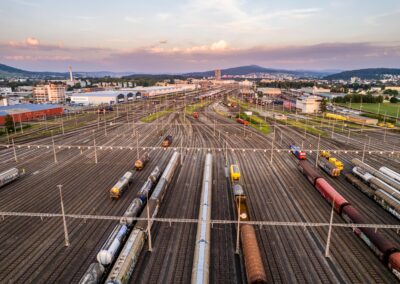
Setting the right track for inland freight transport by rail
The Federal Council released its message on the Goods Transport Act to the Parliament in January. It aims to modernize the comprehensive single-wagon load transport (EWLV) and establish the foundation for its economic viability. Despite various reservations, the Federal Council proposes investment subsidies, temporary operating compensations, and incentives for shippers.
Key Points:
- Federal Council aims for economic viability
- EWLV to undergo fundamental restructuring and modernization
- Support for EWLV operation during the modernization phase
- BAV criticizes industry guidelines
- Overview of the proposal
- What’s next
Federal Council aims for economic viability
On January 10, 2024, the Federal Council adopted the message on the Goods Transport Act (in German) for Parliament. We, from VAP, welcome the continued pursuit of the favored Variant 1. With this proposal, the Federal Council intends to modernize rail freight transport technically and organizationally, strengthen multimodal transport chains, and better integrate shipping. The overarching goals are to enhance supply security nationwide, promote multimodality, and contribute to the federal environmental and energy targets. This involves securing current area coverage, gradually increasing the share of rail freight transport, and laying the groundwork for economically independent operation.
EWLV to undergo fundamental restructuring and modernization
The basis for this is a comprehensive restructuring of the EWLV, or network traffic, with associated technological modernization (especially digitization), integration into the Swiss logistics system, and the establishment of non-discriminatory intramodal competition. The latter is expected to significantly improve the quality and efficiency of logistics services and simplify future innovations. The proposal allocates investment funds of CHF 180 million for the introduction of digital automatic coupling (DAK). Additional investment funds are earmarked for digitized process optimizations, data exchange platforms, and similar initiatives.
Support for EWLV operation during the modernization phase
To maintain current area coverage, the operation will be financially supported for eight years during the modernization phase. Allegedly uncovered costs will be covered, and compensations will decrease in line with the progress of the restructuring, determined in multi-year performance agreements with all freight railways involved in network traffic.
BAV criticizes industry guidelines
To ensure the success of this transformation and stable EWLV operation during the restructuring phase, the industry has proposed guidelines for specific measures and support criteria. However, the Federal Office of Transport (BAV) criticizes these as insufficient and demands further revisions. It particularly highlights the lack of perspective for a comprehensive redesign to enhance efficiency and utilization, foreseeing a tendency towards structural maintenance and further service reduction. The VAP understands the BAV’s reservations, as the guidelines represent a compromise between shippers and freight railways, with significant concessions made by VAP in the interest of the cause. Substantial revisions are now necessary, especially from the perspective of freight transport customers as users of logistics services.
We are prepared to significantly support further development. A comprehensive operational control system is seen as a crucial prerequisite for this transformation, serving as an evaluation tool for the effectiveness of measures and incentives, along with the establishment of a digital platform. The transformation should be methodically structured and implemented in a targeted manner as a project.
Overview of the proposal
- Investment subsidies: The Federal Council allocates CHF 180 million for the introduction of DAK, covering approximately one-third of the restructuring costs. The conversion of rolling stock must be coordinated across Europe and is expected to be completed by 2033. DAK is anticipated to substantially improve the productivity and quality of rail freight transport.
DAK Factsheet (PDF, 971 kB) - Operating compensations: To maintain EWLV at the current comprehensive level during the restructuring phase, the Federal Council proposes to financially support it for eight years on a degressive basis. By the end of this period, economic viability should be achieved. For the first four years, it requests CHF 260 million.
Freight Transport Factsheet (PDF, 712 kB) - Incentives for shippers: Permanently planned are handling and loading contributions, along with compensation for the uncovered costs of the ordered freight transport service, totaling CHF 60 million per year.
Read the complete message on the Goods Transport Act.
What’s next
- In the first half of 2024, open points between BAV and the industry will be discussed, and guidelines will be supplemented and clarified accordingly.
- Within this framework and following the approval of the revised law, a tendering process for various service packages within network traffic is expected to start by the end of 2024.
- Negotiations on potential performance agreements are planned for 2025, allowing any support measures to take effect in early 2026.
For further details, refer to this joint press release from VAP, LITRA, ASTAG, IG Kombinierter Verkehr, and VöV.
Gotthard Base Tunnel (#9): Avoid shifting traffic back to the road
The freight train derailment on 10 August 2023 caused serious damage to the Gotthard Base Tunnel. SBB therefore intends to massively reduce the capacity of sustainable rail freight transport in favour of leisure traffic at weekends with the timetable change on 10 December 2023. This could lead to a shift of up to 15% of rail freight back onto the road.
This is the issue:
- New timetable concept cancels rail freight train paths
- Statutory modal shift target jeopardised
- Alternative for passenger transport available
- NEAT gradually misused for other purposes
- No dialogue at eye level
- Avoiding a shift back to road transport together
New train path concept cancels rail freight train paths
According to the media update of 2 November 2023, SBB assumes that the Gotthard Base Tunnel will not be fully operable for passenger and freight trains again until September 2024. The repair work is likely to take far longer than originally expected. SBB officials have announced that with the December timetable change, significantly more and faster passenger trains will be travelling through the Gotthard Base Tunnel at weekends. Among other things, they are cancelling a time slot for rail freight traffic from 7.30 to 9.00 a.m. on Friday mornings and allocating it to passenger traffic.
Statutory modal shift target jeopardised
The unauthorised train path concept has serious consequences for the national modal split. One of our members assumes that 10% to 15% of combined freight transport consignments will be shifted back to the roads and that supplies to Ticino can no longer be fully guaranteed at weekends. Construction work can also not be carried out in the aforementioned time window.
This development contradicts Switzerland’s policy for modal shift. According to this policy, the Federal Council wants to shift transalpine freight transport from road to rail. The statutory target of 650,000 lorry journeys was already clearly missed in 2022: 880,000 lorries were still travelling through the Swiss Alps.
Alternative for passenger transport available
For representatives of the shipping industry, SBB’s new train path concept is all the more absurd as there is a sensible alternative for passenger transport: from an ecological perspective in particular, leisure travellers should use the mountain route at weekends and leave the Gotthard Base Tunnel to the freight trains. After all, due to their heavy loads, they consume much more electricity over the mountain route than passenger trains. Shippers depend on a reliable transport infrastructure seven days a week to supply goods to Switzerland.
NEAT gradually misappropriated
The Gotthard Base Tunnel is part of the New Rail Link through the Alps (NEAT “Neue Eisenbahn-Alpentransversale”). It was designed for rail freight transport. The common goal of the European Union and Switzerland with the NEAT was and is to promote freight transport by rail. The project was realised at a cost of CHF 23 billion and 55% of it was financed by the performance-related heavy vehicle charge (LSVA). By restricting the urgently needed train paths for freight transport, the NEAT is once again being misused.
No dialogue at eye level
According to SBB, “… careful consideration was given to the allocation of train paths through the Gotthard Base Tunnel during the repair work in collaboration with representatives of the freight transport sector and passenger railway undertakings as well as the independent train path allocation body.” However, the new train path concept was developed without the freight transport industry and its customers. The subsequent dialogue also proved to be tough. In addition, the voice of SBB Cargo was missing at the media conference on 2 November 2023. It is unclear whether and how the concerns of the freight transport sector were taken into account within the company. The shipping industry is alarmed by this one-sided approach and sees the previously constructive cooperation with SBB being jeopardised.
Working together to avoid a shift back to the road
We at the VAP strongly urge SBB to involve all those involved in rail freight transport in the planning of train path allocation and to refrain from making one-sided statements about the smooth handling of freight traffic through the Gotthard Base Tunnel. These favour a premature migration of freight transport to the road, which must be avoided at all costs. After all, it is generally difficult to reverse such a move. SBB should not play freight and passenger transport off against each other and favour road transport in the process.
Gotthard Base Tunnel (#8): Safety and control tasks clearly distributed
The Swiss Safety Investigation Authority (Sust) names a broken wheel disc as the cause of the freight train accident in the Gotthard Base Tunnel. In the news report from 19 October 2023, Swiss television SRF took a close look at the maintenance of freight wagon wheels. VAP expert Jürg Lütscher comments on the safety and control tasks of the players involved – and explains them further in this blog post.
This is what it’s all about:
- Harmonised safety in the European rail freight system
- Maintenance work monitored by independent bodies
- Wheelset inspections in operation and maintenance
- Two inspection procedures established
- Responsibilities and regulations clarified
Harmonised safety in the European rail freight system
Safety in the European rail freight system is based on a triangle of responsibility consisting of infrastructure managers, railway undertakings (RUs) and wagon keepers with their responsible entities in charge of maintenance (ECMs). The specifications and regulations are now largely harmonised throughout Europe. The industry has developed the internationally recognised VPI European Maintenance Guide (VPI-EMG) based on the provisions of the sovereign directives, the applicable technical standards and practical experience. The VPI Germany, VPI Austria and VAP (Switzerland) associations have been pioneering this work since 2007. In 2019, AFWP (France) and UIP (International Union of Wagon Keepers, representing the smaller national associations) were added to the group of editors of the VPI-EMG. This set of rules defines both deadlines and the scope of work and standards in a user-friendly manner. It provides maintenance recommendations that each user must check for applicability to their freight wagons, supplement if necessary and approve for their wagon fleet. More than 550 companies, including wagon keepers, ECMs, repair workshops, authorities and universities, currently use the VPI-EMG. More than 260 repair workshops and mobile service teams from 19 European countries use the VPI-EMG on behalf of the relevant ECM.
Maintenance work monitored by independent bodies
The EU safety directive defines two independent procedures. This is to ensure that the specialised work is carried out everywhere with the required level of quality and knowledge:
- Certification: The companies involved must be certified by independent bodies for security-related activities within the scope of their ECM. They must regularly renew these certificates and allow their customers to view their validity and scope.
- Auditing: Supervisory authorities carry out risk-based audits of safety-critical processes and quality inspections in railway operations. If they uncover weaknesses, they also monitor their rectification.
Wheelset inspections in operation and maintenance
Wheelsets are considered safety-critical components of a rail vehicle. They are subject to continuous wear during operation and can also be damaged by external influences. When maintaining wagons, the ECM ensures that fully functional wheelsets are used.
During operation, the RUs and the train control systems of the infrastructure managers (see blog post «Gotthard Base Tunnel (#2): Automatic train control systems») specifically ensure that no recognisable damage or deviations on wagons jeopardise operational safety. To ensure safe railway operations, the wheelsets must comply with all relevant limit values during the entire operating time. Wheelsets that have been replaced due to deviations or damage are sent to a certified specialist workshop for reconditioning in accordance with the regulations.
Two test procedures established
The SRF news report shows two test procedures for systematic wheelset maintenance. A certified specialist workshop can thus ensure that the wheelsets it repairs do not show any relevant damage in the form of material cracks on delivery. This involves two non-destructive testing methods in accordance with DIN 27201–7, which have become established throughout the industry:
- Ultrasonic testing: Detection of cracks in the wheel face and flange back area
- Magnetic testing: Detection of cracks in the wheel centre and wheelset shaft including wheel seat
Responsibilities and regulations clarified
As many goods are transported across borders, internationally harmonised rules and procedures are important in Europe. In recent years, the regulations have been comprehensively updated and improved. Current versions of the EU Safety and Interoperability Directive apply both in all EU states and – via the overland transport agreement – to the Swiss standard gauge network. Based on this, the Swiss railway sector has developed practical standards and maintenance procedures for the main players. Europe-wide common reporting processes and assessment procedures (see blog post «Gotthard Base Tunnel (#7): Sust report provides clarity») ensure that industry players learn their lessons from an operational incident such as that of 10 August 2023 and implement effective improvements in maintenance.
Gotthard Base Tunnel (#4): Safety-critical components of freight wagons
The publicly published information on the freight train derailment in the Gotthard Base Tunnel indicates a broken wheel on the derailed train. Overloading or material defects are under consideration as possible causes of the failure. What actually happened remains a matter for the ongoing investigations of the Swiss Transportation Safety Investigation Board (Sust).
Topics discussed:
- How are safety-critical components manufactured?
- How are they approved and put into operation?
- How are they maintained?
- What significance does monitoring have in daily operations?
- Which monitoring possibilities exist?
- Uniform rules enable safe cooperation between the actors
- Outlook for digital automatic coupling (DAC)
How are safety-critical components manufactured?
Safety-relevant and safety-critical components such as wheel pans are designed so as to perform their task over the planned period of use under the prevailing conditions of operation and use and thereby to ensure safe travel. The manufacturing firms make use of internationally recognised standards to accomplish this:
- Technical Specifications for Interoperability (TSI) establish fundamental requirements.
- European Standards (EN) define the specific properties.
- Manufacturers employ harmonised and standardised safety methods for development and testing.
- Standardised safety verifications and assessments document the safety and usability.
The international experiences from incidents and accidents continuously enter into the development of the standards and TSI.
How are they approved and put into operation?
Bringing safety-critical components onto the market requires an internationally standardised approval from the European Agency for Railways (ERA) or a national safety authority. This consists of:
- Type approvals for components or vehicles
- Conformity verifications for identical serial parts or vehicles
- CE mark (Conformité Européenne) for a component that satisfies the applicable EU directives
- Operating authorisation for a vehicle in compliance with the rules
The certification that components were manufactured according to the requirements of standards and TSI is issued by so-called “notified bodies”, in other words state-authorised agencies. These inspect and evaluate whether the manufactured products conform to the rules.
How are they maintained?
The manufacturer is obliged to define and publish the applicable maintenance requirements for all components or vehicles. Wagon keepers must implement these manufacturer requirements in accordance with the conditions of use. They appoint certified entities in charge of maintenance (ECMs) for their rolling stock. The latter in turn establish maintenance requirements for the vehicles assigned to them in consideration of their own knowledge and industry expertise. They also plan regular work, carry it out and document the results. Every wagon approved for operation must be registered in an official vehicle registry, including the name of the wagon keeper and the ECM.
What significance does monitoring have in daily operations?
The railway undertakings (RUs) are responsible for the safe travel, preparation, dispatching and other safety aspects of their trains. They define the inspections and tests for ensuring that every trip can be completed safely. To determine this operational suitability, trained employees carry out defined visual inspections before departure. This extremely demanding work takes place at all times of day and in all weather. During the train dispatching and the associated inspections and tests, safety-critical components are also afforded special attention.
Which monitoring possibilities exist?
The wagon keepers are responsible for the proper maintenance of their vehicles. Safety-relevant and safety-critical components are regularly inspected, such as with ultrasound measurements. Safety-critical components are subject not only to strict inspections but also special obligations with regard to labelling, maintenance and traceability of the measures. The RUs can demand wagon-specific information from the wagon keepers.
On the Swiss standard gauge network, the infrastructure operators currently maintain over 250 wayside train monitoring systems. These monitor every vehicle as it passes by for irregularities and can trigger alarms in the event of unacceptable deviations. In this case, the respective train is immediately stopped and inspected.
Uniform rules enable safe cooperation between the actors
A variety of different companies all work together in railway operations. Every actor must be able to depend on the reliability of the others at the points where they interface together. Their tasks and responsibilities are clearly and uniformly regulated at the international level. Harmonised regulations for manufacture, operation and maintenance ensure safe rail transport (for more on the regulations governing the international cooperation, check back on this blog again soon).
Outlook for digital automatic coupling (DAC)
Besides implementation of the applicable requirements by every actor participating in rail transport, new technologies are now coming to the fore. Automation and digitalisation can do more than simply make operating processes more efficient. They also open up new opportunities for operational monitoring of safety-relevant and safety-critical components in freight trains. The ongoing digital recording of the condition of these components offers an attractive opportunity to the responsible parties. By digitally tracking processes of wear and ageing processes on each individual vehicle, it is possible to efficiently plan maintenance work according to the actual needs. Faulty components can be identified and replaced before a total failure. If a component failure occurs during travel, this can immediately trigger an alarm.
To make use of this innovation in freight transport, the wagons require sensor systems, electrical energy and data communication with the train driver, the systems of the wagon keepers and the ECMs. These prerequisites will be met with the planned Europe-wide introduction of DAC (see the blog post “Data ecosystems: Sharing data to double its added value”). In this way, automation and digitalisation are transforming conventional rail freight operations into an intelligent, efficient, resilient and safe mode of transport.
Gotthard Base Tunnel (#3): Current liability provisions are sufficient
The freight train accident in the Gotthard Base Tunnel has brought up liability questions that were already on the agenda of the Federal Council. In its session on 21 June 2023, the Federal Council issued a report on possible actions to intensify the liability provisions in rail freight transport. Read on to learn what these look like and what we think of them.
Topics discussed:
- Railway undertakings (RUs) are liable independent of culpability
- The Federal Council proposes four possible actions – with pros and cons
- We believe: Responsibilities and controls are sufficiently regulated
- Actors will live up to their responsibilities even without new provisions
Railway undertakings (RUs) are liable independent of culpability
The status quo is that RUs are fundamentally liable for damages from accidents involving freight trains on the Swiss rail network regardless of their own culpability. This is referred to as strict liability. However, this does not apply if the damage was caused due to deficiencies in a third-party wagon. In that case, culpability is contractually assumed to lie with the respective wagon keeper. The keeper can only free itself of this liability by proving it was not at fault. In legal jargon, this is termed a reversal of the burden of proof.
The Federal Council proposes four possible actions – with pros and cons
In its report from 21 June 2023, the Federal Council was complying with postulate 20.4259 “Overall assessment of liability in rail freight transport”. This was established by means of motion 20.3084 «Clarifying liability rules in rail freight transport” from Frédéric Borloz (see VAP blog post “Motion Borloz”). Within the framework of the overall assessment, the Federal Council presented four possible actions to the Parliament:
- Expanding the strict liability of the RUs to also include cases in which the characteristic risk of rail operations was not a causal factor. This would raise the minimum insurance coverage of the RUs.
- Oblige the RUs to conclude sufficient liability insurance to also cover damages from the transport of hazardous goods. This would not expand the strict liability of either the RUs or the wagon keepers.
- Introduce fault-independent liability on the part of the wagon keepers for damages that were verifiably caused – in whole or in part – by their vehicles or their cargo, e.g. in the event of leaked hazardous goods from a parked wagon. This would oblige the wagon keepers to conclude sufficient liability insurance for such cases.
- Keep the current regulations.
The Federal Council notes that each option features pros and cons. The Council sees no urgent need for regulation in this regard. Nevertheless, it is willing to look more deeply into specific variants at the request of the Parliament.
We believe: Responsibilities and controls are sufficiently regulated
As a shipping sector association, we are of the view that the responsibilities and controls are already regulated sufficiently clearly by international law and contracts. The current 2017 version of the “General Contract of Use for Wagons (GCU)”, which constitutes the international shipping provisions in force between over 750 RUs and the wagon keepers, already satisfies option 3 presented by the Federal Council of increased liability on the part of the wagon keepers. According to the GCU, wagon keepers are liable for deficiencies on their wagons if they cannot prove an absence of fault.
Actors will live up to their responsibilities even without new provisions
Wagon keepers who belong to our association maintain extensive insurance coverage under the current liability regime since they are responsible for the maintenance of their wagons. The introduction of an additional legal insurance obligation or strict liability for wagons operating in Switzerland would massively impede the free use of foreign wagons (both private wagons and those of RUs). This would entail a huge loss of flexibility in international freight transport both for import/export and – in particular – for transit. We will continue to follow this topic closely and report on current developments.
Gotthard Base Tunnel (#2): Automatic wayside train monitoring systems
On 10 August 2023, a freight train derailed in the Gotthard Base Tunnel. A few minutes before entering the tunnel through the south portal, the train was inspected by automatic wayside train monitoring systems (WTMSs). According to the monitoring data, the train travelled into the tunnel without problems.
Topics discussed:
- What are wayside train monitoring systems (WTMSs)?
- What are WTMSs capable of?
- What is the process for improving WTMSs?
- Digital automatic coupling (DAC) and the future
What are wayside train monitoring systems (WTMSs)?
Wayside train monitoring systems (WTMSs) are part of the railway infrastructure and are used at strategically favourable locations within the network. They use sensors and other technologies to inspect every single vehicle of the train as it passes through. The data acquired in this way are processed and used in daily railway operations to ensure safety, improve punctuality and reduce maintenance.
What are WTMSs capable of?
The original purpose was aimed at protecting the infrastructure to reduce disruptions and damage as well as increase the safety of rail operations.
• Detecting hot boxes
• Detecting wheel treads
• Inspecting pantographs
• Preventing fires and chemical incidents
• Measuring axle weight
• Protecting the structure gauge
• Detecting natural events
• And more
On the north-south axis and on the east-west axis, over 10,000 trains are dynamically monitored by over 250 WTMSs every day. A good 20 alarms are triggered each day, on average.
What is the process for improving WTMSs?
In the innovation project “Wayside Intelligence (WIN)”, which is supported with public funds from the Federal Office of Transport (BAV), SBB Infrastructure is working to further improve the monitoring structure. In addition to the sensor data, new image data are collected, and individual vehicles are identified with the help of radio frequency identification (RFID). The data are analysed algorithmically, aggregated and supplied to the users for specific applications via standardised data exchange interfaces. These advancements aim at improving maintenance by referencing the current condition of the vehicle. At the same time, they enable a simplification of the maintenance processes through artificial intelligence and automation. The project has already made significant progress and may lead to increased safety and availability for both the network and the vehicles.
DAC and the future
With the introduction of DAC (Digital Automatic Coupling), the vehicles lined up into trains are connected together by a data line. This means that the infrastructure provider has minute-by-minute information about which vehicles are travelling its network and in which train. Thanks to this train integrity, the data from the WTMSs can be made available more quickly and reliably. To learn more about DAC and the data ecosystem, read our blog post “Data ecosystems: Sharing data to double its added value”. The extent to which DAC might help to prevent train accidents such as the one in the Gotthard Base Tunnel is discussed by VAP rail freight expert Jürgen Maier in an interview with “10 vor 10”.
Gotthard Base Tunnel (#1): Committed to a comprehensive investigation
On 10 August 2023, a freight train derailed in the Gotthard Base Tunnel. The Swiss Transportation Safety Investigation Board (Sust) believes the likely cause was the failure of a wheel. We at VAP will investigate the event systematically from a risk-oriented perspective.
Topics discussed:
- Emergency concept functioning, supply ensured
- Proven responsibility triangle
- Safety standards complied with
- Legal relationships comprehensively regulated
- Breakages are rare but cannot be ruled out
- Continued pursuit of the modal shift goal
Emergency concepts functioning
Thanks to further improvements to emergency concepts, the key actors responded quickly and appropriately after the accident: The supply of goods is secured, freight and passenger rail cars are on the move again. The emergency concepts of the freight railway undertakings for routing detour traffic along the transit corridor have proven themselves. The lessons from Rastatt have been learned, the industry is prepared for emergencies.
Proven responsibility triangle
The rail freight system is based on cooperation carried out on equal footing between infrastructure providers (for the Gotthard Base Tunnel: SBB) and freight railway undertakings as well as other actors such as wagon keepers, who potentially influence the safe operation of the railway system. All involved have advanced safety systems and implement the same European regulations at the interfaces between the various actors.
Safety standards complied with
According to current information, all actors complied with the applicable safety standards and methods. The last inspection for trains driving through the south portal into the Gotthard Base Tunnel takes place at Claro (TI) by automatic wayside train monitoring systems. According to the available data, the derailed train travelled into the tunnel without problems. The wagon keepers and their entities in charge of maintenance (ECMs) are responsible for the maintenance and safe operating condition of the wagons upon handover to the freight railway undertakings. The ECM, which is certified by independent bodies, defines maintenance measures and ensures their implementation and documentation according to safety standards and methods.
Legal relationships comprehensively regulated
Wagon keepers make their wagons available to freight railway undertakings to use. The freight railway undertakings in turn make use of the networks of the infrastructure providers. All usage relationships are uniformly regulated by contract in Switzerland and internationally. Regarding the relationship between freight railway undertakings and wagon keepers, the Swiss Carriage of Goods Act (GüTG) refers in Art. 20 to the Convention concerning International Carriage by Rail (COTIF). On the basis of this international convention, over 770 freight railway undertakings and wagon keepers in Europe additionally established the General Contract of Use for Wagons (GCU), a multilateral contract in effect since 2006 that regulates in detail the legal relationship between wagon keepers and railway undertakings.
Breakages are rare – but cannot be ruled out
How the derailment occurred is not yet clear and is under continued investigation by the Sust (Swiss Transportation Safety Investigation Board). As the accident investigation continues, it remains necessary to clarify the cause in addition to questions of liability and responsibility as well as the current safety measures. Breakages on wheel occur very rarely. In this case, both an external influence as well as material fatigue are possibilities. Breakages on critical operating components such as rails or wheel are extremely difficult to predict and have diverse causes. Preventive maintenance of these components with regular inspections is standard, but these measures can reach their limits. In Switzerland, train/wagon inspections by freight railway undertakings and the infrastructure operators as well as inspections by over 250 wayside train monitoring systems are firmly and comprehensively established.
Continued pursuit of the modal shift goal
Everyone understands how far-reaching the impacts of such an event can be on the entire transportation system and how high the damages can be. This is why our industry working group “IG Sicherheit” [IG Safety] engages in close cooperation with all relevant actors in the railway sector within the framework of our annual process for sharing experiences between ECMs as well as in collaboration with the Federal Office of Transport (BAV) in order to continuously improve the state of technology and raise the already very high safety level even higher. We urge that the questions and measures on the agenda be considered in the light of the Sust report. Only this way can the danger of another accident be further reduced while simultaneously continuing to pursue the constitutionally established modal shift goal for freight traffic crossing the Alps. It is therefore all the more important for the Gotthard Base Tunnel to be open for traffic again as soon as possible – especially considering that the Italian economy is poised to pick back up again after its summer pause. Otherwise, the alternative of utilising the available and flexible road transport options will be unavoidable. Accordingly, we offer our assistance and that of our members and industry partners in efficiently organising the detour traffic and reshaping its composition.
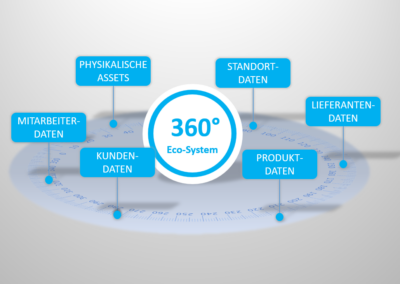
Data ecosystems: Sharing data to double its added value
We at the VAP have been working more intensively on the topic of data ecosystems for some time. In 2022, we initiated the development of a data platform at the Coordination Unit for Sustainable Mobility (KOMO) and are pushing ahead with the further development of the Mobility Data Infrastructure (MODI). With this blog post, we would like to continue the dialogue and show why data ecosystems should be part of the vision of all freight railway actors.
Here’s why:
- Complexity sets the bar high
- Small steps to the big vision
- Exploiting the inexhaustible potential of data
- We should stay in the conversation
Complexity sets the bar high
Data ecosystems are highly complex and encompass diverse subject areas (see Figure 1). If they are to be made usable and economically viable, we must take into account all the wishes and needs of the actors as well as any restrictions.
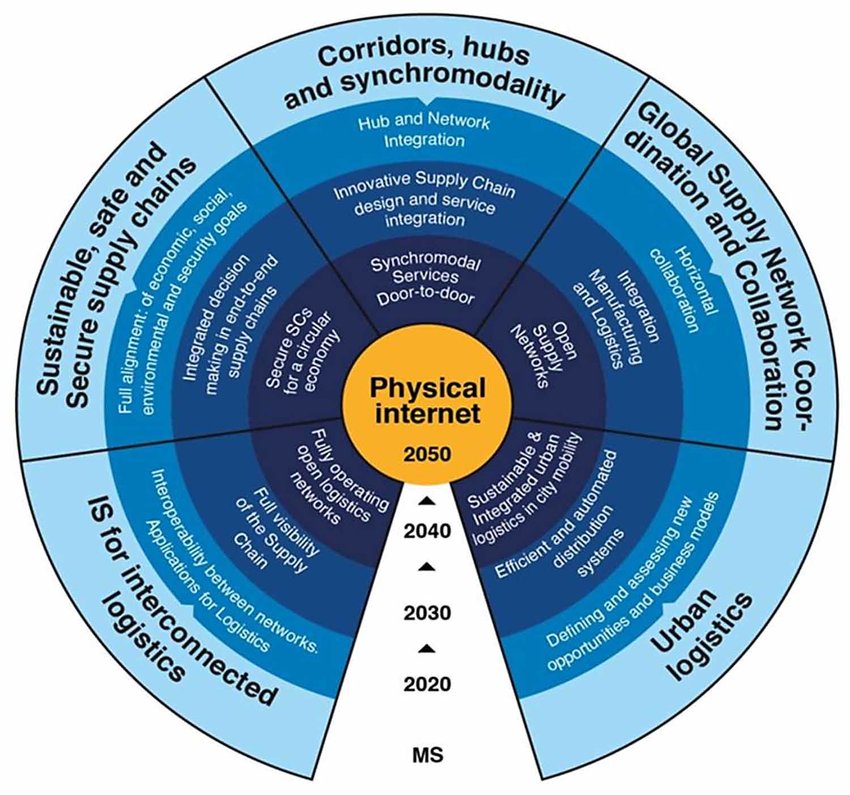
Figure 1: The vision of digital and operational interconnectivity covers highly challenging topics
On the occasion of our Freight 2023 Forum, Dr Matthias Prandtstetter, Senior Scientist and Thematic Coordinator at the AIT Austrian Institute of Technology AIT, and Monika Zosso Lundsgaard-Hansen, Co-Section Head Directorate Operations at the BAV, provided insights on the current status of initiatives and considerations. The experts agree: progress in the rail sector will be a long and difficult affair.
In small steps to the big vision
The target image of an intelligent and possibly self-deciding data ecosystem could be realised through the following development phases as examples (not exhaustive):
1. provide basic data (e.g. with MODI)
- Guaranteed quality
- “Uniqueness” of the data set (i.e. clear definitions)
- Accessibility/transparency for all those involved
- Market-based development of apps and extended functionalities possible
2. activate hub for exchange of data (e.g. DX Intermodal by Hupac)
- Exchange between 2 or more companies operating on the hub
- Additional data sets (with or without restrictions for individual actors/companies)
- Booking possibilities for individual or entire relations
3. create data ecosystem
- Ensure access to historical data for initial analysis possibilities
- Connect databases (basic data and/or data sets available with restrictions)
4. use blockchain technology
- Data and data sets are optimally networked
- Absolute cost and price transparency
- Increased security in data exchange
- More efficient overall development and processing
5. realise the vision of a physical internet
- Open global system based on physical, digital and operational interconnectivity
- Applies protocols, interfaces and modularisation
- Certain decisions are made by the ecosystem – not by individual players
Currently, the rail sector is in phase 1 and 2, even if only selectively. With the Federal Act on Mobility Data Infrastructure (MODIG), the FOT is addressing all relevant topics. DX Intermodal is already operational in combined transport (CT) and takes up points from phase 2. An overall benefit for rail freight logistics can only be achieved if all forms of freight transport production and the entire transport chain (“door-to-door”) are taken into account. To this end, elements of artificial intelligence must be integrated.
Exploiting the inexhaustible potential of data
Big Data has transformed from hype to megatrend; the potential of collected data is almost infinite. This enables disruptive, innovative, digital business models and better predictions for correct business decisions. However, this only applies to data that is available in the right quality and granularity. In addition, the actors must be able to extract the right information and thus the desired knowledge from the data and to interpret and use it correctly. This poses a number of challenges for the ecosystem partners:
System benefit vs. self-benefit
Some companies already have in-house data systems. They collect data from devices on locomotives and wagons and use it for optimisation or pass it on to third parties. This gives them a competitive advantage and additional sources of revenue. Why should such companies participate in data ecosystems? Because optimising their own system does not necessarily serve the system as a whole or the end customer. If, for example, various individual players sell the same data to third parties for a fee, the system becomes more expensive because money flows for each data transfer. In addition, individual actors can combine their data sets within the framework of a data ecosystem and thus promote the efficiency of the entire system, for example the estimated time of departure or arrival. In this context, questions of data sovereignty need to be clarified.
Obligation vs. voluntariness
The state is and remains the biggest financial backer of the rail system. It should have an interest in relieving its own coffers and thus the taxpayers. The provision of non-profit data can improve efficiency. Again, questions remain: Should ecosystem partners be obliged to provide datasets? Should it be possible in a data ecosystem to offset previous, individual investments or to contrast subsidies received? Or should participation in a data ecosystem remain voluntary, with the risk that too few participants feed the platform with data?
Data vs. data
Not every data element is equal for a data ecosystem. Thus, it must be clearly defined from the beginning with which goal and overall benefit an actor should deposit its data elements on a data platform. In addition, a distinction must be made between operational, technical and commercial data in order to avoid emotional discussions. Finally, the quality ensured by the data owner or a newly created quality body determines the credibility and sustainability of a data ecosystem.
We should stay in the conversation
We at the VAP want to make the potential of data ecosystems available to the entire rail sector and increase its competitiveness. That is why we are committed to various initiatives, research projects and established products in this context, namely the following:
- Further development of the mobility data infrastructure MODI, together with the BAV.
- Common European Mobility Data Space (EMDS), an EU initiative
- Logistics Working Group (AKL), in which we have taken over the leadership
If you too would like to help shape the digital future of the rail sector, Jürgen Maier looks forward to hearing from you.
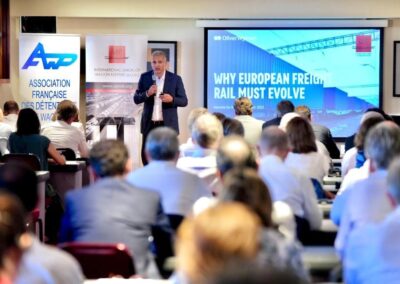
Keepers’ Summit 2023: Adapting to customer requirements and a visionary future for rail freight transport
What it’s all about:
- UIP Keepers’ Summit in Nice
- Customer focus and transformation for rail freight in Europe
- David Zindo new President of the UIP
The International Union of Wagon Keepers (UIP) in collaboration with its French member association AFWP welcomed 120 freight rail stakeholders from across Europe to its annual flagship conference, the Keepers’ Summit, in Nice, France on 15 June 2023. Discussions focused on how environmentally friendly features of rail freight can be used to address climate change while appealing to customers and attracting young talent. The panelists and the audience agreed: rail freight has an important role to play in the future of our society. However, this can only be achieved if rail freight operations transform away from state monopolies towards private sector competition.
In search of change, former UIP President Dr Heiko Fischer challenged the audience to look to the past to better prepare for the future. As the driving force behind the creation of the General Contract of Use (GCU), Mr Fischer pointed to the important role of private wagon keepers in developing rail freight solutions. As a convinced and visionary man, he always placed great emphasis on the need to innovate and transform rail freight to meet the future challenges and expectations of customers and society. The audience acknowledged with standing applause the commitment and achievements of Dr Fischer, who had guided the destiny of UIP as President for 11 years.
Mr Joris D’Inca, Global Head of Logistics at the international management consulting firm Oliver Wyman, confirmed in his keynote speech the need for rail freight to adapt to evolving customer requirements: «Customers expect complete transparency along the transport chain. They place the greatest value on the availability of real-time information and effective corridor management, among other things. Only by adapting to these and other requirements will rail freight be able to gain market share from road freight and play a greater role in combating climate change.» Presentation Joris D’Incà
The expert panel, moderated by Ms Emilie Soulez and composed of Mr Charles Puech d’Alissac (VIIA/Naviland), Mr Paul Mazataud (SNCF Réseau) and Mr Stéphane Gavard (Streem), dove deep into the elements at the heart of the transformation needed to meet the new expectations. Mr Mazataud confirmed SNCF Réseau’s needs and intentions to offer more transparency in maintenance operations, but also RNE’s plans to increase flexibility by adapting the timetabling process. Mr Puech D’Alissac highlighted the elements and benefits of combined transport and the business model behind the activities of Naviland and VIIA. He pointed out the progress made in digitising the interface with customers and encouraged all stakeholders to redouble their efforts in digitising the interfaces between rail freight actors. Mr Gavard provided insights into wagon innovation both in terms of concept and industrial manufacturing, but also explained Streem’s project to develop skills and knowledge in the industry.
Finally, Mr David Zindo, CEO of Streem Group and newly elected UIP President, concluded with a promise: to support the transformation with clear priorities while allowing freight wagon keepers and associations to benefit from the success of the past in order to increase the attractiveness and competitiveness of rail freight. He stressed the importance of the work of UIP and the national federations, which act as consolidated voices and link to local and European political institutions.
«Our societies need to understand the unique selling proposition of rail freight as a crucial means to decarbonise the transport sector. We as a system need to improve our offer to meet the needs of customers, but also to attract and train young talent.» – David Zindo
|
David Zindo becomes new UIP President: A vision for the future of rail freight transport David Zindo will be the new President of UIP, succeeding Dr Heiko Fischer, who led UIP as President for 11 years. Zindo was elected during UIP’s General Assembly on 15 June 2023 in Nice, France. He is supported by Vice Presidents Per-Anders Benthin (CEO of Transwaggon) and Johann Feindert (CEO of GATX Rail Europe). Mr Zindo brings extensive experience to the position, being CEO of Streem Group (formerly Ermewa Group) and a member of the UIP Executive Board since 2015. He previously held senior finance positions at SNCF, Geodis and Veolia Environmental Services. As the new UIP President, David Zindo’s vision is to further strengthen UIP by setting clear priorities, strengthening the team and building alliances with other associations. He wants to strengthen the role of freight wagon keepers in the supply chain and explain the complex EU regulatory landscape. With his long experience and commitment to rail freight, Mr Zindo aims to transform the sector to meet future challenges and the expectations of customers and society. Read more about the newly elected President’s vision in UIP’s interview with David Zindo. |
-
The International Union of Wagon Keepers (UIP) was founded in 1950 and has its headquarters in Brussels. It is the umbrella organisation of national associations from 14 European countries, representing more than 250 wagon keepers and Entities in Charge of Maintenance (ECMs). The fourteen member countries are: Austria, Belgium, Czech Republic, France, Germany, Hungary, Italy, the Netherlands, Poland, Spain, Slovakia, Sweden, Switzerland and the United Kingdom. As the voice for more than 234,000 freight wagons, UIP represents half of the total European freight wagon fleet and is one of the most important resources for the freight rail sector in Europe. Research, lobbying and constant exchange with all stakeholders and organisations interested in the rail freight sector play an important role for the association to direct all efforts towards increasing efficiency in the rail freight service. Through participation in many working groups and committees at European and international level, UIP brings the perspective and interests of freight wagon keepers and works in cooperation with all interested parties to secure the long-term future of rail freight. UIP is recognised by the European Commission as a representative body in the rail sector.