
COMPETITION IN RAIL FREIGHT TRANSPORT
We at the VAP are committed to a fair, competitive freight transport system. To this end, we monitor, among other things, modal shift and lobby politicians for non-discriminatory rail.
Informative
Rail Freight Transport Vision of the Advisory Group on the Development of Rail Freight Transport, 2022
Future rail freight transport in the area / wagonload transport
- Interview in RailBusiness, 21.11.2022: Frank Furrer zur Fortführung des Wagenladungsverkehrs
- Media release, 2.11.2022: Unterstützung für einen starken Schienengüterverkehr in der Fläche
- 2.11.2022: Bundesrat gibt zwei Varianten in Vernehmlassung
- Erläuternder Bericht zur Vernehmlassungsvorlage, BAV
- Faktenblatt Digitalisierung
- Faktenblatt Schienengüterverkehr
- Position paper to KVF‑N, 22.6.2022: Future of rail freight transport in the countryside
Legal
Summary of a study commissioned by the shipping industry
- Study «From integrated to market-oriented railways» in German or in French
Modal shift report 2021
- Federal Council report on modal shift of November 2021 (in german)
- Blog articel: Modal shift: In transit on the right track
Transport of dangerous goods
Archive
Relocation report 2019 – industry calls for additional measures
- Bericht des Bundesrats über die Verkehrsverlagerung vom November 2019
- Positionspapier der Branche
- Position der Branche (Präsentation)
- Position der Branche (PDF)
- Medienmitteilung der Branche
- BAV: Botschaft zum Bundesbeschluss über eine Erhöhung und Laufzeitverlängerung des Zahlungsrahmens für die Förderung des alpenquerenden Schienengüterverkehrs
- BAV: Bundesbeschluss über eine Erhöhung und Laufzeitverlängerung des Zahlungsrahmens für die Förderung des alpenquerenden Schienengüterverkehrs
- BAV: Faktenblatt Sinkende Lastwagenzahlen und hoher Marktanteil der Bahn
- BAV: Faktenblatt Verlagerungswirkung der NEAT
- BAV: FAQ Verlagerungsbericht 2019
- BAV: Verkehrsentwicklung im alpenquerenden Güterverkehr infolge Fertigstellung der NEAT
IG WLV: Set goals, develop measures
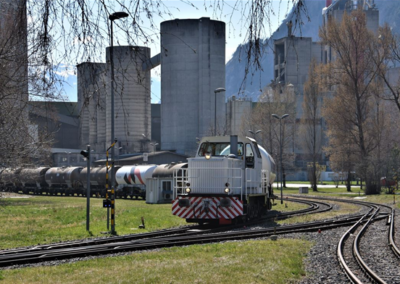
On 9 June 2021, the annual cantonal conference of the Wagonload Transport Interest Group (IG WLV) took place – unfortunately again as a video conference. In addition to the founding partners of IG WLV (VAP, Association of Public Transport (VöV/UTP), SBB Cargo), a large number of representatives from individual cantons took part.
To start with, VöV and SBB Cargo presented the current situation – especially in the context of the Covid 19 crisis – and pointed out the challenges ahead. The VAP then presented the three main objectives on behalf of IG WLV, from which three clusters of action can be derived. IG WLV is currently working intensively on the concretisation and concrete implementation of these goals.
Technology/Automation cluster
IG WLV is pushing for the rapid introduction of nationwide and non-discriminatory automation and digitalisation in Switzerland. This is done in close coordination and cooperation with Europe. It advocates the implementation of the motion Dittli 20.3221 vis-à-vis the industry, politics and administration (cf. blog post «Progress for automation in rail freight transport»).
Production/efficiency cluster
The IG WLV defines key performance indicators and draws up a concept that depicts estimates of demand flows in wagonload traffic for the coming years. It is also considering how additional volumes could be generated that combine planning security, dynamism and cooperation.
Policy cluster
IG WLV is working on a concept for CO2 reduction (see blogpost «Motion CO2-free rail freight»). It will represent this concept vis-à-vis the federal government, industry players and cantons and promote its implementation.
Findings from 2020
After defining the target areas, the participants reflected on the findings from last year’s cantonal conference. Attention was given to the following focal points:
- Data: Various challenges to obtain the right data – quantitative and qualitative – for future concepts and planning.
- Locations and legal bases: Tasks and obligations of the Confederation, cantons and municipalities and optimal use of existing and future logistics areas.
- Free loading: Consideration of all free loading in an overall concept that includes the respective financing needs and tools.
- Expansion steps/STEP: Bringing together the concerns of all actors from politics and business, cross-cantonal coordination and use of the same basic tools.
Best Practice
In an interesting contribution, the cantons of Vaud and Zurich presented their challenges and approaches to solutions for optimising and improving logistics opportunities. These could be used as best practices or interesting starting points in the future.
Further round table discussions
All the information and impulses were discussed in greater depth at two round tables with the following focal points:
- Round table 1: Solution approaches to the challenges of the findings from 2020
- Round table 2: Best practice of the cantons of Zurich and Vaud; possible blueprint for further steps towards optimised, integrated freight transport logistics
Details on the concrete results of the panel discussions and on possible measures can be found in the next blog post.
Strengthen modal shift and diversity of supply
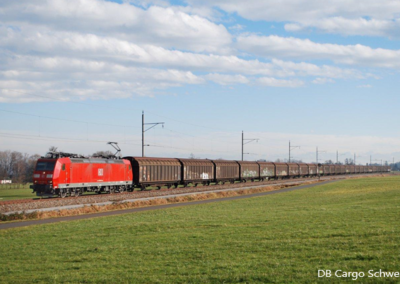
A market-oriented variety of services and the role of rail freight in modal shift are up for debate. After SBB Cargo announced a further savings programme, Charles Juillard, member of the Council of States, and the Commission for Transport and Telecommunications SR have resorted to the instrument of the postulate and called on the Federal Council to examine and report. Both issues are currently being dealt with in the Council of States.
Postulate 21.3198: Better use of railway facilities
The postulate 21.3198 «Freight transport. Why not make better use of existing railway facilities?» by Charles Juillard, member of the Council of States for the European People’s Party (EPP), instructs the Federal Council to submit a report on the development of freight transport in Switzerland – especially by rail. In doing so, it should examine the measures that could favour a shift of freight transport from road to rail. This demand arose against the background that in recent years the number of service points and facilities for the transfer of goods from road to rail has been steadily reduced, favouring road transport for reasons of simplicity and time savings. This development contradicts the mandate of modal shift and noise abatement.
Details on Postulate 21.3198 «Freight transport. Why not make better use of existing railway facilities?» can be found here.
Postulate 21.3597: Future of freight transport
With the postulate 21.3597 «Future of freight transport», the Committee for Transport and Telecommunications of the Council of States instructs the Federal Council to submit a report on the future direction of rail freight transport policy by the end of the first quarter of 2022 at the latest. The Commission demands details on the import and export of goods by rail and the contribution of rail freight transport, modal shift and sustainable orientation of the supply chain. It wants an assessment of SBB Cargo’s market-oriented and area- and cost-covering services, as well as its organisational structure, modal shift effects, transport performance, infrastructures, service points and the needs of the shipping industry. The Federal Council’s report should also address the effects and prospects of the strategic realignment of SBB Cargo and identify political scenarios for further development, any need for legislative action and the need for investment in new rolling stock, automation and digitalisation.
Details on postulate 21.3597 «Future of freight traffic» can be read here.
Committed to stronger rail
We at the VAP support both of the above postulates and, for environmental and energy policy reasons, are committed to a balanced modal split and a high diversity of services. Within the framework of the Wagonload Transport Interest Group (IG WLV), we are currently working on a fitness programme for rail freight transport. This includes more intensive cooperation between freight railways and SBB Cargo in the interests of customers. Together with the FOT, we are also in the process of driving forward and rapidly implementing the digitalisation and automation of rail freight. Particular attention is being paid to the Digital Automatic Coupling DAK (cf. Progress for Automation in Rail Freight Traffic). Also in cooperation with the FOT, we are currently drawing up a concept for the contribution of rail freight transport to the reduction of CO2 emissions. You can also find more information on this in our specialist blog.

SBB Cargo Magazine: VAP President Josef Dittli in conversation
Désirée Baer, CEO of SBB Cargo, and Josef Dittli, Member of the Council of States and President of the VAP Swiss Rail Shippers Association, talk about the future of Swiss rail freight. They agree that digitalisation and automation should significantly increase the productivity of rail. The federal government should play a supporting role in this.
→ Click here for the interview (in german)
Swiss Wagonload Transport Interest Group – for a start
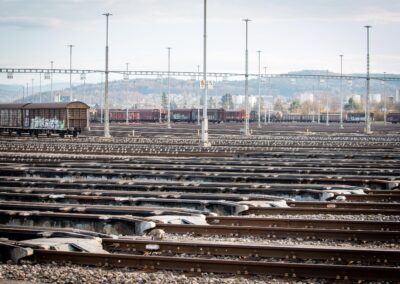
In 2018, the VAP, together with SBB Cargo and the Association of Public Transport (VöV/UTP), founded the Swiss Wagonload Transport Interest Group – IG WLV Schweiz for short. This blog post kicks off a series of posts that provide answers to such and similar questions: What do the stakeholders want to achieve? What were the triggers and foundations? Where do we stand today? What are the potential benefits for VAP members?
How it all began
According to the press release «Outsourcing of SBB Cargo should bring more competition» of the Committees for Transport and Telecommunications (TTC) of January 2017, they agreed to the draft bill «Organisation of the Railway Infrastructure» (OBI, in german) of the Federal Council. However, the KVF proposed to their councillors by 14 votes to 11 that the draft be referred back to the Federal Council and revised in some points. Among other things, SBB Cargo should be outsourced in a holding structure in order to achieve more competition and strengthen freight transport in this way. In addition, the KVF recommended that system leadership should also be regulated for freight transport.
This was the birth of IG WLV, so to speak. In addition, Article 3a of the Freight Transport Act (GüTG) (in german) was amended during the consultations on OBI. According to this, the actors in rail freight transport are to jointly develop guidelines for achieving the goals of the GüTG. For example, in favour of technical innovations, efficiency improvements in production processes or for improved integration of rail freight transport into the logistics economy.
Strong wagonload traffic, satisfied customers
The interest group aims to promote the further development of wagonload traffic in Switzerland. In the common interest, it pursues the goal of providing the services of the railway system more effectively and efficiently and thus enabling a self-sustaining and sustainable development of rail freight transport in the sense of the GüTG. The system of wagonload traffic is to be aligned with the strengths of the railway and the needs of the customers and is to be regarded as an integral part of the overall logistics. Both rail providers and customers should benefit equally from its economic viability and reliability.
Exchange of information and planning for the future
Since its foundation, the stakeholders of IG WLV have exchanged views on various topics in board meetings. In addition, in regular workshops they shed light on the concrete challenges and hurdles of the railway system, such as the development possibilities in single wagonload traffic or the reasons why customers are dissatisfied with the current situation. The IG WLV is currently working on a joint concept with directions and corresponding goals as well as concrete measures for the coming years.
A lot planned, a lot to do
Whether customers, politicians or dialogue groups: Overall, the expectations of the IG WLV are high. VAP General Secretary Frank Furrer talks about the current state of developments in an interview with the transport workers’ union. The road from a declaration of intent to concrete results is long and rocky. The IG WLV wants to smooth this path so that customers can count on a better railway system and politicians recognise the added value of increased efficiency and cooperation.
Four private logistics service providers take a stake in SBB Cargo
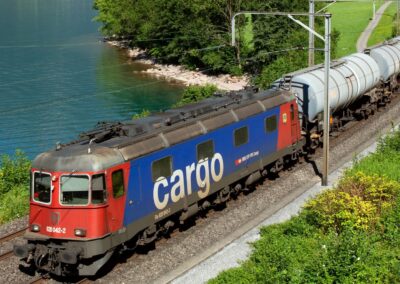
The four family-owned companies Galliker, Planzer, Bertschi and Camion Transport are taking a 35% stake in SBB Cargo AG under the name «Swiss Combi AG». The companies stand for customer orientation, innovation and market-oriented solutions.
SBB Cargo’s customers will benefit from this accumulated experience as an operator of logistics networks and from its broad customer base. The newly founded company has it in its power to counter the fears expressed in many quarters of further increasing market dominance with complete transparency and competition-oriented action. It can help wagonload traffic, SBB’s core business, to regain momentum after years of decline.
It remains to be seen to what extent the law on the organisation of railway infrastructure passed last year and the associated ordinances will be able to spur the further development of rail freight transport as a whole. The framework conditions for rail freight transport are still poor in the area of planning construction sites and line closures as well as regulating the non-discriminatory operation of sidings and terminals. Also, despite this involvement and the formal independence of SBB Cargo, it remains completely open whether a balanced infrastructure and real estate policy will be possible within the SBB Group in the future or whether it will continue to act unilaterally in favour of passenger traffic.
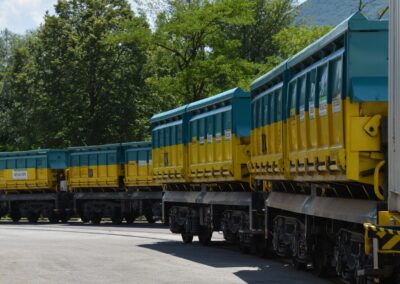
Federal Council puts together package of measures to strengthen modal shift
With the opening of the Ceneri Base Tunnel in December 2020, another piece of the puzzle for an efficient north-south connection through Switzerland will be completed. However, the expansion of the international freight corridor is delayed by at least a decade. As a result, the productivity gains in international combined transport are only half as great as originally planned.
The Federal Council acknowledges the delayed implementation in principle and presents a “package of measures to strengthen modal shift” in the modal shift report of 13 November 2019. However, from the perspective of the Swiss freight transport industry, the proposed measures are not sufficient. In order to maintain the competitiveness of UCT (Unaccompanied Combined Transport) in transalpine traffic and to continue the modal shift, the industry is calling for additional measures.
Delayed implementation of the modal shift
With the opening of the Ceneri Base Tunnel in December 2020, the NRLA project will be officially completed. However, the benefits for freight traffic in Alpine transit through Switzerland will only materialise with a considerable time delay. Numerous factors contribute to the fact that the productivity of the resources used – locomotives, personnel, railway wagons, etc. – cannot be increased by far to the extent and in the time frame originally planned:
- The delayed expansion of the feeder lines in the north makes it impossible to operate 740 m trains.
- Frequent and internationally uncoordinated construction sites with diversions and temporary capacity bottlenecks prevent the expected reduction in travel time and lead to continuously increasing quality deficits. The consequences are delays and inefficient use of resources.
- Due to the non-coordinated international train path planning, the travel time savings in Switzerland will fizzle out at the borders for the time being.
- The remaining gradients of the line and the operational concept of the Gotthard Base Tunnel still require the use of a second locomotive for heavy trains.
Under these conditions, combined transport operators can realise at most half of the originally expected productivity effects. In order to maintain the current volume in transalpine combined transport and to gain additional traffic volumes in the medium term with regard to the modal shift target, the Swiss freight transport industry proposes a longer-term orientation of the modal shift policy until 2030 with additional measures.
Extension of the payment framework for the promotion of transalpine UCT until 2030
In order not to jeopardise the positive results of the current modal shift policy, the promotion of transalpine UCT must not be suspended prematurely. From the market’s point of view, an extension of the funding measures until 2030 is necessary. Only from 2030 onwards can the planned further productivity effects be expected to be realised.
Furthermore, according to the monitoring of the Federal Office of Transport, the quality deficits of CT trains have continuously increased. While 75% of trains were less than one hour late in 2009, only 55% of all trains were late in the first half of 2019. Today, 12% of trains are even delayed for 12 hours or more. These quality deficits, driven by the expansion of the corridor infrastructure with numerous construction sites and capacity restrictions, will continue to weigh heavily on productivity until at least 2030.
The 2030 time horizon also creates the necessary investment security. Transport companies will invest in containers and craneable trailers, operators in rail wagons and terminals, and railway companies in locomotives if longer-term use of these capital goods is ensured.
Subsidies for operating compensation for UCT amounting to CHF 55 million annually from 2024
An efficient railway infrastructure in combination with train path prices at the level of the neighbouring countries Germany and Italy enables Switzerland to operate combined transport on its own account – this guiding principle still holds true. However, the operational and infrastructural conditions on the north-south corridor through Switzerland do not meet these requirements either at present or in the coming years. During this period, combined transport operators and railway companies will be able to increase productivity by a maximum of half of the originally planned value when the NRLA is completed.
It is true that the Swiss track price revision 2021 – which lowers the base price for freight transport and introduces discounts for long trains – makes a significant contribution to supporting UCT. Nevertheless, a gap of about half of the operating compensation of the reference year 2018 remains, amounting to CHF 110 million.
Based on this analysis of the situation, the freight transport industry demands that unaccompanied combined transport (UCT) be supported with operating contributions of CHF 55 million per year until 2030. This will enable UCT to maintain the current modal shift volume and, if necessary, to largely absorb traffic growth. Should the framework conditions improve more quickly than assumed – for example through a significant improvement in quality or a sustainable optimisation of the international timetables – additional traffic volumes could continue to be gained for UCT.
With the expected further growth of UCT until 2030, the reduction path of subsidies per consignment would again be significantly improved. Whereas in 2011 an average of CHF 173 in operating subsidies was paid per shifted truckload, in 2018 this figure was still CHF 116. According to the ideas of the freight transport industry, this amount would drop further to CHF 40–45 per shifted truck by 2030.
Expansion of access routes in the north
The NRLA concept for promoting rail freight transport depends on efficient, high-performance access lines to the base tunnels in order to ensure the supply of Europe’s highest-demand economic locations. After the commissioning of the 4 m corridor, the situation will be as follows:
- 3 access lines in Italy – via Chiasso, Luino and Domodossola
- 2 lines in Switzerland – via Gotthard and Lötschberg base tunnels
- 1 access line north of Basel – via Karlsruhe – Mannheim – Cologne – Benelux
An alternative must urgently be created for the bottleneck in the north. The only efficient alternative route (flat track) is the route on the left bank of the Rhine via France. It is optimal for the high-volume Belgium – Italy route. In addition, there is a direct connection route with the corridor on the right bank of the Rhine, which serves to reduce the risk.
However, these routes do not yet correspond to the corridor parameters of the Swiss transit axis and therefore currently only carry a low volume of traffic. In order to make the capacities on these alternative routes more usable for UCT through Switzerland, the Zeebrugge/Antwerp – Strasbourg – Basel line and the Wörth – Lauterbourg – Strasbourg cross connection must be upgraded to the parameters 740 m train length, 4 m corner height, 2000 t with one locomotive, ETCS. This would also create a system in the north with two feeder lines and an alternative route on the left bank of the Rhine.
The expansion of a corridor-compliant alternative route via France is likely to be manageable in terms of costs. It is very much in the interest of Switzerland and its transit shift policy. To implement it, Switzerland needs a political initiative together with France and Belgium, which should lead to an international treaty on infrastructure development. Parliament should call on the Federal Council to take the corresponding initiative in the form of an international treaty. In addition, the expansion of the Rhine Valley railway in Germany must be pursued with vigour. The completion of this contractually agreed capacity increase has been postponed until 2040.