
OPERATIONS
We represent the freight stakeholders and in this chapter we focus on the use of infrastructure, i.e. transport. We advocate free operation on the last mile. In favour of fair competition, we want to use the strength of all modes of transport and combine them optimally. Because in this way, the route becomes shorter – and more economical – for each individual.
Actors in the field of operation
Freight railway undertakings
Manufacturer/holder of rolling stock (private wagon rental companies)
Operators

Timetables (Swiss capacity allocation body TVS)
Informative
The future of rail freight transport in the countryside
- Blog post «Zukunft Schienengüterverkehr in der Fläche»
- Position paper to the KVF‑N, 22.6.2022
- Report of the Federal Council on the future direction of surface rail freight, 31.3.2022
Emission limit values for noise
Freight transport by rail
- Freight transport by rail concept 2017
- Report on freight transport by rail 2017
- Hearing Cargo Forum Switzerland on the subject of freight transport by rail 2017
Driving service regulations
- Statement on the driving service regulations in the 2020 amendment cycle
- Driving service regulations from 1.7.2020
- Implementing provisions for the train service regulations, SBB regulations
Operating regulations for sidings
The responsibility for safe operation lies with the responsible company. The corresponding operating regulations must be drawn up by the siding operator.
The VAP provides auxiliary means to its members. We provide support with legal and administrative tasks. Contact us directly for clarification, advice or audit support.
Freight railway undertakings in Switzerland
 |
 |
 |
 |
| DB Cargo | GATX | Hupac | railCare |
 |
 |
 |
|
| SRT swiss rail traffic | TR Trans Rail | WRS |
|
|
|
| DB Cargo | GATX | Hupac |
|
|
|
| SRT swiss rail traffic | TR Trans Rail | WRS |
|
||
| railCare |
Freight railway wagon rental companies in Europe
 |
 |
 |
 |
| VTG | wascosa | ermewa | Groupe Millet |
 |
|||
| MFD Rail |
|
|
|
| VTG | wascosa | ermewa |
|
|
|
| Groupe Millet | MFD Rail |
Shippers (examples)
 |
 |
 |
 |
| Die Post | Holcim | Panlog | Hastag |
|
|
|
| Die Post | Holcim | Panlog |
|
||
| Hastag |
ECM certification of locomotives
News and terminology
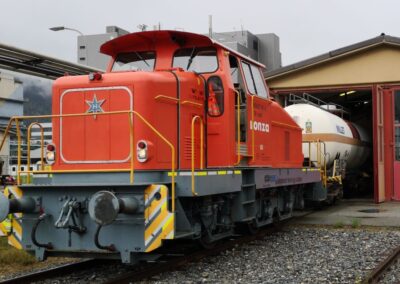
From 16 June 2022, owners of locomotives will also have to present an ECM certificate for their vehicles. The acronym ECM stands for “Entity in charge of maintenance” and describes the entity responsible for maintenance. ECMs registered for these vehicles in the European Railway Agency Database for Interoperability and Safety (ERADIS) register must comply with the provisions of the European Safety Directive and the corresponding implementing regulation.
Does this also affect you?
This new regulation affects members of the VAP who have their own locomotives for shunting services in their sidings. However, the implementing regulation excludes the following vehicles from its scope:
- Steam locomotives and historical vehicles
- Locomotives or vehicles that run within the siding without entering the station via the siding with flank protection
- Two-way vehicles
This means that you do not need ECM certification either for the use of two-way vehicles or for the use of locomotives exclusively within the sidings. If, on the other hand, your locomotives run outside the flank protection in transfer tracks of the station, you must obtain an ECM certificate for them.
Caution when waiving certification
Important to know: If a locomotive without an assigned ECM is to be taken to the workshop, you must arrange a special transport for it with an appropriate operating concept. Alternatively, you can carry out a piggyback transport on a lorry. There are therefore certain disadvantages to not having ECM certification.
ECM certification
Locomotive owners can either seek ECM certification themselves or delegate the ECM function to a service provider. The following companies offer support, both for certification and for taking over the ECM function for locomotives:
- Bahn-Support GmbH / philipp.schneider@bahn-support.ch / T +41 (0)44 808 78 07
- Müller Technologie AG / a.simonetta@mueller-technologie.ch / T +41 (0)52 557 91 56
- Sersa Group AG / rudi.hoz@rsrg.com / T +41 (0)43 322 23 41
- Siemens Mobility AG / ruben.andre@siemens.com / T +41 (0)79 951 38 24
Legal basis
Directive (EU) 2016/798 on railway safety and the updated implementing regulation (EU) 2019/779 of 16 May 2019 regulate the uniform requirements for ECMs. The regulation now provides for a scope of application for all types of vehicles. Included are the vehicle categories freight wagons, locomotives, multiple units, passenger coaches, high-speed vehicles, construction/maintenance vehicles and others.
Transitional provisions
The following transitional provisions apply to existing certificates and attestations of conformity under the old ECM Regulation 445/2011:

ECM function and exemptions
An ECM certification certifies that the requirements of the Implementing Regulation are met. In the context of issuing the safety certificate for railway undertakings (RUs) or safety authorisations for infrastructure managers, corresponding ECM certificates may also be issued. These apply to RUs and infrastructure managers that are entered as ECMs in the register for their own vehicles and maintain these vehicles exclusively for their own operations. Accordingly, these vehicles are not freight wagons and do not run in other trains. In this case, the RU or the infrastructure manager cannot perform an ECM function for other vehicles. For ECMs responsible for the maintenance of freight wagons, certification is mandatory without exception. Any entity certified for the relevant scope can act as a registered ECM.
Noise reduction and automation make rail more attractive
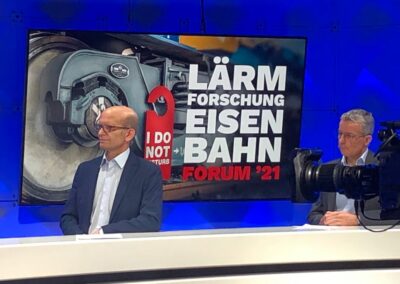
A considerable potential for more sustainability in rail freight transport lies in noise abatement. Noise must be further reduced so that an increase in rail freight transport can be realised without significant increases in noise. This will then benefit the environment and the population. The speakers at the Noise Research Forum 2021 explained which concepts and measures are currently being examined and are promising.
At the Noise Research Forum 2021, the focus was on an essential aspect of future-proof rail freight transport: automation. For rail to become more attractive for freight transport, it must become more efficient and sustainable. One example of this is the digital automatic coupler (DAK). It represents a major milestone in automation and allows for a considerable increase in efficiency in European rail freight transport. If rail freight transport becomes more cost-effective, the share of rail in the total volume of traffic can increase, which favours CO2 reduction.
The management of infrastructure and traffic must also be increasingly automated and digitalised. Real-time information for customers on the transport or safe operation of the wagons used and the correct loading as well as semi-autonomous operation of the sidings strengthen rail freight transport. Start-up financing would facilitate the digital transformation, while at the same time subsidies could be reduced.
The VAP makes a significant contribution to strengthening the innovative strength and the will to transform of its members. Only in this way can rail freight transport become more attractive and develop into a valid alternative to the road. To this end, the VAP supports its members in the implementation of automation in Switzerland, always in coordination with developments and requirements in Europe.
Detailed information from the Railway Noise Research Forum 2021
Rudolf Sperlich, Vice-Director of the Federal Office of Transport (FOT), welcomed the participants and looked back on the development of noise remediation to classify the forum. He explained Switzerland’s pioneering role in Europe and noted that the programme had been implemented very successfully in terms of costs and deadlines. However, because the effect fell just short of the statutory remediation target, the parliament unanimously adopted additional measures in 2013. Innovation assistance and departmental research are two of these supplementary instruments that will expire in 2025. For this reason, a wealth of ideas, networking and the will to innovate are once again called for in order to help the new, interesting approaches to success or to broad application.
Paul Steffen, Vice Director at the Federal Office for the Environment (FOEN), pointed out in his welcome address the need for further innovations in the railways. Innovation is still necessary, not only for the health of residents, but also to strengthen the environmental advantage of rail over road and thus to maintain market share in freight transport.
Detlef Schlickelmann, representative of the VAP Swiss Rail Shippers Association, explained that the noise remediation project ended in 2016 with the commissioning of the last 4,000 or so refurbished wagons. The industry had successfully organised the entire process of series engineering, approval, conversion incl. material pool and financing under the project management of the VAP. Schlickelmann added that the digital automatic coupler (DAK) project would create a great increase in efficiency in European rail freight transport and that the VAP wanted to write a second success story for the progress of rail freight transport with the rapid implementation of the DAK project.
Railway noise research according to the Federal Railway Noise Abatement Act (BGLE)
Fredy Fischer, Deputy Head of the Noise and NIR Division at the FOEN, emphasised in his introductory presentation how important it is for the railways to become even quieter. He called on the industry representatives to create a common vision of the quiet railway. If this required research or development, he said, the federal government would be happy to support projects.
5L demonstrator train
Jens-Erik Galdiks, head of fleet technology at SBB Cargo, used the “5L demonstrator train” project to show that current technologies can reduce the noise of freight wagons by a further 6 dB. Here, it is important to keep an eye on and consider the cost-benefit ratio. Other effects such as wear reduction are also significant. These commercial effects do not necessarily accrue to the investor. Therefore, a balance of benefits between infrastructure managers, railway undertakings and wagon keepers must be created. Jens-Erik Galdiks further stated that a further noise reduction of freight wagons would be disproportionate at present and that other measures such as optimisation of locomotives should be pursued.
Overall optimised innovative freight wagon
Dr Hanno Schell, Head of Innovation at VTG Rail Europe GmbH, spoke about the goal of designing a quieter freight wagon. The first step was to reduce the weight by 800 kg and the sound from 83 dB(A) to 76 dB(A). VTG further developed the bogie of the type RC25NT-H‑D from the company ELH Eisenbahnlaufwerke Halle GmbH & Co. KG further. It replaced the friction damping with hydraulic damping. This enabled it to save 200 kg per bogie in the cross beam at the drawbar. VTG also installed Bonatrans wheelsets with a noise-reducing BASF coating. A welded steel disc was used for the disc brake, which is 49 kg lighter than conventional cast discs; a further 13 kg could be saved on the disc brake caliper. Various tests have already been carried out in Switzerland with the quieter bogie. All in all, it would allow higher driving speeds, take more weight and, thanks to the hydraulic damping, have very good running characteristics.
Composite wheelset
Professor Masoud Motavalli, head of the Structural Engineering Department at the Swiss Federal Laboratories for Materials Testing and Research (Empa), spoke about the use of lightweight and high-strength fibre-reinforced plastics to produce a composite wheelset and a composite bogie. A feasibility study showed that the designed wheelset was 40% lighter than the conventional metal version. In addition, a noise reduction of 3 dB was achieved. The carbon fibre-reinforced plastics are corrosion-resistant, have a very long service life and high fatigue strength, but are much more expensive compared to classic materials. Masoud Motavalli therefore proposes to design an entire bogie out of composites, because this would make optimised pricing more feasible. He is convinced that a massive weight reduction would be possible and the self-damping of the material would reduce the number of dampers. In addition, other innovations could be incorporated, for example self-steering, which would reduce the wear and tear on the tracks. All this would bring a significant noise reduction compared to conventional bogies.
Development of a superstructure simulation tool
In his presentation, Jean Marc Wunderli, Head of the Acoustics/Noise Reduction Department at Empa, presented a numerical model for the simulation of rollover processes, which simulates the resulting contact forces, the structural vibrations and finally the radiated airborne sound in three modules. Mr Wunderli emphasised that simulation tools that modelled the sound generation and radiation of the rolling noise of railways in a physically correct manner were a mandatory prerequisite for optimisations to the vehicle and superstructure. Due to the high complexity of the system and the partly contradictory requirements (noise, vibrations, wear, positional stability …), a trial-and-error approach was not expedient.
“Rail pads – less rolling noise and more protection
Holger Frauenrath, professor at the Institute of Materials Science at the Ecole Polytechnique Fédérale de Lausanne (EPFL), presented a project to develop new types of rail pads. These should enable both better protection of the railway superstructure and a noise reduction of at least 1 dB (A) compared to conventional rail pads. The multidisciplinary project team brings together researchers from EPFL, HEIG Yverdon and Empa from the fields of materials science, numerical simulation, vibroacoustics, environmental engineers and railway experts from SBB. Based on an experimental modelling chain ranging from the material properties to the behaviour of a rail pad as a component to the system behaviour in the track, new multi-material rail pads with a soft core with high damping capacity between 200 and 2’000 Hz are developed. These will be optimised for a good balance between mechanical stability, noise reduction and permanent way protection. Designs are currently being tested to European standards and prepared for the final development phase, which will involve the production of engineering-scale prototypes for field trials in the track from March 2022. The new rail pads will be of interest both for reduced noise pollution in densely populated countries and for railway operators, as they should reduce the costs of maintaining the permanent way.
Optimised concrete sleeper, optimised intermediate layer
Dr Christian Czolbe, Senior Engineer Acoustics at PROSE AG, showed that noise along railway lines depends on both the rolling stock and the components in the track. For the infrastructure, it therefore makes sense to take measures that increase rail damping and reduce rail noise. In a research project, PROSE developed acoustically optimised concrete sleepers together with Vigier Rail and examined two promising prototypes in a test track. In another project, an inconspicuous and barely visible component between rail and sleeper was optimised. Dr. Christian Czolbe stated that the developed Bategu intermediate layer unites a longstanding demand of the railway industry: it dampens the dynamic impact loads in the superstructure and reduces noise at the same time. With a measured noise reduction of up to 5 dB (A), it would be significantly quieter along the line, which residents could perceive and confirm immediately after its installation. It also protects the track superstructure and thus leads to a reduction in life cycle costs – a win-win situation for the railway industry and residents. The new Bategu intermediate layer has passed all relevant standard and field tests as well as the fatigue strength tests and is now available for safe series use in the railway infrastructure.
Measurement of acoustic roughness
Florian Mauz, research associate and doctoral student at ETH Zurich, presented a development approach for an optical measuring device for measuring acoustic roughness on rails. In the future, it should be possible to measure the roughness from the moving train. By cleverly combining several sensors, the measurement result could be optimised. Florian Mauz showed the test setup and the series of tests in a laboratory environment. Soon the approach would be tested on a moving train and validated for its accuracy.
The link to the Forum’s website is www.laermforschung-eisenbahn.ch.
Further information on the departmental railway research and the award criteria can be found on the FOEN website (in german, french or italian).
Motion Borloz
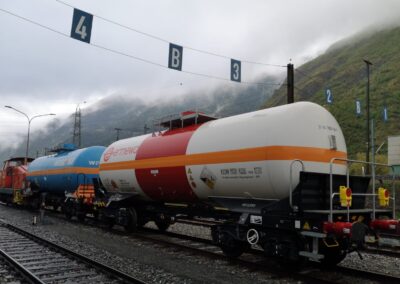
On 11 March 2020, FDP National Councillor Frédéric Borloz submitted motion 20.3084 «Clarifying regulations on liability in the transport of goods by rail». With this motion, he is demanding that the Federal Council clarify regulations on liability in the transport of goods by rail. The clarification should in particular concern the distribution of risks and the regulation of legal remedies between railway undertakings (RUs) and wagon keepers, as well as the legal consequences of incidents involving dangerous goods.
Position of the VAP
The VAP, as the representative of the shipping industry, together with scienceindustries, as the professional association of the chemical industry, opposes motion 20.3084. The motion cites as an example the incident that took place in the summer of 2009. This motion cites the incident at Daillens in May 2015 as an example and justifies the need for clarification as follows. Firstly, the wagon keeper is only liable in the event of an accident if the RU can prove that he is at fault. Secondly: It is not clear who is responsible for the quality of the (rolling) stock. Both assertions are false.
Valid arguments
Since the Daillens incident, the international legal framework has been substantially adapted. On 1 July 2015, Appendix D to the Convention concerning International Carriage by Rail (COTIF) entered into force. Article 7 states: «The person who has made the wagon available for use as a means of transport on the basis of a contract in accordance with Article 1 shall be liable for the damage caused by the wagon if he is at fault.» Clause 2 states that the contracting parties may make deviating agreements. This is what the approximately 600 private sector contracting parties did and updated the General Contract of Use for Wagons (GCU) as of 1 January 2017. Article 7 clarifies the maintenance obligations of the wagon keeper, Article 27 describes the principle of liability: «The keeper is liable for the damage caused if he is at fault.» And: «Fault is presumed if he has not properly fulfilled his obligations under Article 7.»
Lack of practicability
The Borloz motion places the liability issue in a national context, although it is an international issue. Responsibilities and controls are clearly regulated supranationally and under treaty law. A national law amendment – or whatever is meant by «clarifying provisions» – would affect the practicability for rail freight transport in and through Switzerland. The internationally applicable transport regulations have long since complied with the required incentivisation and tightening of liability. The demanded transition to strict liability for wagon keepers is unnecessary, as in the event of an incident there are no insurance gaps under civil law in the matter of liability, for example with regard to compensation payments, as previous incidents have shown.