
OPERATIONS
We represent the freight stakeholders and in this chapter we focus on the use of infrastructure, i.e. transport. We advocate free operation on the last mile. In favour of fair competition, we want to use the strength of all modes of transport and combine them optimally. Because in this way, the route becomes shorter – and more economical – for each individual.
Actors in the field of operation

Freight railway undertakings
Manufacturer/holder of rolling stock (private wagon rental companies)
Operators

Timetables (Swiss capacity allocation body TVS)
Informative
The future of rail freight transport in the countryside
- Blog post «Zukunft Schienengüterverkehr in der Fläche»
- Position paper to the KVF‑N, 22.6.2022
- Report of the Federal Council on the future direction of surface rail freight, 31.3.2022
Emission limit values for noise
Freight transport by rail
- Freight transport by rail concept 2017
- Report on freight transport by rail 2017
- Hearing Cargo Forum Switzerland on the subject of freight transport by rail 2017
Driving service regulations
- Statement on the driving service regulations in the 2020 amendment cycle
- Driving service regulations from 1.7.2020
- Implementing provisions for the train service regulations, SBB regulations
Operating regulations for sidings
The responsibility for safe operation lies with the responsible company. The corresponding operating regulations must be drawn up by the siding operator.
The VAP provides auxiliary means to its members. We provide support with legal and administrative tasks. Contact us directly for clarification, advice or audit support.
Freight railway undertakings in Switzerland
 |
 |
 |
 |
| DB Cargo | GATX | Hupac | railCare |
 |
 |
 |
|
| SRT swiss rail traffic | TR Trans Rail | WRS |
|
|
|
| DB Cargo | GATX | Hupac |
|
|
|
| SRT swiss rail traffic | TR Trans Rail | WRS |
|
||
| railCare |
Freight railway wagon rental companies in Europe
 |
 |
 |
 |
| VTG | wascosa | ermewa | Groupe Millet |
 |
|||
| MFD Rail |
|
|
|
| VTG | wascosa | ermewa |
|
|
|
| Groupe Millet | MFD Rail |
Shippers (examples)
 |
 |
 |
 |
| Die Post | Holcim | Panlog | Hastag |
|
|
|
| Die Post | Holcim | Panlog |
|
||
| Hastag |
SBB should take responsibility instead of 3 billion financial package
In our blog post «No stabilisation of the SBB despite CHF 3 billion in additional federal funding», we expressed our position on Motion 22.3008. In this post, we summarise the voice of the industry and interest representatives in response to the Federal Council’s proposals in the report of 16 December 2022. The business community rejects the financial injection of 3 billion Swiss francs to the SBB and instead calls for corporate responsibility.
This is what it’s all about:
- SBB confronted with poor results in long-distance traffic due to pandemic
- Economy rejects financial injection of 3 billion Swiss francs and calls for entrepreneurial solution
- A clear “no” to the misappropriation of the HVF
- Change of system for loans welcomed
- Market liberalisation in long-distance transport divides the economy
Motion 22.3008 «Support for the implementation of SBB investments and a long-term vision in Covid-19 times» demands that the Confederation take over SBB’s deficits in long-distance transport. In its report of 16 December 2022, the Federal Council sets out its proposals for financing SBB. It proposes a one-off capital grant of an estimated 1.25 billion Swiss francs and wants to reduce the track access charges for long-distance traffic with a further 1.7 billion Swiss francs. This subsidy is to be secured financially by crediting the full proceeds of the performance-related heavy goods vehicle charge LSVA (federal share) to the rail infrastructure fund. The aim of the measures is to compensate for SBB’s losses in long-distance traffic from 2020 to 2022 and to comply with the upper limit of its net debt.
No to the financial injection, yes to the waiver of vault loans
The business community – represented by Economiesuisse, SGV, CFS, Astag and VAP – and the pro-business parties FDP and SVP reject both the proposed cash injection and the misappropriation of the HVF for the benefit of long-distance transport by a clear majority.
They are equally united in welcoming the system change in the granting of loans and call for the abandonment of vault loans. A majority sees the capital market as the solution for financing in the commercial sector. A minority can also imagine certain federal loans from parliament for this purpose. Overall, transparency in the commercial and subsidised sectors should be increased.
Entrepreneurial responsibility demanded
Instead of the Confederation assuming SBB’s losses as a result of the Covid 19 crisis at the taxpayer’s expense, the state railway should bear entrepreneurial responsibility. To this end, it has various market-based measures at its disposal to bring operating costs and investments in line with supply and prices. Realistic examples are cost savings, price increases or the sale of real estate not required for operations.
Designing a train-path pricing system that is fair to the polluter.
SVP, Economiesuisse, SGV, CFS and VAP reject a reduction of the train path price for long-distance traffic. The FDP and Astag can imagine a shared solution between the federal government and the SBB. The Swiss train-path pricing system is not designed in a way that is fair to the polluter; freight transport is burdened too heavily. The stakeholders agree that the HVF should not be misused to solve this problem. Instead, the Confederation should continue to use the federal share of the HVF to steer and increasingly for the decarbonisation of road, rail and shipping.
Disagreement on market opening
The freight transport-related associations Astag, CFS and VAP are calling for a migration strategy to open up the market in long-distance transport in line with the European Union (EU). Here, the other business representatives and parties close to the economy show a greater willingness for realpolitik demands. Whether this Swiss realpolitik can be maintained for long on the European stage remains to be seen.
Positions in wording
You can find our complete hearing response of 7 March 2023 as a download on our website: You can download further consultation responses here:
Driving service regulations: Please simplify and harmonise internationally
The Federal Office of Transport (FOT) is further developing the Swiss Driving Service Regulations (FDV2024) as part of the 2024 amendment cycle. Systematic changes are central. Here is a statement from the perspective of the shipping industry.
This is what it’s all about:
- Further development of the driving service regulations from 2024 in force
- Systemic simplification for railway employees required
- Consistent application of the TSI OPE additionally increases interoperability
- Railway industry should take responsibility for the rules on driving services
- VAP wants more entrepreneurial leeway for siding operators
For more than 20 years, uniform train service regulations have been in force in Switzerland, which are binding for all railway undertakings. They are essential for railway operations, as they define safety-relevant activities and cooperation measures and specify the tasks, competences and responsibilities of all those involved in railway operations. The FOT works closely with the railway industry to further develop the driving service regulations and update them every four years. This amendment cycle makes sense, as it takes into account both the daily experiences from operations and the technical developments in the railway industry. However, it also has negative side effects: For example, the TSO have grown into a jungle of regulations that is difficult to keep track of and that urgently needs to be streamlined and aligned with the interoperability regulations. The responsible companies must be granted more entrepreneurial freedom. The current revision is scheduled to come into force on 1 July 2024[1]
Amendment cycle 2024 with important sub-projects
We at the VAP welcome the systematic further developments of the driving service regulations proposed by the FOT in the conceptual sub-projects (cf. Figure 1). We also suggest that the fundamental innovations be implemented consistently and quickly.
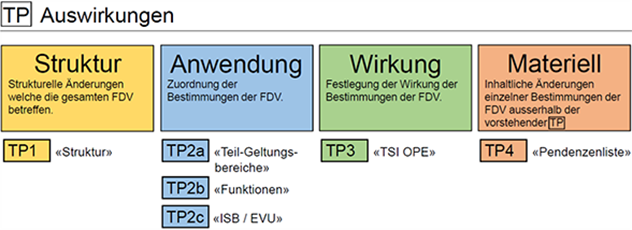
- With sub-project 1 “STRUCTURE”, the FOT wants to systematically structure the driving service regulations in order to make them more comprehensible and uniform for users. The full implementation of this unification will require several rounds of amendments. It usually makes sense to combine structural harmonisation with material adjustments.
- With sub-projects 2a, 2b and 2c “Application”, the FOT aims to create the conditions for a systematic digital use of the driving service regulations. Each individual regulation is assigned to a scope of application or an option. It is now specified who performs which function. As soon as this sub-project is realised, regulations can be clearly filtered according to areas of application and assigned to functions. This will massively increase efficiency in the creation and in all applications of regulations, as it allows for digital usage options.
- Within the framework of sub-project 3 “Impact”, the FOT is required to find a user-friendly strategy to ensure the safe transfer of responsibility to the railway undertakings during ongoing operations. According to TSI OPE (see box), the railway undertakings are responsible for operating regulations; this should also apply in Switzerland in the future. The ongoing development of the TSI OPE will also make it possible to gradually abolish the existing national rules of the rolling stock regulations and to retain only mandatory national regulations that have to be notified to the European Railway Agency ERA as Notified National Technical Regulations (NNTV)[2].
- Sub-project 4 “MATERIAL” includes a number of content-related adaptations that update the running service regulations.
Regulating cooperation between all stakeholders
Far-reaching changes are on the horizon for the further development of the driving service regulations as of 2024. We are convinced that railway operations cannot be classified as complex per se. It needs clear rules for the cooperation of all those involved – especially because the division of labour, automation and specialisation in railway operations are increasing. Therefore, in our view, the following aspects should be included:
Aim for simplification
There is a need for uniform, comprehensible and addressee-appropriate regulations that apply across companies. Employees should have all the necessary rules for their respective functions and be able to work consistently freed from unnecessary ballast.
The operating regulations should be formulated on a risk basis, and the railway companies must develop simple and cost-effective solutions tailored to them within a defined overall framework in order to produce competitively.
Use digitalisation
With function-based filters, digitalisation enables a massive increase in efficiency in the use of the driving service regulations. Anyone carrying out a safety-relevant activity needs to know the regulations relevant to it – but only these.
Ensuring entrepreneurial freedoms
We at the VAP strive for feasible solutions for sidings, as strict compliance with the regulations defined for railway operations is not always possible here. For sidings in particular, we recommend a risk-based approach to ensure more entrepreneurial freedom. Specific regulations are needed to make the operation of sidings safe and cost-efficient for operating companies and employees.
Ensure interoperability
Interoperable railways that operate on different infrastructures and across borders in several countries have different requirements than regional railways and railway sidings that only operate locally. In view of the different conditions at stations and sidings, the operating regulations must be designed differently, comprehensibly and concentrated on the essentials within the framework of a uniform overall structure, depending on the traffic and infrastructure.
In the standard gauge sector, the operating regulations are becoming increasingly harmonised internationally with the further development of the TSI OPE. The number of remaining national regulations must be kept to a minimum in order to improve practical applicability. All countries involved are required to abolish national regulations that are no longer needed. Consistent application of the OPE TSI will lead to more uniform rules in cross-border traffic in the long term and to the gradual disappearance of hurdles.
Assume responsibility
The OPE TSI assigns responsibility for the operating regulations to the railway undertakings. Consequently, the FOT must hand over its sovereignty over the operating regulations to the railway industry. The Swiss railway industry should actively assume responsibility for the entire operating regulations and their further development. The VAP welcomes this transfer of responsibility of the FDV to the railway industry. It is to be combined with the upcoming innovation steps. In the railway sector, a cross-company solution for uniform overarching operating regulations must be found. From the point of view of the VAP, a cooperative collaboration model would be appropriate, in which the FOT has the coordination task and develops and agrees on operational regulations in the form of a guideline together with the technical experts of the railway industry (thus Art. 3a GüTV according to the draft of the Federal Council of 2 November 2022). After publication, these guidelines can be used by the individual companies for the preparation of their driving service regulations.
| TSI OPE 2019/773 This abbreviation stands for the European Union’s implementing regulation on the Technical Specifications for Interoperability “Traffic Operation and Management”, issued in 2019. According to this regulation, rail should regain market share thanks to barrier-free train journeys across national borders and contribute to the reduction of CO2 emissions. This requires, among other things, a comprehensive Europe-wide harmonisation of operating rules. Until now, different national regulations have been applied in different countries. The EU is driving harmonisation forward with the further development of the OPE TSI. In it, it defines the responsibilities for companies, but does not provide for any officially issued driving service regulations, as is currently the case in Switzerland. This remains the responsibility of the railway undertakings. In the interests of interoperability, they must adapt the service regulations to the requirements of the OPE TSI. Switzerland has also committed itself to the application of the OPE TSI via the Joint Committee (CH-EU land transport agreement). |
Sporty timetable
The FOT has published the following timetable for the further development of the driving service regulations:
| Implementation step | Deadline |
| Publication of FDV2024 | by the end of November 2023 |
| Entry into force of FDV2024 | 1 July 2024 |
| Intermediate cycle FDV2025 (Tram and TSI OPE sub-projects) |
at the end of 2025 |
| Next regular cycle | as of mid-2028 |
[1] https://www.bav.admin.ch/bav/de/home/publikationen/vernehmlassungen/abgeschlossene-vernehmlassungen/weiterentwicklung-fdv-a2024.html
[2] https://www.bav.admin.ch/bav/de/home/rechtliches/rechtsgrundlagen-vorschriften/nntv.html
No stabilisation of SBB despite CHF 3 billion in additional federal funding
With motion 22.3008, Parliament wants to amend the Federal Act on Swiss Federal Railways (SBBG) and grant SBB financial aid of CHF 1.2 billion to compensate for pandemic-related revenue shortfalls in long-distance transport and to relieve the financial burden on long-distance transport with a reduction in train path prices of CHF 1.7 billion. Here is a first critical look.
This is what it’s all about:
- VAP rejects capital subsidy of a total of 3 billion francs to SBB – entrepreneurial responsibility is needed
- Maintaining the SBB monopoly in long-distance traffic is problematic from a European policy point of view – an orderly migration strategy is needed to open up the market.
- The amendment of the law should demand more entrepreneurial responsibility and provide for monitoring of SBB in long-distance traffic.
- LSVA must not be misused for reserves in the BIF
Motion 22.3008 “Support for the implementation of SBB investments and a long-term vision in Covid 19 times” calls for a draft law according to which SBB’s deficits caused by the Covid 19 pandemic would be considered extraordinary and SBB would be granted corresponding financial aid. This should enable the investments to be carried out as planned in accordance with the decisions of the Federal Assembly.
Initial situation
The politically approved extensions to the railway infrastructure will lead to an expansion of services. This requires investments in rolling stock. The expansion of services – at least in the initial phase – is recording deficits in long-distance and regional transport; the latter is financed by the corresponding credit decisions in regional passenger transport (RPV) by the federal government and the cantons.
During the pandemic, long-distance transport suffered large deficits which, unlike RPV, were not financed. Instead, the Federal Council took the view that it was in the entrepreneurial risk area of profitable long-distance transport to bear the consequences of the pandemic.
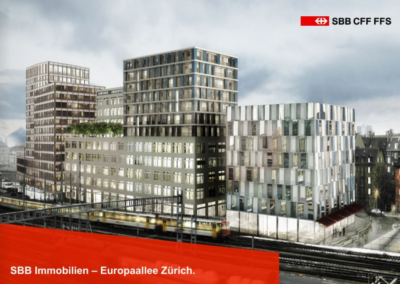
Investments by the SBB in investment properties near stations require large sums of money, but overall they increase the attractiveness of the rail passenger service. This ignores the fact that rail freight traffic suffers at locations in conurbation centres; where investment properties are built, logistics locations disappear (Zurich Justice Centre, Europa-Allee Zurich, etc.). SBB Real Estate benefited from a generous opening balance sheet and generates substantial profits. These are used for the pension fund (PF), which regularly attracts media attention with the highest conversion rates.
Proposal of the Federal Council
The Federal Council proposes a one-off capital contribution of CHF 1.25 billion (losses in long-distance traffic from 2020 to 2022). This means that SBB does not have to make any entrepreneurial contribution, just as it does in the RPV.
The Federal Council also proposes the waiver of contribution margins in the years 2023 to 2029 amounting to 1.7 billion francs in order to raise profitability in long-distance traffic to an appropriate level (4 to 8% return on sales). These must be compensated for as missing revenues in infrastructure by additional operating contributions to SBB Infrastructure from the Rail Infrastructure Fund (BIF). According to the Federal Council, the liquidity in the BIF is sufficient for this.
Furthermore, the financing instruments are to be corrected. The previous granting of vault loans, which led to SBB’s indebtedness outside the debt brake, is to be replaced in future by loans via the federal budget. This means that parliament will now decide on loans, and at the same time the debt brake will apply. The change is to take effect from a debt level to be defined, as of the end of 2023: CHF 11.7 billion. Expansion steps that lead to unprofitable service expansions will therefore be subject to the debt brake. After the capital injection of CHF 1.25 billion, vault loans can continue to be granted until the threshold of CHF 11.7 billion is exceeded again.
The liquidity of the BIF is to be additionally ensured. To this end, the Federal Council proposes that two-thirds of the HVF be placed in the BIF. The federal share of the HVF should only be used to offset the uncovered costs from road transport once a reserve of CHF 300 million has been shown.
Our assessment
We reject a capital subsidy, as this would mean that SBB would not have to make any entrepreneurial contribution to the consequences of the pandemic in its own economic and monopolised long-distance traffic. At the very least, monitoring of SBB’s entrepreneurial activities in long-distance traffic should be introduced to accompany the capital subsidy.
The correction of the financing instruments is necessary. Since the state-owned enterprise has a de facto state guarantee, vault loans should no longer be possible in future. Instead, parliament should decide on loans in compliance with the debt brake and in awareness of this state guarantee. We therefore reject the reservation of the debt ceiling of CHF 11.7 billion with the option of further vault loans. Unless the upper limit is noticeably reduced again.
Ensuring the liquidity of the BIF is unnecessary in view of sufficient reserves. By waiving contribution margins, the Confederation is reducing the entrepreneurial pressure on SBB. At the same time, it maintains SBB’s monopoly in long-distance transport. This is highly problematic in terms of European policy, as the EU has liberalised long-distance transport and expects Switzerland to adopt this liberalisation step. We therefore demand a migration strategy from the Federal Council for the opening of the market in Switzerland and, in parallel, monitoring of the entrepreneurial activities of the SBB in long-distance traffic.
We also reject the misuse of the HVF to ensure the reserve of the BIF. The HVF is intended to compensate for the environmental costs of road transport and to contribute to a more climate-friendly choice of transport mode. As an incentive tax, it is not levied for infrastructure expansion and maintenance.
-and maintenance of infrastructure, from which passenger transport essentially benefits. On the contrary, the HVF should be earmarked for rail freight transport and for measures for the climate-friendly development of road transport.
Alternatives such as adjustments to the offer, foregoing investments or selling assets are mentioned in the consultation documents but rejected. We do not agree with this assessment. Non-operational assets such as Gateway Basel Nord and other combined transport transhipment companies, all of which must be available on a non-discriminatory basis in accordance with Art. 8 GüTG, could be sold. Sales of SBB’s other real estate portfolio would also be possible without operational restrictions. Reductions in services in the off-peak hours would also contribute to easing the construction site situation at night.
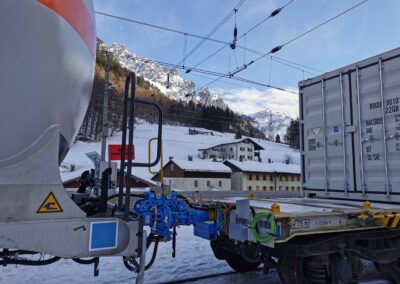
Innovation in rail transport: DAC as a pioneer
In step with Europe and with substantial à fonds perdu financing, the migration to DAK will succeed. We at the VAP are joining forces with the BAV, VöV, partner companies and coordinated with European institutions to develop the project for the digitalisation and automation of Swiss rail freight transport. In this blog article we present a current overview.
This is what it’s all about:
- Why DAC migration is so important for Swiss rail freight.
- What realistic and fair financing must look like.
- How a smooth, cross-border migration of DAC can be achieved.
In Switzerland, the political discussion on the future of rail freight transport has been initiated. Until mid-February 2023, the federal government will consult on the question: how much freight transport by rail do we want in the future? A key element of this is the comprehensive modernisation of rail freight transport by means of a modern digital automatic coupling (DAC) – this is intended to comprehensively renew previous labour-intensive and time-consuming work processes in rail freight transport. Thanks to digitalisation and automation, rail freight transport should then become more efficient, more powerful and thus more competitive, and in future play a leading role in multimodal logistics. The innovation of rail freight transport is a European matter, as Switzerland is part of the interoperable European railway network. Transports should also continue to take place across borders without obstacles. This is why Swiss companies are actively involved in the EU’s Europe’s Rail innovation programme.
We would like to take this opportunity to give you an interim update on our current work and challenges.
General
The VAP is committed to very close coordination with the European project – European DAC Delivery Program (EDDP) of Europe’s Rail. Why?
European freight transport urgently needs comprehensive innovation to be able to survive in the highly competitive transport sector in the future or to be part of a modern supply chain – the DAC is the key project for this.
Most wagon fleets are used or rented out internationally and accordingly the migration must be coordinated across borders.
The technical specifications, which are defined at EU level, apply to all countries and must also be applied in Switzerland.
A common purchasing policy for the new couplings helps to reduce the unit price and one can fall back on uniform requirements.
The challenges – with a few exceptions – are identical in many countries. Regarding the migration timeline, there are major differences.
International coordination means optimal use / deployment of limited resources and experts.
In Switzerland, we are currently focusing on important preliminary work for the concretisation of the overall migration and also on the contents for the message, which will be the basis for the implementation of the migration.
Financing
VöV, VAP and SBB, as important representatives of the railway industry, agree that such a large investment for the DAC migration must be supported with appropriate financing tools and mechanisms.
There is agreement that a predominant “à fonds perdu” participation of the federal government and supplementary interest-free loans are necessary. Furthermore, the VAP in particular repeatedly pointed out the need for a clean cost-benefit balance. It ultimately found its way into the agreements on the DAC with the BAV. As is well known, the investments in the DAC migration are mainly incurred by the vehicle owners, while the benefits will only materialise much later after full implementation. On the one hand, it is therefore necessary to regulate the longer phase of pre-financing until the benefits begin to accrue. Above all, however, the benefits will be felt first and foremost by the railway undertakings (RUs) and the infrastructure managers (IMs). They will benefit from more efficient processes, whereas vehicle owners will see little benefit. The investment must be borne jointly by the actors in accordance with the potential benefits. In view of the market conditions, it will only be possible to a limited extent to generate this process through higher rental income. The financing concerns a time span of at least 15 years. Consequently, we suggested that the draft law should define appropriate mechanisms for joint financing according to the actual benefits that accrue, in a binding and fair manner for all parties involved, on the basis of “cost-benefit analyses”.
To this end, the VAP – together with the umbrella organisation of the UIP – will contribute data and facts on investment and cost/benefit planning and actively participate.
The concrete financing modalities within the EU are still open at present; solutions still have to be found in particular regarding the participation of the EU and the member states.
Engineering
For a successful and efficient implementation of the DAC migration, competent engineering is required, which defines the conversion measures for the specific fleet, provides the technical specifications for the orders and the conversion work, and defines the verification for quality assurance. In the coming months, the European EDDP programme will work together to develop the necessary foundations. On this basis, the prerequisites for the national DAC migration must be worked out.
Migration
Each country must carry out extensive preparatory work so that the information and basics are available at time X of effective implementation. Accordingly, the project deals with the following questions, among others:
Determination of workshop capacities
- Necessary “pop-up” workshops
- Necessary resources
Owner-specific planning of the conversion
- Vehicle type and fleet sizes
- Critical elements and possible solutions in cooperation with EDDP
- Owner-specific scheduling
Data and information pool
- Updating the vehicle register as a basis for funding
- Timely provision of information to individual actors / stakeholder groups
Material pool
- Procurement of components for DAC migration
- Planning of material quantities and delivery dates
- Coordination of material flows to the conversion workshops
- Ensuring support in operation (repair material)
Currently we see a focus on the locomotives to be converted, as these are primarily on national routes in the WLV and must be equipped with DAC trains at the start of operation.
In Switzerland, as is already the case with SBB-Cargo, further “pilot transports” will be planned as early as possible in order to be able to introduce the resulting findings and results at EU level and to be able to advance the project as a whole.
Organisation
On the one hand, the VAP has increased the resources in the General Secretariat, on the other hand it is represented with its members in various national and international meetings and working groups.
For the future or the effective implementation we see some challenges in the design and staffing of the overall organisation – be it in the international context (where is which aspect coordinated or also monitored) as well as in the cross-sectoral organisation of Swiss DAC migration.
Did you know that…
- …without DAC, no freight train – WLV, block train or Rola – will be able to run on fully equipped ETCS Level 3 (European Train Control System) lines in future, as the technical requirements, especially train integrity, are not met. The infrastructure upgrade to ETCS Level 3 will mainly take place on busy main lines and will enable an increase in capacity with the dynamic block. Allowing trains to continue to run without train integrity on sections of line operated in this way will involve a great deal of effort.
- …the DAC will be an important component for digital data exchange and sustainable logistics, in the sense of customers and the climate, can only be realised with the participation of all players. This is the reason why the VAP is in any case committed to the realisation of a data platform based on “MODIG”. With DAC we achieve an increase in efficiency of the entire “supply chain”.
- …DAC will allow the traditional WLV to be run more efficiently and will help to make it self-sustaining at the latest after the migration has been completed.
→ To learn more about the DAC programme, click on: https://rail-research.europa.eu/european-dac-delivery-programme/
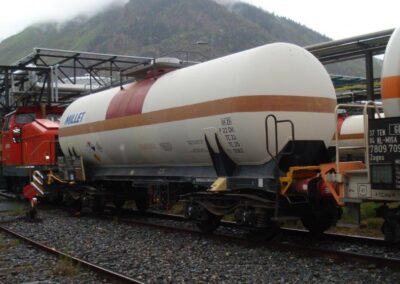
Subsidising wagonload traffic: preventing distortion of competition and discrimination
We comment on the Federal Council’s consultation draft “Further development of the framework conditions for Swiss freight transport”. We critically assess the proposals from the point of view of freight rail customers and demonstrate the necessity of a legal independence of system transport.
Yes and but to variant 1
With variant 1, the Federal Council wants to digitalise rail freight transport with automatic digital coupling (DAK). In this way, it positions rail as part of multimodal logistics. Accompanying this, it provides for spatial planning measures, investment aid and transhipment and loading incentives that cushion the additional costs of the system break between rail and other modes of transport. Until automation is implemented, the Federal Council wants to compensate for the uncovered costs of system traffic. We welcome the thrust of variant 1 in essence, but have reservations and note a fundamental need for adjustment.
Making the subsidised first/last mile independent
We want to and must make system transport more sustainable. This requires a redesign of all processes, incentive instruments, market mechanisms and interfaces within multimodal freight logistics. The goal must be a self-sufficient and market-based system that does not discriminate against any freight railways and is reliably available to shippers.[1] Until this new concept is implemented, we agree to temporary financial aid for SBB Cargo’s network traffic. This financial aid is based on performance-related, competition-neutral and non-discriminatory incentives – and on making the first/last mile independent in a legally independent SBB company. This is the only way to guarantee Switzerland’s security of supply and the future viability of the railways.
Preventing distortion of competition and discrimination
By transferring responsibility for system traffic to SBB Cargo, the Federal Council is monopolising around 70% of the freight transport volume. At the same time, SBB Cargo is also the main provider of block train and combined transport services. This combination of interests can lead to discrimination against system and block train customers on the one hand, but also to distortions of competition vis-à-vis other providers of block train and combined transport services on the other – irrespective of the compensation paid to system transport. This consists of the nationwide service of transhipment and loading facilities and should therefore be legally independent. Since the corresponding services and resources are already combined in an independent organisational unit today, the transformation effort would remain low. However, the Federal Council would have to specify Art. 9a para. 7 of the Freight Transport Act (GüTG).
Consistently supervise new system operator
During the limited phase of public compensation, but also afterwards, the system operator should be consistently monitored in terms of performance, quality, productivity and costs. Care must be taken to ensure that the financial aid is quickly reduced and that SBB Cargo’s business model is modernised. This prevents disadvantages and ensures smooth, nationwide system traffic in the long term. Targeted monitoring of the development of volumes and customer structure should guarantee the latter in particular in the long term. Such monitoring requires an amendment to Art. 9a GüTG.
Additional background information and opinions can be found in our response to the consultation on the «Weiterentwicklung der Rahmenbedingungen für den Schweizer Gütertransport».
[1] Cf. video “Rail freight transport of the future”: www.cargorail.ch/#video
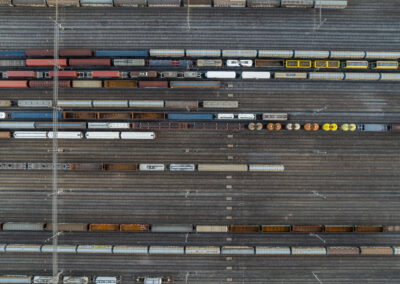
Future of rail freight transport in the area
Shaping rail freight transport for the future
The Federal Council’s report Bericht «Future orientation of rail freight transport in the area»[1] of March 2022 provides a welcome opportunity to rethink the Swiss rail freight transport system with its intermodal competition and cross-system processes as a whole. A holistic new conception starts not only with the (start-up) financing of the EMLV or the DAC, but with all processes, incentive instruments, market mechanisms and interfaces of multimodal freight logistics in Switzerland. The goal must be a self-sustaining, market-based rail freight transport system that includes all freight railways without discrimination on the basis of intramodal competition and supports shippers as a reliable partner. In this context, any financing based on the proven model in transit traffic must primarily benefit the customers of all freight railways and offer performance-based, competition-neutral incentives without any discrimination. Only in this way and only with combined forces can innovations and investments by the private sector in rail freight transport develop. And only in this way can rail freight transport in the countryside be made fit for the future.Federal Council considers long-term financial support
According to the report, the Federal Council wants to maintain single wagonload traffic (SCC) in the future and does not rule out long-term financial support. According to the definition of the Federal Office of Transport (FOT), single wagonload traffic comprises the transport of groups of wagons in unaccompanied combined transport (UCT) and conventional rail freight wagons bundled together for the main run. The Boards of Directors of SBB AG and SBB Cargo AG assess in their Financial Report 2021[2] a subsidisation of their rail freight services as necessary and probable. The Federal Council and the federal companies are thus apparently in agreement that financial support for rail freight transport is necessary in the area. However, they base their assessment of volume and financial viability solely on information from SBB Cargo. The other freight railways, most of which are organised in the private sector, are not included in this assessment. In our view, a new perspective is urgently needed here.Adopting a new perspective
SBB Cargo has been operating nationwide rail freight services as a monopoly since the 1999 Rail Reform I – with little success, as a review 25 years after the parliamentary decision shows. This must change: The freight railways active throughout Switzerland and their customers can join forces and, under the leadership of the Wagonload Transport Interest Group (IGWLV)[3], redesign rail freight transport in Switzerland.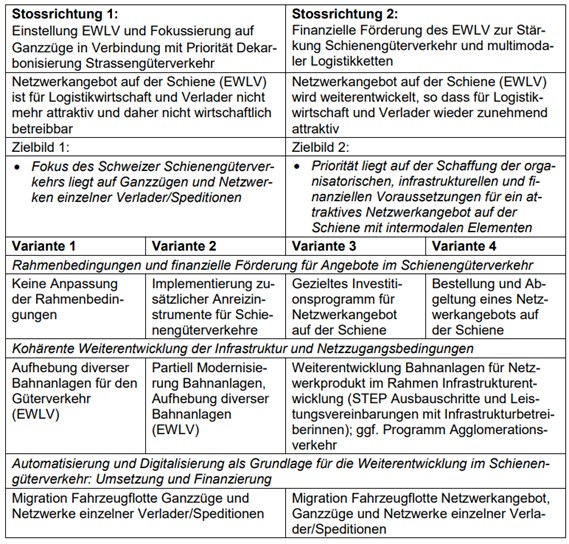
Figure 1, page 51 in the report «Future orientation of rail freight transport in the area».
For the further development of rail freight transport in the area, the report presents two directions (Figure 1): one involves the discontinuation of EMLV, the other the financial promotion of EMLV. From the VAP’s point of view, this is too narrow a view. A change of perspective is necessary in two respects: First, actors need to redefine their understanding of their roles and rethink their processes. Secondly, a neutral view of the financial situation is needed. For neither the envisaged technical advances (keyword digital automatic coupling DAC) nor the purely internal view of SBB Cargo can bring about a reorganisation. This should also be the focus of the current discussion about the future. The organisational form shown in the report (Figure 2) represents a mental jumping-off point for working out further variants of directions.
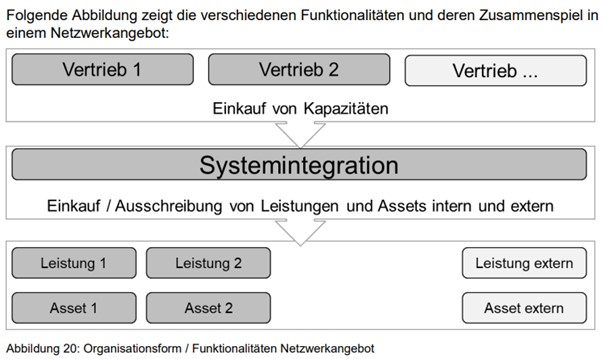
Figure 2, page 50 in the report «Future orientation of rail freight transport in the area».
Fact-based decisions
In order to assess the financing requirements of regional rail freight transport, it is imperative to have an analysis of the economic viability carried out by external neutral experts. If surface rail freight is indeed unprofitable, a distinction must be made as to whether SBB Cargo’s monopoly position or the system itself is responsible. The neutral third party must also examine whether economic viability, as required by the Freight Transport Act (GüTG[4]), is currently being pursued at all. Only when a detailed analysis of the current situation is available can parliament decide on appropriate measures.
Limit funding
If financial support proves to be undoubtedly appropriate, it should be considered as temporary financing for a fundamental new concept – not as permanent subsidisation. Temporary start-up funding can support the development of a competitive rail freight transport system until its simultaneous digitalisation and automation and the commissioning of new network elements from the 2035 expansion stage have been completed. Permanent funding, on the other hand, would undermine the market-based incentives for competitiveness and self-sufficiency of rail freight transport and make further development of rail freight transport in Switzerland impossible.
[1] “Future orientation of surface rail freight traffic”, Federal Council report in response to KVF‑S postulate 21.3597 of 10 May 2021. In 1999, with Rail Reform I, Parliament transferred the monopoly for the operation of surface rail freight traffic to SBB Cargo AG. Its share of rail freight traffic in domestic, import and export traffic is around 60%. The remaining 40% is carried in block trains via sidings and terminals.
[2] «SBB Financial Report 2021», chapter «Bewertungsunsicherheiten rund um die Coronapandemie und um das Geschäftsfeld Cargo Schweiz», p. 84.
[3] The Wagonload Transport Interest Group (IGWLV) was founded in 2018. It represents the interests of VöV, SBB Cargo and VAP with the mandate to modernise rail freight transport in the area and make it more efficient, in accordance with Art. 3a of the Freight Transport Act. President: Frank Furrer, Secretary General VAP, Vice President: Désirée Baer, CEO SBB Cargo –> Reports on IG WLV
[4]«Bundesgesetz über den Gütertransport durch Bahn- und Schifffahrtsunternehmen (Gütertransportgesetz, GüTG)» Art. 2 Para. 2
4th EU railway package: Making the most of the innovation boost
Climate protection is at the top of the political agenda in Europe. A high demand for mobility of people and transport of goods has been leading to massive climate-damaging emissions in our intensively industrialised region for a long time. On the way to net zero, policymakers expect the rail sector to consistently exploit its advantages and make a substantial contribution to more resource-efficient logistics. Thanks to innovation, we have the chance to make the production of freight transport more efficient, ergo more cost-effective and more customer-friendly, and on top of that, we increase the availability of train paths on our existing rail networks.
Railway sector must digitalise
The conditions for meeting these political expectations are actually good. Europe has a dense rail network on which the railways can move large masses with low energy and space requirements compared to other modes of transport, and the important centres are all connected. However, many standards and working methods in the railway sector are massively outdated. And the specific characteristics of the individual countries sometimes diverge diametrically. This is a major reason why the increase in performance demanded by the rail sector has so far failed to materialise. The rail sector can only convincingly fulfil the high political expectations – to take on the key role in the implementation of climate policy – if it fundamentally renews itself. To do so, it needs a system-wide innovation push and harmonised sovereign rules in line with the state of the art.
EU-wide harmonised interoperability
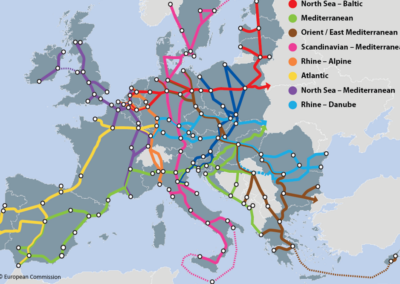
This is where the technical pillar of the 4th EU Railway Package comes into play. It aims at a systematic harmonisation in international standard gauge traffic. The member states are called upon to apply the interoperability standards consistently and to harmonise the corresponding approval procedures internationally. In this way, the existing hurdles for cross-border traffic will be removed and the way opened for joint European innovation steps. This makes the technical pillar decisive for successful innovations in the European rail sector.
These comprise four thematic fields and will significantly improve the market position of rail transport in the coming years:
- Internationally harmonised sovereign regulations
- Cross-border compatible technical systems
- Internationally harmonised processes for safety-relevant activities
- Joint activities for system-wide guided further development
- Automation becomes marketable
Europe’s Rail Joint Undertaking (EU-Rail) has initiated an important cross-European development with the European Freight Digital Automatic Coupler Delivery Program (EDDP). This is intended to enable digitalisation and automation in freight transport. The development work should be so far advanced by 2025 that digital automatic couplers are available ready for series production for the upcoming migration of rolling stock.
Switzerland in the middle
From both an economic and a geographical perspective, it makes sense for Switzerland to participate actively and consistently in the ongoing EU activities – even more so in the context of the tug-of-war over the institutional framework agreement. The triggered revision of the Swiss Railway Act (EBG) for the autonomous adaptation of our sovereign regulations to the established Interop and Safety Directive of the 4th EU Railway Package is a welcome impetus for actively tackling the envisaged innovation packages now. The Swiss railway sector should and will use this innovation push to its advantage as soon as possible, in order to remain a competitive partner in the highly competitive transport sector in the future.

Important transport of dangerous goods on the Simplon
According to the modal shift report of November 2021, the Federal Council is considering a consultation on a ban on the transport of dangerous goods at the Simplon. In doing so, it is revising its assessment submitted to parliament in 2015, according to which it considers the transport of dangerous goods at the Simplon Pass to be “sufficiently safe”. This is all the more surprising as FEDRO has been investing heavily in safety measures (retention basins, overtaking bans, emergency braking sections and the like) for years and the traffic statistics do not show any significant increase in the transport of dangerous goods.
We advocate that the dangerous goods situation be analysed in cooperation with the industry representatives and that any targeted potential for improvement be exploited, thus also guaranteeing entrepreneurial freedom. Such agreements have already made good progress in chlorine transport by rail.
A ban would endanger the supply of the population and the economy. It should also be taken into account that a great deal has been invested in the Simplon road in recent years to increase safety. According to the Federal Roads Office (FEDRO), the Simplon is the best developed pass in Switzerland. You can read a comprehensive argumentation in the scienceindustries factsheet.
TR Trans Rail AG – a multimodal success story
We at the VAP are committed to competitive rail freight transport. In the meantime, several private RUs and VAP members operate important transports. We are happy to introduce them and their core competences. Let’s start with TR Trans Rail AG.
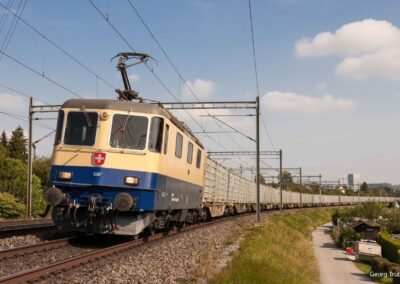
Between mid-September and the end of December is harvest time for sugar beet – a multimodal, logistical challenge for all involved. Here, rail plays to its strengths, especially on medium and longer distances, and delivers large quantities reliably and on time to the two plants in Aarberg and Frauenfeld.
As a long-standing logistics partner of Schweizer Zucker AG, TR Trans Rail AG’s cargo transports reach a peak in the last quarter of each year. During this time, a complex logistics project is ramped up for transport to the sugar factories. At the loading points, the rail wagons are loaded by the farmers and then transported by rail. Since the 2021 season, TR Trans Rail AG has been the sole national logistics partner of Schweizer Zucker AG in the area of rail transport, another milestone in its corporate history.
Thanks to the experience of the past seasons, meticulous planning coupled with a high degree of flexibility, the orders are handled smoothly. If, for example, drought or viral yellowing have a negative impact on yield and sugar content, various trains have to be rerouted at short notice. Only with the flexibility of everyone involved is it possible to optimise the utilisation of the two plants.
Shortly before Christmas 2021, the last load of beet reached the Frauenfeld sugar factory. For 100 days, TR Trans Rail AG transported around 555,000 tonnes of beet to the sugar factories in Aarberg and Frauenfeld with over 500 trains.
«The transport by rail and the cooperation with the partners involved mostly worked smoothly. Thanks to the rail transports, around 90,000 road kilometres could be saved. That corresponds to a distance of about two circumnavigations of the earth,» explains Peter Koch, who is responsible for the sugar beet transports east.
TR Trans Rail AG relies on the VAP when it comes to overarching know-how in rail freight transport.
André Pellet: To help our customers find new transport solutions for their wagon loads, we wanted to learn more about their needs, possibilities, but also hurdles. A business partner therefore recommended that we contact the VAP, which we already knew. The contact was quickly established and the cooperation started quickly and without complications.
What would you tell a colleague about the VAP?

André Pellet, Managing Director TR Trans Rail AGThe VAP is an extremely useful platform for the maritime industry. For only together can the urgent issues of freight transport by rail be tackled.
The rail freight system is extremely complex and therefore very demanding. Each customer or provider has different needs. But only the whole unit, bundled in an association, has the chance to master the challenges.
Where do you see the most urgent need for action to promote rail freight transport?
The transport policy framework must be right for the freight railways. The tightly organised railway organisation must not hinder the flexibility to find good transport solutions and the effort must remain within an economic measure. The ever leaner infrastructure must not restrict us any further.
What do you wish for the future of rail freight transport in Switzerland?
The railway should increasingly act as a unit vis-à-vis the road. The various service providers and private railway companies have different possibilities and each could contribute something to the implementation and handling of transports. The railways should not see themselves as competitors, but should contribute their individual strengths and thus offer holistic and customer-oriented solutions.
Thank you very much for your answers, André Pellet!
|
Information about TR Trans Rail AG: As a Swiss rail transport company, TR Trans Rail offers a wide range of offers and services with various domestic and foreign partners. Thanks to many years of experience, they are specialists in the areas of freight transport, modern services, train nostalgia, group charter trips, accompanied trips and themed event trips. |