
OPERATIONS
We represent the freight stakeholders and in this chapter we focus on the use of infrastructure, i.e. transport. We advocate free operation on the last mile. In favour of fair competition, we want to use the strength of all modes of transport and combine them optimally. Because in this way, the route becomes shorter – and more economical – for each individual.
Actors in the field of operation
Freight railway undertakings
Manufacturer/holder of rolling stock (private wagon rental companies)
Operators

Timetables (Swiss capacity allocation body TVS)
Informative
The future of rail freight transport in the countryside
- Blog post «Zukunft Schienengüterverkehr in der Fläche»
- Position paper to the KVF‑N, 22.6.2022
- Report of the Federal Council on the future direction of surface rail freight, 31.3.2022
Emission limit values for noise
Freight transport by rail
- Freight transport by rail concept 2017
- Report on freight transport by rail 2017
- Hearing Cargo Forum Switzerland on the subject of freight transport by rail 2017
Driving service regulations
- Statement on the driving service regulations in the 2020 amendment cycle
- Driving service regulations from 1.7.2020
- Implementing provisions for the train service regulations, SBB regulations
Operating regulations for sidings
The responsibility for safe operation lies with the responsible company. The corresponding operating regulations must be drawn up by the siding operator.
The VAP provides auxiliary means to its members. We provide support with legal and administrative tasks. Contact us directly for clarification, advice or audit support.
Freight railway undertakings in Switzerland
 |
 |
 |
 |
| DB Cargo | GATX | Hupac | railCare |
 |
 |
 |
|
| SRT swiss rail traffic | TR Trans Rail | WRS |
|
|
|
| DB Cargo | GATX | Hupac |
|
|
|
| SRT swiss rail traffic | TR Trans Rail | WRS |
|
||
| railCare |
Freight railway wagon rental companies in Europe
 |
 |
 |
 |
| VTG | wascosa | ermewa | Groupe Millet |
 |
|||
| MFD Rail |
|
|
|
| VTG | wascosa | ermewa |
|
|
|
| Groupe Millet | MFD Rail |
Shippers (examples)
 |
 |
 |
 |
| Die Post | Holcim | Panlog | Hastag |
|
|
|
| Die Post | Holcim | Panlog |
|
||
| Hastag |
Gotthard Base Tunnel (#8): Safety and control tasks clearly distributed
The Swiss Safety Investigation Authority (Sust) names a broken wheel disc as the cause of the freight train accident in the Gotthard Base Tunnel. In the news report from 19 October 2023, Swiss television SRF took a close look at the maintenance of freight wagon wheels. VAP expert Jürg Lütscher comments on the safety and control tasks of the players involved – and explains them further in this blog post.
This is what it’s all about:
- Harmonised safety in the European rail freight system
- Maintenance work monitored by independent bodies
- Wheelset inspections in operation and maintenance
- Two inspection procedures established
- Responsibilities and regulations clarified
Harmonised safety in the European rail freight system
Safety in the European rail freight system is based on a triangle of responsibility consisting of infrastructure managers, railway undertakings (RUs) and wagon keepers with their responsible entities in charge of maintenance (ECMs). The specifications and regulations are now largely harmonised throughout Europe. The industry has developed the internationally recognised VPI European Maintenance Guide (VPI-EMG) based on the provisions of the sovereign directives, the applicable technical standards and practical experience. The VPI Germany, VPI Austria and VAP (Switzerland) associations have been pioneering this work since 2007. In 2019, AFWP (France) and UIP (International Union of Wagon Keepers, representing the smaller national associations) were added to the group of editors of the VPI-EMG. This set of rules defines both deadlines and the scope of work and standards in a user-friendly manner. It provides maintenance recommendations that each user must check for applicability to their freight wagons, supplement if necessary and approve for their wagon fleet. More than 550 companies, including wagon keepers, ECMs, repair workshops, authorities and universities, currently use the VPI-EMG. More than 260 repair workshops and mobile service teams from 19 European countries use the VPI-EMG on behalf of the relevant ECM.
Maintenance work monitored by independent bodies
The EU safety directive defines two independent procedures. This is to ensure that the specialised work is carried out everywhere with the required level of quality and knowledge:
- Certification: The companies involved must be certified by independent bodies for security-related activities within the scope of their ECM. They must regularly renew these certificates and allow their customers to view their validity and scope.
- Auditing: Supervisory authorities carry out risk-based audits of safety-critical processes and quality inspections in railway operations. If they uncover weaknesses, they also monitor their rectification.
Wheelset inspections in operation and maintenance
Wheelsets are considered safety-critical components of a rail vehicle. They are subject to continuous wear during operation and can also be damaged by external influences. When maintaining wagons, the ECM ensures that fully functional wheelsets are used.
During operation, the RUs and the train control systems of the infrastructure managers (see blog post «Gotthard Base Tunnel (#2): Automatic train control systems») specifically ensure that no recognisable damage or deviations on wagons jeopardise operational safety. To ensure safe railway operations, the wheelsets must comply with all relevant limit values during the entire operating time. Wheelsets that have been replaced due to deviations or damage are sent to a certified specialist workshop for reconditioning in accordance with the regulations.
Two test procedures established
The SRF news report shows two test procedures for systematic wheelset maintenance. A certified specialist workshop can thus ensure that the wheelsets it repairs do not show any relevant damage in the form of material cracks on delivery. This involves two non-destructive testing methods in accordance with DIN 27201–7, which have become established throughout the industry:
- Ultrasonic testing: Detection of cracks in the wheel face and flange back area
- Magnetic testing: Detection of cracks in the wheel centre and wheelset shaft including wheel seat
Responsibilities and regulations clarified
As many goods are transported across borders, internationally harmonised rules and procedures are important in Europe. In recent years, the regulations have been comprehensively updated and improved. Current versions of the EU Safety and Interoperability Directive apply both in all EU states and – via the overland transport agreement – to the Swiss standard gauge network. Based on this, the Swiss railway sector has developed practical standards and maintenance procedures for the main players. Europe-wide common reporting processes and assessment procedures (see blog post «Gotthard Base Tunnel (#7): Sust report provides clarity») ensure that industry players learn their lessons from an operational incident such as that of 10 August 2023 and implement effective improvements in maintenance.

Revision of the noise limits
That’s what it’s all about:
- Silence is a precious commodity in densely populated and industrialised areas
- Federal government has issued regulations on noise abatement
- FOEN mandated to review existing regulations
The Confederation has issued regulations on noise abatement that lay down framework conditions for industry and transport in particular. The Federal Office for the Environment (FOEN) was mandated by Parliament to review the existing regulations. In the current year, the FOEN is conducting a comprehensive economic assessment (VOBU) of nine possible measures, analysing their noise-reducing effect and economic consequences in connection with traffic noise. The regulations for the construction and licensing of vehicles and aircraft are to continue to be coordinated internationally. The FOEN aims to present the findings transparently to important representatives from industry and the cantons and to discuss implications with them.
The Association of the Freight Industry (VAP) will be actively involved and contribute the industry’s perspective. The FOEN will complete the VOBU by the end of 2023 and the Federal Department of the Environment, Transport, Energy and Communications (DETEC) will decide on the further procedure and publish this at the beginning of 2024. We will report on new findings here.
The following focal points are considered:
- Adjustment of the limit values for road, rail and air traffic noise
- Adjustment of the assessment period (rest period)
- Standardisation of the sensitivity levels
- Simplification of the noise classification regime (restriction of the protection of existing buildings)
- Dynamisation of noise protection (temporary relief)
- Clarification of measures (definition of test criteria)
- Strengthening transparency (disclosure of relief)
- Strengthening of the polluter-pays principle (compensation for advance payments)
Gotthard Base Tunnel (#7): Sust report provides clarity
On 28 September 2023, the Swiss Safety Investigation Authority (Sust) published its interim report on the derailment of the freight train in the Gotthard Base Tunnel. It documents the course of the accident and makes initial safety recommendations. The event is now being processed by the responsible international committees. Both the European railway industry and Switzerland are represented here. The report should not be misused for a national solo action.
This is what it’s all about:
- Fatigue cracks caused wheel breakage
- Further investigation is well coordinated
- Consequential initial safety recommendations
- Accident clarified – but not yet completely solved
Fatigue cracks caused wheel breakage
Fortunately, Sust submitted its interim report very quickly. In it, it identifies the broken wheel disc of the eleventh freight wagon as the cause of the derailment in the Gotthard Base Tunnel. The wagon is registered in Sweden. The damaged wheel is wheel type BA 390 with LL brake pads. All the fractured surfaces show fatigue cracks originating from the tread. They are now the subject of in-depth metallographic examinations by Sust. The Sust report contains no evidence of pre-existing operational defects that could have caused derailment.
Further investigation is well coordinated
The incident is now being dealt with by the Joint Network Secretariat (JNS). The aim of this body is an EU-wide harmonisation of all measures taken after an accident or incident in European rail transport. The JNS supports the European Railway Agency (ERA) in organising the exchange of experience between national supervisory and investigative authorities and the industry organisations accredited by ERA. The latter also include the three players in the triangle of responsibility for rail transport: the infrastructure manager (responsible for the infrastructure), the wagon keeper (responsible for the maintenance of the wagons) and the freight railway undertaking (responsible for the operation of the wagons). At the same time, Sust triggers a so-called Safety Alert in the SIS information system, which is used by the national supervisory and investigative authorities. And finally, the Swedish wagon keeper deposits a warning message in ERA’s Safety Alert IT Tool (SAIT).
Based on these notifications and as part of the coordinated process, all European stakeholders should have access to the published information. It is now up to them to draw the right conclusions in the exchange between national authorities, industry representatives and ERA. Thanks to the Land Transport Agreement, Sust is recognised by ERA as an investigative body, as is the Federal Office of Transport (FOT) as a safety authority. The matter is now being dealt with by the competent international bodies. We consider this fact to be entirely correct and necessary in view of the cross-border use of freight wagons throughout Europe. The responsible bodies will next establish a reference to similar wheel breakages from the past.
Consequent first safety recommendations
The Sust report makes two short-term safety recommendations, which the VAP supports without reservation. In Recommendation No. 183, it advocates that the FOT extend the 2017 “JNS Urgent Procedure Broken Wheels” to the BA 390 series wheelsets. The “JNS Task Force Broken Wheels” set up at that time had reacted to several wheel fractures on the BA 314 and BA 004 wheel types and called for more intensive inspections in operation and maintenance to limit the risks for these wheel types. We also welcome Safety Recommendation No. 184, in which Sust urges the FOT to apply for a new “JNS Procedure” at European level to deal with the wheel breakage on the BA 390 series. This should prevent further similar wheel breakages from occurring.
Accident clarified – but not yet completely solved
The interim report corrects the misleading media coverage of the accident, according to which the derailed wagon 11 also damaged the safety gate to the east tunnel, which weighed about 100 tonnes. According to Sust, it was not until carriage 14 hit the switch track at the Faido multifunction station switch that it struck the safety gate. Further investigations are necessary to fully clarify the accident in detail. This includes, for example, analyses of the wagon 14 and the switch. Sust will only provide a complete clarification of the course of events and causes of the accident in its final report. Once this has been published, it is the responsibility of all actors involved in the JNS procedures to draw the right conclusions from it for competitive and safe European rail transport. The recommendations of the Sust final report will be implemented by the entire industry.

Marco Rosso: «Collaborative innovation can contribute to the quality of life and function profitably at the same time.»
Marco Rosso is Chairman of the Board of Directors of Cargo sous terrain AG (CST). In an interview with the VAP, he talks about interoperability, non-discrimination on the last mile and the logistics of the future. And about how collaborative innovation can contribute to the quality of life of people in Switzerland and function profitably at the same time.
VAP: Mr Rosso, how do you see the relationship between rail freight and CST in the future?
Marco Rosso: Rail and CST are two systems that complement each other. CST cooperates with all modes of transport to jointly absorb the predicted freight traffic growth of over 30% by 2050 in an innovative, sustainable way. Because CST is not suitable for all transports, the company supports the business models of rail, road hauliers and other logistics players with new technology and digitalisation. Only with cooperation (within the framework of competition rules) can interoperability be guaranteed among the most diverse modes of transport and transport companies. Therefore, CST plans to connect to rail, road, ship, air freight and other systems. At the CST hubs, there will be multimodal connections, in particular also a rail connection. In the construction phase, starting as early as 2026 and continuing until 2045, CST will use rail transport to the tune of 2,000 goods trains per year and thus become an important rail customer.
Shouldn’t the state create the infrastructure and the operation in the tunnels, as well as the operation of the terminals and the last/first mile would then be free and subject to competition?
CST is a system that only works as a whole because all processes are controlled end-to-end. This is the only way to ensure that the general cargo reaches its destination on time and reliably. For this reason, the system must be managed from a single source and at the same time be connectable to all partner platforms. CST has been planned and conceived as a private-sector project from the very beginning. With this financing concept, it is possible and important to move forward quickly without straining the funds in the federal budget. The investors also include important future customers. They help to develop the system in line with the market. The Confederation has recognised that it would not be expedient to act as a creator itself, but to limit itself to the legal framework. With carefully prepared business plans, competitive prices and the broad investor base that supports the project, CST shows that innovation in freight transport contributes to the quality of life in cities and rural areas and can function profitably at the same time.
Where do you see the biggest challenges in your project?
Such a comprehensive project presents many challenges, for example in planning, legal, environmental, financial and political terms. What distinguishes CST is the model of collaborative innovation – with the inclusion of all stakeholders. The project approaches the challenges pragmatically in stages.
How do you design a non-discriminatory first/last mile?
Our system is planned to be non-discriminatory from the start anyway, without the law requiring it. The following applies throughout: everyone has access to the system with the same price for the same service. But we go even further, for example, by developing CST’s city logistics in a collaborative partnership and are open to any cooperation with smaller as well as larger partners, including the railways and the post office. Here, too, our principle is collaborative innovation, which we live by every day.
What is the greatest benefit or motivation of CST for the Swiss population?
The most important effect of CST will be to increase the quality of life for all inhabitants of Switzerland. By showing a way how the logistics of the future can look sustainable, how heavy traffic on the road can be moved away by bundling and pre-sorting in tunnels for all shippers, or how a traffic jam can be avoided for the supply of goods, how to get the best out of the available resources in terms of CO2 emissions, noise, etc. The precious space on the surface should primarily belong to the population. CST favours the expansion of infrastructure as well as renewable energies in Switzerland. CST is a privately financed driver of innovation for the benefit of the Swiss economy and for quality of life in cities and villages by guaranteeing security of supply and thus increasing prosperity in Switzerland.
Are there any points that you think we should still let our members know about?
There are decisive decisions and discussions ahead, especially against the background of the political debates on freight transport. We are firmly convinced that with an entrepreneurial attitude we can make an effective contribution to maintaining Switzerland in the 21st century as an excellent business location with a high quality of life, also for future generations. We participate in this work with enthusiasm and commitment.
Mr Rosso, thank you very much for the interview.
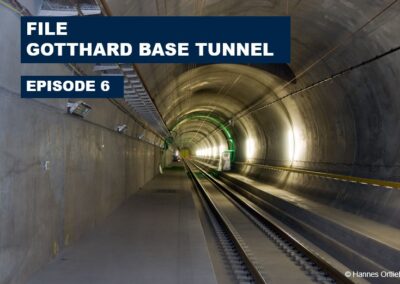
Gotthard Base Tunnel (#6): FOT pragmatically supports freight traffic
After the freight train accident in the Gotthard Base Tunnel, the Federal Office of Transport (FOT) is promoting rail freight transport with tangible measures: The tunnel may only be used for freight trains. The compensation per train operated in unaccompanied combined transport (UCT) will soon be increased to up to CHF 1,100. We, as the association of the shipping industry, would like to express our sincere appreciation for this. By the way: our voice also applies to foreign shippers.
This is what it’s all about:
- Gotthard base tunnel only open for rail freight traffic
- Higher compensation for transalpine UCT
- The VAP says thank you
Gotthard Base Tunnel open for freight trains only
Since the reopening of the east tunnel of the Gotthard base tunnel, it has been available exclusively for freight traffic. Around 100 train paths are possible every day. A further 30 trains per day run through the mountain section. This means that transalpine rail freight traffic has a total of 130 train paths at its disposal every day. By comparison: in 2022, an average of 120 trains crossed the base tunnel every day.
Thanks to this measure, the freight railways can handle rail freight traffic practically without restrictions. Admittedly, the routing over the mountain route is associated with considerable additional expense. But it mainly affects domestic traffic that is not dependent on the 4‑metre corridor.
Higher compensation for transalpine UCT
The FOT is committed to transalpine rail freight traffic and in particular transit traffic (see “The FOT strengthens rail freight traffic through the Alps”). The compensation per train operated in UCT will be increased by CHF 200 to up to CHF 1,100 in the coming weeks. The FOT also does not want to reduce the compensation per consignment for 2024, but will introduce a symbolic reduction of CHF 1 to CHF 57 per consignment. In this way, the FOT is supporting transalpine UCT in a very pragmatic way. Against the background of the difficult construction site situation on the access routes and the tense economic situation, the FOT is refraining from continuing on the current course to reduce compensation for UCT.
The VAP says thank you
The FOT deserves a big thank you for this pragmatic support. It strengthens the joint and targeted efforts of the entire industry to make the capacity restrictions on both the Gotthard and Lötschberg axes as bearable as possible. We see it as a sign of a common policy effort to support modal shift in transit traffic.
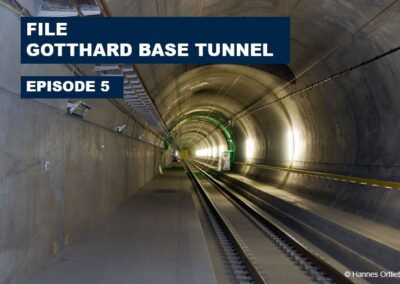
Gotthard Base Tunnel (#5): Too early to assign blame and liability
According to the main edition of the SRF Tagesschau news programme from 27 August 2023, the Federal Office of Transport (BAV) views SBB Cargo as solely liable for the consequences of the freight train accident in the Gotthard Base Tunnel. The programme made reference to an oversight of the rail reform; prior to this, all freight wagons had to be sent to the Federal Railways for maintenance. We believe: It is too early for speculations, and certainly not in media with a nationwide audience. Such polemic does not help solve the problem in any way whatsoever. Only the report of the Swiss Transportation Safety Investigation Board (Sust) will establish clear facts – and create opportunities to respond appropriately.
Topics discussed:
- The state retains the upper hand in the rail market
- The rail reform did, in fact, reform liability law
- Wagon keepers are liable independent of fault
- Federal Council did not propose any legal changes
- Contractual provisions are public
- Responsibility must be assigned based on the Sust report
- Current liability rules are economically balanced
- Negative consequences of legal changes must be considered
The state retains the upper hand in the rail market
The federal government clearly assigns responsibility for the freight train accident in the Gotthard Base Tunnel to the SBB subsidiary SBB Cargo. A spokesperson for the BAV indicated on SRF Tagesschau on 27 August 2023 that the applicable liability law originates from the time of the Federal Railways. However, the times have not changed. The Swiss Federal Railways, SBB, still dominate the rail freight market. Only a few weeks ago, the Federal Council approved the renationalization of SBB Cargo. In response to the interpellation by FDP National Council Member Christian Wasserfallen, the Federal Council made clear that the private shareholders had not improved the (financial) situation of SBB Cargo.
The rail reform did, in fact, reform liability law
In the course of the rail reform, the international Convention Concerning International Carriage by Rail (COTIF) was amended to create a separation between infrastructure and operations. At the same time, SBB Cargo terminated the siding contracts. The monopoly privilege, which required that freight trains be sent to the Federal Railways for maintenance, was hereby abolished. Instead, the conditions for use of the freight wagons were standardised between the freight railway undertakings and the wagon keepers at the international level on the basis of COTIF in the form of a contract entitled the “General Contract of Use for Wagons (GCU)”. COTIF and the GCU set out more stringent liability rules than are preferred by the BAV with its reservations against internationally uniform industry solutions. Wagon keepers were in for an unpleasant surprise as they took over full responsibility for the future maintenance of their wagons: The SBB provided the wagon keepers with extremely sparse documentation on the condition and maintenance of their freight wagons by SBB Cargo up to the termination of the siding contracts. Since then, the wagon keepers have themselves been responsible for their wagons and have cleaned up the legacy from SBB.
Wagon keepers are liable for deficiencies on their wagons
With his comments on SRF Tagesschau, the BAV spokesperson gave the impression that private freight railway undertakings or wagon keepers are not liable for accident damage. This is not true. European and Swiss freight railway undertakings and wagon keepers have been liable since 2006, when the GCU was established, and these rules were further intensified in 2017. Today, freight railway undertakings are fundamentally liable for damages from accidents involving freight trains on the Swiss rail network regardless of their own culpability (strict liability). If the damages were caused by deficiencies on a third-party wagon, culpability is contractually assumed to lie with the respective wagon keeper. The freight railway undertaking involved can take recourse against the wagon keeper. The latter can only free itself from liability with respect to the freight railway undertaking by proving it was not at fault (reversal of the burden of proof). You can read more about this in our blog post “Gotthard Base Tunnel (#3): Current liability provisions are sufficient”.
Federal Council did not propose any legal changes
SRF news editor Christoph Leisibach stated that the Federal Council issued a report proposing measures for adapting the liability law, such as by increasing the liability of the wagon keepers. This statement is incorrect. In the BAV report from 21 June 2023 addressing postulate 20.4259 “Overall assessment of liability in rail freight transport”, the Federal Council presented options but explicitly declined a modification of the regulations.
Contractual provisions are public
Professor Frédéric Krauskopf was consulted by SRF Tagesschau as an expert. When asked whether SBB Cargo could assert (co-)liability on the part of the wagon keeper of the damaged wagon, Krauskopf referred to the contract between the two parties. As explained above, the relevant contract is the GCU. This contract is publicly available; in other words, it is also accessible to professors and public television networks. The GCU was adopted unanimously by SBB Cargo along with all other national railways in Europe.
Responsibility must be assigned based on the Sust report
We at VAP are intensively examining the question of who bears what fault for the freight train accident on 10 August 2023 and who must accept liability. This can only be answered precisely and within a reasonable timeframe after the Sust report is available.
Current liability rules are economically balanced
The wagon keepers must ensure that their wagons are approved and maintained according to the correspondingly applicable laws, regulations and binding standards. The freight railway undertakings accept the wagons in the trust that the wagon keeper has lived up to these obligations. They carry out all necessary inspections to ensure that the train can travel safely. The wagon keepers have no influence on the train departure. The freight railway undertakings independently decide on the type and manner of the inspections since they are also solely responsible for the operation of the train. It therefore makes economic sense for the freight railway undertakings to be primarily liable for their inspections prior to train departure and for possible consequences. If it is later determined that a deficiency on a wagon was the cause of the damage (such as in the case of wheel failure), the wagon keeper is liable to the freight railway undertaking for the resulting damages. This is the case unless the wagon keeper can prove that it is not responsible for the deficiency (reversal of the burden of proof). In road transport, the liability between the keeper of the tractor vehicle and the keeper of the trailer is regulated in exactly the same way.
Negative consequences of legal changes must be considered
An intensification of the already highly detailed liability provisions will not make rail freight any safer nor will it bring a single additional freight train onto the rail network. On the contrary. Whatever might be changed in the liability rules would have market consequences, such as in the form of higher leasing rates for freight wagons and, above all, more complicated and labour-intensive wagon handoffs from one area of responsibility to the next. This means that a poorly conceived, unilateral change in Swiss law could bring a sudden stop to the free access to 550,000 freight wagons from all over Europe that is guaranteed today by the GCU – to the detriment of the environment as well as the Swiss economy.

EU aid: walking a tightrope between protecting the climate and distorting competition
In wagonload traffic (TWCI) within the European Union (EU), we are witnessing a development that is more political than market-oriented. The EU is promoting the transfer of freight transport to climate-friendly modes of transport such as rail and inland waterway with various programmes and funds, and in principle this is to be welcomed.
The public freight companies, supported by the unions, describe the TWCI as a «public service». However, it is not they who bear the consequences, but the States and shippers. In fact, the subsidies redistributed by the EU at taxpayers’ expense mean that the TWCI is heavily subsidised, with no incentive to increase productivity in the interests of sustainable development. This means that the TWCI is using taxpayers’, society’s and the economy’s money to cement a monopoly devoid of any public service obligations such as the obligation to carry or the obligation to publish tariffs.
This lack of market orientation and entrepreneurial spirit on the part of the public railways and the unions will not help to achieve either the traffic transfer objectives or the climate objectives. What’s more, as owners of the state-owned railways, governments are taking a long-term, imponderable financial and transport policy risk with regard to security of supply in their countries.
The consequences for shippers are no less serious. To achieve multimodal transport, shippers have to invest in the rail system, while they are dependent on a monopolistic company that is itself financially dependent and managed by political control. This is hardly security of supply and investment.
Subsidies must be used in a targeted and time-limited way to safeguard jobs in the long term and put TWCI on the road to success.
In this blog post, we take a close look at public subsidies in Germany, France, Austria and Switzerland from the perspective of their purpose and scale, and address the issue of conflicts of interest and the necessities involved.
What is at stake?
- State aid aims to establish sustainable and viable mobility.
- However, it can give rise to distortions of competition and discrimination.
- State financial aid must be used to ensure the transition to financial autonomy.
- Market players specifically need financial support for innovations such as DAC.
- The bodies granting the aid should check its effectiveness and any breaches of the rules on subsidies.
- If necessary, the law should be amended.
The European Commission provides financial support for the transfer of freight from road to more environmentally friendly modes of transport, such as inland waterways and rail. It provides financial aid in line with EU guidelines on State aid. The objective of this EU aid is sustainable and intelligent mobility, which in turn is supposed to help reduce CO2 emissions and relieve road congestion as part of the Green Pact for Europe. As is often the case with public funding, in the freight transport sector it is also necessary to ensure that competition in the internal market is not distorted and that self-financing and transparency are achieved.
Comparison of deficit financing in wagonload traffic
Country |
Subsidy programme and benefits |
Amount of subsidy |
Period |
| Germany |
Temporary, non-discriminatory and growth-oriented subsidy of operating costs (BK-EWV) This grant from the German Federal Ministry of Digital Affairs and Transport is intended as a transitional measure to increase the profitability of the TWCI through the deployment of digital automatic coupling (DAC). The Ministry’s aim is to support Federal and non-Federal railway undertakings in national and cross-border transport within the framework of a TWCI system description to be provided. Details of the BK-EWV programme are expected in July. |
80 million euros 100 million euros 100 million euros |
2023 2024 2025 |
| France |
Support for wagonload traffic transport services The purpose of direct subsidies is to compensate rail companies for the difference in cost between road and rail transport. The beneficiaries are rail companies active in the TWCI sector. |
450 million euros, i.e. 150 million euros per year |
2023–2025 |
| Austria |
«SGV-Plus» (TFM Plus) This subsidy programme helps rail transport companies to carry goods by rail that would otherwise have to be transported largely by road, by lorry. SGV-Plus consists of support for rail freight services and a subsidy for the infrastructure usage charge. Subsidies for connections and terminals The state helps companies to transport their goods sustainably by rail through measures such as these:
|
Approx. 90 million euros
13 million euros per year |
2023–2027
From 2023 onwards |
| Switzerland |
Improving the framework conditions for freight transport in Switzerland The Federal Council is planning subsidy programmes with the following benefits:
|
CHF 600 million, i.e. CHF 150 million per year |
2024–2027 |
Limited relevance of the comparison
The subsidies mentioned in the table above are expressed in absolute figures. This makes them difficult to compare, in the absence of a reference amount. For example, SNCF (France) achieves several times the number of tonne-kilometres travelled by SBB, but receives considerably less money in comparison. Unlike the countries of the European Union, in Switzerland the total amount of subsidies also includes the migration to DAC. It is precisely because most countries have numerous sources of funding at their disposal at the same time that it is extremely difficult to compare subsidies in a meaningful way.
Conflict of interest between climate protection and competition
Governments mainly use their subsidies to encourage the transfer of traffic to sustainable modes of transport. The ultimate objective entails the risk of distorting the competitiveness of rail freight. If rail freight is to remain viable not only ecologically, but also economically, those responsible must aim for an autonomous, market-oriented rail freight system that integrates all rail freight companies without discrimination on the basis of intramodal competition, and is a reliable partner for shippers. Switzerland has set itself the goal of self-financing, and is well on the way to achieving it.
Guaranteeing non-discrimination
Wherever public and private players in the market come together, the accusation of discrimination quickly arises. A classic example is last-mile subsidies. This is the subject of heated debate both internationally and in Switzerland (see RailBusiness no. 6 and 7/2023). In our blog article entitled «Outsourcing the last mile and making it non-discriminatory», we outline the form that a non-discriminatory last mile could take in Switzerland. We recommend that management of the system should no longer be entrusted to a single major operator – as is currently the case with SBB Cargo – and propose that instead, the first and last kilometre services should be provided by a single service provider. Ideally, this would be the infrastructure operator, which, apart from this, does not provide any transport services. In our blog article entitled «Subsidising wagonload traffic: preventing distortion of competition and discrimination», you will find a more detailed explanation of why non-discrimination is paramount when it comes to State aid.
In Germany, the Verband deutscher Verkehrsunternehmen (VDV) and Die Güterbahnen (The Freight Railways) are calling for non-discriminatory subsidies for service routes between the customer’s loading point and the last functional train consist. Appropriate regulations will ensure that the subsidy reaches particularly underserved and unprofitable regions, as well as new traffic, in order to attract rail transport to these areas as well.
Financial support for innovation
In our view, state funding should be a transitional measure designed to last until the players manage to finance themselves. This approach is particularly important for innovations such as the migration to DAC and the associated digitalisation of rail freight. Wagon owners cannot benefit directly from DAC, but have to make huge investments in re-equipping their rolling stock. To find out why we are in favour of up-front funding for the DAC, which paves the way for a new era of rail, rather than the ongoing subsidisation of an obsolete system, read our blog post entitled «Innovation in rail transport: DAC as a pioneer».
Rethinking the rail system
If the benefits of digitalisation are to be realised in rail freight transport, we need more than the DAC. What is needed is a fundamental transformation and optimisation of cross-system processes. Only in this way will market players be able to increase productivity, reduce costs and systematically adopt a customer focus in order to remain competitive by rail. This requires a new holistic approach to the entire rail system. This goes far beyond the (initial) financing of the TWCI or DAC. It concerns all the processes, incentive instruments, market mechanisms and interfaces of multimodal freight logistics in Switzerland.
Creating transparency through monitoring
If public funds are to be used in a targeted way, the objectives to be achieved with this support must be clearly defined. As is customary in the private sector, this means checking against measurable parameters, such as «how many DACs will be implemented by 2025 for how much money», «how many tracks have been built» or «how many lorry loads have been put on rail». The measurability of a success rate enables the players involved to adapt their strategy accordingly.
Preventing abuses of EU state aid guidelines
In 2020, Deutsche Bahn was accused of massive market distortion, as it was to receive a €5 billion increase in equity from the state as a result of the COVID-19 crisis. At the beginning of 2023, the European Commission launched an investigation into possible illegal state aid of between ten and twenty billion euros paid to the Freight sector of the state-owned railway company SNCF. These recent examples show that public aid always carries a risk of abuse. It is all the more important for governments to create the same conditions of competition for all and, if necessary, to refine the legal framework a posteriori.[1]
Refining the guidelines a posteriori
The European guidelines for the rail sector are an example of such a review. The European Commission has proposed revising them in order to shift traffic to more sustainable and less polluting solutions while maintaining a level playing field within the European Union. The consultation of Member States on the promotion of transparent and non-discriminatory programmes, the limitation of individual aid to exceptional cases and the modification of the aid ceiling ended on 16 March 2022. The majority of respondents favoured the promotion of programmes offering equal opportunities to all companies and the granting of individual aid only in exceptional cases. The European Commission plans to approve the revision of the State aid guidelines applicable to the rail transport sector in the 4th quarter of 2023.
Sensible modal shift – from shipper to rail forwarder
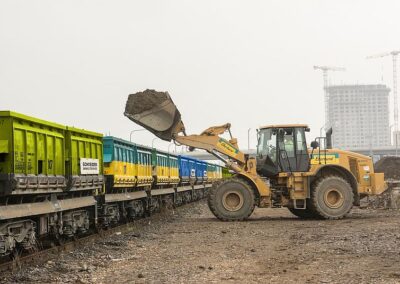
In the canton of Zurich, clean excavated material from excavation pits with a volume of more than 25,000 cubic metres must be transported away by rail by the builder-owner from 1 July 2021, otherwise a replacement fee is owed. The companies HASTAG (Zürich) AG, Schneider Umweltservice AG and Eberhard Bau AG have merged to form the newly founded company TerraRail Modalsplit AG as of 8 March 2022 to offer this service.
This is what it’s all about:
- Canton of Zurich: ordinance on the transport of excavated material and aggregates by rail (BTV).
- TerraRail: Provider for transport of excavated material and aggregates by rail.
- In the interests of fair competition: invitation to tender for RUs
TerraRail Modalsplit AG offers the transport of excavated material and aggregates by rail at four locations. In doing so, they make use of their many years of experience and the ideal locations with rail connections of the three companies. Traction between the sites and the unloading point(s) is currently provided by SBB Cargo.
The excavated materials are transported by rail from the agglomeration area and deposited or recycled in a landfill. Ideally, raw material such as gravel is transported again directly. The offer also includes the development of a transport concept, which must be submitted with the building application.
TerraRail is currently using SBB Cargo for the transport by rail. However, other RUs were also considered. TerraRail Modalsplit AG acts independently of the providers in the market and obtains several offers during the bidding and production planning process. The most suitable offer is confirmed. Therefore, changing constellations are to be expected in this area.
It is expected that there will be competing offers, as TerraRail’s offers are placed under competitive conditions. In fact, several awards have already been made to other suppliers in the market. This indicates the existence of competition.
Rail transport is attractive when the rail infrastructure leads directly from the place of loading to the place of unloading and over longer distances. However, this is rarely the case in the modal split area. As a rule, an additional reloading process is required, which increases the effort and requires loading places. For this reason, from TerraRail’s point of view, legal requirements make sense in order to increase the modal split share of rail transport and to relieve the roads. At the same time, TerraRail is working to continuously improve the competitiveness of this transport chain.
The VAP approves of the bundling of the competence of private-sector companies and the organisation of a transport chain based on the strengths of all partners. The three shippers, in their role as specialists in earthworks and mining and operators of suitable transhipment platforms in their sidings and now as rail forwarders, are shifting transports to the railways and relieving the burden on the roads. Competition and the pursuit of real competitiveness compared to pure road transport are viewed positively. It is desirable that shippers have a choice and that supply security is increased by the existence of several rail providers.
The solution found in the canton of Zurich with the replacement levy on builders is a compulsory measure designed in a market economy, where the revenue flows into the general state budget and is not earmarked for a specific purpose. We would welcome a targeted reimbursement to the market players, for example in the form of financial support from the canton for the construction of transhipment platforms or the development of new multimodal logistics solutions.
For other products, a comparable model is much more difficult to implement, as the necessary transhipment platforms are lacking. Here, cantonal transport and spatial planning is called upon to ensure that locations are well connected by road and rail.
In order to promote further positive relocations, the VAP also assumes an advisory role for the cantons. In doing so, the cantons benefit from the association’s extensive expertise, many years of experience and far-reaching network, which is firmly anchored in the transport industry.
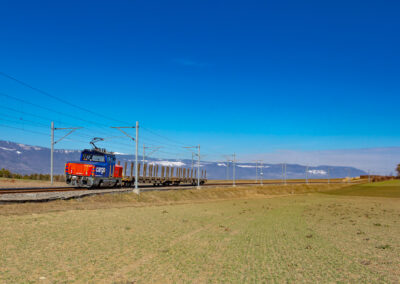
SBB Cargo again a fully-owned subsidiary of SBB
Integration – a rejection of market orientation?
SBB Cargo loses both its logistics experience in the shareholder body and on the Board of Directors, as well as the external chairmanship of the Board of Directors as a symbol of entrepreneurial freedom. Stigmatised as unsuccessful, it is back at the board table. What can customers and relocation politicians expect?
Here’s what it’s all about:
- Logistics companies Planzer, Camion Transport, Galliker and Bertschi give back minority stake
- SBB Cargo to be fully reintegrated into SBB Management Board
- External chairmanship of the Board of Directors and decision-making powers of SBB Cargo to be abolished
- No sign of necessary reorganisation of wagonload traffic
- Compensation and interpretation as public service
- Traffic losses continue
SBB remains true to itself. The integrated railway separates itself from the minority shareholders in its freight railway SBB Cargo and fully reintegrates them into the group management and its railway family. And the boss, Ms Baer, is replaced by a real estate expert. The reasons for these steps are not explained.
Likewise, it remains unexplained why the WLV cannot be run on its own merits and should continue to be supported with taxpayers’ money in the long term. The only thing that is clear is that wagonload traffic is to be transformed into a public service with compensation and that, with “Suisse Cargo Logistics” and the newly founded SBB Intermodal AG, combined transport is also to be taken over by SBB and strategically withdrawn from the market. It is imperative to raise some questions here, such as non-discriminatory and fair conditions for all players.
The resurrection of SBB Cargo as a relic before OBI Organisation of Railway Infrastructure 16.075 probably comes as a surprise not only to the VAP, as a representative of the shipping industry. It is unclear what role politics, DETEC as owner, on-lender of taxpayers’ money and supervisory authority played in this decision.
We at the VAP are analysing and taking soundings for the time being. We are seeking dialogue with politicians, DETEC, SBB and the new CEO of SBB Cargo. Based on these findings and hopefully a satisfactory factual situation, we will determine our further course of action and inform you again about this current status.
Values such as competition, market orientation, innovation, non-discrimination, productive modes of transport and self-sufficiency are part of the DNA of the VAP. And ultimately, our “old” ideas such as “branch railways” and a spin-off of the first/last mile service could be the right answer for a strong rail freight system in Switzerland.
Looking back at the year 2018, SRF report: Discussion about freight traffic – SBB Cargo off track (in german)