
FINANCING
Financing is a topic where it is worth taking a closer look.
Hearing
Taxes, levies
- 31.08.2022: Federal Council decides to modernise the collection system for the Distance-related Heavy Vehicle Fee (HVF)
- Information on the Heavy goods vehicle charge (HGVC)
- HVF calculator from ASTAG
- Renewal of the technical infrastructure of the Heavy Vehicle Fee (HVF) as of 2025
- National consumer price index
Financial aid
SBB should take responsibility instead of 3 billion financial package
In our blog post «No stabilisation of the SBB despite CHF 3 billion in additional federal funding», we expressed our position on Motion 22.3008. In this post, we summarise the voice of the industry and interest representatives in response to the Federal Council’s proposals in the report of 16 December 2022. The business community rejects the financial injection of 3 billion Swiss francs to the SBB and instead calls for corporate responsibility.
This is what it’s all about:
- SBB confronted with poor results in long-distance traffic due to pandemic
- Economy rejects financial injection of 3 billion Swiss francs and calls for entrepreneurial solution
- A clear “no” to the misappropriation of the HVF
- Change of system for loans welcomed
- Market liberalisation in long-distance transport divides the economy
Motion 22.3008 «Support for the implementation of SBB investments and a long-term vision in Covid-19 times» demands that the Confederation take over SBB’s deficits in long-distance transport. In its report of 16 December 2022, the Federal Council sets out its proposals for financing SBB. It proposes a one-off capital grant of an estimated 1.25 billion Swiss francs and wants to reduce the track access charges for long-distance traffic with a further 1.7 billion Swiss francs. This subsidy is to be secured financially by crediting the full proceeds of the performance-related heavy goods vehicle charge LSVA (federal share) to the rail infrastructure fund. The aim of the measures is to compensate for SBB’s losses in long-distance traffic from 2020 to 2022 and to comply with the upper limit of its net debt.
No to the financial injection, yes to the waiver of vault loans
The business community – represented by Economiesuisse, SGV, CFS, Astag and VAP – and the pro-business parties FDP and SVP reject both the proposed cash injection and the misappropriation of the HVF for the benefit of long-distance transport by a clear majority.
They are equally united in welcoming the system change in the granting of loans and call for the abandonment of vault loans. A majority sees the capital market as the solution for financing in the commercial sector. A minority can also imagine certain federal loans from parliament for this purpose. Overall, transparency in the commercial and subsidised sectors should be increased.
Entrepreneurial responsibility demanded
Instead of the Confederation assuming SBB’s losses as a result of the Covid 19 crisis at the taxpayer’s expense, the state railway should bear entrepreneurial responsibility. To this end, it has various market-based measures at its disposal to bring operating costs and investments in line with supply and prices. Realistic examples are cost savings, price increases or the sale of real estate not required for operations.
Designing a train-path pricing system that is fair to the polluter.
SVP, Economiesuisse, SGV, CFS and VAP reject a reduction of the train path price for long-distance traffic. The FDP and Astag can imagine a shared solution between the federal government and the SBB. The Swiss train-path pricing system is not designed in a way that is fair to the polluter; freight transport is burdened too heavily. The stakeholders agree that the HVF should not be misused to solve this problem. Instead, the Confederation should continue to use the federal share of the HVF to steer and increasingly for the decarbonisation of road, rail and shipping.
Disagreement on market opening
The freight transport-related associations Astag, CFS and VAP are calling for a migration strategy to open up the market in long-distance transport in line with the European Union (EU). Here, the other business representatives and parties close to the economy show a greater willingness for realpolitik demands. Whether this Swiss realpolitik can be maintained for long on the European stage remains to be seen.
Positions in wording
You can find our complete hearing response of 7 March 2023 as a download on our website: You can download further consultation responses here: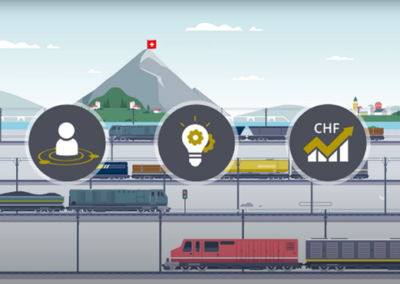
Improvement of freight transport: it is high time to do something
Representatives of the industry and interest groups had until 24 February 2023 to comment on the consultation draft entitled «Improving the framework conditions for freight transport in Switzerland». The LITRA, UTP, CI TCNA, ASTAG and VAP have jointly submitted their views (blog Rail freight transport in the territory: the industry develops a joint solution). Here is a summary of the key elements of the responses from other stakeholders.
The issues at stake:
- Abandoning wagonload traffic (TWCI) would be fatal.
- Funding must not maintain the status quo.
- Digital Automatic Coupling (DAC) and the data platform must be promoted.
- Non-discriminatory access to the market must remain possible.
- Innovative approaches at organisational level, cooperation between players
- Focus on customer benefit.
The Federal Council invited industry representatives and political parties to submit their views on the consultation project entitled “Improving the framework conditions for freight transport in Switzerland” by 24 February 2023. Many responses were received. Below we compare the statements of the representatives of certain interest groups and draw a conclusion. The Federal Council will incorporate the feedback into its message to Parliament in a second step.
Do not abandon the TWCI
With the exception of the SVP, the responses were in favour of variant 1, a further development of V1 or a completely new variant. The respondents consider the abandonment of the TWCI to be fatal. They fear the loss of security of supply, capacity shortages on the road, additional work and expense in logistics and greater efforts to meet climate compatibility.
Do not maintain the status quo through funding
Many respondents agreed with partial funding as proposed. Several responses suggested that funding should be from existing funds – preferably from the IFF – rather than from new credit. However, several respondents expressed concern that the funding is underestimated and therefore serves at most to maintain the current state. They therefore call for an increase in funding that will achieve the modal split change they are aiming for. There is a consensus that the funding should allow for modernisation and customer orientation, so as to ensure financial autonomy in the future.
Advancing digitalisation and automation
A majority is in favour of modernising rail freight transport by means of the CPD. They approve of federal funding in the form of time-limited financing until the DAC is completed.
According to the majority of responses, digitalisation also includes the interconnection of freely accessible data platforms and the simplification of cooperation between market players that goes with it.
Preserving a non-discriminatory market economy
Some voices call for a transfer mandate for freight transport, others insist on a free choice of means of transport in domestic traffic. On the whole, respondents want non-discriminatory support for different types of traffic and modes of transport. The free market economy must be preserved. Innovative approaches at the organisational level and cooperation between market players will make TFM more attractive to customers.
Preventing distortions of competition in the TWCI
The majority did not support SBB Cargo as a monopoly in the TWCI. The respondents propose adjustments to prevent distortions of competition, such as organisational and financial separation of the TWCI from the block train and cooperation between the market players.
Improving customer benefit
A need mentioned by several interviewees is that the overall design should systematically focus on improving customer benefit. This includes sufficient and properly allocated infrastructure capacity and an appropriate market system that promotes innovation and attractive offers. With regard to train path prices, the respondents would like to see a reduction – for example, on a European scale.
An underestimation of the need for action
The many responses highlight one thing: the need for action in rail freight transport is much greater than the Federal Council has shown. The two alternative solutions merely offer a choice between two lesser evils instead of a comprehensive solution. In order to have a factual debate on the financing alternatives, the respondents would like to receive clear facts about SBB Cargo’s finances.
The overwhelming majority of respondents deplored the fact that there was no coherent overview, rather than just the TFM and shipping. They cited the HVF and the forthcoming revision of the Federal Act on a Heavy Vehicle Fee (HVF), as well as the Federal Act on Mobility Data Infrastructure (MVDI).
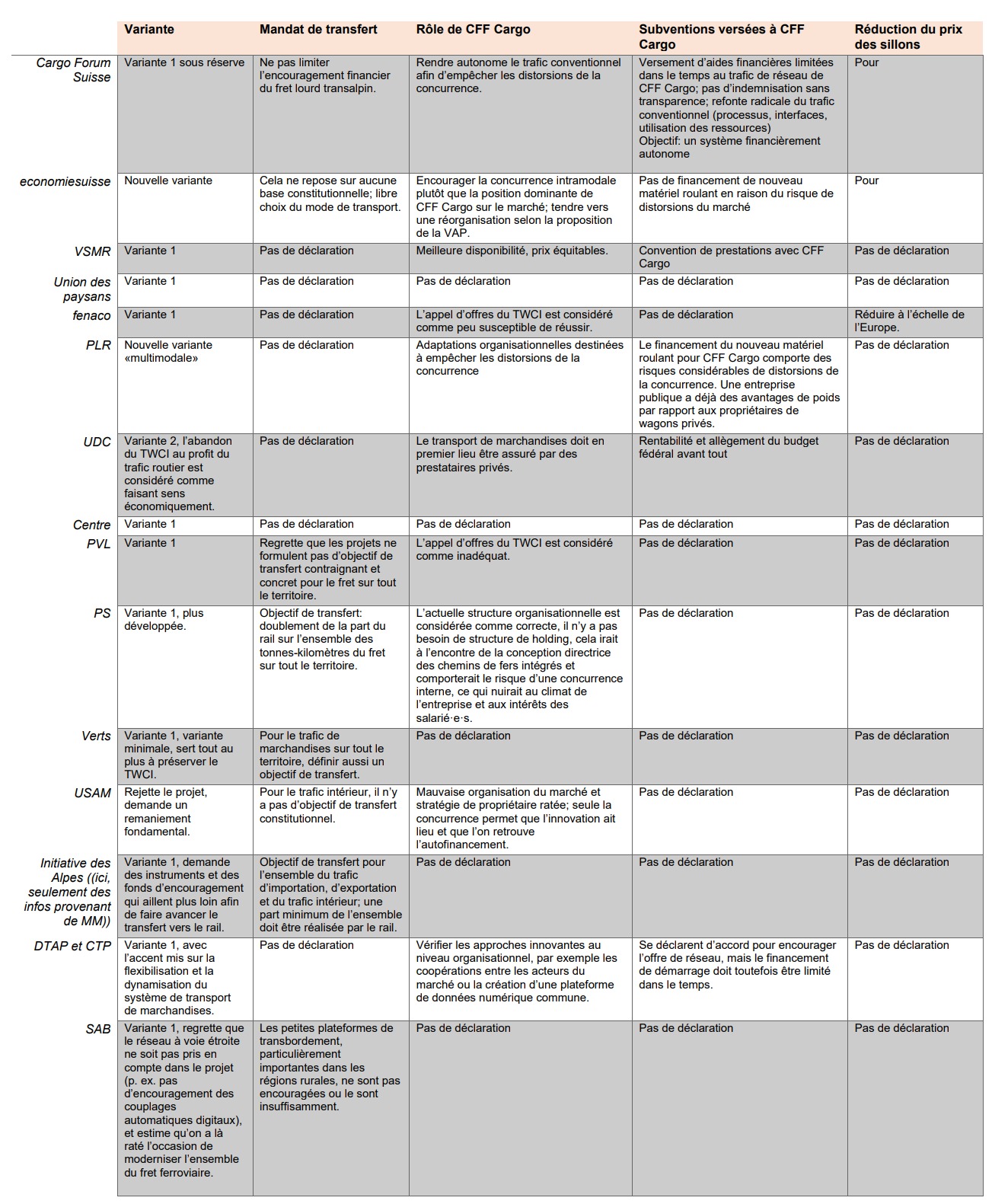
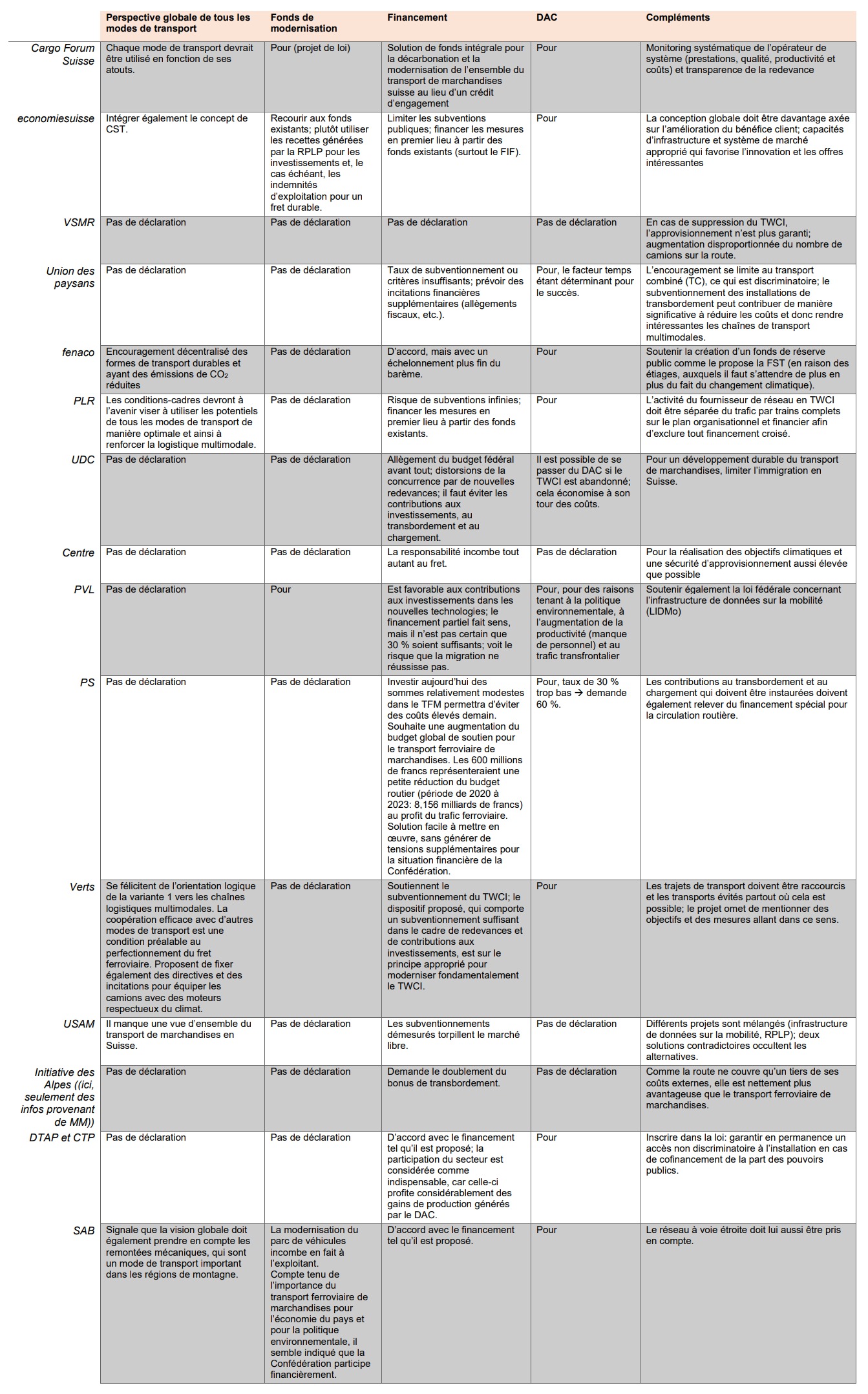
The DETEC evaluation is published here: https://www.fedlex.admin.ch/eli/dl/proj/2022/69/cons_1
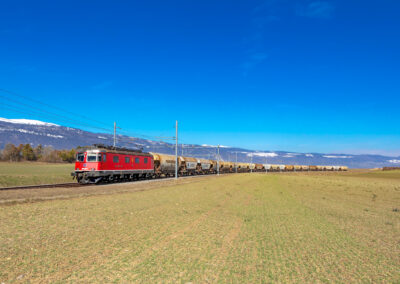
No stabilisation of SBB despite CHF 3 billion in additional federal funding
With motion 22.3008, Parliament wants to amend the Federal Act on Swiss Federal Railways (SBBG) and grant SBB financial aid of CHF 1.2 billion to compensate for pandemic-related revenue shortfalls in long-distance transport and to relieve the financial burden on long-distance transport with a reduction in train path prices of CHF 1.7 billion. Here is a first critical look.
This is what it’s all about:
- VAP rejects capital subsidy of a total of 3 billion francs to SBB – entrepreneurial responsibility is needed
- Maintaining the SBB monopoly in long-distance traffic is problematic from a European policy point of view – an orderly migration strategy is needed to open up the market.
- The amendment of the law should demand more entrepreneurial responsibility and provide for monitoring of SBB in long-distance traffic.
- LSVA must not be misused for reserves in the BIF
Motion 22.3008 “Support for the implementation of SBB investments and a long-term vision in Covid 19 times” calls for a draft law according to which SBB’s deficits caused by the Covid 19 pandemic would be considered extraordinary and SBB would be granted corresponding financial aid. This should enable the investments to be carried out as planned in accordance with the decisions of the Federal Assembly.
Initial situation
The politically approved extensions to the railway infrastructure will lead to an expansion of services. This requires investments in rolling stock. The expansion of services – at least in the initial phase – is recording deficits in long-distance and regional transport; the latter is financed by the corresponding credit decisions in regional passenger transport (RPV) by the federal government and the cantons.
During the pandemic, long-distance transport suffered large deficits which, unlike RPV, were not financed. Instead, the Federal Council took the view that it was in the entrepreneurial risk area of profitable long-distance transport to bear the consequences of the pandemic.
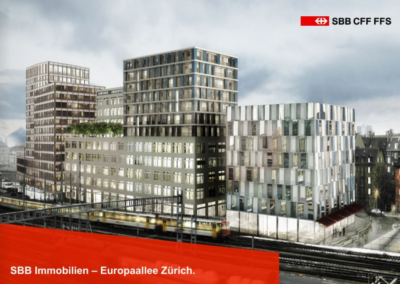
Investments by the SBB in investment properties near stations require large sums of money, but overall they increase the attractiveness of the rail passenger service. This ignores the fact that rail freight traffic suffers at locations in conurbation centres; where investment properties are built, logistics locations disappear (Zurich Justice Centre, Europa-Allee Zurich, etc.). SBB Real Estate benefited from a generous opening balance sheet and generates substantial profits. These are used for the pension fund (PF), which regularly attracts media attention with the highest conversion rates.
Proposal of the Federal Council
The Federal Council proposes a one-off capital contribution of CHF 1.25 billion (losses in long-distance traffic from 2020 to 2022). This means that SBB does not have to make any entrepreneurial contribution, just as it does in the RPV.
The Federal Council also proposes the waiver of contribution margins in the years 2023 to 2029 amounting to 1.7 billion francs in order to raise profitability in long-distance traffic to an appropriate level (4 to 8% return on sales). These must be compensated for as missing revenues in infrastructure by additional operating contributions to SBB Infrastructure from the Rail Infrastructure Fund (BIF). According to the Federal Council, the liquidity in the BIF is sufficient for this.
Furthermore, the financing instruments are to be corrected. The previous granting of vault loans, which led to SBB’s indebtedness outside the debt brake, is to be replaced in future by loans via the federal budget. This means that parliament will now decide on loans, and at the same time the debt brake will apply. The change is to take effect from a debt level to be defined, as of the end of 2023: CHF 11.7 billion. Expansion steps that lead to unprofitable service expansions will therefore be subject to the debt brake. After the capital injection of CHF 1.25 billion, vault loans can continue to be granted until the threshold of CHF 11.7 billion is exceeded again.
The liquidity of the BIF is to be additionally ensured. To this end, the Federal Council proposes that two-thirds of the HVF be placed in the BIF. The federal share of the HVF should only be used to offset the uncovered costs from road transport once a reserve of CHF 300 million has been shown.
Our assessment
We reject a capital subsidy, as this would mean that SBB would not have to make any entrepreneurial contribution to the consequences of the pandemic in its own economic and monopolised long-distance traffic. At the very least, monitoring of SBB’s entrepreneurial activities in long-distance traffic should be introduced to accompany the capital subsidy.
The correction of the financing instruments is necessary. Since the state-owned enterprise has a de facto state guarantee, vault loans should no longer be possible in future. Instead, parliament should decide on loans in compliance with the debt brake and in awareness of this state guarantee. We therefore reject the reservation of the debt ceiling of CHF 11.7 billion with the option of further vault loans. Unless the upper limit is noticeably reduced again.
Ensuring the liquidity of the BIF is unnecessary in view of sufficient reserves. By waiving contribution margins, the Confederation is reducing the entrepreneurial pressure on SBB. At the same time, it maintains SBB’s monopoly in long-distance transport. This is highly problematic in terms of European policy, as the EU has liberalised long-distance transport and expects Switzerland to adopt this liberalisation step. We therefore demand a migration strategy from the Federal Council for the opening of the market in Switzerland and, in parallel, monitoring of the entrepreneurial activities of the SBB in long-distance traffic.
We also reject the misuse of the HVF to ensure the reserve of the BIF. The HVF is intended to compensate for the environmental costs of road transport and to contribute to a more climate-friendly choice of transport mode. As an incentive tax, it is not levied for infrastructure expansion and maintenance.
-and maintenance of infrastructure, from which passenger transport essentially benefits. On the contrary, the HVF should be earmarked for rail freight transport and for measures for the climate-friendly development of road transport.
Alternatives such as adjustments to the offer, foregoing investments or selling assets are mentioned in the consultation documents but rejected. We do not agree with this assessment. Non-operational assets such as Gateway Basel Nord and other combined transport transhipment companies, all of which must be available on a non-discriminatory basis in accordance with Art. 8 GüTG, could be sold. Sales of SBB’s other real estate portfolio would also be possible without operational restrictions. Reductions in services in the off-peak hours would also contribute to easing the construction site situation at night.
Subsidising wagonload traffic: preventing distortion of competition and discrimination
We comment on the Federal Council’s consultation draft “Further development of the framework conditions for Swiss freight transport”. We critically assess the proposals from the point of view of freight rail customers and demonstrate the necessity of a legal independence of system transport.
Yes and but to variant 1
With variant 1, the Federal Council wants to digitalise rail freight transport with automatic digital coupling (DAK). In this way, it positions rail as part of multimodal logistics. Accompanying this, it provides for spatial planning measures, investment aid and transhipment and loading incentives that cushion the additional costs of the system break between rail and other modes of transport. Until automation is implemented, the Federal Council wants to compensate for the uncovered costs of system traffic. We welcome the thrust of variant 1 in essence, but have reservations and note a fundamental need for adjustment.
Making the subsidised first/last mile independent
We want to and must make system transport more sustainable. This requires a redesign of all processes, incentive instruments, market mechanisms and interfaces within multimodal freight logistics. The goal must be a self-sufficient and market-based system that does not discriminate against any freight railways and is reliably available to shippers.[1] Until this new concept is implemented, we agree to temporary financial aid for SBB Cargo’s network traffic. This financial aid is based on performance-related, competition-neutral and non-discriminatory incentives – and on making the first/last mile independent in a legally independent SBB company. This is the only way to guarantee Switzerland’s security of supply and the future viability of the railways.
Preventing distortion of competition and discrimination
By transferring responsibility for system traffic to SBB Cargo, the Federal Council is monopolising around 70% of the freight transport volume. At the same time, SBB Cargo is also the main provider of block train and combined transport services. This combination of interests can lead to discrimination against system and block train customers on the one hand, but also to distortions of competition vis-à-vis other providers of block train and combined transport services on the other – irrespective of the compensation paid to system transport. This consists of the nationwide service of transhipment and loading facilities and should therefore be legally independent. Since the corresponding services and resources are already combined in an independent organisational unit today, the transformation effort would remain low. However, the Federal Council would have to specify Art. 9a para. 7 of the Freight Transport Act (GüTG).
Consistently supervise new system operator
During the limited phase of public compensation, but also afterwards, the system operator should be consistently monitored in terms of performance, quality, productivity and costs. Care must be taken to ensure that the financial aid is quickly reduced and that SBB Cargo’s business model is modernised. This prevents disadvantages and ensures smooth, nationwide system traffic in the long term. Targeted monitoring of the development of volumes and customer structure should guarantee the latter in particular in the long term. Such monitoring requires an amendment to Art. 9a GüTG.
Additional background information and opinions can be found in our response to the consultation on the «Weiterentwicklung der Rahmenbedingungen für den Schweizer Gütertransport».
[1] Cf. video “Rail freight transport of the future”: www.cargorail.ch/#video
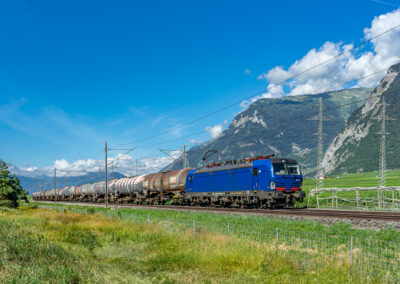
Consultation on surface rail freight transport: two variants, many question marks
The Federal Council’s report on the «Future orientation of rail freight transport in the area» was sent out for consultation. In it, the economic viability of single wagonload transport is presented as impossible without any evidence. As alternatives, the federal government envisages shifting rail freight transport to the road in the medium term or subsidising it permanently. We think: It’s more complicated than that.
That’s the point:
- Two variants and what they do not take into account
- Fundamental reorganisation of the network necessary
- Outsourcing of the last mile central to more competition
The further development of rail freight transport in the country is currently the subject of heated debate. On 2 November 2022, the Federal Council submitted its dispatch on the «Further development of the framework conditions for Swiss freight transport» for consultation. The report suggests that there will be no more single wagonload transport without financial support; block trains will not be subsidised anyway. The Federal Council proposes two options:
- The single wagonload transport in the area is further developed and modernised through digitalisation, automation and the creation of a data exchange platform. Locations that are necessary for successful area service will be better integrated into the spatial planning of the cantons and the federal government. Until the modernisation measures take effect, the single wagonload transportwill be financially supported by ordering the service in the form of investment and operating contributions.
- The single wagonload transport in the area will be discontinued. The rail system will be reduced to block trains, resulting in a massive downsizing of SBB Cargo.
Both variants are supported by the migration to digital automatic coupling (DAK), the promotion of multimodality and Rhine navigation, and the financing of climate-neutral drives on rail and Rhine.
Fundamental reorganisation instead of rhetoric
The single wagonload transport in the area comprises a good 70% of the traffic volume in inland transport by rail. The Federal Council’s question as to whether it should be preserved is therefore rather rhetorical. However, his conclusion that it can be successfully operated by SBB Cargo after modernisation with the help of DAK is not a realistic option either. Rather, the rail freight transport in the area must be fundamentally restructured and opened up to other market players. In this respect, the Federal Council’s report falls far short of the expectations of customers and its own announcements.
Digitalisation and automation will make rail freight transport more efficient and, above all, more interesting for the logistics industry: For the first time, rail freight transport can be integrated online into the logistics chains of the economy and into the train protection of the infrastructure managers. The DAK in conjunction with the state data exchange platform in accordance with the Federal Mobility Data Infrastructure Act (MODIG) is thus THE central lever for the competitiveness of the rail freight transportand success factor number one of this legislative proposal.
However, the single wagonload transport, which has been a monopoly of the SBB since the railway reform in 1999, must be fundamentally restructured. The roles and processes must be completely rethought. This internal renewal requires the involvement of other market players in order to design a service with lower fixed costs and correspondingly higher flexibility. In this respect, the Federal Council falls behind its report of 30 March 2022. While in its diagram there it showed a new interplay of the various players in the rail freight transport system (p. 50/75), in the draft message it merely proposes a continuation of the currently not very successful model of «all services from a single source» of SBB Cargo. Once again, the question of the future viability of a broad range of services in the single wagonload transport in Switzerland is equated with the further development of the state-owned company SBB Cargo.
In fact, customers want a variant 1+. In addition to the digitalisation of rail freight transport and promotional measures for more multimodality, this also includes the reorganisation of single wagonload transport. This includes the neutralisation and financial support of short-distance delivery (last mile), the creation of a neutral digital booking and data exchange platform and the possibility of integrating private wagonload services.
Industry united for big changes
The IG Wagonload Transport interest group calls for an efficient network offer (hub and spoke) with more competition and less discrimination. The Federal Council should take up our common vision of rail freight transport – which, by the way, was supported by the Federal Office of Transport FOT – in the definitive Federal Council message (cf. VAP blog post «Critical view of the federal government’s long-term perspective»). The same applies to the consolidated position of the freight railway managers of the VöV on how the rail freight transport can be operated successfully in the long term in the area (cf. blogpost «Industry develops joint solution»).
The Federal Council expects a common stance from the freight transport industry. It should take a more differentiated look at their joint assessment and the numerous nuances of the rail freight transport in the area when shaping its future and take greater account of them.
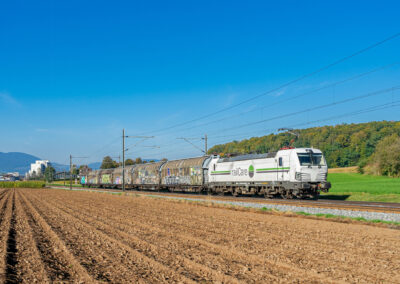
Rail freight transport in the territory: the industry develops a joint solution
The freight railways of the umbrella organisation of public transport (VöV) and we at the VAP are holding intensive talks on the upcoming reorganisation and modernisation of rail freight transport in the territory and its sustainable promotion. Here is a summary of the state of the debate and the advantages of an incentive-based funding model.
Those responsible for rail freight at VöV and we at the VAP, as the voice of the shipping industry, want to show together that rail freight transport in the territory can be operated successfully in the long term. The discussions of the industry representatives on the future of inland transport logistics are in full swing and should result in a common position on rail freight transport when the Federal Council sends its message on the “Future orientation of rail freight transport int the territory” for consultation.
Building a sustainable network
The industry players are striving for an efficient network offer (hub and spoke). The operators of rail freight transport and customers in domestic transport should benefit from this in the same way. This requires a new distribution of roles in production and a sustainable financial support model with distinct incentive mechanisms. This must be competition-neutral and at the same time as simple as possible. It must not allow any market and competition distortions between subsidised and non-subsidised freight railways and services or similar disadvantages. The subsidy model should contain few, but implementable incentive mechanisms with maximum effect. Furthermore, it should adapt to developments; the reduction path of the subsidies ideally runs parallel to the AS 2035 and the Zurich bypass line.
Improved framework conditions
In order for the rail freight transport to develop its strengths, better framework conditions are needed – irrespective of the funding model and understanding of its role. These include:
- Reduction of the train path price to European level
- Extension of the reimbursement of the HVF to all road-rail-ship transports
- Extension of investment subsidies to siding owners and operators
- Automation/digitalisation, in particular through digital automatic coupling (DAC)
- Freely accessible data and information platform for more efficient operational handling
Highly effective incentive mechanisms
Industry representatives envisage incentives to shippers and financing and neutralisation of the first and last mile. Incentives to shippers include compensation for new traffic, the reopening of sidings after longer operational interruptions, efficiency improvement measures in shunting operations and for own manoeuvres on the last mile. The operation of the first and last mile is to be financed through compensation to the service provider. The latter offers short-distance services for all freight railway companies at defined (strongly cost-under-recovering) prices.
New role for SBB Cargo
SBB Cargo continues to assume the role of network provider. It handles main runs and shunting, is responsible for planning network traffic and ensures efficient bundling of traffic with individual wagons or wagon groups. To this end, SBB Cargo is in sole contact with the shippers who commission transports in network traffic and in dialogue with the service provider who serves the first/last mile.
In the favour of competition
The representatives of VöV and VAP advocate a sustainable industry solution that offers more planning and investment security and increases the attractiveness of the rail freight market. They envisage a competition-neutral support mechanism that uses existing structures and compensation approaches. The industry’s support model can increase its modal shift effect by offering additional incentives to third parties with a favourable first and last mile. This eliminates the make-or-buy decision for the freight railways. SBB Cargo can operate the network on its own. The solution, which is emerging from the dialogue between freight railways and the loading industry, is intended to strengthen the competitiveness of the players and enable innovation and customer orientation.
It is interesting to note that in 2014, our study had already recommended “non-discriminatory service of the last mile for all railway undertakings”.
- PDF Summary of our study “From integrated to market-oriented rail” (in German, in French)
«BAHN 2050» – A CRITICAL LOOK AT THE FEDERAL GOVERNMENT’S LONG-TERM PERSPECTIVE
The Federal Council wants to further strengthen the railways in the long term. To this end, it has revised its long-term rail strategy. It is now focusing on improved access to the railway and more capacity on the east-west axis with new multimodal transhipment platforms and facilities for city logistics. Here is a critical appraisal of this perspective.
With a view to future expansion steps of the railway infrastructure, the Federal Council has adapted its long-term rail perspective from 2012 and published details from the meeting of 22 June 2022. Up to now, the Federal Council has concentrated primarily on eliminating bottlenecks and increasing frequency. With the upcoming expansion steps within the framework of the BAHN 2050 perspective, it wants to improve the rail service primarily on short and medium distances, for example with additional S‑Bahn services and an upgrade of the suburban stations. In this way, it takes into account the fact that the greatest potential for modal shift to rail lies within the agglomerations and in connections between regional centres and agglomerations.
Promoting modal shift in freight transport
In freight transport, access to the railway is to be improved and capacities on the east-west axis increased. This will be achieved with new multimodal transhipment platforms and facilities for city logistics. With the targeted modal shift, the Federal Council wants to strengthen its strategy for achieving the climate goals and better coordinate spatial and transport planning. This aspiration is expressed in its vision: «Thanks to the efficient use of its strengths, the railway makes a major contribution to the 2050 climate goal and strengthens Switzerland as a place to live and do business».
Conflict of goals: free choice of transport
The Federal Council defines one of the main goals of RAIL 2050 as increasing the share of rail in the modal split for both passenger and freight transport. This goal contradicts the constitution, which guarantees the free choice of transport mode for domestic traffic. There is also a contradiction with the Federal Council’s previous goals, in particular with goal 7 of DETEC’s 2040 orientation framework, «Future Mobility». According to this, transport users in Switzerland are free to decide which mobility offers they use and combine.
Intramodal competition and market-based offers
For us at the VAP, the modal split is the result of a well thought-out infrastructure, transport and spatial planning policy. As the voice of the shipping industry, we advocate favourable framework conditions that boost intramodal competition on the railways and ensure customer orientation and innovation with market-based offers. In order for such offers to develop their potential, sufficient capacities on the network with high-quality and inexpensive train paths as well as sufficiently well-developed logistics locations are necessary. This is the only way to increase the share of rail freight transport in the modal split. We therefore warn against ideas of further networks and coordinated system train paths by SBB Cargo. These hinder the desired intramodal competition and have a correspondingly negative effect on customer orientation and innovation.
Ensuring connection to Europe
We welcome the Federal Council’s focus on short and medium distances. However, it ignores the complex potential of international transport. This is regrettable. In our opinion, the BAHN 2050 perspective should provide for a favourable connection of the Swiss railway network to the international corridors and the Rhine ports as well as southern ports in the destination area. The Federal Council is explicitly called upon to meet this requirement by Motion 22.3000 «Continuation of the successful modal shift policy and guarantee of national supply security thanks to the expansion of the Wörth-Strasbourg Neat feeder line on the left bank of the Rhine» and Motion 20.3003 «State treaty for a Neat feeder line on the left bank of the Rhine».
A clear yes to digitalisation
We consider the intention to consistently use efficiency gains through automation and new technologies as positive, as well as the goal of flexibly and optimally networking rail services with other modes of transport and services as part of overall mobility. In addition to the aforementioned multimodal transhipment platforms, the framework and market conditions for freight railways play a decisive role here. In addition to digital automatic coupling (DAK), this includes open data and booking platforms in particular. With their help, data from the entire value chain is recorded and exchanged transparently so that rail freight customers can easily book their consignments and track the flow of goods in real time.
Investing in the future with the DAC
The digital automatic coupler (DAC) is much more than what its name suggests. It is the basis for the complete digitalisation and automation of rail freight transport in Switzerland – and thus a far-sighted investment in the future.
Rail freight 4.0
We at VAP are committed to a competitive rail freight system in order to ensure that our members have a free choice of transport mode. To this end, we are active at various levels. One is the digital automatic coupling, or DAC for short. With this, European rail freight can reach the next dimension of modernisation.
The DAC allows automatic coupling, as the name suggests. But that is by far not all. We should rethink Swiss rail freight transport with its cross-system processes as a whole. In this view, the DAC enables a continuous power and data transfer in the train. Such a transfer is the prerequisite for the digitalisation and automation of rail freight transport. It is tantamount to a quantum leap in quality and customer benefit, as all data is available digitally via all interfaces and logistics participants. Digital train control will also lead to a groundbreaking flexibilisation of network use and thus to a significant increase in network capacity. This offers rail freight transport the unique opportunity to play a key role in multimodal logistics.
Genuine innovation for 100 years
The last real innovation in European rail freight transport was electrification. It was 100 years ago. As a result, the competitiveness of rail freight has steadily declined. With the investment in the DAC, rail freight transport can now catch up on several stages of development at once. Because it offers new functions with groundbreaking advantages (cf. Figure 1).
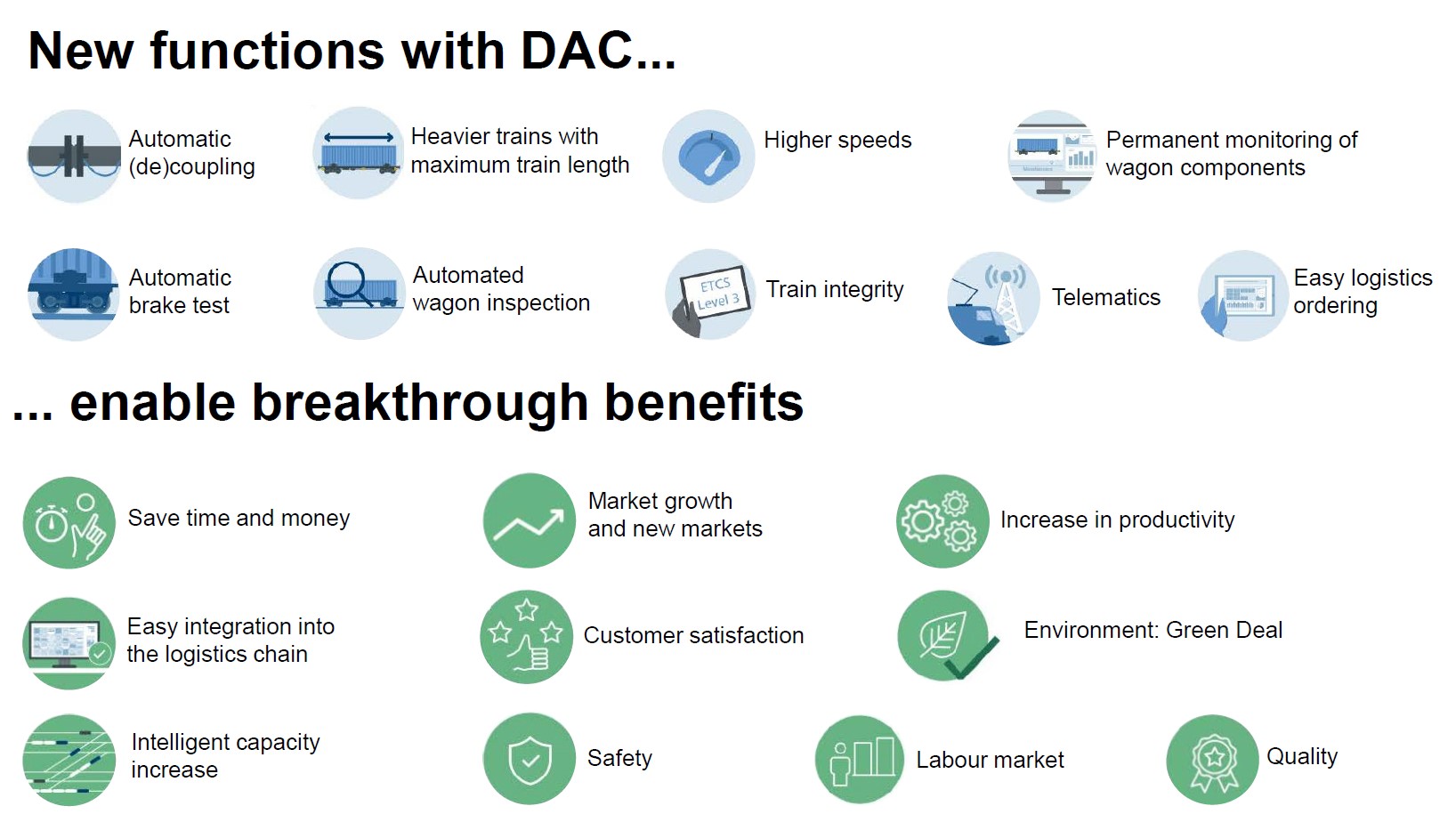
Figure 1: The DAC brings more benefits than the automation of the coupling process.
Rail freight transport as the backbone of supply
Rail freight transport is a central component of the supply of goods. In Switzerland alone, we expect freight transport volumes to grow by 30 percent by 2050. Transport capacities on road and rail are limited. Capacity expansion is mainly possible through improved interfaces of the multimodal logistics chains. And rail freight transport also has a lot to offer in terms of sustainability. Transport accounts for one third of greenhouse gas emissions each year. With the Green Deal in Europe and the long-term Climate Strategy 2050 in Switzerland, politicians have set ambitious goals. Low-emission rail transport is proving to be extremely competitive.
Support needed
Leading rail freight transport into a new era of progress with the DAC cannot be achieved single-handedly. Our industry is dependent on support. This includes, on the one hand, political commitment to ensure seamless coordination between Switzerland and the EU. On the other hand, it requires financial support. Because the industry players cannot bear the high initial investments alone. The added value of the DAC is designed for the long term and distributed among several market participants (cf. Figure 2). In our view, a deliberate start-up financing by the federal government is imperative. But the overriding goal must remain self-sustainability.
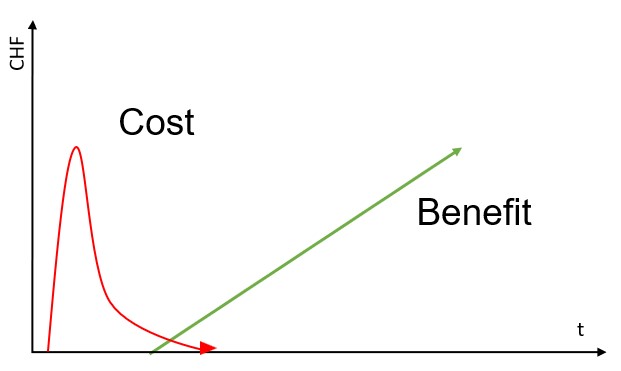
Figure 2: The benefits of the DAC can be seen in the long term and are distributed among several market participants.
Considered retrofitting
We consider it sensible to retrofit the existing fleet of wagons restrictively and to concentrate on young and market-relevant wagons. Wagon owners should only retrofit their wagons if this is cheaper over time than buying new ones. In addition, the Confederation should provide for a scrapping allowance for wagons that have not been written off, the use of which the wagon keeper can decide himself. The fact is that a large number of wagons must be converted in a coordinated manner within a short period of time so that the wagons remain compatible with each other and the DAC unfolds its added value as soon as possible.
You can find more on the subject in this presentation.
Future of rail freight transport in the area
Shaping rail freight transport for the future
The Federal Council’s report Bericht «Future orientation of rail freight transport in the area»[1] of March 2022 provides a welcome opportunity to rethink the Swiss rail freight transport system with its intermodal competition and cross-system processes as a whole. A holistic new conception starts not only with the (start-up) financing of the EMLV or the DAC, but with all processes, incentive instruments, market mechanisms and interfaces of multimodal freight logistics in Switzerland. The goal must be a self-sustaining, market-based rail freight transport system that includes all freight railways without discrimination on the basis of intramodal competition and supports shippers as a reliable partner. In this context, any financing based on the proven model in transit traffic must primarily benefit the customers of all freight railways and offer performance-based, competition-neutral incentives without any discrimination. Only in this way and only with combined forces can innovations and investments by the private sector in rail freight transport develop. And only in this way can rail freight transport in the countryside be made fit for the future.Federal Council considers long-term financial support
According to the report, the Federal Council wants to maintain single wagonload traffic (SCC) in the future and does not rule out long-term financial support. According to the definition of the Federal Office of Transport (FOT), single wagonload traffic comprises the transport of groups of wagons in unaccompanied combined transport (UCT) and conventional rail freight wagons bundled together for the main run. The Boards of Directors of SBB AG and SBB Cargo AG assess in their Financial Report 2021[2] a subsidisation of their rail freight services as necessary and probable. The Federal Council and the federal companies are thus apparently in agreement that financial support for rail freight transport is necessary in the area. However, they base their assessment of volume and financial viability solely on information from SBB Cargo. The other freight railways, most of which are organised in the private sector, are not included in this assessment. In our view, a new perspective is urgently needed here.Adopting a new perspective
SBB Cargo has been operating nationwide rail freight services as a monopoly since the 1999 Rail Reform I – with little success, as a review 25 years after the parliamentary decision shows. This must change: The freight railways active throughout Switzerland and their customers can join forces and, under the leadership of the Wagonload Transport Interest Group (IGWLV)[3], redesign rail freight transport in Switzerland.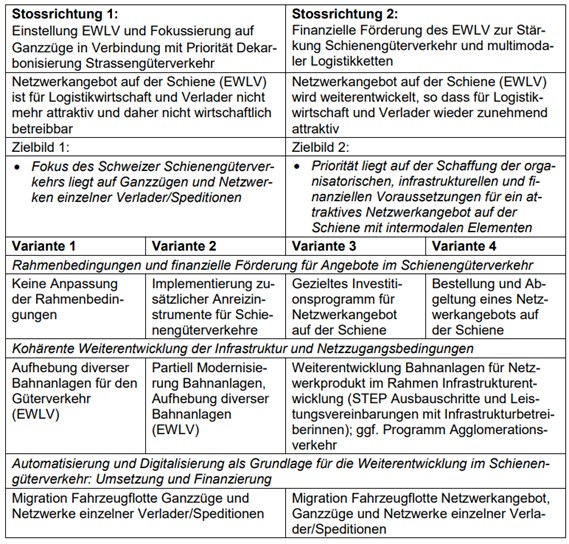
Figure 1, page 51 in the report «Future orientation of rail freight transport in the area».
For the further development of rail freight transport in the area, the report presents two directions (Figure 1): one involves the discontinuation of EMLV, the other the financial promotion of EMLV. From the VAP’s point of view, this is too narrow a view. A change of perspective is necessary in two respects: First, actors need to redefine their understanding of their roles and rethink their processes. Secondly, a neutral view of the financial situation is needed. For neither the envisaged technical advances (keyword digital automatic coupling DAC) nor the purely internal view of SBB Cargo can bring about a reorganisation. This should also be the focus of the current discussion about the future. The organisational form shown in the report (Figure 2) represents a mental jumping-off point for working out further variants of directions.
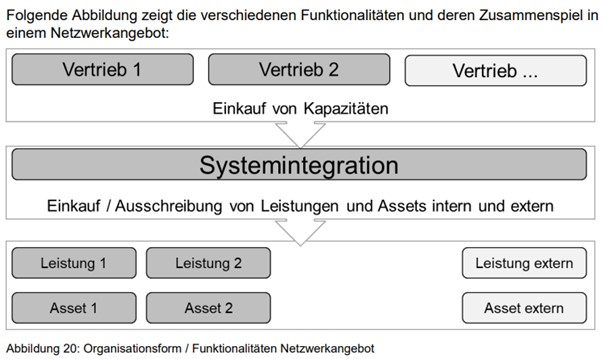
Figure 2, page 50 in the report «Future orientation of rail freight transport in the area».
Fact-based decisions
In order to assess the financing requirements of regional rail freight transport, it is imperative to have an analysis of the economic viability carried out by external neutral experts. If surface rail freight is indeed unprofitable, a distinction must be made as to whether SBB Cargo’s monopoly position or the system itself is responsible. The neutral third party must also examine whether economic viability, as required by the Freight Transport Act (GüTG[4]), is currently being pursued at all. Only when a detailed analysis of the current situation is available can parliament decide on appropriate measures.
Limit funding
If financial support proves to be undoubtedly appropriate, it should be considered as temporary financing for a fundamental new concept – not as permanent subsidisation. Temporary start-up funding can support the development of a competitive rail freight transport system until its simultaneous digitalisation and automation and the commissioning of new network elements from the 2035 expansion stage have been completed. Permanent funding, on the other hand, would undermine the market-based incentives for competitiveness and self-sufficiency of rail freight transport and make further development of rail freight transport in Switzerland impossible.
[1] “Future orientation of surface rail freight traffic”, Federal Council report in response to KVF‑S postulate 21.3597 of 10 May 2021. In 1999, with Rail Reform I, Parliament transferred the monopoly for the operation of surface rail freight traffic to SBB Cargo AG. Its share of rail freight traffic in domestic, import and export traffic is around 60%. The remaining 40% is carried in block trains via sidings and terminals.
[2] «SBB Financial Report 2021», chapter «Bewertungsunsicherheiten rund um die Coronapandemie und um das Geschäftsfeld Cargo Schweiz», p. 84.
[3] The Wagonload Transport Interest Group (IGWLV) was founded in 2018. It represents the interests of VöV, SBB Cargo and VAP with the mandate to modernise rail freight transport in the area and make it more efficient, in accordance with Art. 3a of the Freight Transport Act. President: Frank Furrer, Secretary General VAP, Vice President: Désirée Baer, CEO SBB Cargo –> Reports on IG WLV
[4]«Bundesgesetz über den Gütertransport durch Bahn- und Schifffahrtsunternehmen (Gütertransportgesetz, GüTG)» Art. 2 Para. 2