
The VAP promotes freight transport by rail.
The VAP Association of Shippers campaigns for market-oriented framework conditions and an attractive Swiss rail freight system. Relevant topics:
Freight industry
- How do we shape the future of freight transport?
- What moves the freight industry?
- An overview of the players in rail freight transport.
Network
Here you will find useful information on railroads, their organization and network access.
Financing
Information on financial support and charges in freight transport.
Sites
Everything about free loading, terminals, sidings or even multimodal logistics hubs.
Interoperability
The VAP is committed to harmonizing the framework conditions so that trains can run effortlessly on European rail networks.
Sustainability
For a far-sighted future, various areas need to be designed sustainably.
Innovation
How can we drive innovation in freight transport?
Operations
In favor of fair competition, we want to utilize the strength of all modes of transport and combine them optimally. Because this makes the route shorter – and more economical – for everyone.
Events
Here you will find further information and documents on our events Forum Freight Transport, our General Assembly and others.
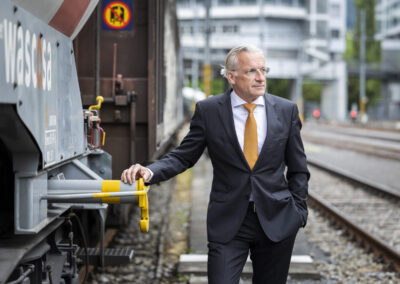
«We want to be faster and better than the others in the future as well.»
In June 2022, the takeover of the family business WASCOSA by Swiss Life and Vauban was announced. We wanted to know more about the background to this sale and the vision of WASCOSA from the former owner and future Chairman of the Board of Directors Philipp Müller.
Mr Müller, the news of the sale of your successful family business came as a surprise. What will change?
Philipp Müller: Less than you might think at first glance. With this step we have secured the future of WASCOSA. Of course there will be a change from a family-run to an investment-driven company. But the spirit of WASCOSA will remain. We want to continue to act faster and better than others, to be successful as a team and to put customers’ interests before our own. These goals are demanding, but doable.
What prompted you to take this step?
The succession plan and securing the future of the company. Neither of our children was interested in succeeding me. So we had to find an external solution to this question. Eight years ago, we had already hired a CEO from outside the family, Peter Balzer. In addition, our market is currently undergoing an enormous shakeout. Of the ten largest car rental companies in Europe, we are the only ones who have not experienced a merger or takeover. Those who are still in the game are constantly getting bigger, making major long-term investments and taking high financial risks. We simply needed more financial strength for WASCOSA to be able to survive as an SME in this market. We found these strong financial partners in Swiss Life and Vauban.
What other solutions were on the table?
At first we considered a minority shareholding by third-party shareholders. However, this did not result in an optimal solution for the parties involved. Selling to a competitor was never on the table. In the end, long-term cooperation with a strong financial partner proved to be the most sustainable.
«WASCOSA has established itself from a small, unknown rental company to a successful supplier of freight car systems throughout Europe through innovation, customer proximity and agility.»
What experiences from the past will shape the future of the company?
WASCOSA has established itself from a small, unknown rental company to a successful provider of freight car systems throughout Europe through innovation, customer proximity and agility. We want to maintain this latter position. One example of our innovative strength: there is currently a strong trend towards modular freight car concepts. We introduced such concepts 15 years ago. Now that the trend is catching on, we are ready for the market. In the last 60 years of our company, an uncompromising customer orientation has made the difference in our daily business. We want to keep it that way too. It is in the interest of the new owners that WASCOSA remains at its core what it has always been: an innovative and customer-oriented company.
How will you master this change process?
The participation of Swiss Life and Vauban as third-party shareholders was derived from an intensive strategy process with around 15 employees. After the decision was made, we introduced the new shareholders to the company at a one-day event. Throughout the entire strategy process, we wanted to avoid uncertainty, mistrust and false assumptions on the part of management and employees. We succeeded in doing so, and we are doing everything we can to ensure that we also succeed under the new ownership. CEO Peter Balzer and I will still be on the Board of Directors. This is a strong message with regard to continuity and the future of WASCOSA.
«The DAC is a key project with enormous potential to move freight wagon transport forward.»
Where do you see the most urgent need for action in rail freight transport?
There are different starting points. We need sufficient capacities on the network, i.e. more train paths. In addition, country-specific obstacles should be removed. And finally, rail freight transport is dependent on targeted financial support to get innovations rolling, for example the digital automatic coupling (DAC).
Speaking of DAC: what do you think about it?
It is a key project with enormous potential to move freight wagon transport forward. However, we have little influence on this highly political topic. We have been working on the electrification of freight wagons for several years. Here, of course, the DAC gives us an additional boost.
Is the real added value of the DAC recognised by the industry?
Our industry is not too keen on innovation and also not very future-oriented. The automation of coupling by the DAC has arrived. I am not so sure about its potential for digitalisation. As always, it probably first needs someone to lead the way and make the efficiency gains clear.
You have been involved in the VAP’s Executive Committee (GLA) for years. How do you describe the work of the VAP?
The VAP is characterised by a high level of competence and a pleasant working relationship. The association’s activities are driven by the cause and not by the ego of individuals. The VAP is the leader in some areas. This is shown by the high level of participation at home and abroad in events such as the forums. This interest proves that the VAP takes up political, economic or legal issues proactively and constructively. I found the get-together at the GLA very positive. In the dialogue with SBB, the association shows staying power. Here, passenger transport comes first, then infrastructure, then real estate and only then rail freight. That makes it all the more important to keep at it. The patience and constant cooperation of Frank Furrer’s team stand out.
What strengths do you attribute to the VAP?
One of its main strengths is the large number of shippers among its members. The VAP networks all the players in freight transport. In addition, it offers the shippers’ industry a highly interesting and relevant platform. I think that you can only make successful policy if you represent all interests.
How has the VAP supported you and your WASCOSA?
We have had very good experiences with the VAP. It has even supported us competently and successfully all the way to the Federal Court.
What else would you like to see from the VAP?
That it becomes more visible in the media. The VAP could appear more prominently as an opinion-leading expert on rail transport and thus increase its public profile, just like the TCS or ASTAG.
To whom would you recommend cooperation with the VAP?
Everyone who is interested in rail freight transport. I am thinking above all of associations from other modes of transport. For a long time now it has no longer been just about rail versus road, but about sensible multimodal co-existence.
What has not yet come up in this conversation?
The topic of sustainability. Rail freight transport is one of the most important drivers and carriers of sustainable transport. Incidentally, this was also one of the reasons why I took over from my father-in-law at WASCOSA 30 years ago.
Mr Müller, thank you very much for the interesting interview.
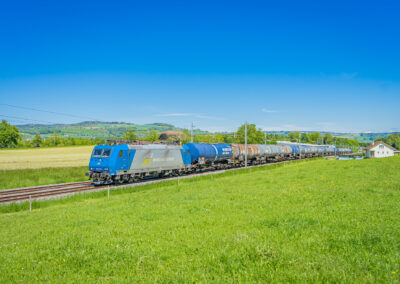
Economic advantages of a competitive freight railway
Freight transport plays a crucial role for the national economy as it enables the exchange of goods and services. In view of the challenges such as limited road capacity and climate change, the shift of freight transport to rail is becoming increasingly important. Here we explain the economic benefits of a modal shift.
Limited road capacity:
The road infrastructure is limited and is already reaching its limits in many regions. Due to the increased use of HGVs in freight transport, traffic on the roads continues to rise, leading to congestion, delays and increased transport costs. Shifting freight traffic to the railways relieves the roads. This enables more efficient use of existing infrastructure and reduces the need for expensive road extensions.
Climate change and environmental pollution:
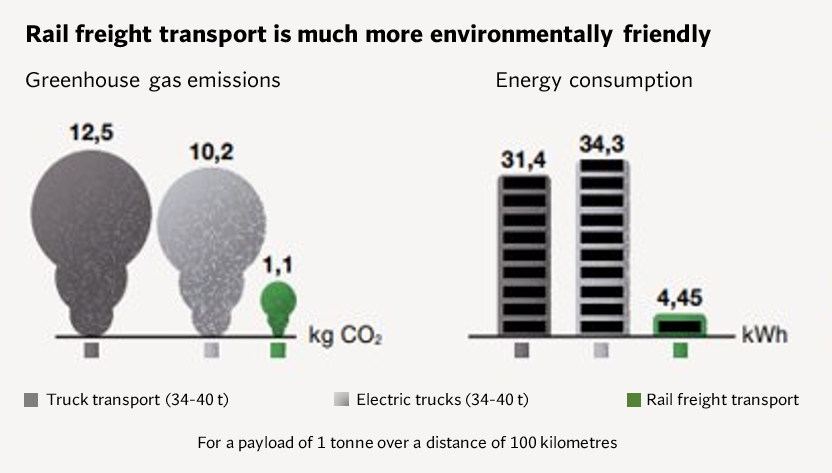
The transport sector contributes significantly to CO2 emissions and other harmful environmental impacts. Compared to road transport, rail transport is more environmentally friendly, as trains produce on average fewer emissions per tonne-kilometre. In addition, rail transport reduces noise levels and minimises air pollution in urban areas, resulting in an improved quality of life for the population.
Efficiency and economy:
Rail offers high efficiency in freight transport as trains can carry larger loads than trucks. By using goods trains, large quantities of goods can be transported in one go, which leads to an optimisation of transport costs. This allows companies to improve their logistics processes and increase the efficiency of their supply chains. A more efficient freight transport connection leads to lower transport costs, which in turn increases the competitiveness of companies and has a positive impact on the national economy. Through digitalisation, the necessary freight wagons can be efficiently networked, thus avoiding fixed costs.
Safety and accident prevention:
Shifting freight transport to rail contributes to increasing road safety. Compared to road transport, accidents in rail transport are less frequent and generally have a lower impact on life, health and the environment. Reducing HGV traffic on the roads minimises potential sources of danger and increases safety for other road users.
Experienced logistics experts needed
Independent and sector-specific logistics experts are needed who specialise in specific products. The railways should concentrate on operating the trains, while the overall logistics are in the specialised hands of the logistics experts.
Electricity shortage: take precautions and develop scenarios
Energy transition, geopolitical crises, supply shortages – these and other factors could lead to an electricity shortage. The large consumers are called upon to develop scenarios for a quota system. We at the VAP are actively working on this.
Electricity is available – that was taken for granted in Switzerland for decades. This is now being called into question: on the one hand, the replacement of fossil fuels by sustainable energy sources will limit the available energy resources in the coming years. On the other hand, geopolitical conflicts and supply bottlenecks may have an additional negative impact on their availability, as the current situation shows us.
Active participation required
Against this background, the Confederation has called on all large consumers to cooperate in the preparations for a possible electricity shortage. If an electricity shortage does indeed occur, the rail sector will have to restrict passenger transport services. Freight transport is to be maintained in line with demand.
Freight transport plays a key role
The railways play a system-relevant role in freight transport with domestic, import and export traffic for the supply of the economy and society. If a massive power shortage occurs, the freight logistics capability should basically remain intact. However, it must adapt to the changed demand.
This is also the great unknown. At present it is not possible to draw up reliable scenarios for the development of demand in the event of an electricity shortage. Certainly, the demand for transport capacity will change noticeably both in Switzerland and in our neighbouring countries. But depending on the sector, it may fall as well as rise.
Viewing rail operations as a system
To ensure that rail freight traffic can continue to roll even in a crisis situation, the sector must react to the changed demand in a timely manner with an adapted transport offer. This is only possible if the entire rail operation is viewed as a system. In other words, all operationally relevant functions must remain functional.
Scenarios in progress
In order to curb energy consumption in the event of a crisis, passenger transport will be guided by the reduced timetables that it has already drawn up and implemented in the pandemic year 2020. In freight transport, possible scenarios are being developed in close dialogue with the logistics sector and with a view to the economic supply of the country. According to the mandate, coordinated scenarios should be available by the end of 2022. We at the VAP are actively contributing our knowledge and experience to this process.
Investing in the future with the DAC
The digital automatic coupler (DAC) is much more than what its name suggests. It is the basis for the complete digitalisation and automation of rail freight transport in Switzerland – and thus a far-sighted investment in the future.
Rail freight 4.0
We at VAP are committed to a competitive rail freight system in order to ensure that our members have a free choice of transport mode. To this end, we are active at various levels. One is the digital automatic coupling, or DAC for short. With this, European rail freight can reach the next dimension of modernisation.
The DAC allows automatic coupling, as the name suggests. But that is by far not all. We should rethink Swiss rail freight transport with its cross-system processes as a whole. In this view, the DAC enables a continuous power and data transfer in the train. Such a transfer is the prerequisite for the digitalisation and automation of rail freight transport. It is tantamount to a quantum leap in quality and customer benefit, as all data is available digitally via all interfaces and logistics participants. Digital train control will also lead to a groundbreaking flexibilisation of network use and thus to a significant increase in network capacity. This offers rail freight transport the unique opportunity to play a key role in multimodal logistics.
Genuine innovation for 100 years
The last real innovation in European rail freight transport was electrification. It was 100 years ago. As a result, the competitiveness of rail freight has steadily declined. With the investment in the DAC, rail freight transport can now catch up on several stages of development at once. Because it offers new functions with groundbreaking advantages (cf. Figure 1).
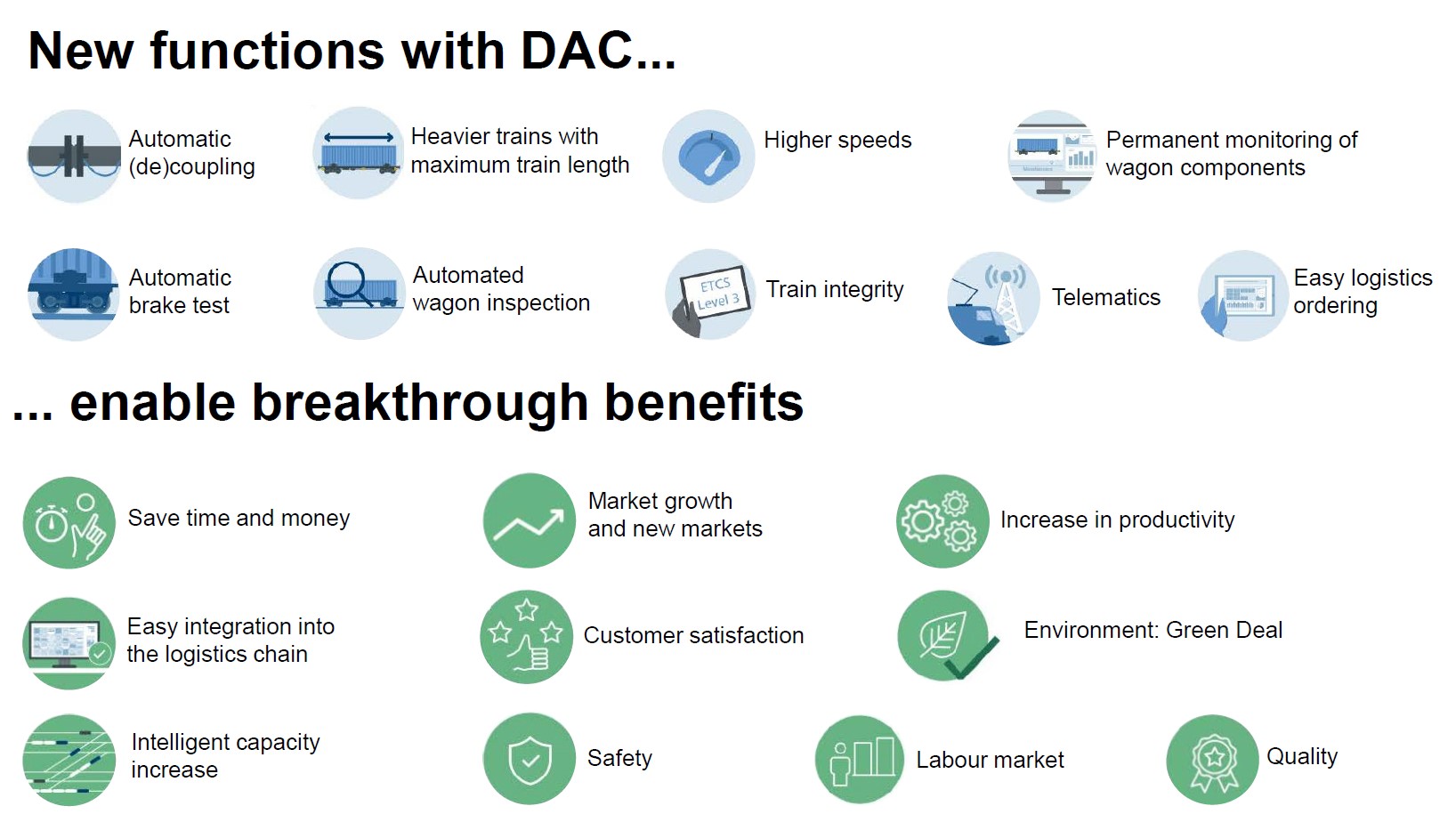
Figure 1: The DAC brings more benefits than the automation of the coupling process.
Rail freight transport as the backbone of supply
Rail freight transport is a central component of the supply of goods. In Switzerland alone, we expect freight transport volumes to grow by 30 percent by 2050. Transport capacities on road and rail are limited. Capacity expansion is mainly possible through improved interfaces of the multimodal logistics chains. And rail freight transport also has a lot to offer in terms of sustainability. Transport accounts for one third of greenhouse gas emissions each year. With the Green Deal in Europe and the long-term Climate Strategy 2050 in Switzerland, politicians have set ambitious goals. Low-emission rail transport is proving to be extremely competitive.
Support needed
Leading rail freight transport into a new era of progress with the DAC cannot be achieved single-handedly. Our industry is dependent on support. This includes, on the one hand, political commitment to ensure seamless coordination between Switzerland and the EU. On the other hand, it requires financial support. Because the industry players cannot bear the high initial investments alone. The added value of the DAC is designed for the long term and distributed among several market participants (cf. Figure 2). In our view, a deliberate start-up financing by the federal government is imperative. But the overriding goal must remain self-sustainability.
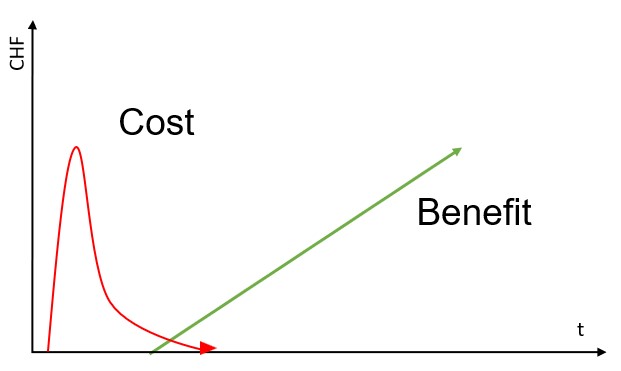
Figure 2: The benefits of the DAC can be seen in the long term and are distributed among several market participants.
Considered retrofitting
We consider it sensible to retrofit the existing fleet of wagons restrictively and to concentrate on young and market-relevant wagons. Wagon owners should only retrofit their wagons if this is cheaper over time than buying new ones. In addition, the Confederation should provide for a scrapping allowance for wagons that have not been written off, the use of which the wagon keeper can decide himself. The fact is that a large number of wagons must be converted in a coordinated manner within a short period of time so that the wagons remain compatible with each other and the DAC unfolds its added value as soon as possible.
You can find more on the subject in this presentation.
Ensure Switzerland-EU interoperability
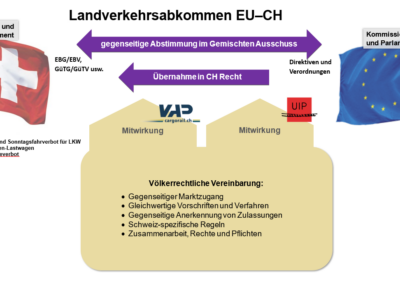
On 24 June 2022, the Joint Committee on Land Transport acknowledged the importance of harmonised rules for Switzerland-EU land transport. We think: More is needed for sustainable interoperability. What is needed now is a coordinated transport policy.
In 1999, Switzerland concluded a land transport agreement with the European Union (EU). This guarantees mutual market access for transporters from both sides of the Swiss border. The regulations for cross-border goods transport by rail and road have been harmonised.
Switzerland partially left out
With the NRLA, Switzerland expanded the European rail corridor into a flat railway and successfully implemented its modal shift policy with the Distance-related Heavy Vehicle Fee (HVF) and a ban on cabotage, night and Sunday driving. The modal split in transalpine transit traffic is over 70% in favour of rail, which is considered an international benchmark. However, this pleasing performance record should not hide the fact that, compared to member states, Switzerland does not currently have full market access. The Swiss railway network is not yet an integrated part of the European Interop network.

Sticking to the Agreement on Land Transport
At its half-year meeting on 24 June 2022, the Joint Committee on Land Transport emphasised the importance of the agreement. However, unresolved political differences between Switzerland and the EU are blocking its further development. Such further development is urgently needed within the framework of the technical pillar of the 4th EU Railway Package.
Since 2019, Switzerland’s cooperation with the European Railway Agency (ERA) has been governed by a temporary transitional solution. The Joint Committee discussed a further extension of this transitional solution. This would facilitate Switzerland’s procedural involvement in simplified authorisations for cross-border traffic as well as its technical participation in innovation projects for the digitalisation and automation of the railways.
Federal Council in demand
We at the VAP are convinced that Swiss rail freight transport must expand its market access and not miss the boat on European innovation. With this credo, Josef Dittli, member of the Council of States, submitted interpellation 22.3566 on 9 June 2022. He is asking the Federal Council to answer the following questions:
- How does the Federal Council intend to ensure the necessary continuation of the rail packages within the framework of the EU-CH land transport agreement?
- How does the Federal Council intend to achieve the implementation of the technical pillar of the 4th EU railway package in Switzerland and secure free cross-border rail traffic in the long term?
- How does the Federal Council intend to achieve Switzerland’s early full membership in the European Railway Agency ERA?
- How does the Federal Council intend to secure and complete the Swiss seat in the EU RISC as an important management and decision-making body?
Ensure full interoperability
For the economy in general and for our members in particular, it is crucial that previous achievements are secured in the long term. We consider it absolutely necessary that Switzerland is represented as an equal partner in central European bodies as soon as possible and that transport policy in cross-border transport is coordinated.

Future of rail freight transport in the area
Shaping rail freight transport for the future
The Federal Council’s report Bericht «Future orientation of rail freight transport in the area»[1] of March 2022 provides a welcome opportunity to rethink the Swiss rail freight transport system with its intermodal competition and cross-system processes as a whole. A holistic new conception starts not only with the (start-up) financing of the EMLV or the DAC, but with all processes, incentive instruments, market mechanisms and interfaces of multimodal freight logistics in Switzerland. The goal must be a self-sustaining, market-based rail freight transport system that includes all freight railways without discrimination on the basis of intramodal competition and supports shippers as a reliable partner. In this context, any financing based on the proven model in transit traffic must primarily benefit the customers of all freight railways and offer performance-based, competition-neutral incentives without any discrimination. Only in this way and only with combined forces can innovations and investments by the private sector in rail freight transport develop. And only in this way can rail freight transport in the countryside be made fit for the future.Federal Council considers long-term financial support
According to the report, the Federal Council wants to maintain single wagonload traffic (SCC) in the future and does not rule out long-term financial support. According to the definition of the Federal Office of Transport (FOT), single wagonload traffic comprises the transport of groups of wagons in unaccompanied combined transport (UCT) and conventional rail freight wagons bundled together for the main run. The Boards of Directors of SBB AG and SBB Cargo AG assess in their Financial Report 2021[2] a subsidisation of their rail freight services as necessary and probable. The Federal Council and the federal companies are thus apparently in agreement that financial support for rail freight transport is necessary in the area. However, they base their assessment of volume and financial viability solely on information from SBB Cargo. The other freight railways, most of which are organised in the private sector, are not included in this assessment. In our view, a new perspective is urgently needed here.Adopting a new perspective
SBB Cargo has been operating nationwide rail freight services as a monopoly since the 1999 Rail Reform I – with little success, as a review 25 years after the parliamentary decision shows. This must change: The freight railways active throughout Switzerland and their customers can join forces and, under the leadership of the Wagonload Transport Interest Group (IGWLV)[3], redesign rail freight transport in Switzerland.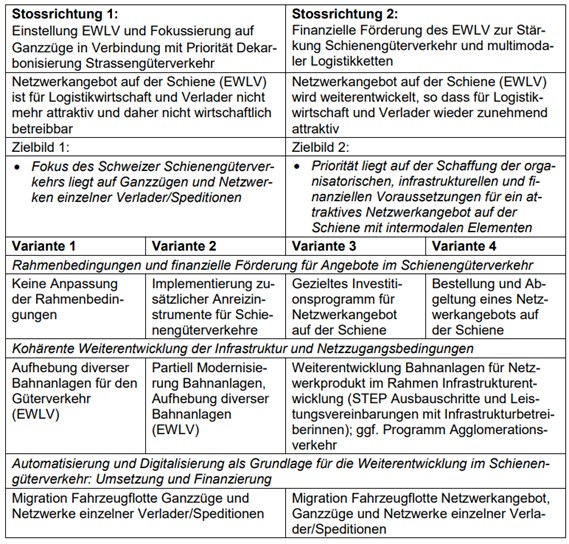
Figure 1, page 51 in the report «Future orientation of rail freight transport in the area».
For the further development of rail freight transport in the area, the report presents two directions (Figure 1): one involves the discontinuation of EMLV, the other the financial promotion of EMLV. From the VAP’s point of view, this is too narrow a view. A change of perspective is necessary in two respects: First, actors need to redefine their understanding of their roles and rethink their processes. Secondly, a neutral view of the financial situation is needed. For neither the envisaged technical advances (keyword digital automatic coupling DAC) nor the purely internal view of SBB Cargo can bring about a reorganisation. This should also be the focus of the current discussion about the future. The organisational form shown in the report (Figure 2) represents a mental jumping-off point for working out further variants of directions.
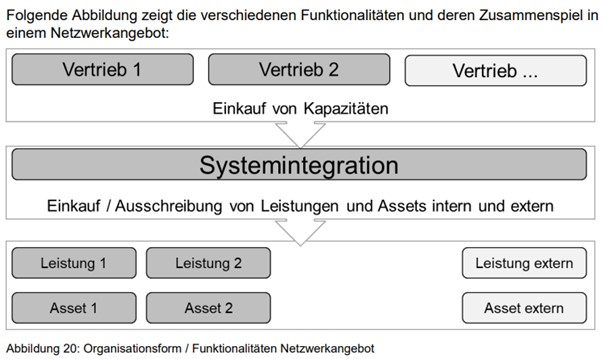
Figure 2, page 50 in the report «Future orientation of rail freight transport in the area».
Fact-based decisions
In order to assess the financing requirements of regional rail freight transport, it is imperative to have an analysis of the economic viability carried out by external neutral experts. If surface rail freight is indeed unprofitable, a distinction must be made as to whether SBB Cargo’s monopoly position or the system itself is responsible. The neutral third party must also examine whether economic viability, as required by the Freight Transport Act (GüTG[4]), is currently being pursued at all. Only when a detailed analysis of the current situation is available can parliament decide on appropriate measures.
Limit funding
If financial support proves to be undoubtedly appropriate, it should be considered as temporary financing for a fundamental new concept – not as permanent subsidisation. Temporary start-up funding can support the development of a competitive rail freight transport system until its simultaneous digitalisation and automation and the commissioning of new network elements from the 2035 expansion stage have been completed. Permanent funding, on the other hand, would undermine the market-based incentives for competitiveness and self-sufficiency of rail freight transport and make further development of rail freight transport in Switzerland impossible.
[1] “Future orientation of surface rail freight traffic”, Federal Council report in response to KVF‑S postulate 21.3597 of 10 May 2021. In 1999, with Rail Reform I, Parliament transferred the monopoly for the operation of surface rail freight traffic to SBB Cargo AG. Its share of rail freight traffic in domestic, import and export traffic is around 60%. The remaining 40% is carried in block trains via sidings and terminals.
[2] «SBB Financial Report 2021», chapter «Bewertungsunsicherheiten rund um die Coronapandemie und um das Geschäftsfeld Cargo Schweiz», p. 84.
[3] The Wagonload Transport Interest Group (IGWLV) was founded in 2018. It represents the interests of VöV, SBB Cargo and VAP with the mandate to modernise rail freight transport in the area and make it more efficient, in accordance with Art. 3a of the Freight Transport Act. President: Frank Furrer, Secretary General VAP, Vice President: Désirée Baer, CEO SBB Cargo –> Reports on IG WLV
[4]«Bundesgesetz über den Gütertransport durch Bahn- und Schifffahrtsunternehmen (Gütertransportgesetz, GüTG)» Art. 2 Para. 2
Freight Transport Forum: the industry stands together for progress in rail freight transport
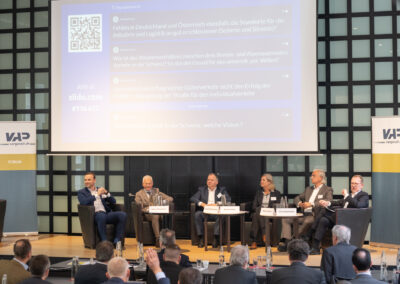
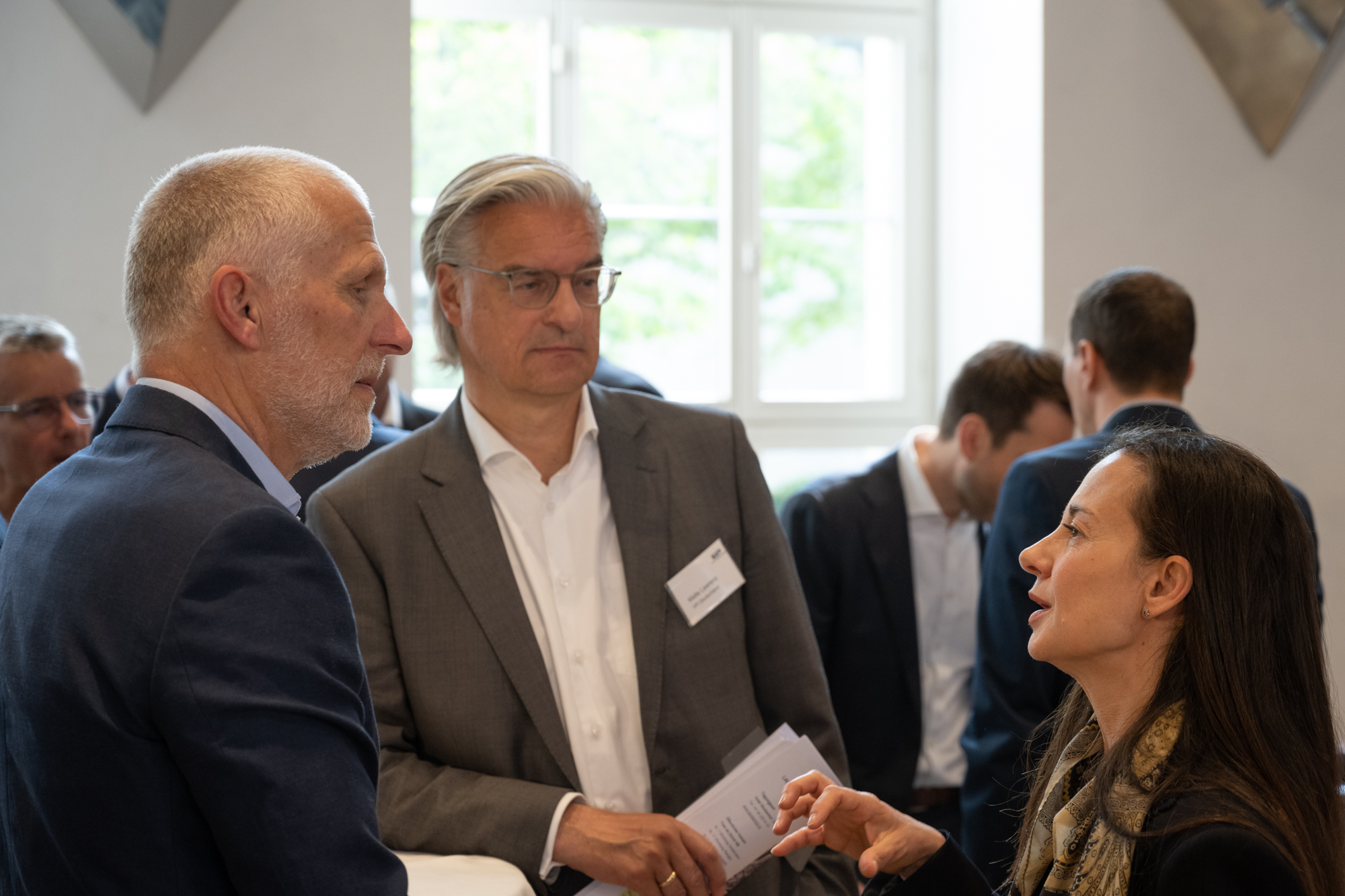
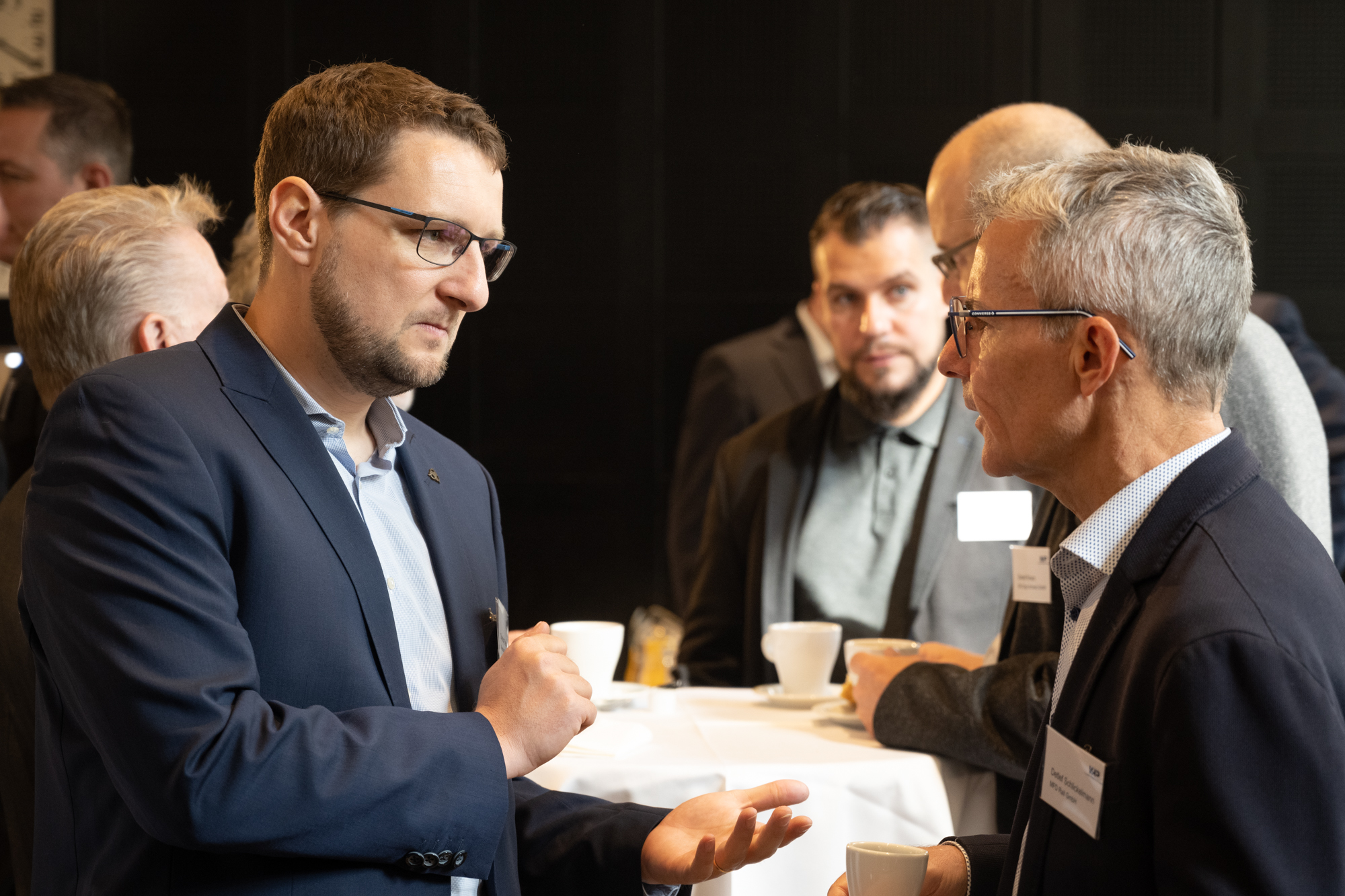
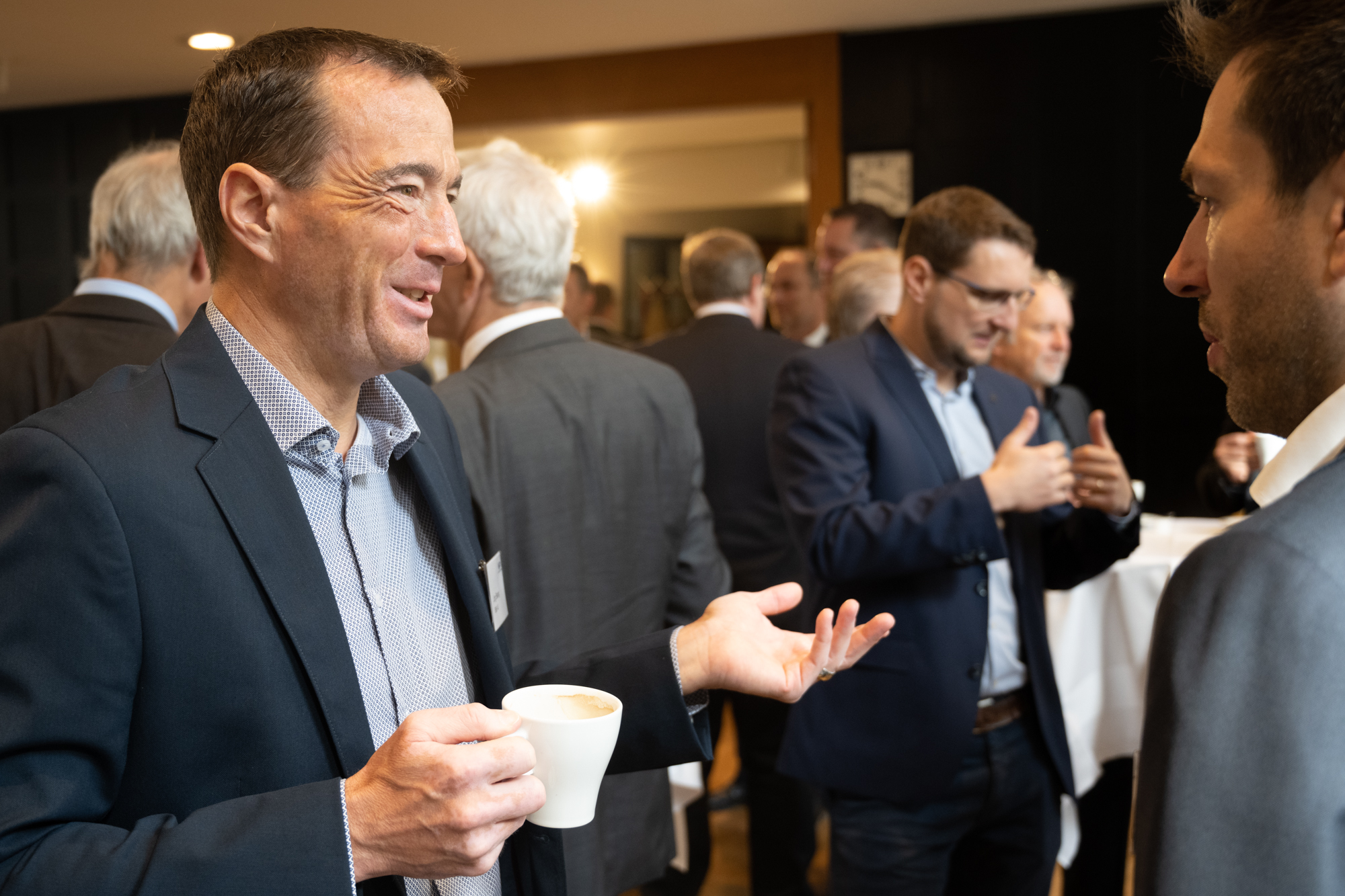
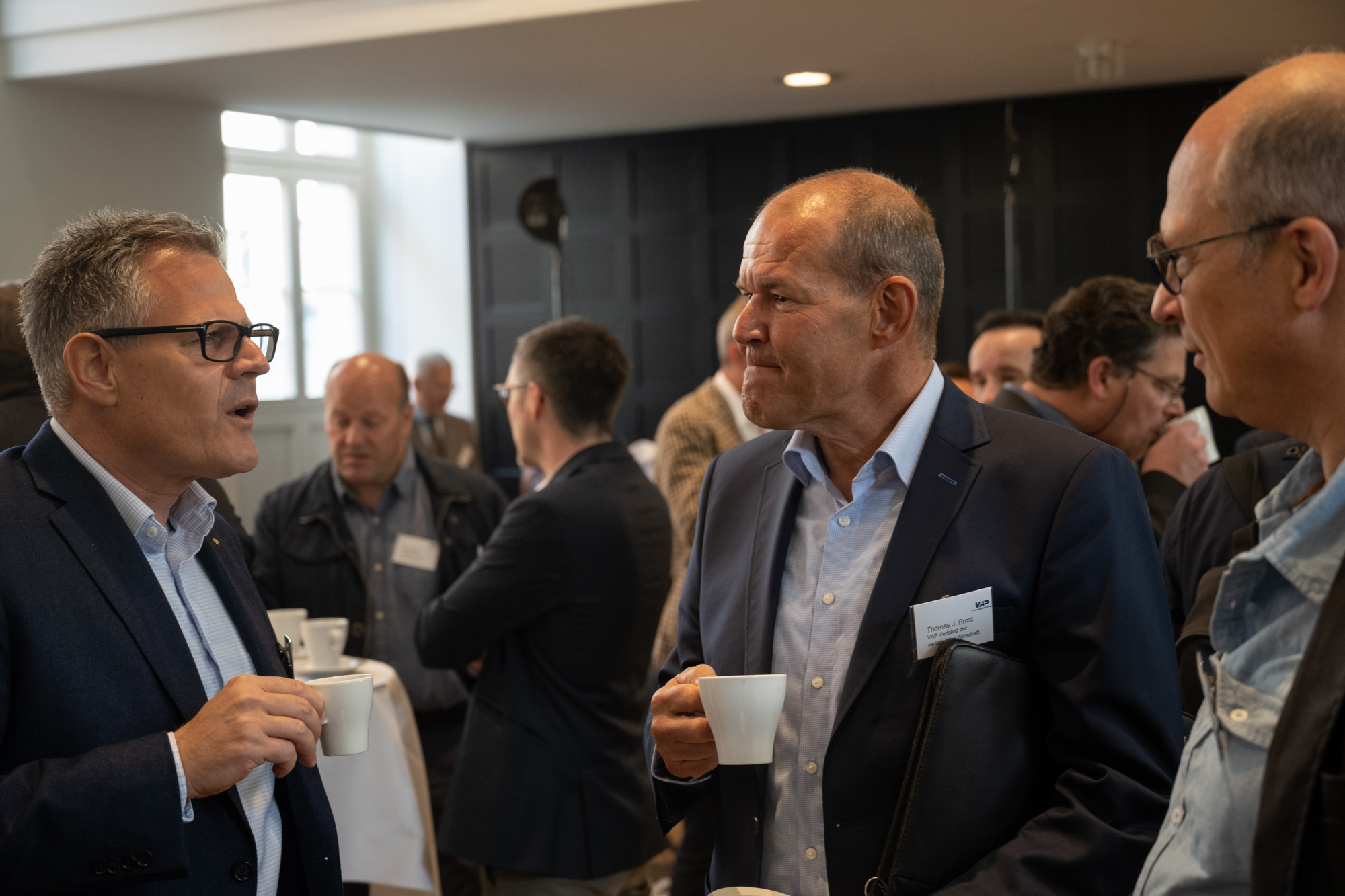
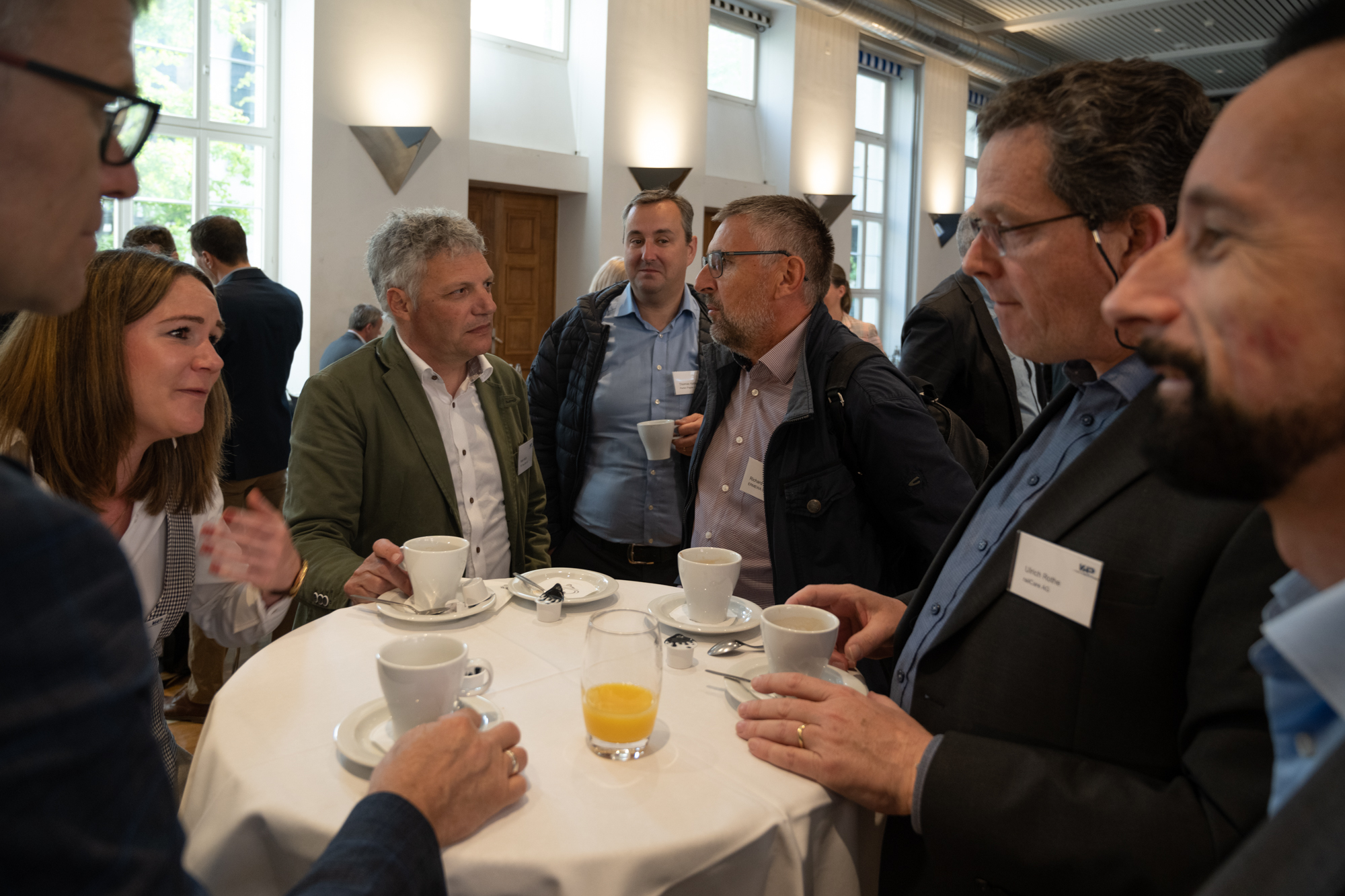
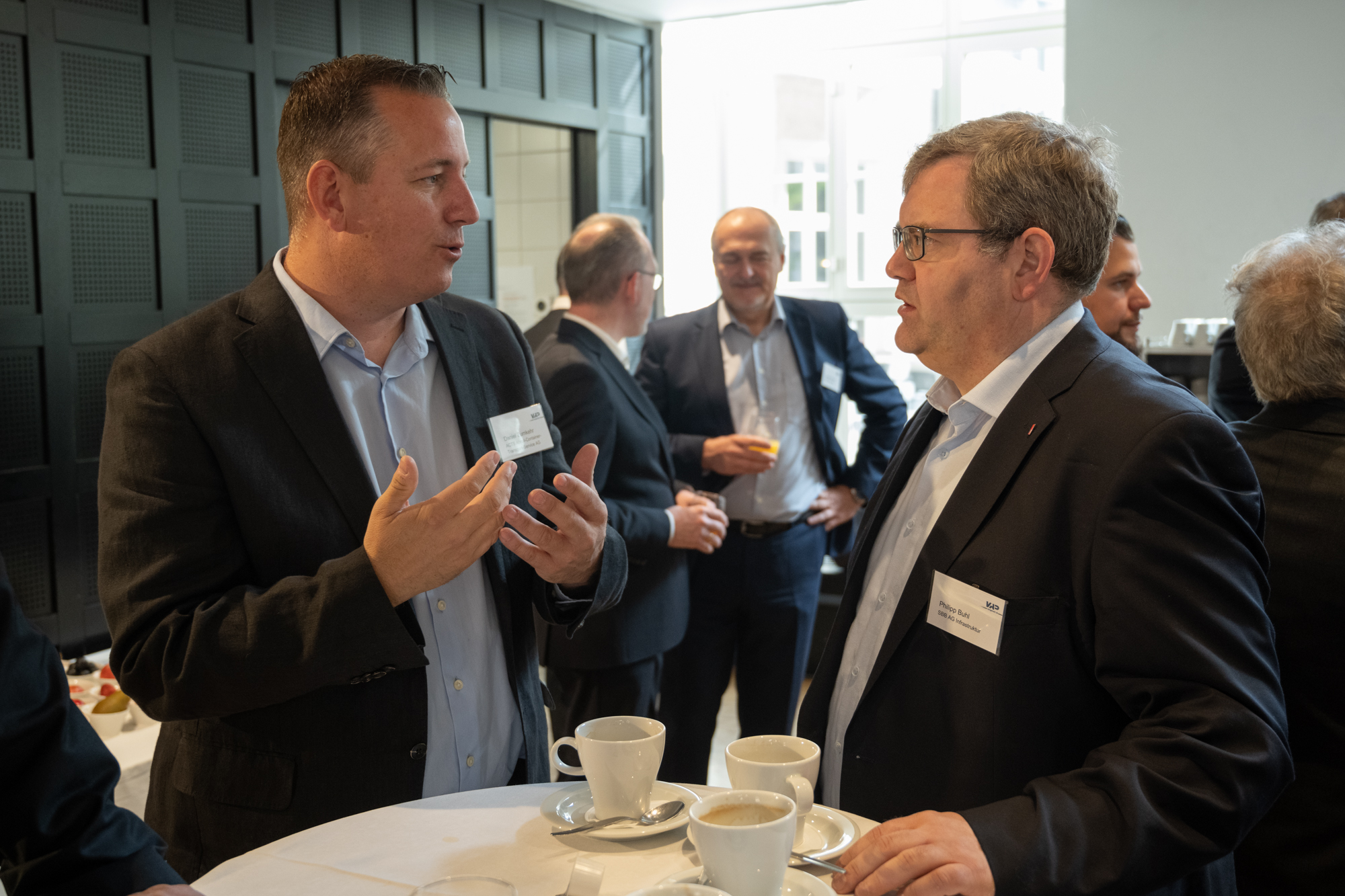
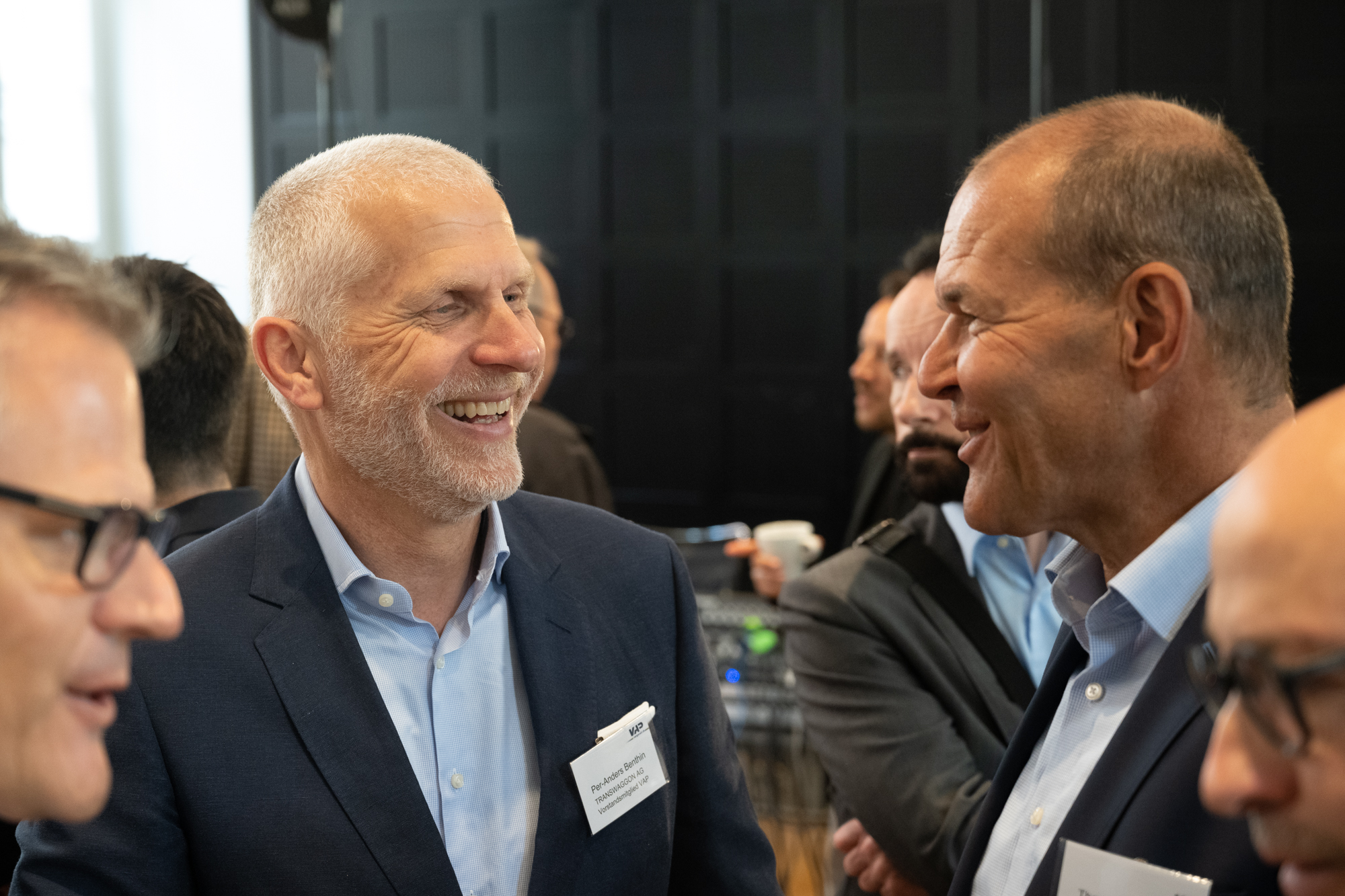
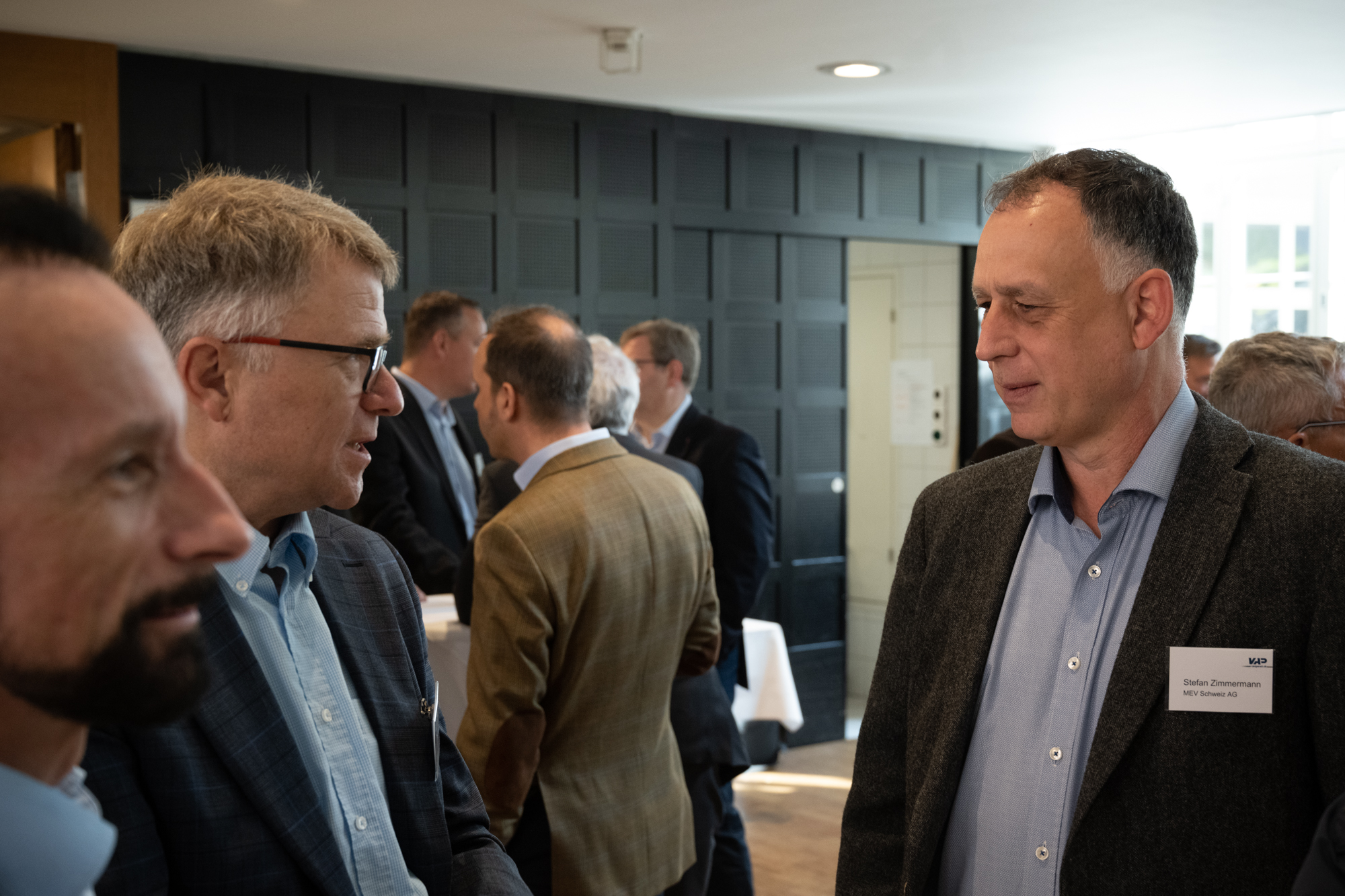
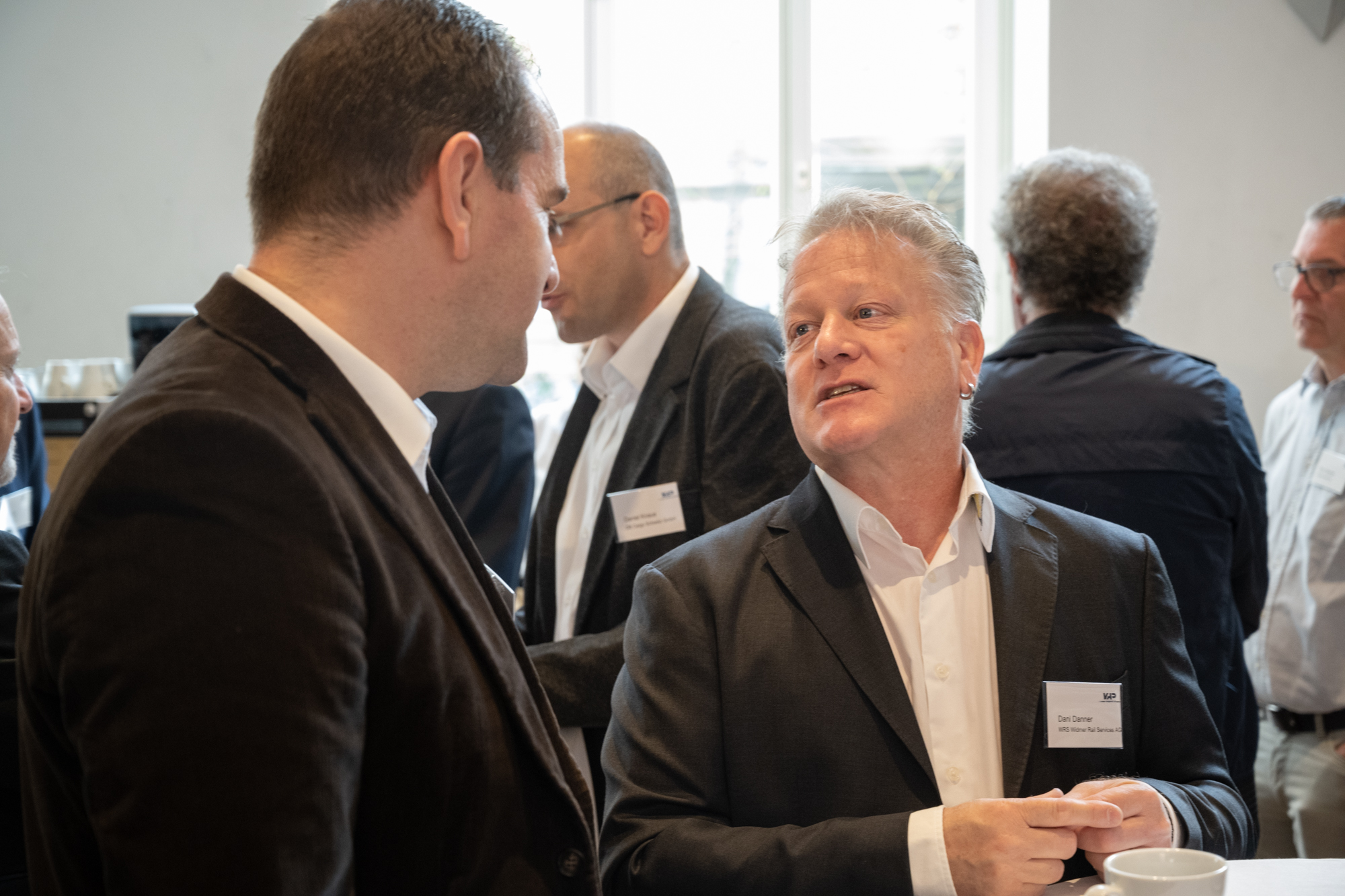
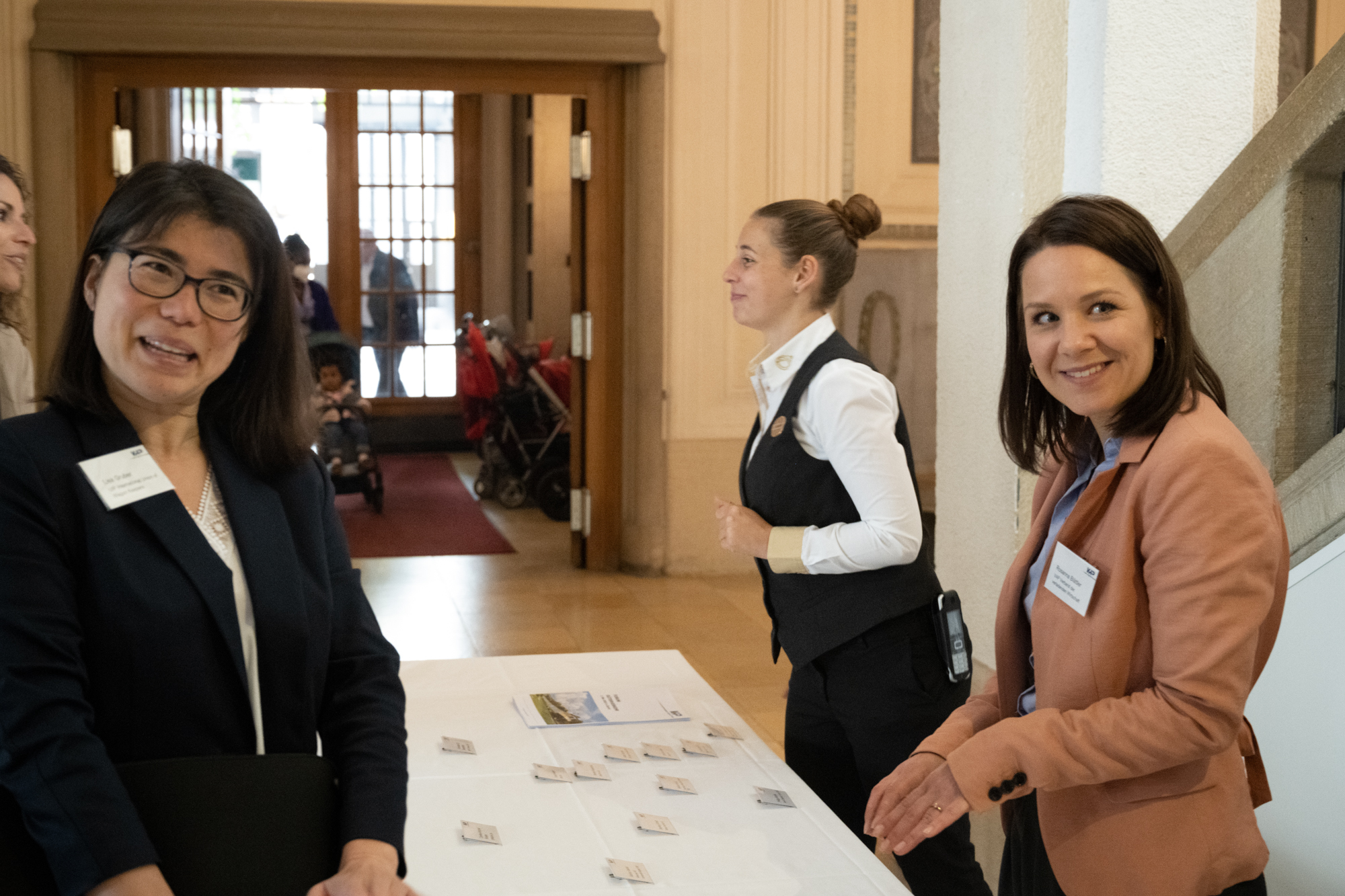
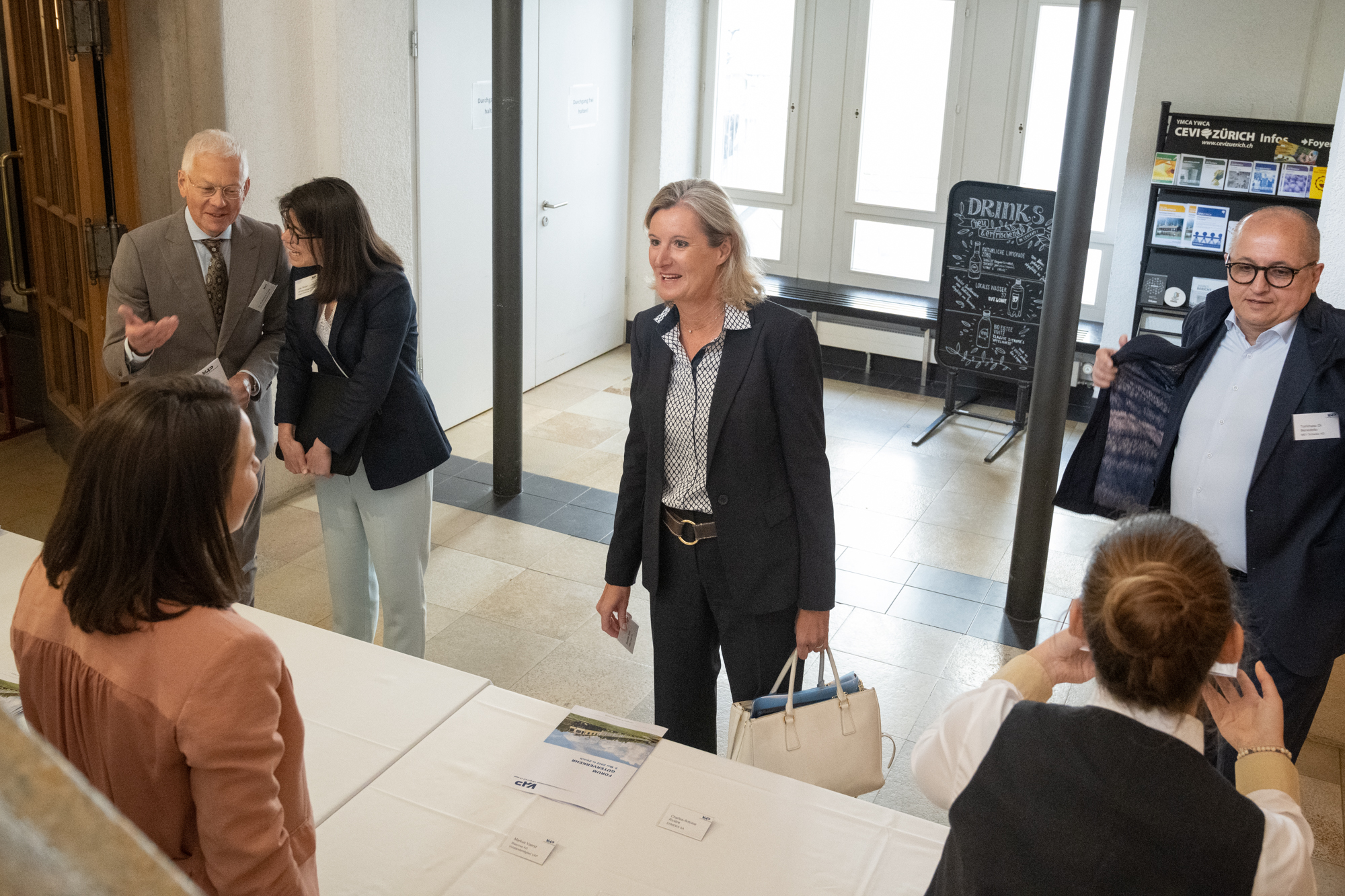
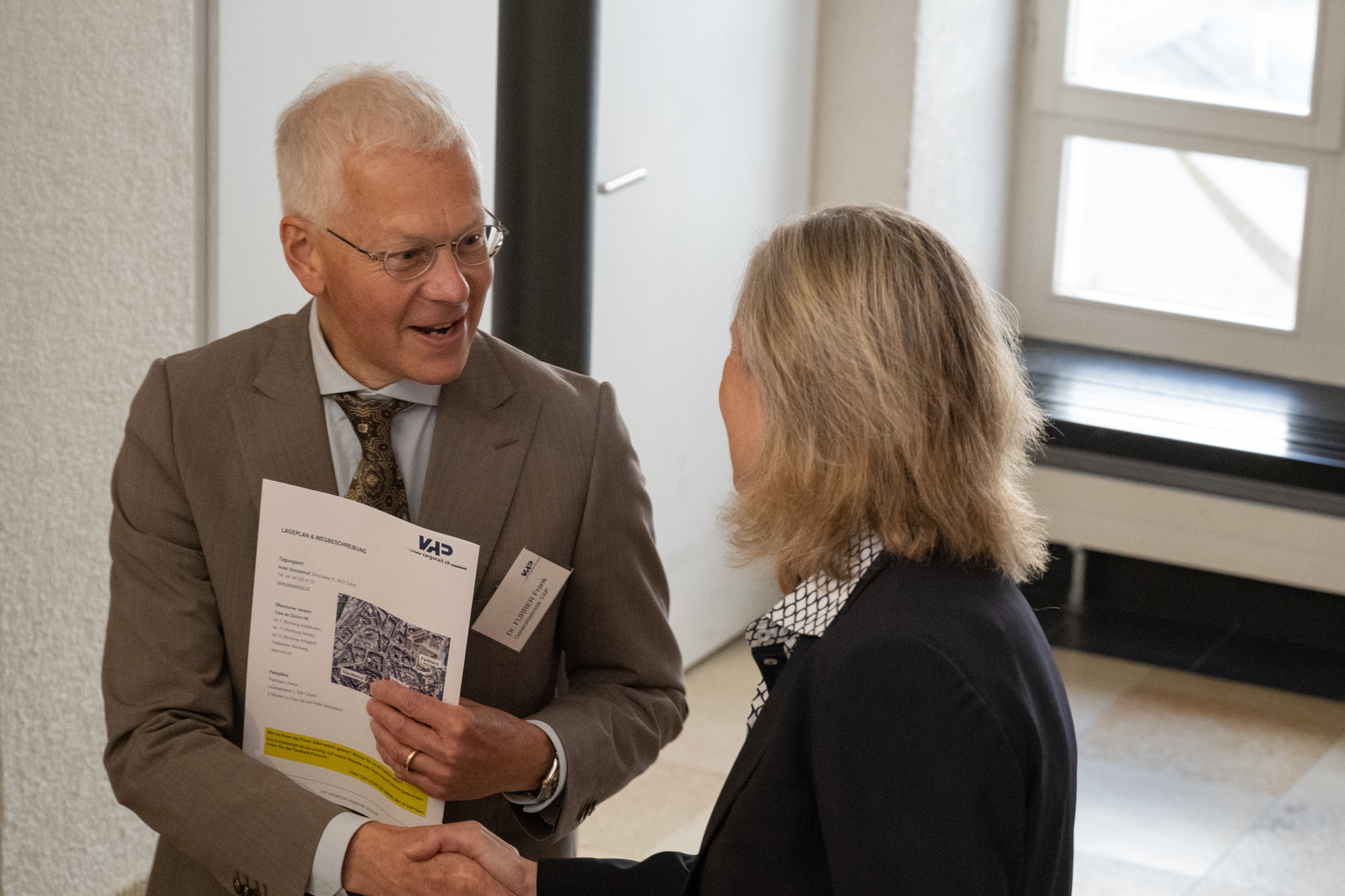
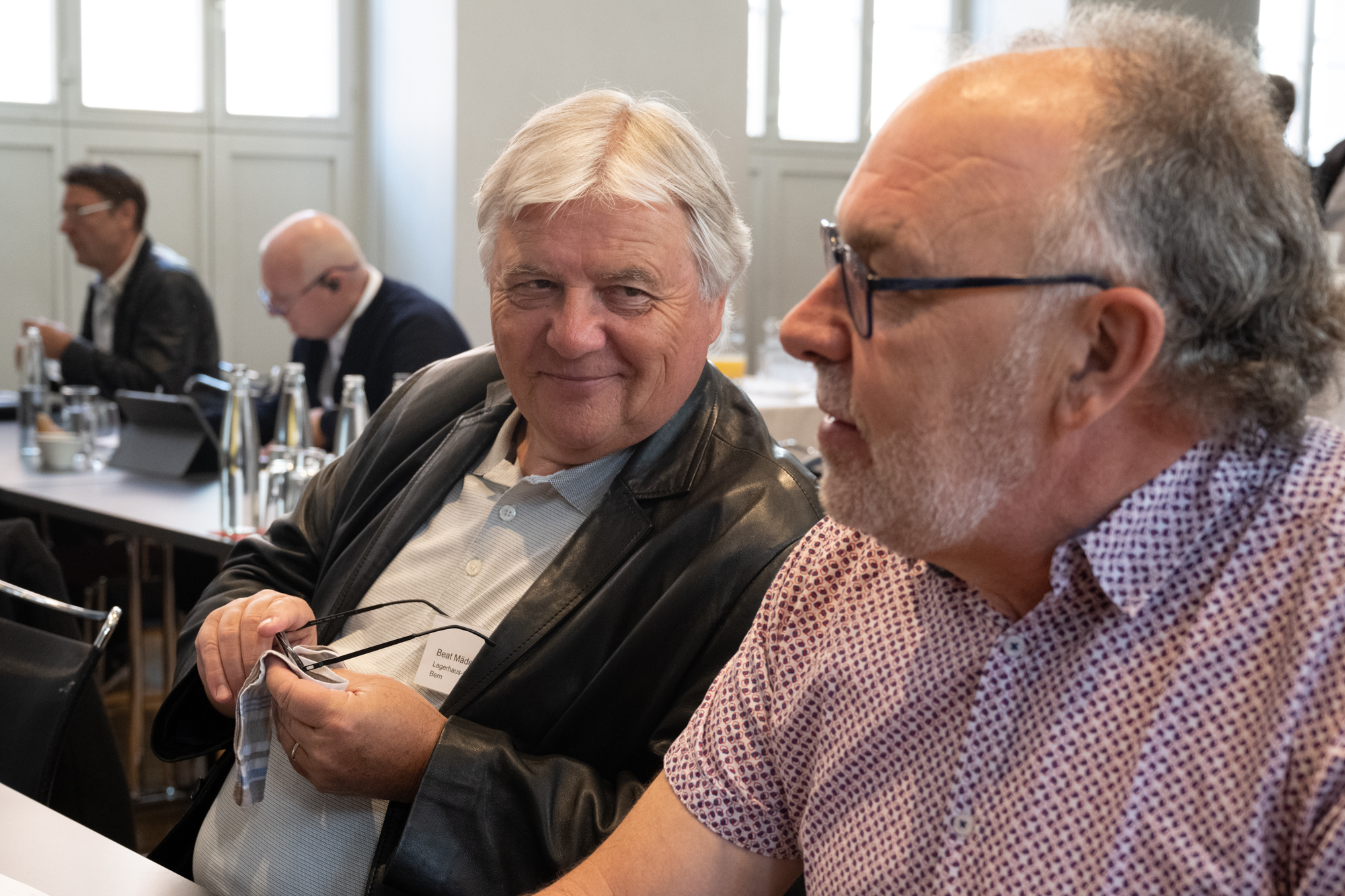
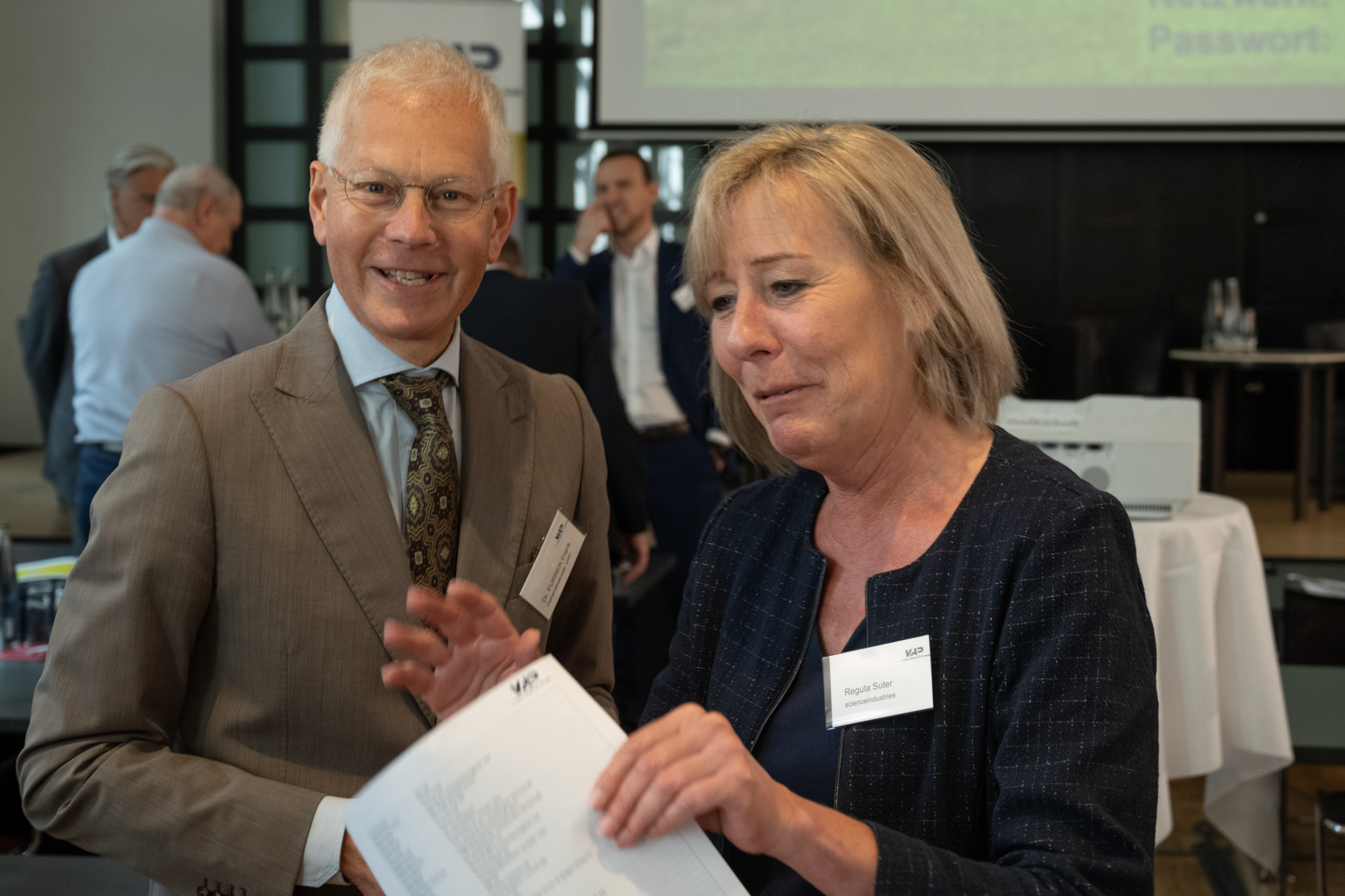
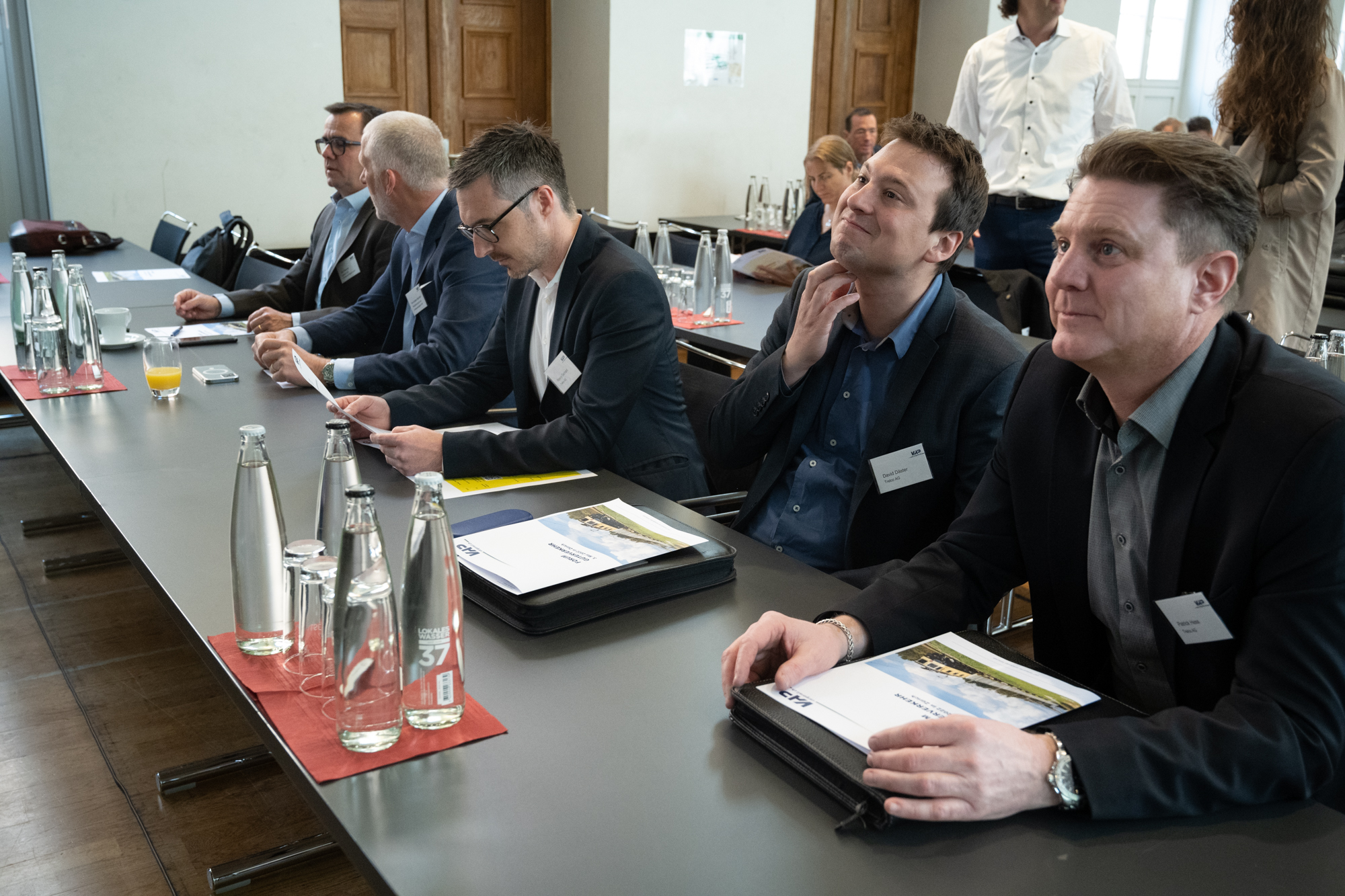
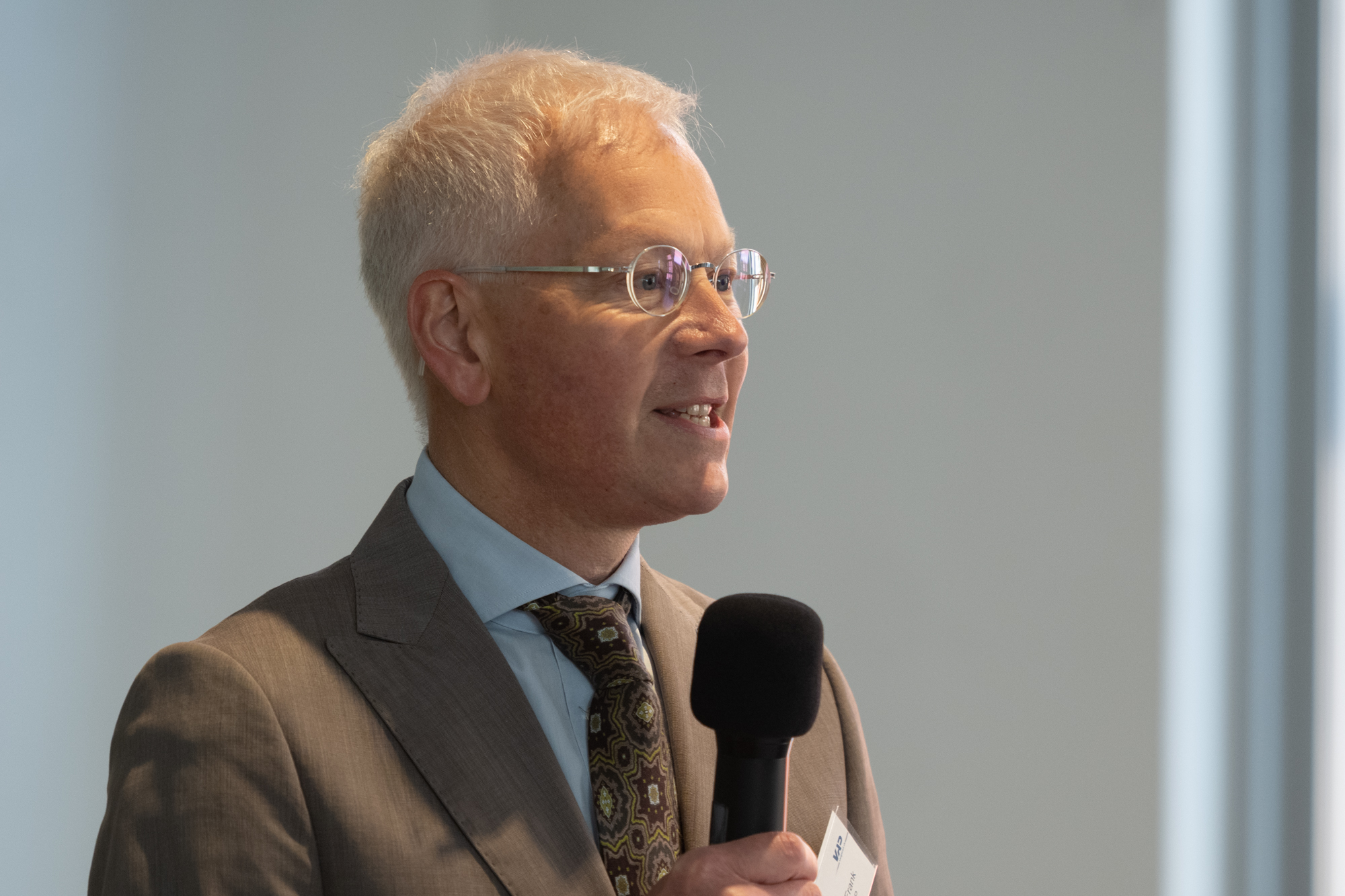
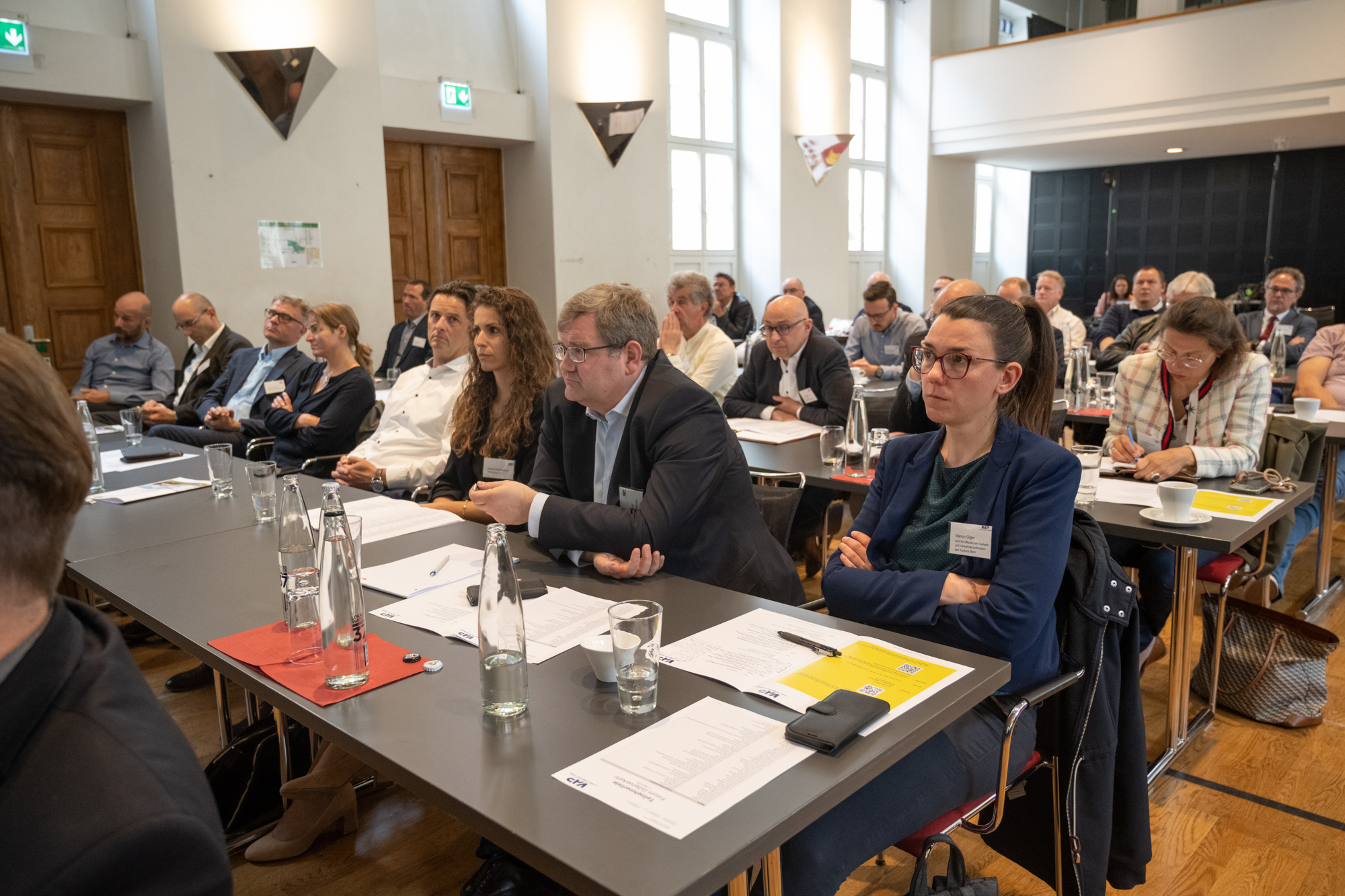
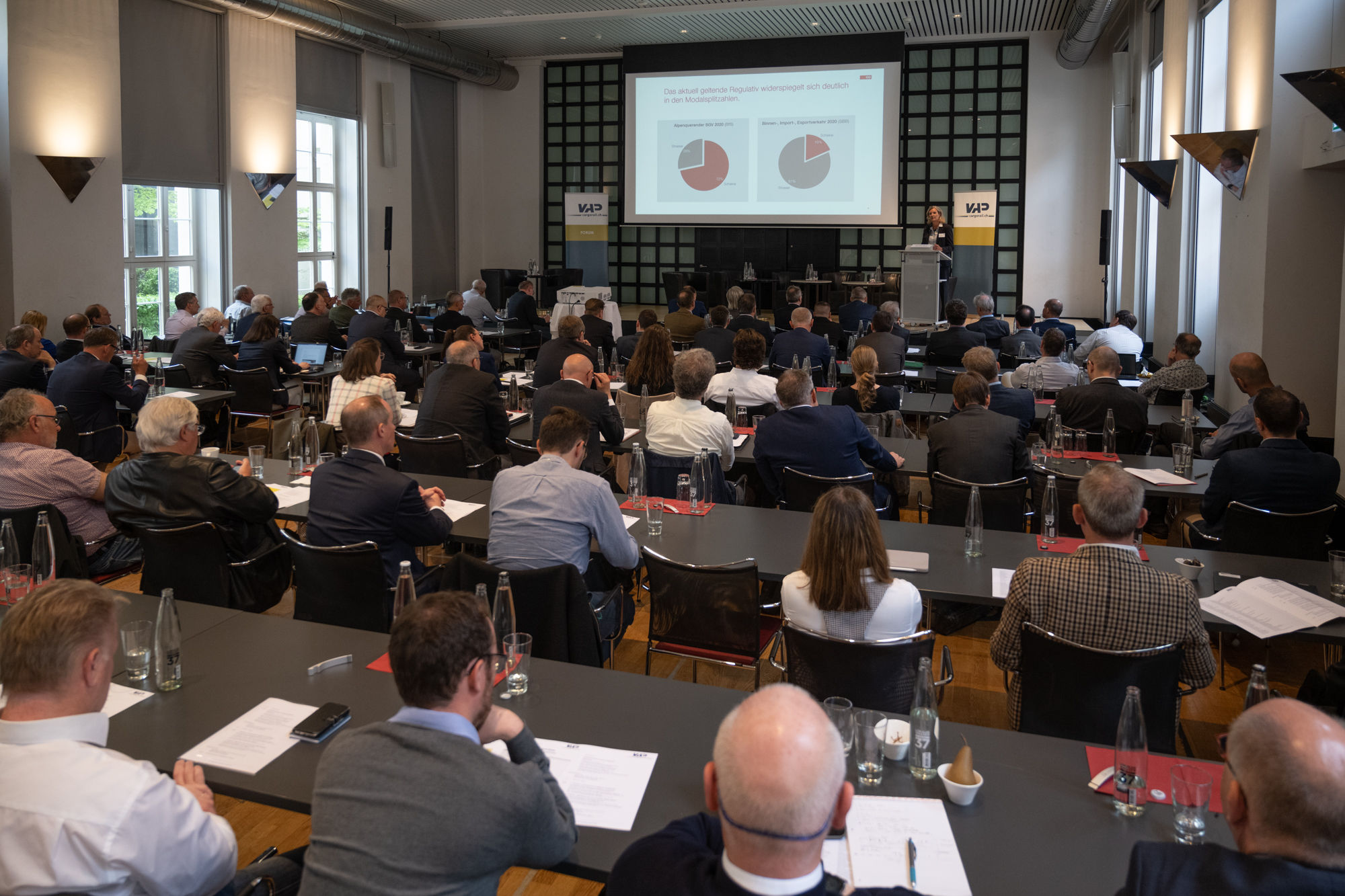
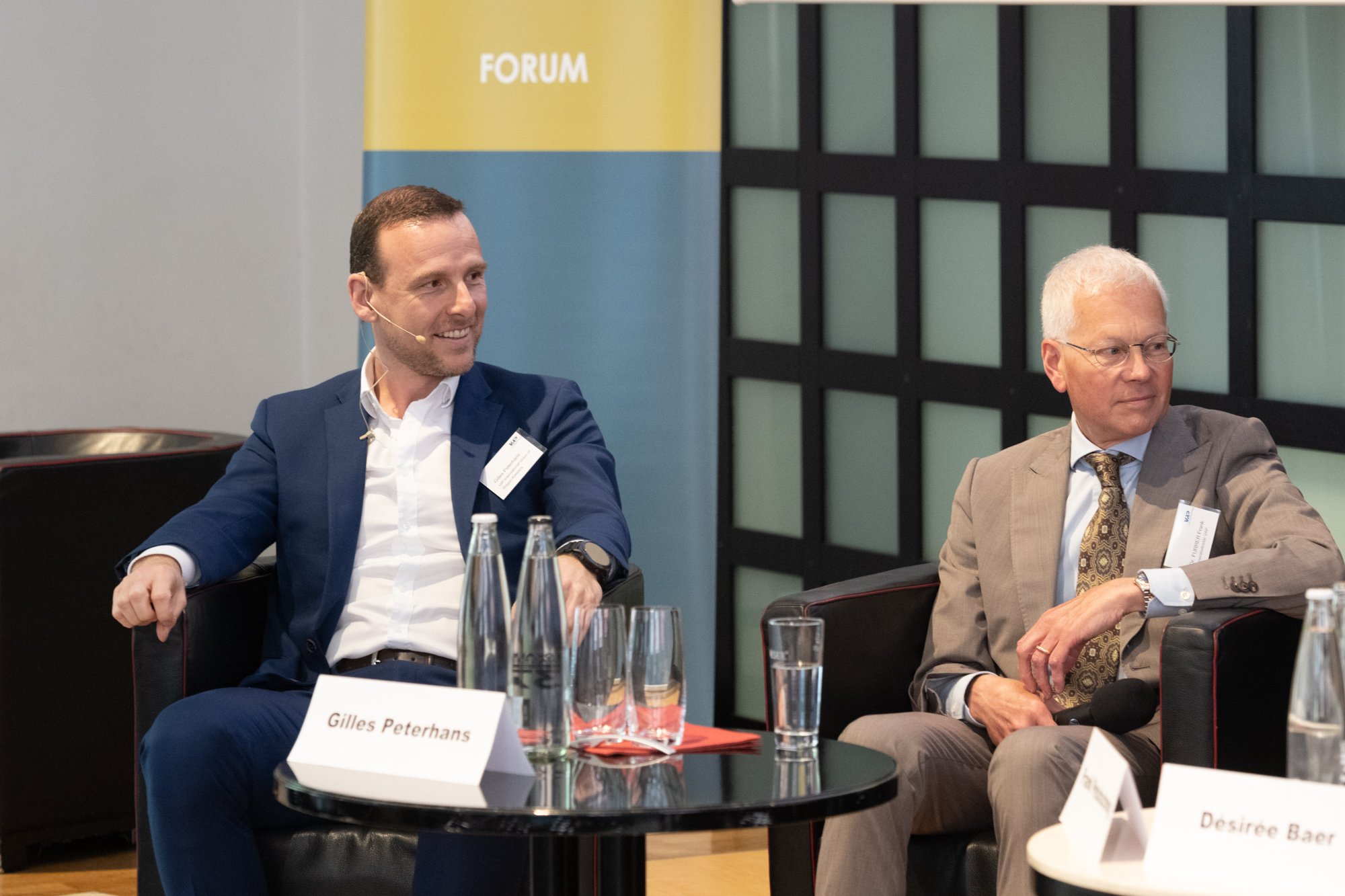
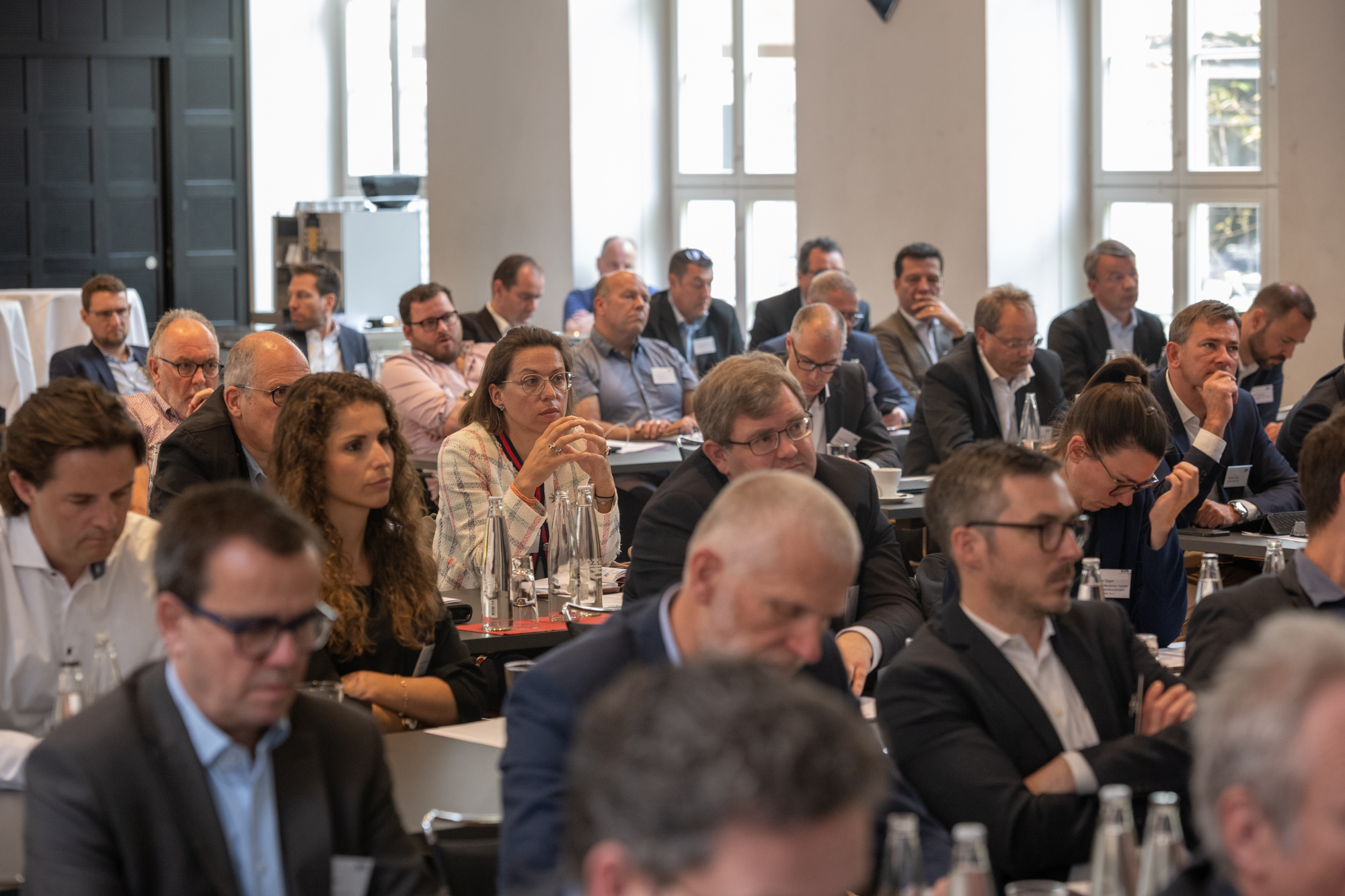
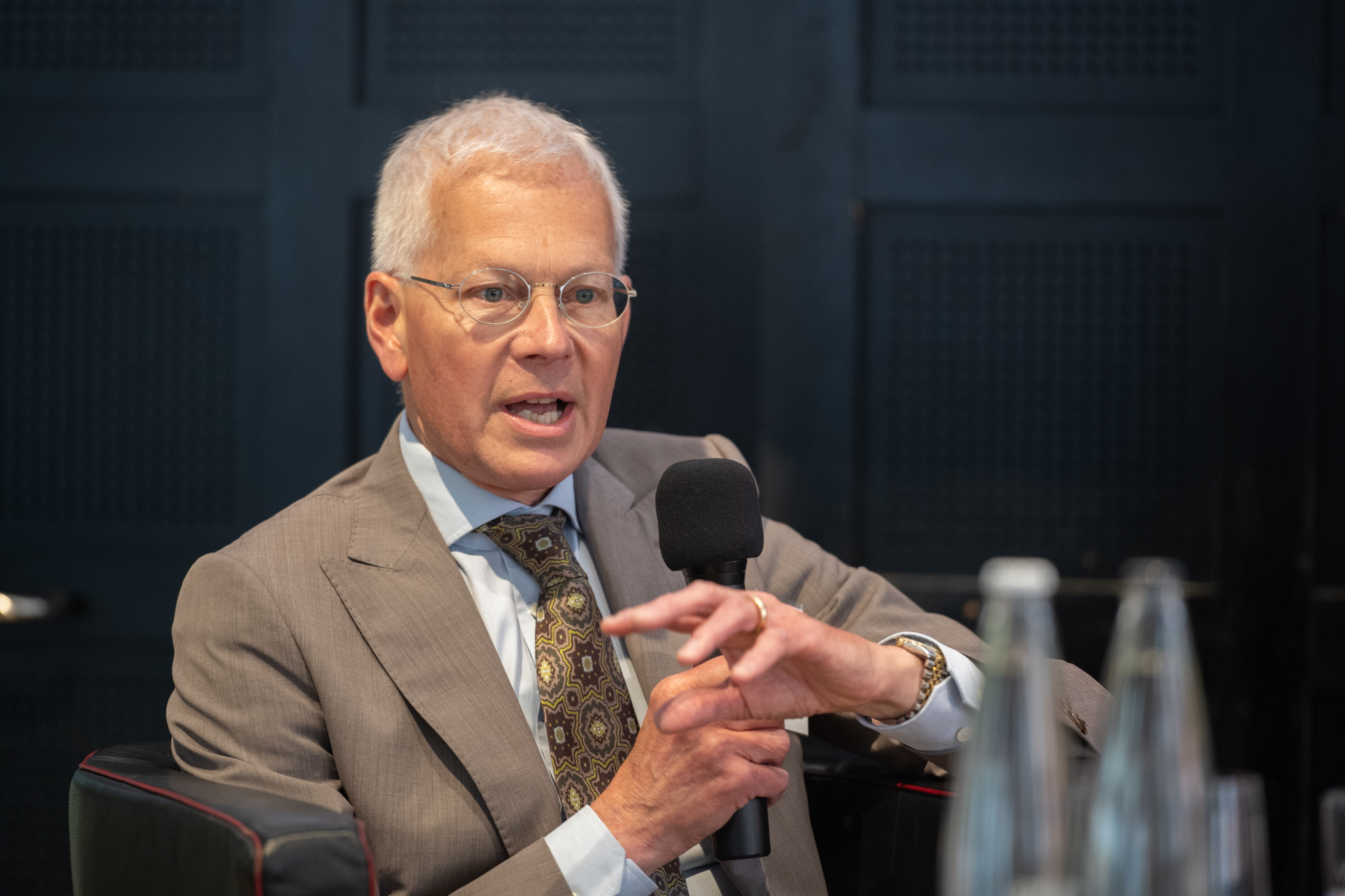
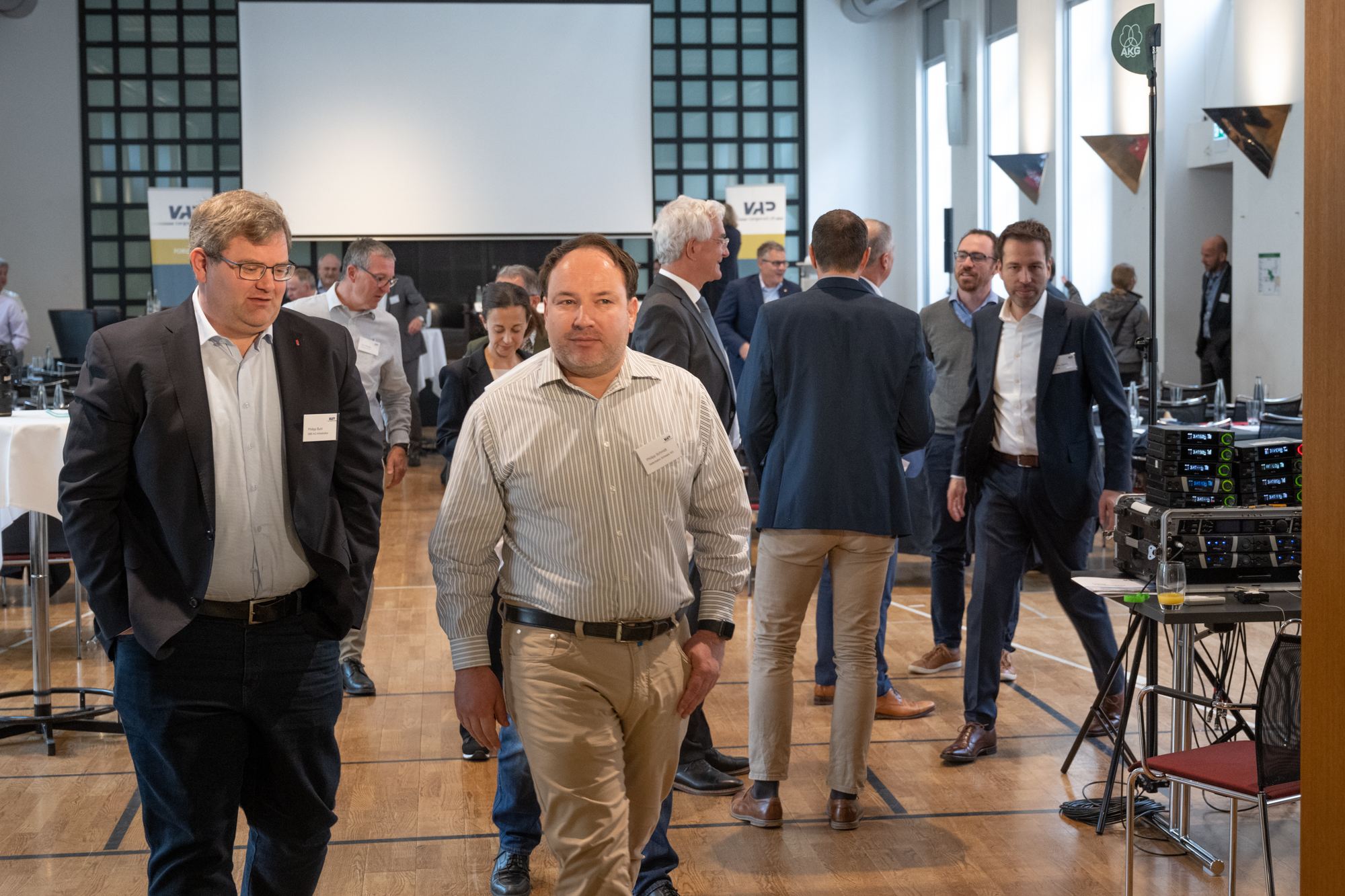
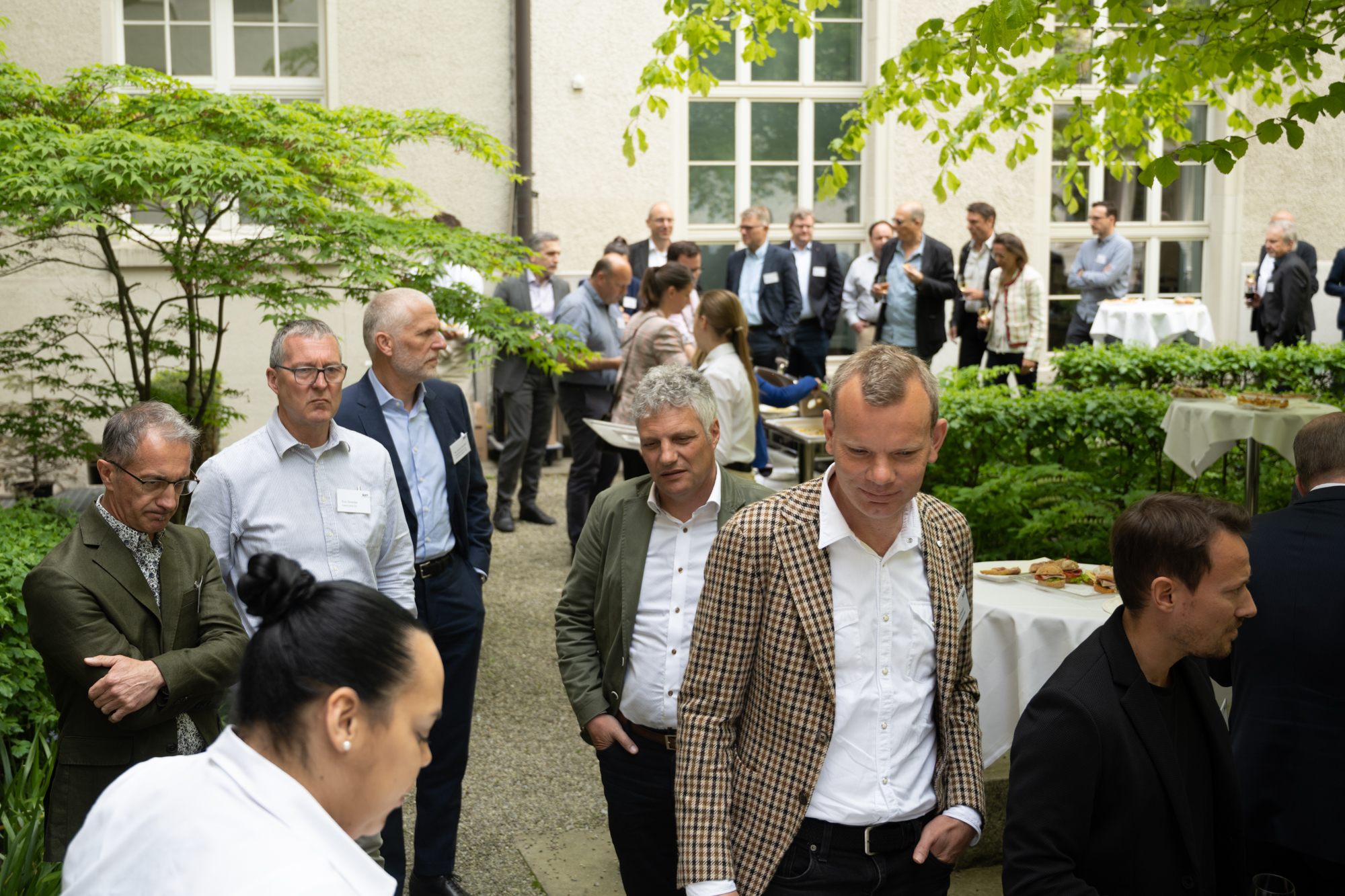
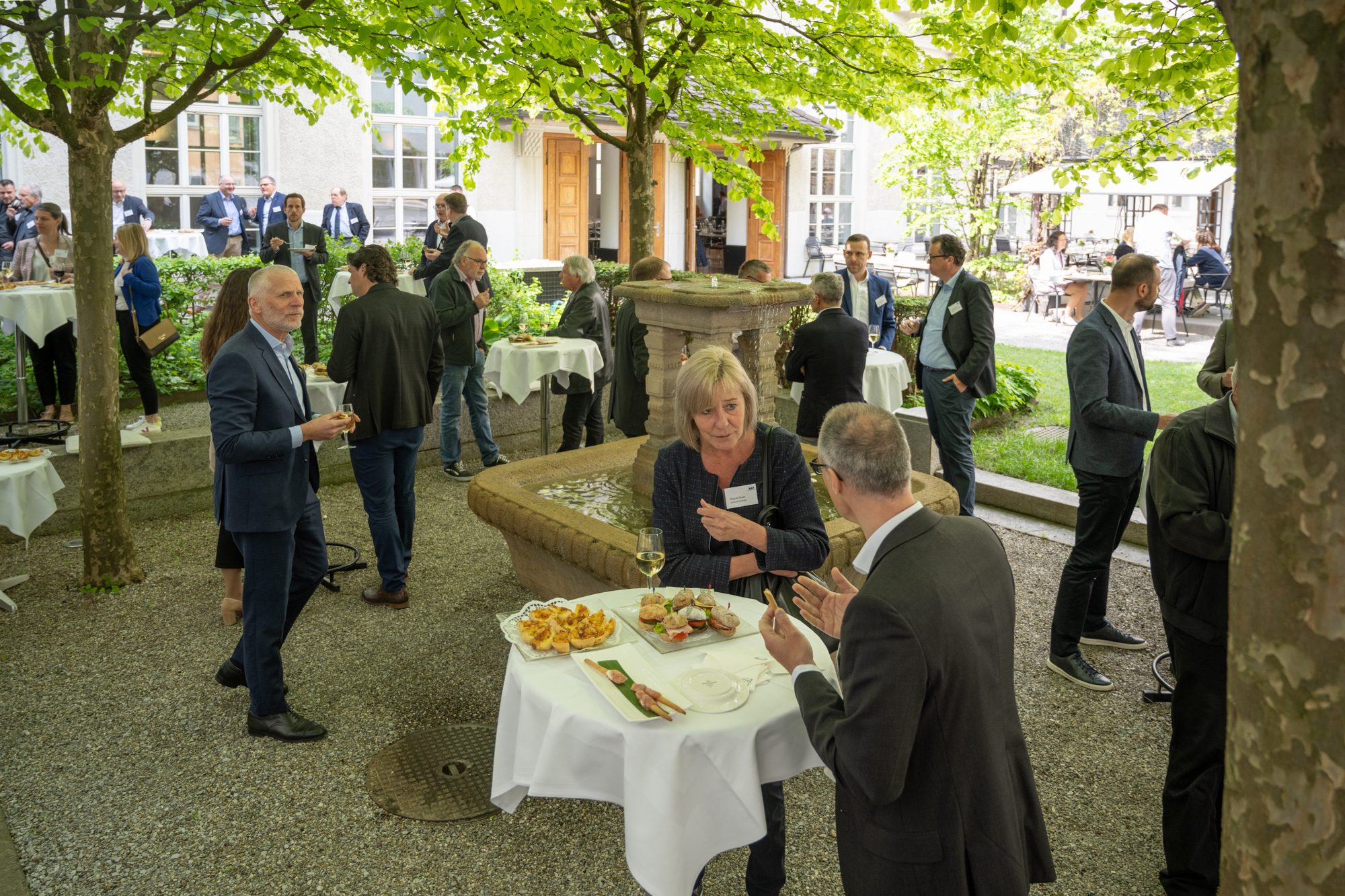
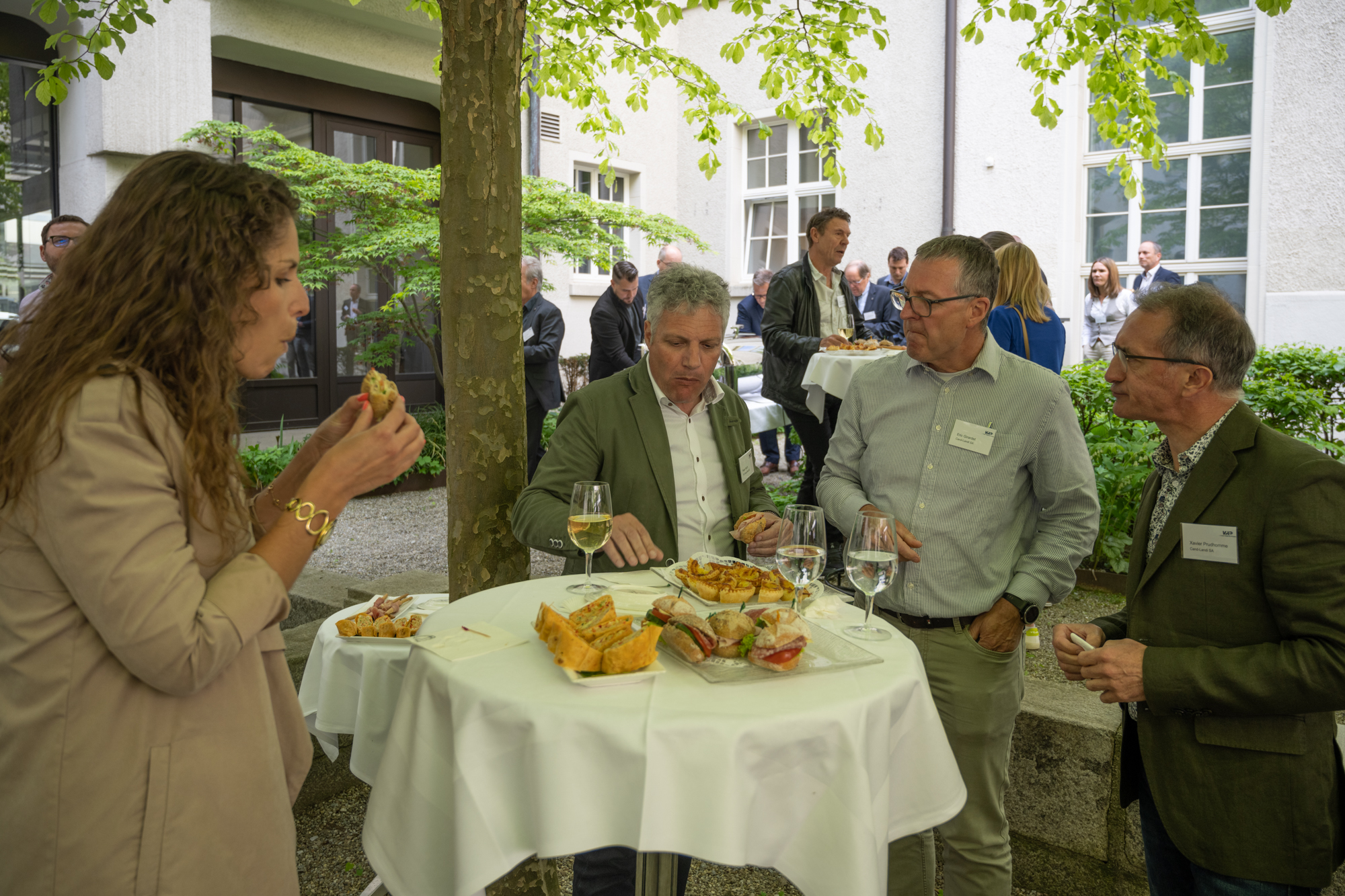
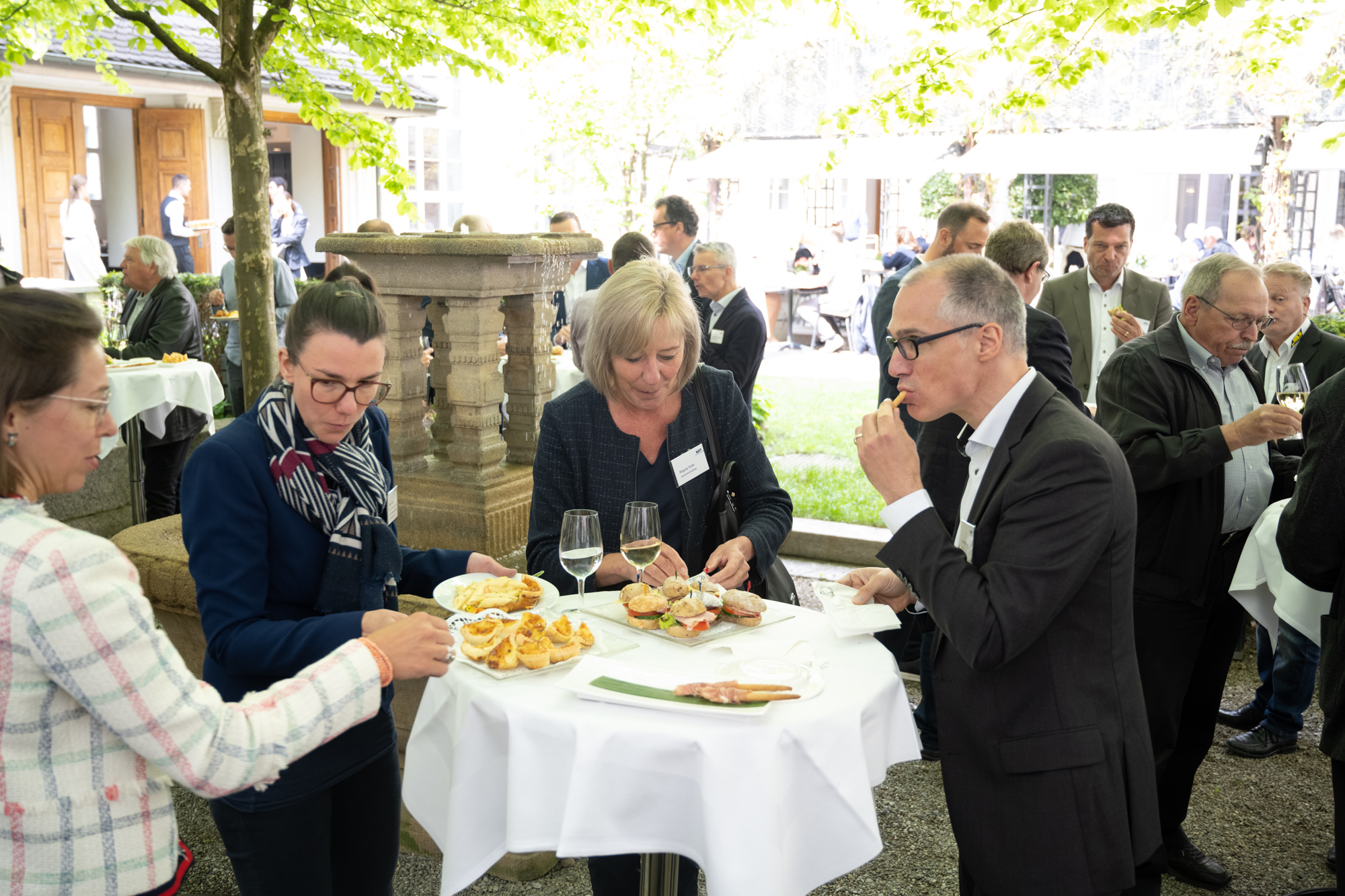
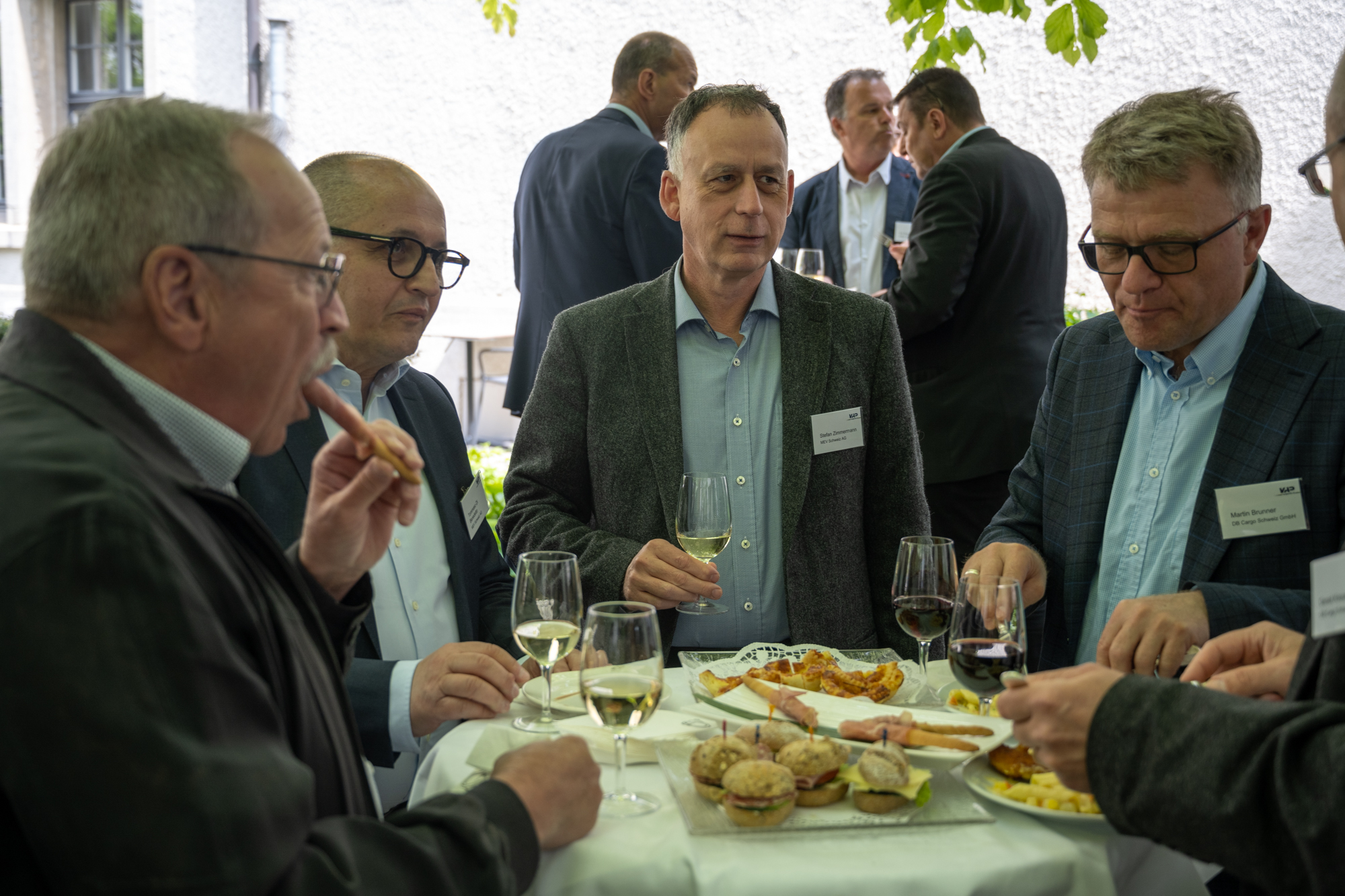
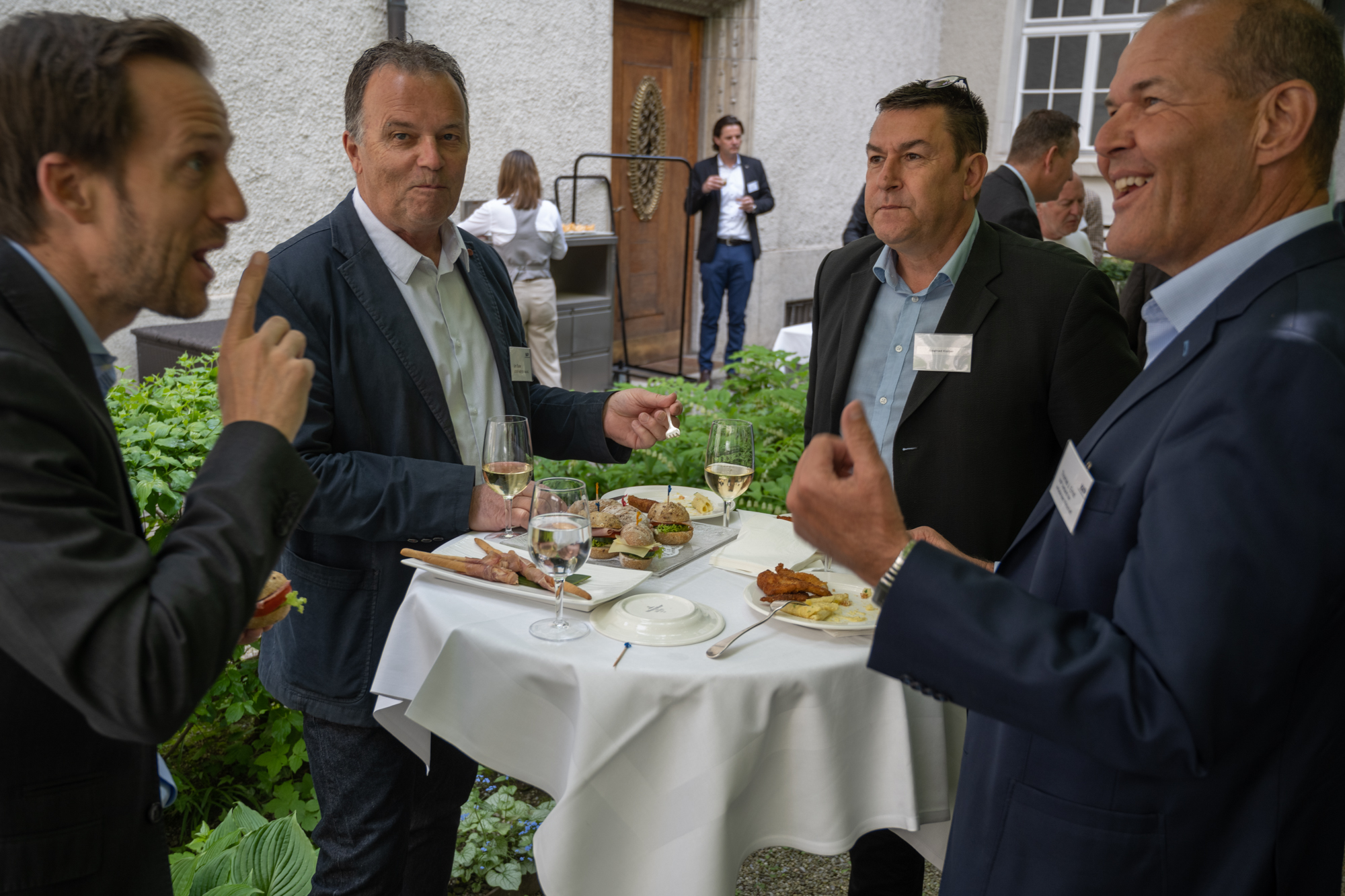
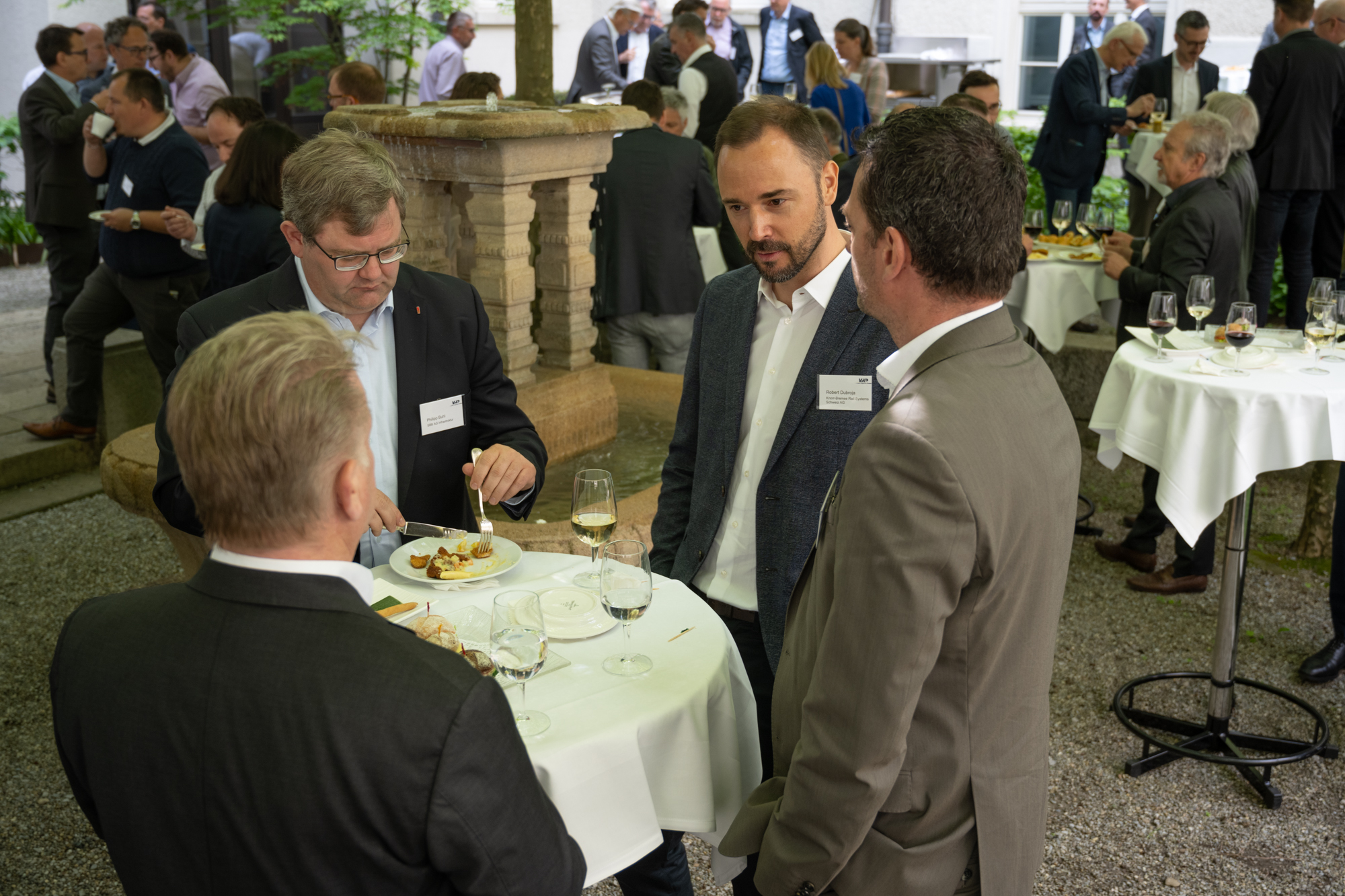
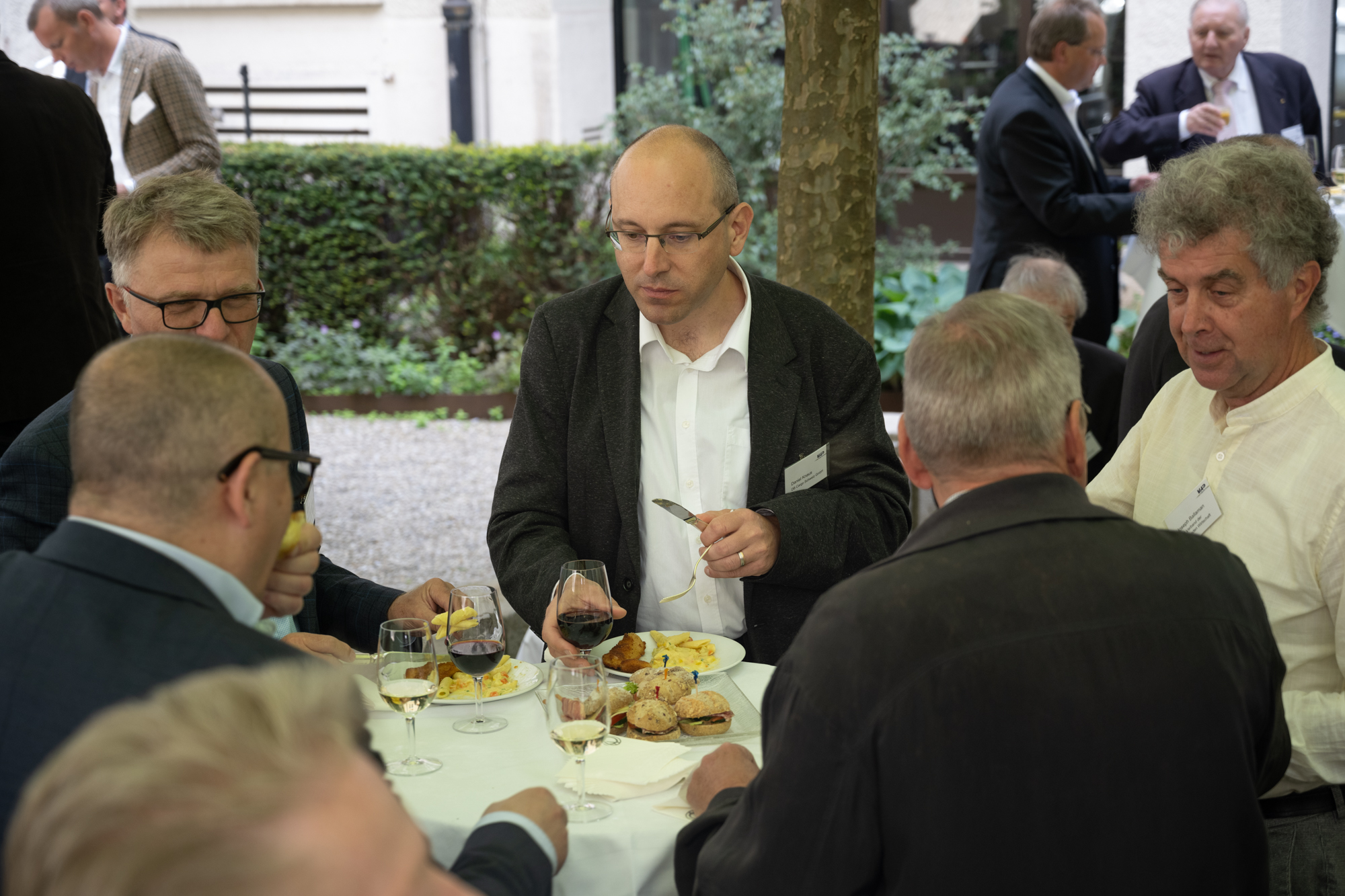
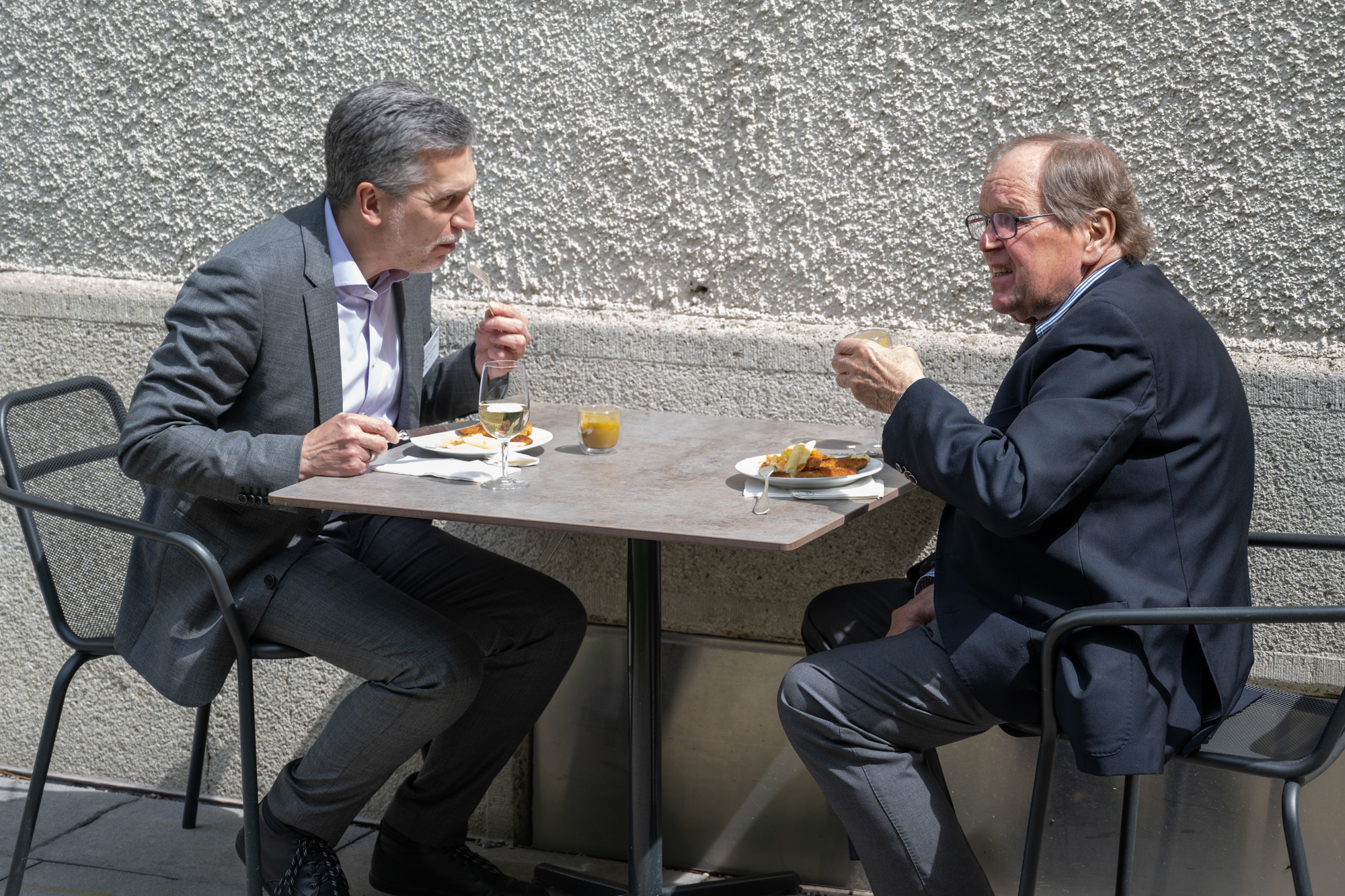
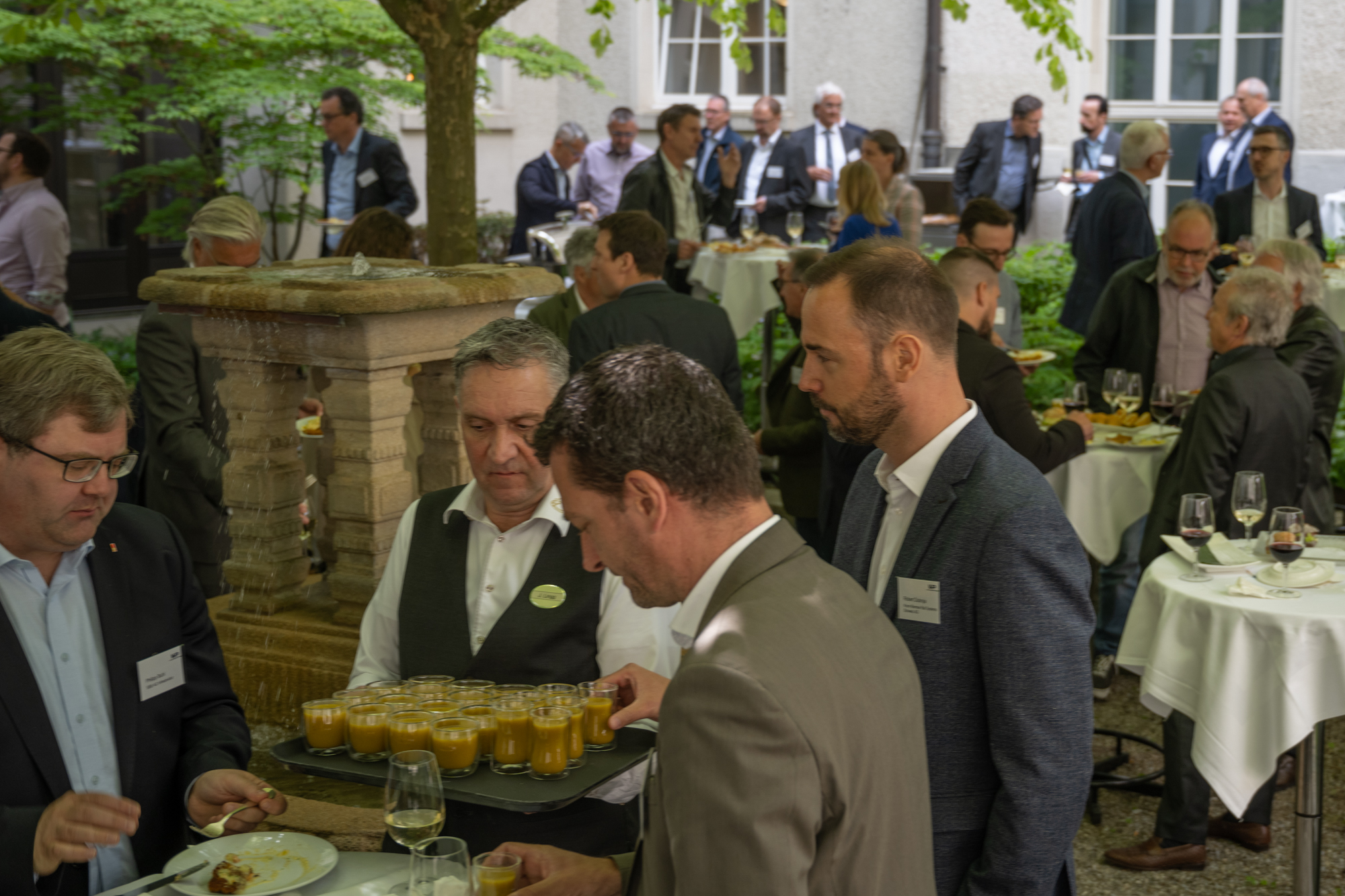
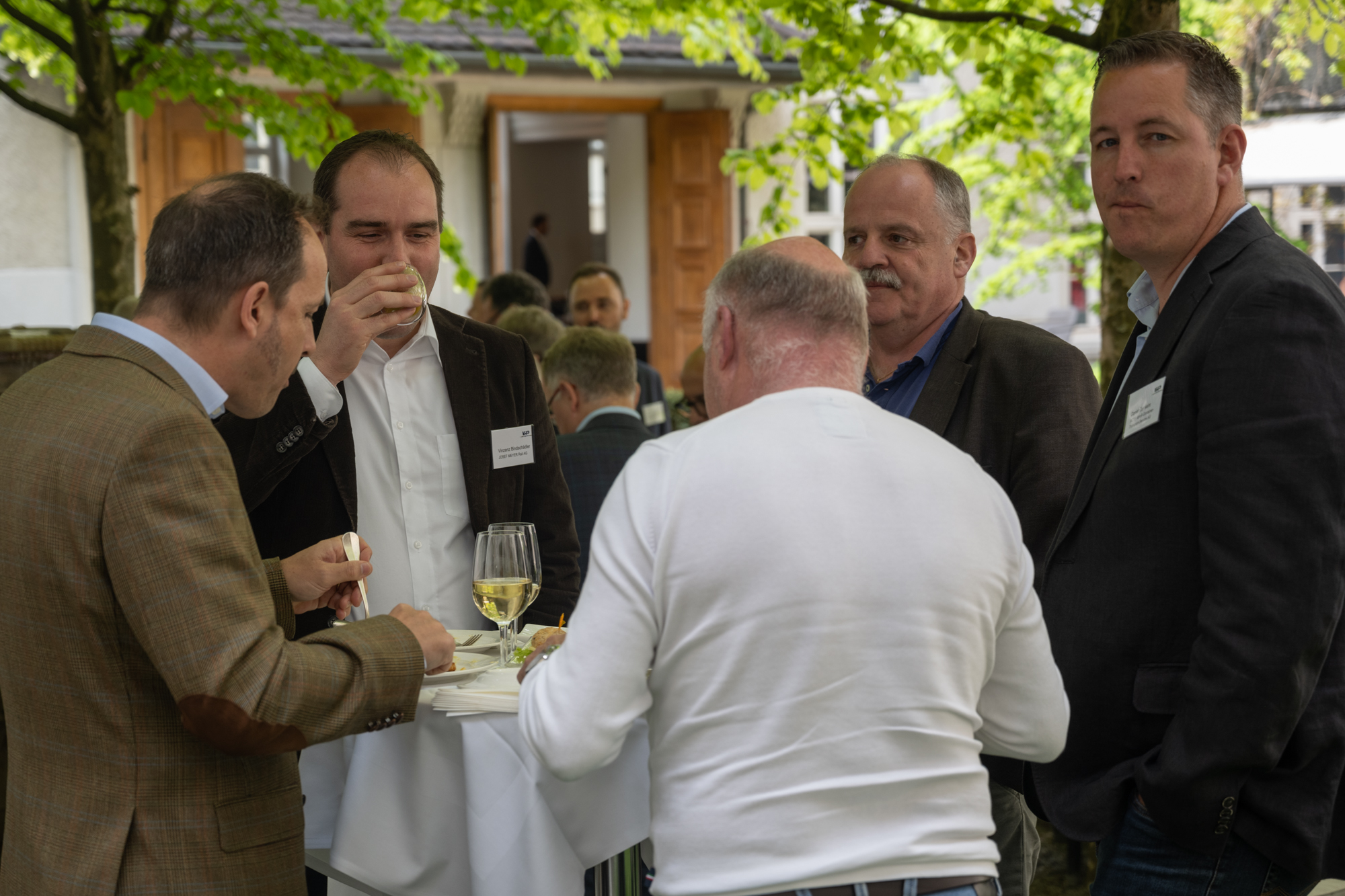
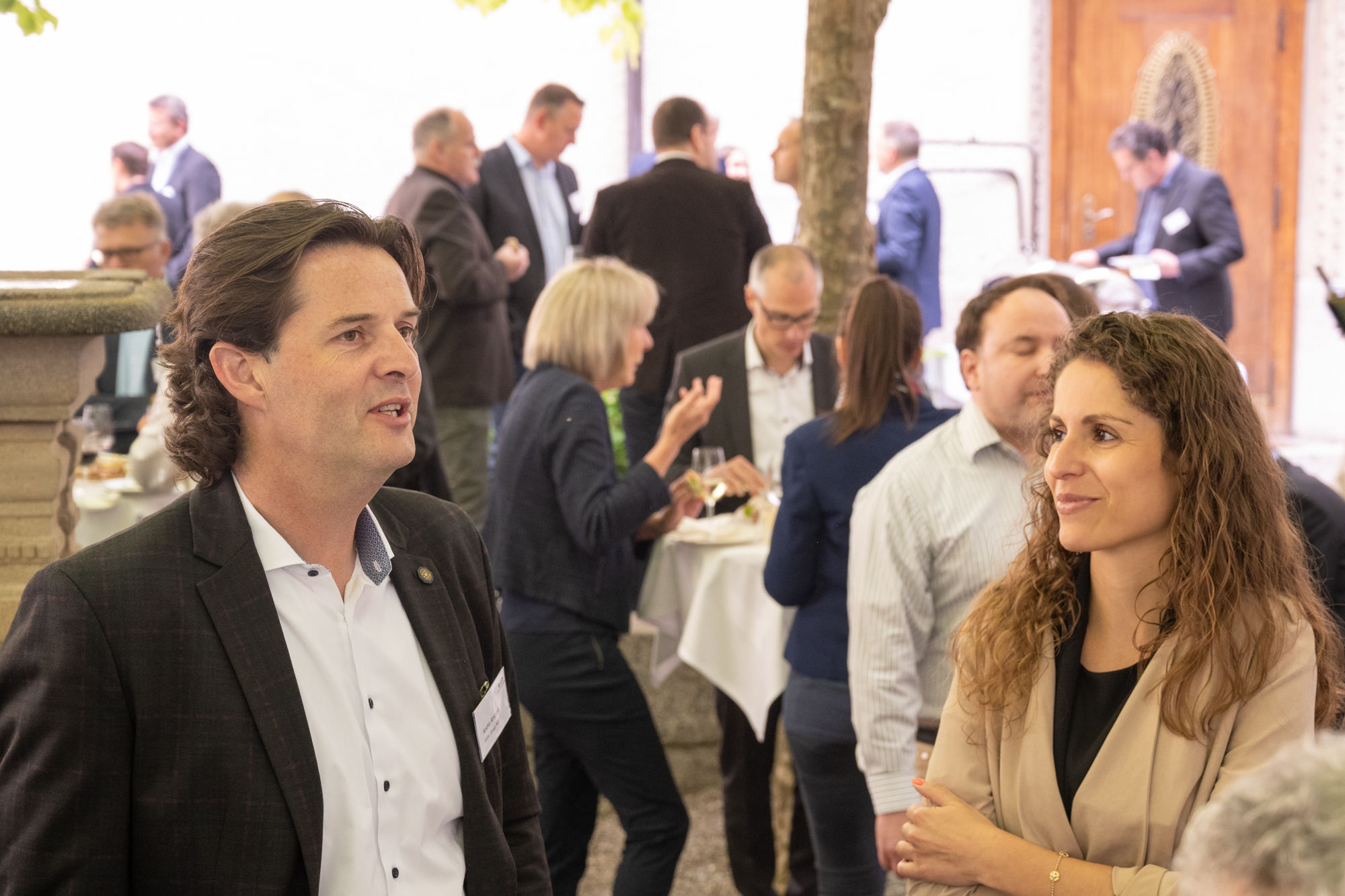
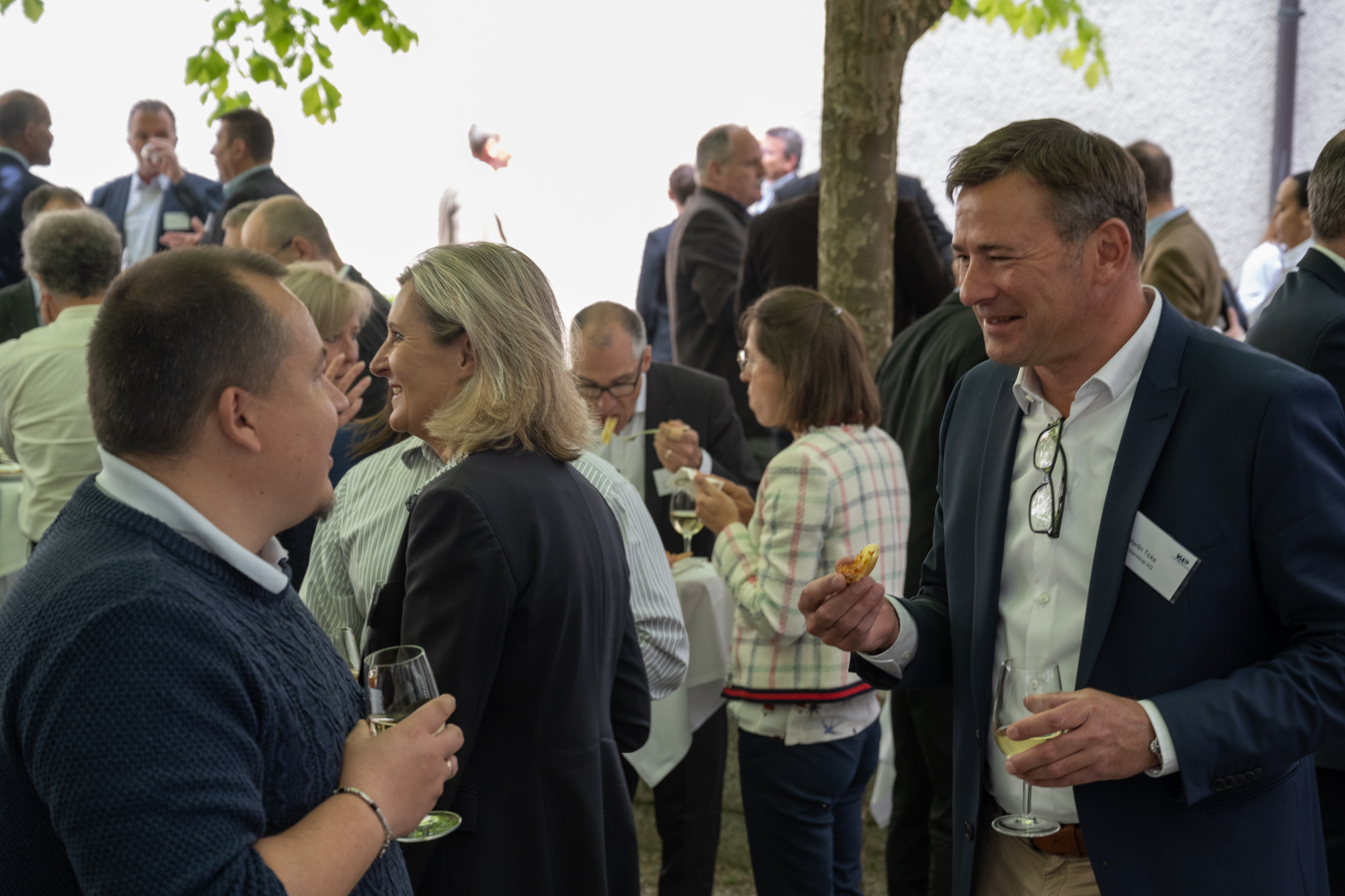
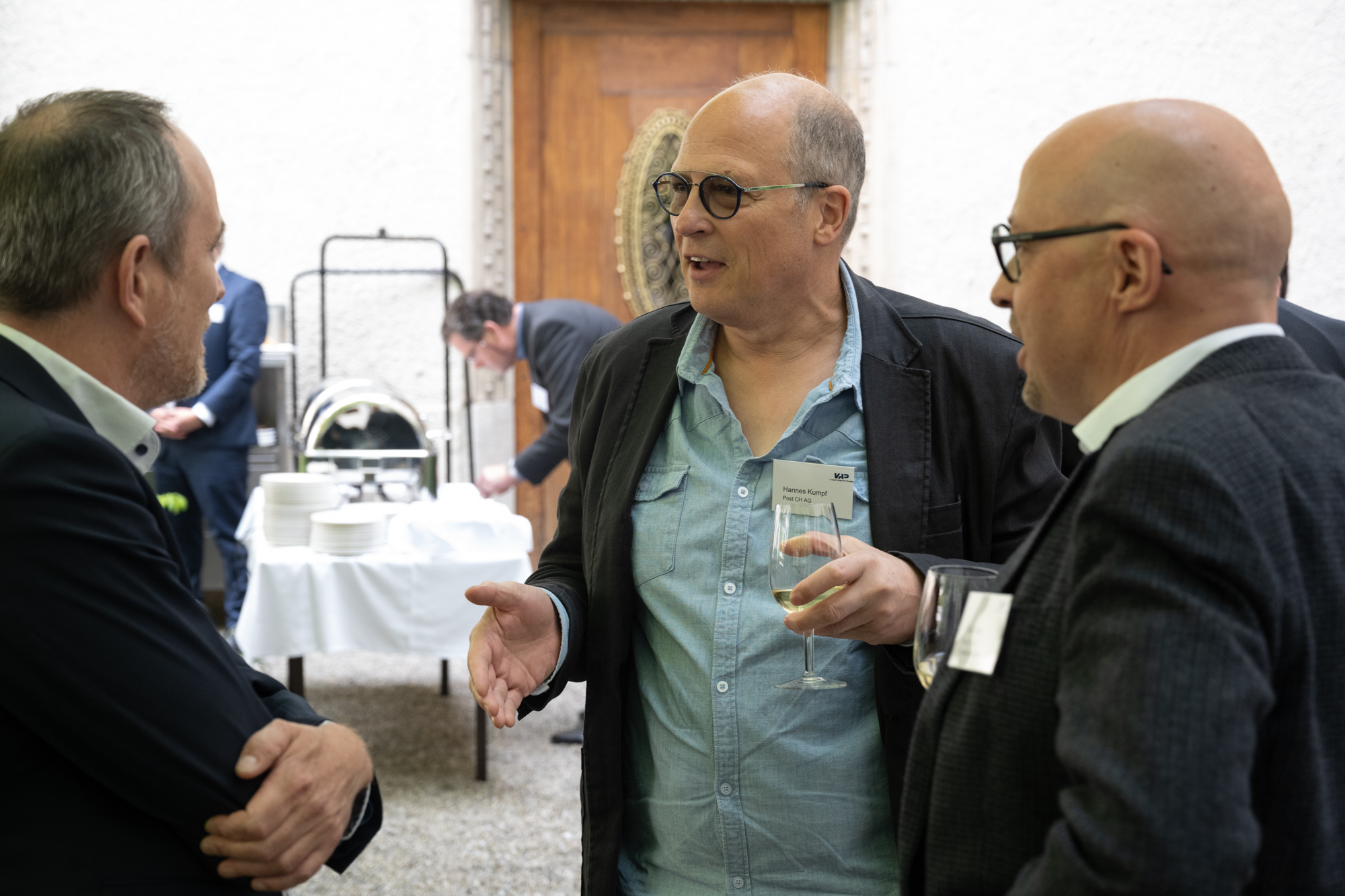
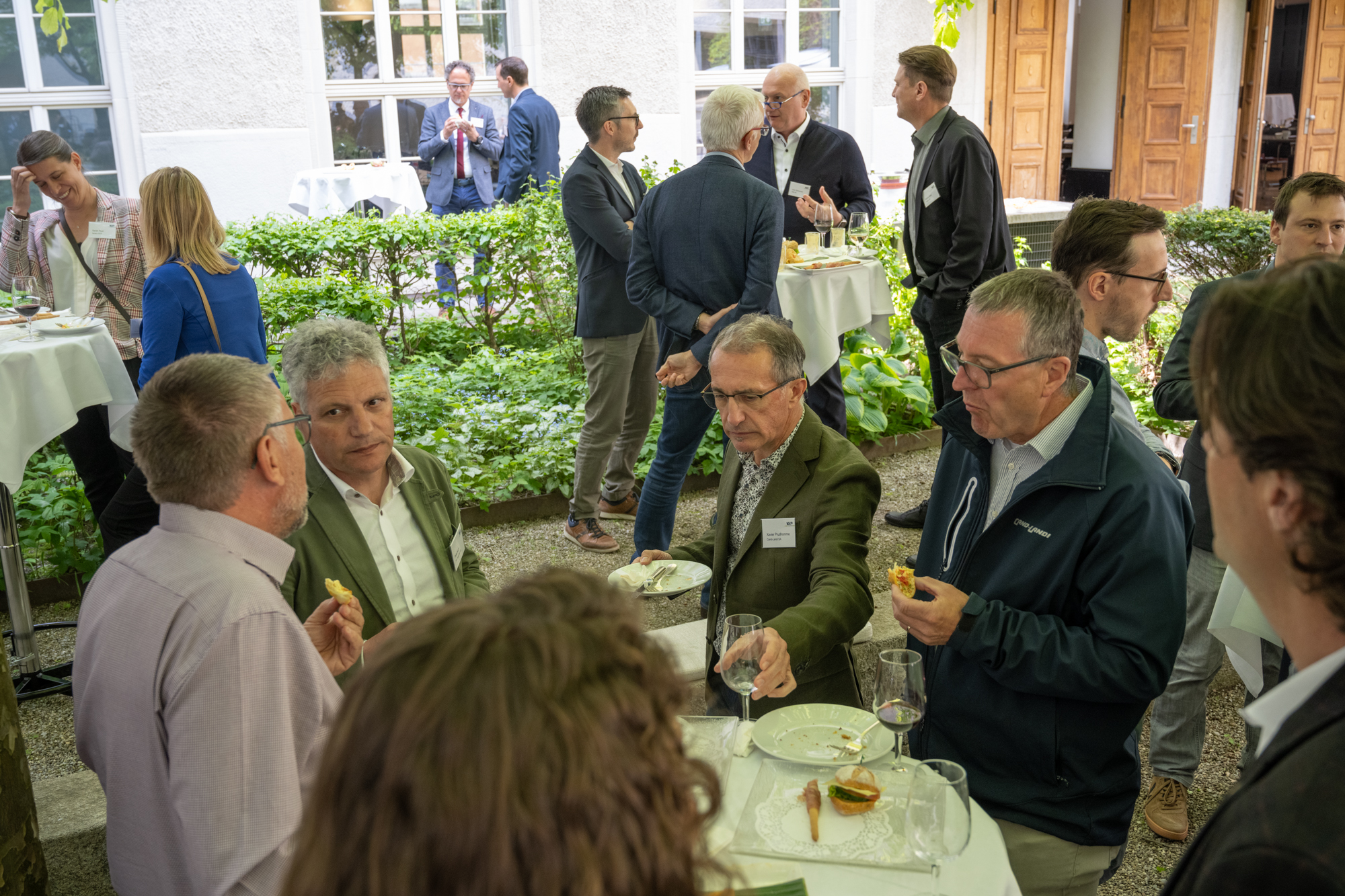
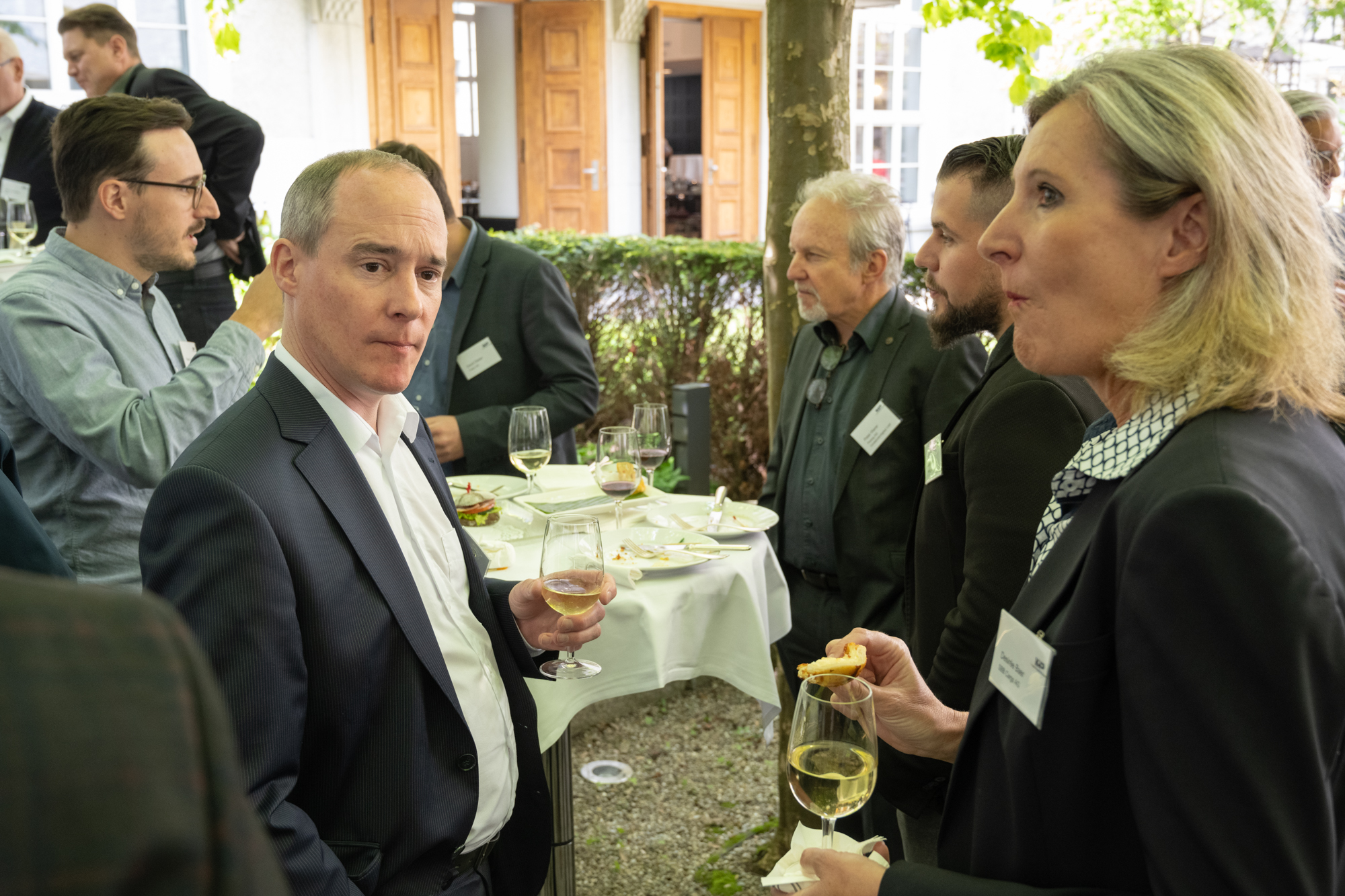
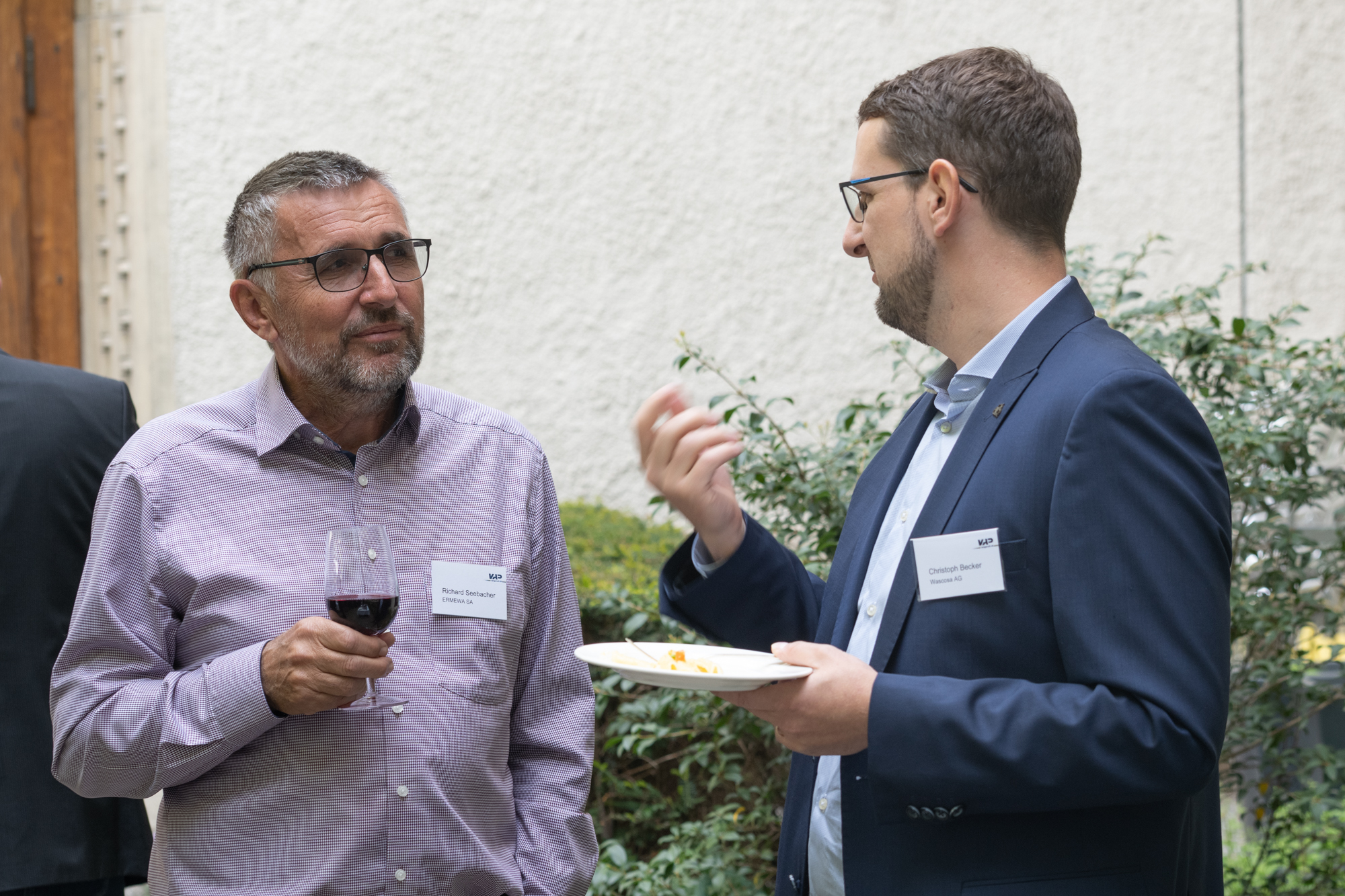
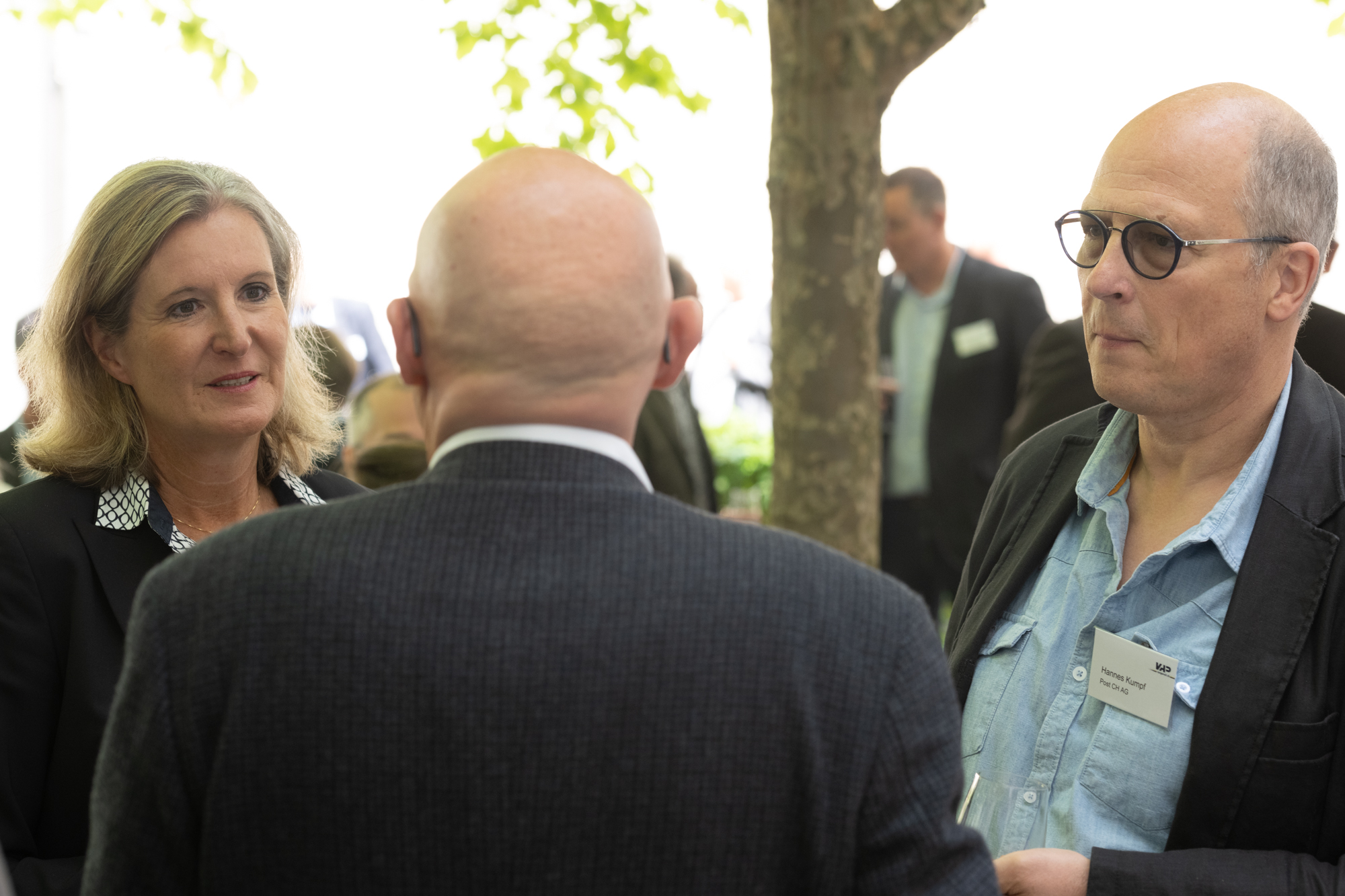
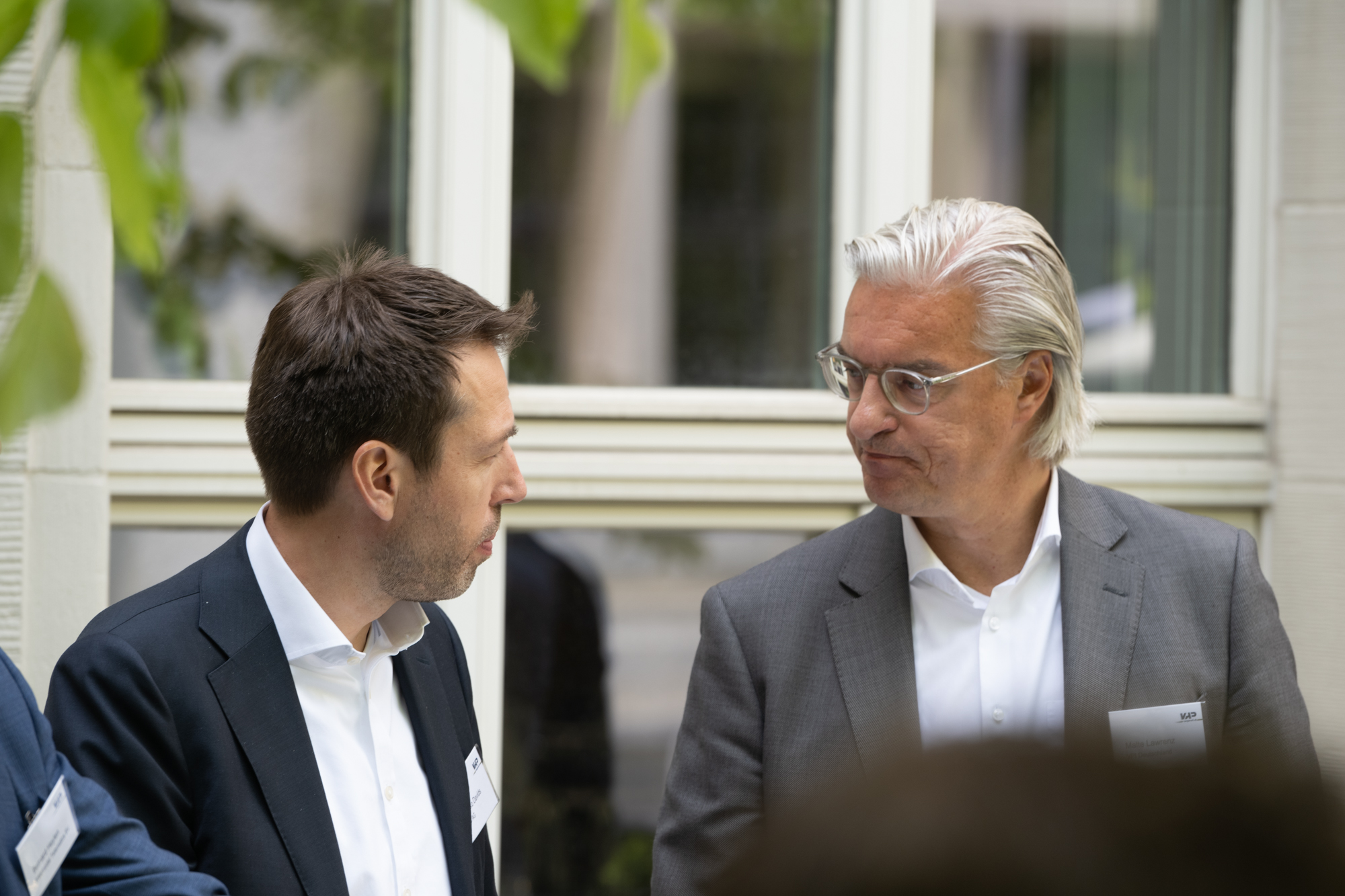
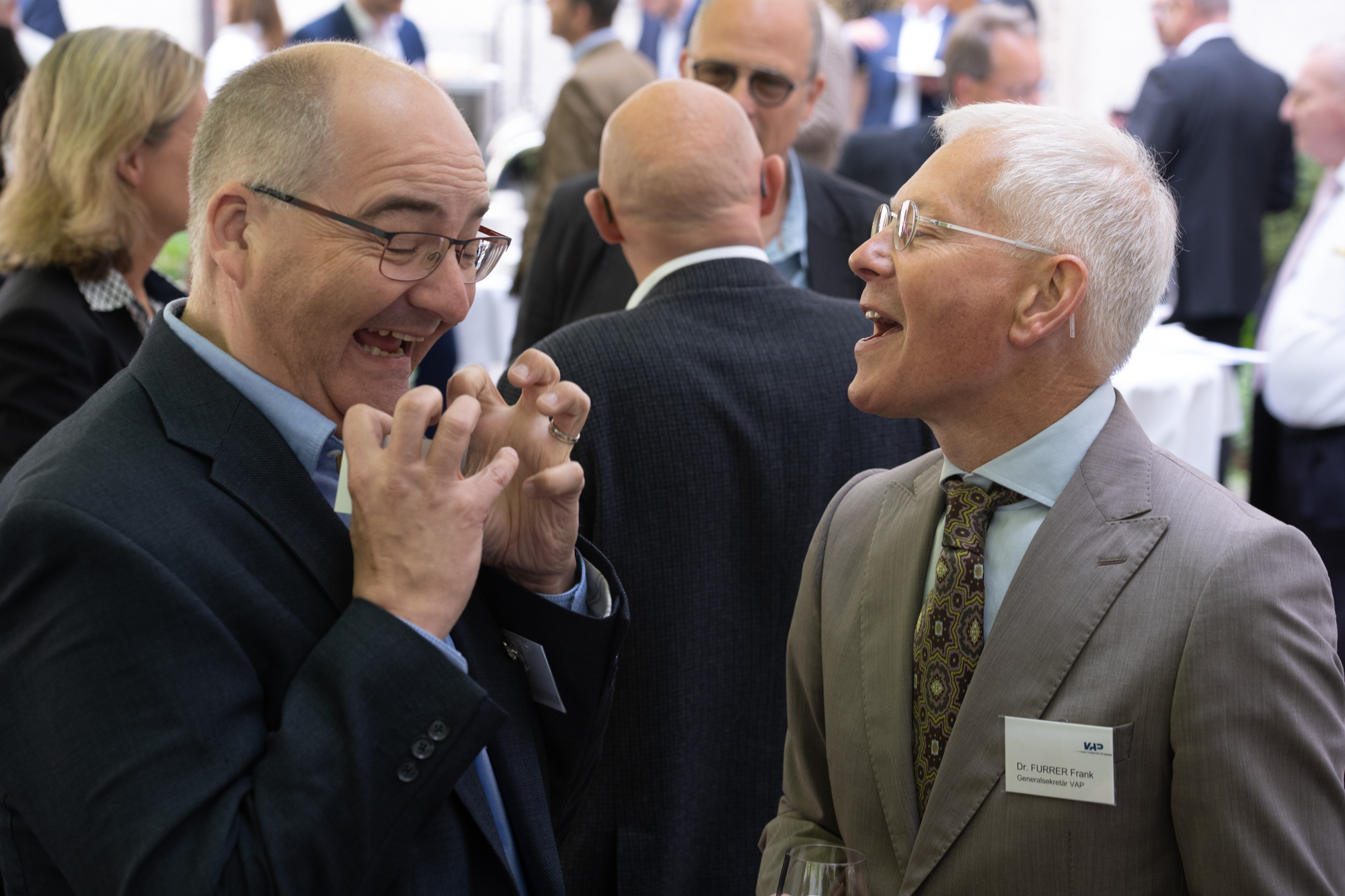
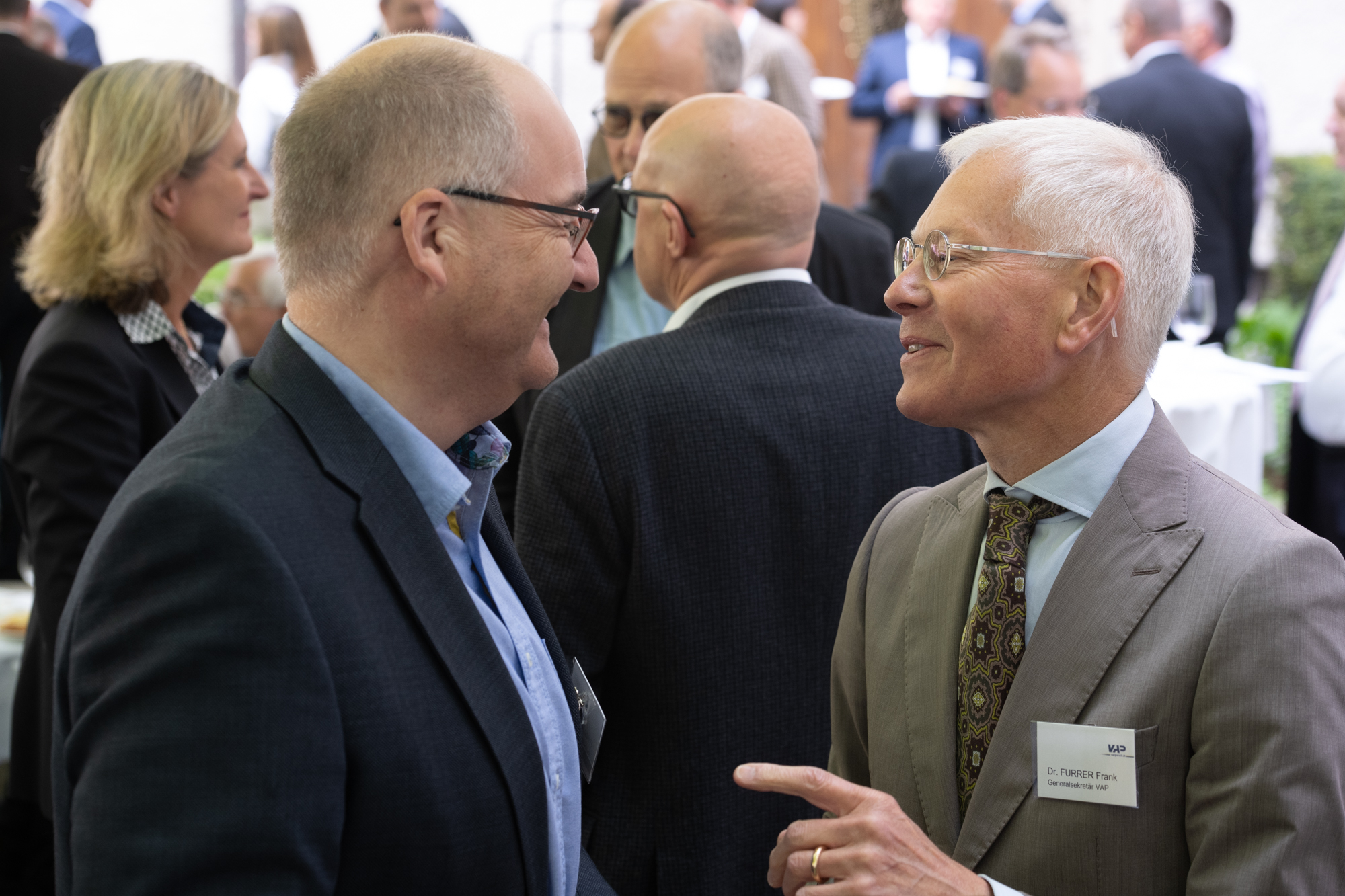
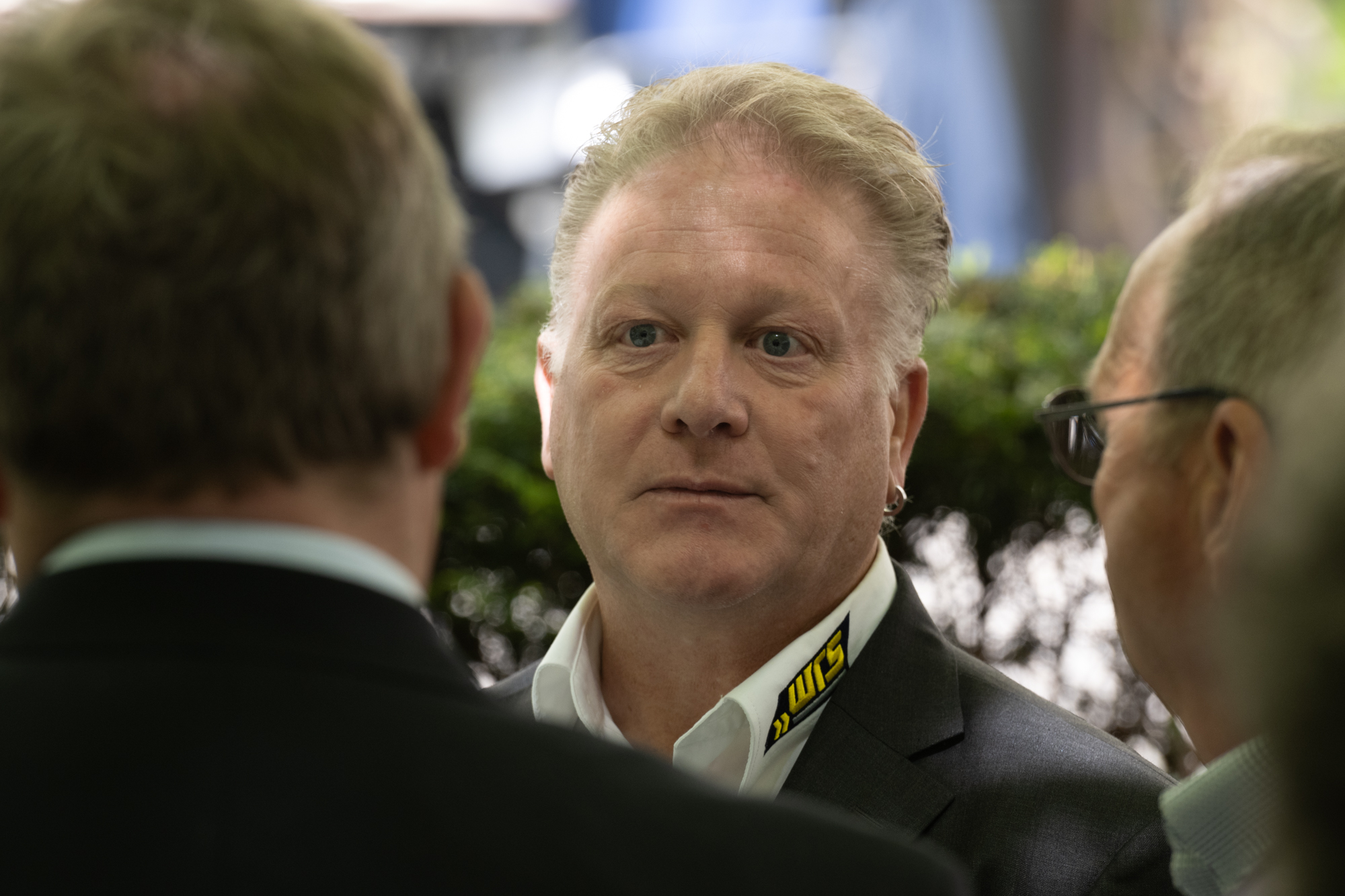
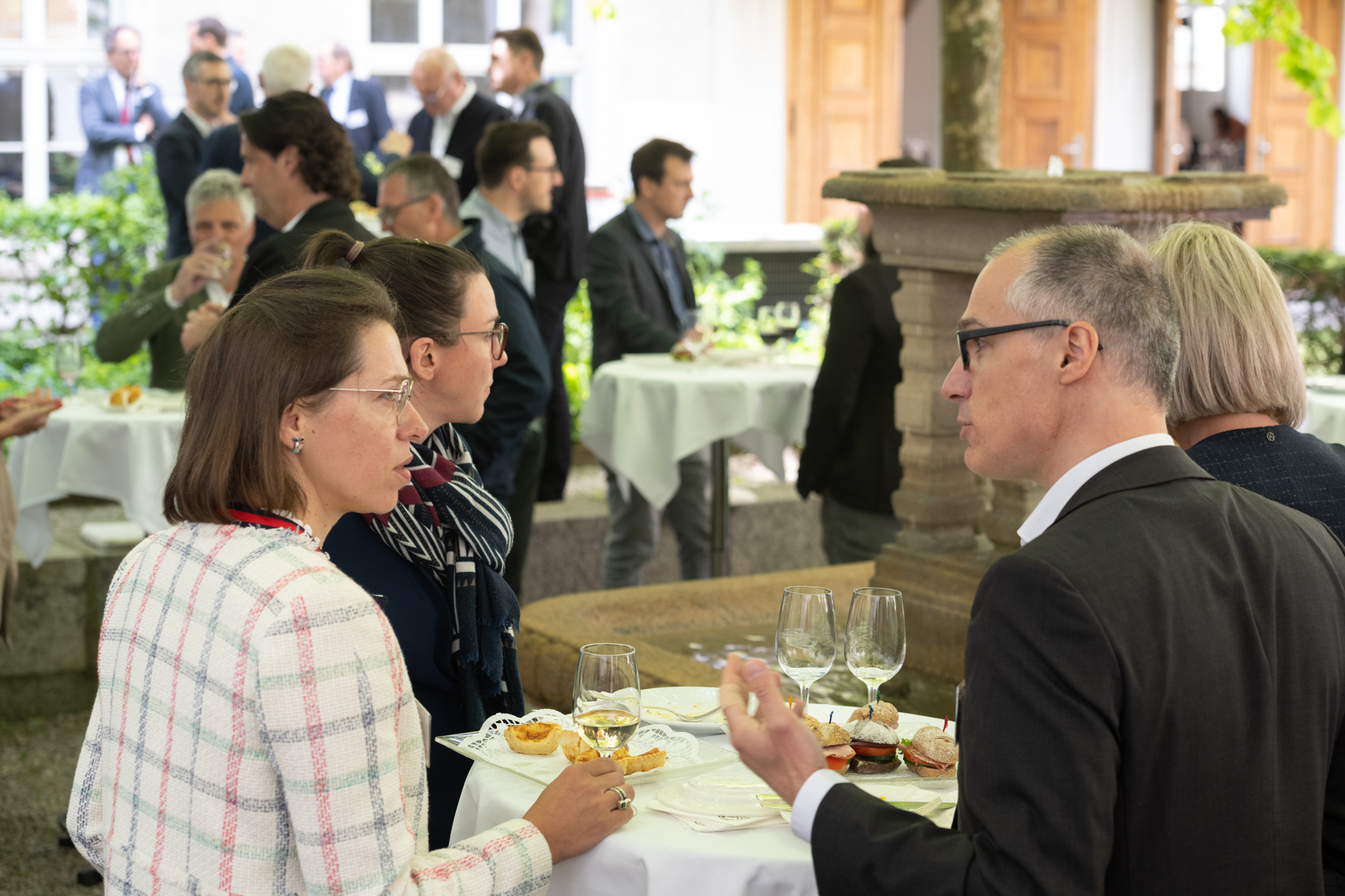
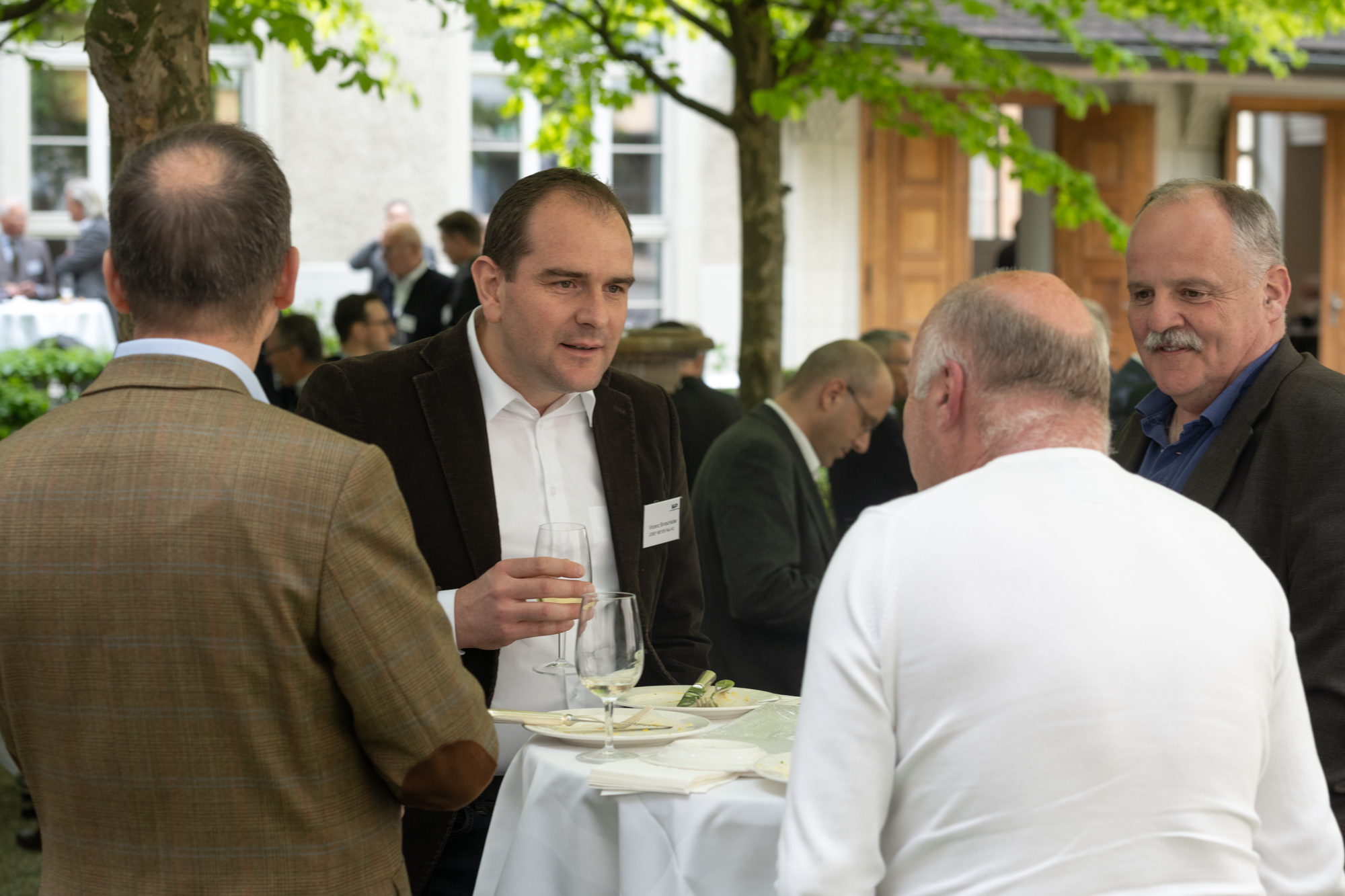
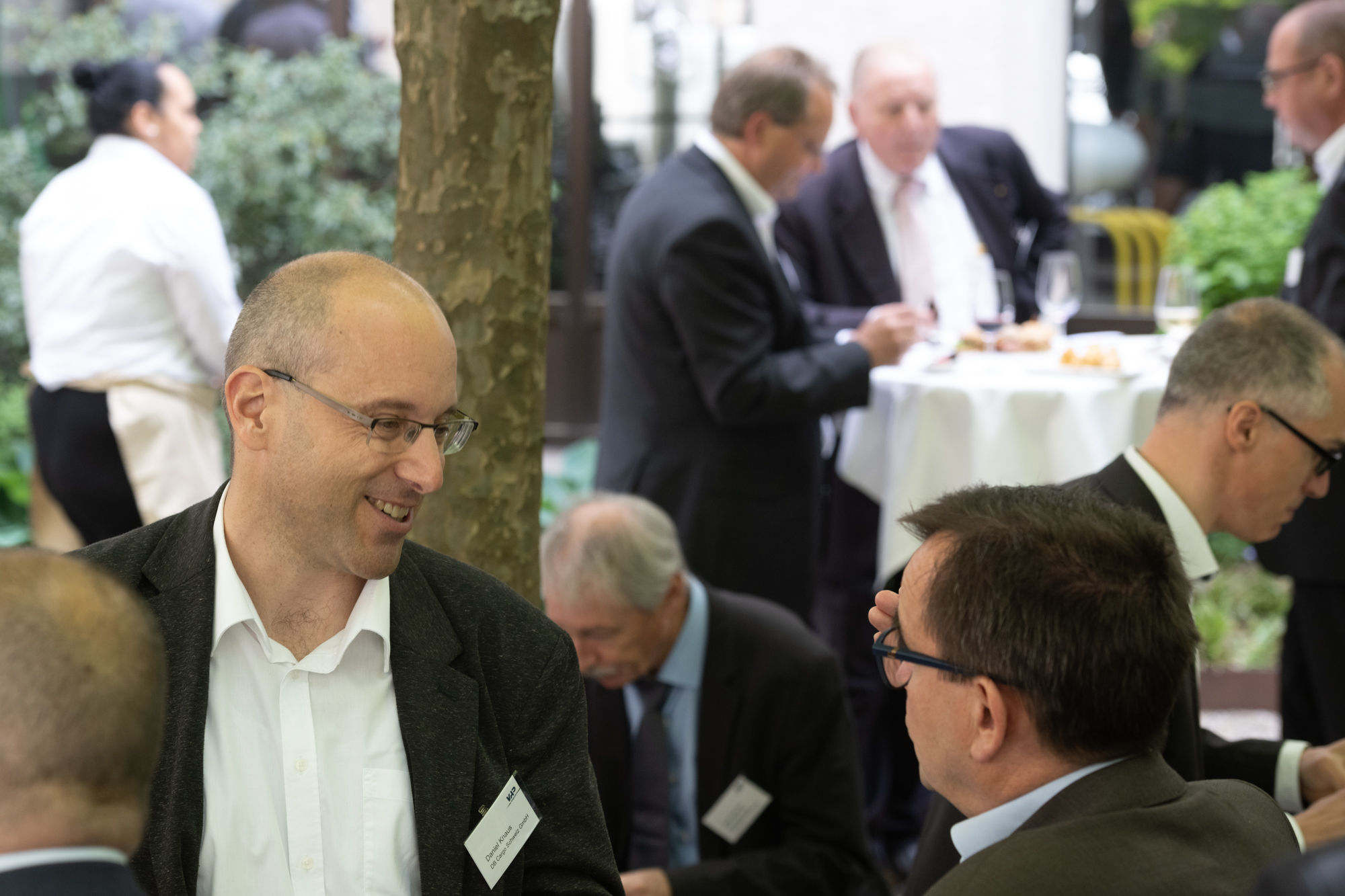
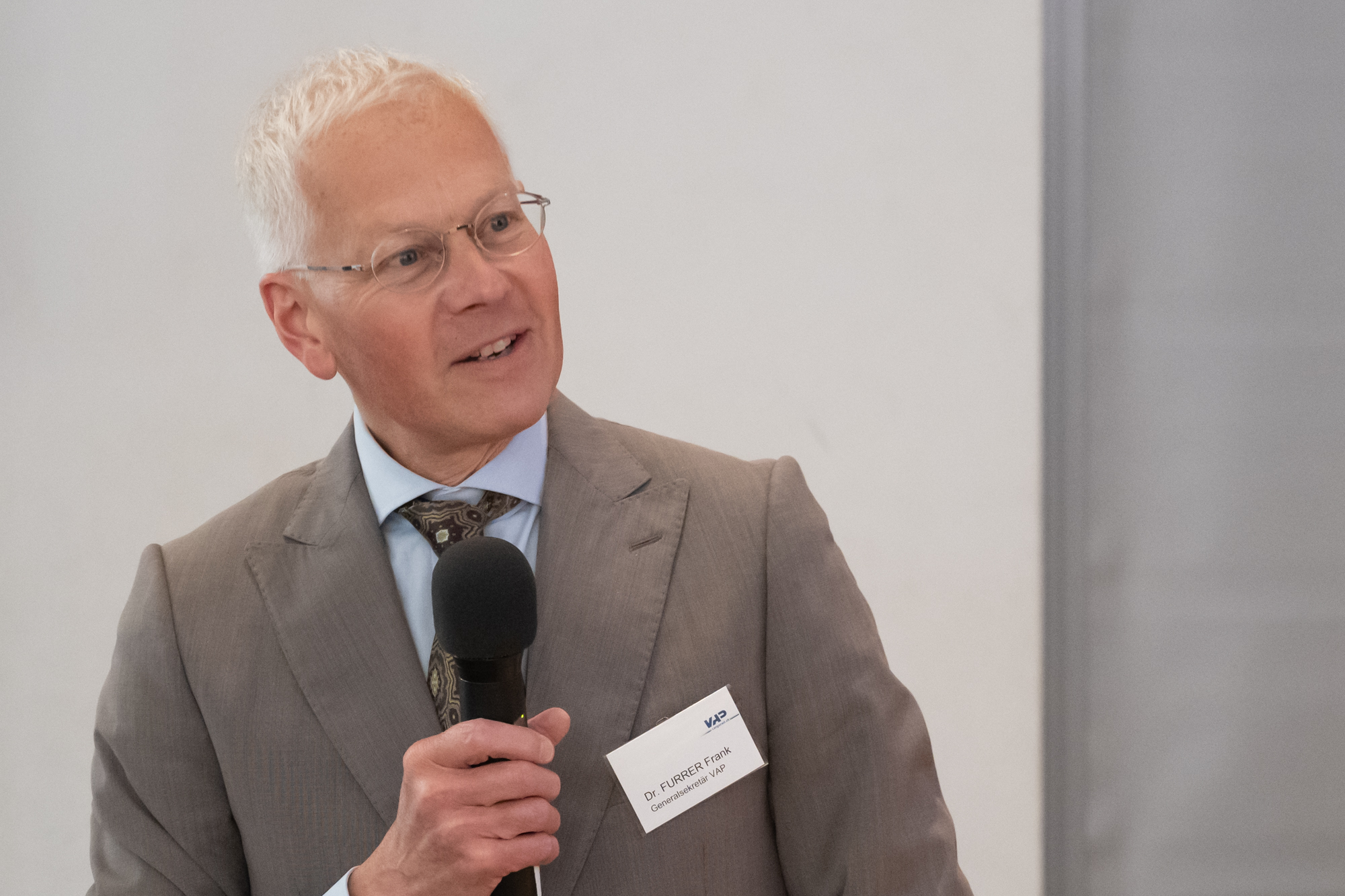
On 3 May 2022, the popular Freight Transport Forum finally took place again after three years. The most important players and representatives from the shipping industry from all over Europe met to refresh their expertise and exchange ideas with colleagues across companies. The chances of making rail freight transport fit for the future in a joint effort are good!
Interesting approaches
The freight transport master plans and rail freight transport in particular, which were launched in Germany and Austria, provide a comprehensive overview of the political strategies and measures. Something comparable is lacking in Switzerland; instead, there is still a strong focus on the individual modes of transport. The VAP therefore continues to pursue an overall view of freight transport and logistics, in close cooperation with economiesuisse and ASTAG. Austria presents an amendment to the Waste Management Act. This stipulates that transports of waste with a total weight of more than ten tonnes, starting from a defined transport distance (decreasing between 1.1.2023 and 1.1.2026 from 300, 200, 100 km), must in future be carried out by rail or by other means of transport with equivalent or lower pollutant or greenhouse gas potential (e.g. propulsion by fuel cell or electric motor). Similar developments can also be seen in the canton of Zurich, for example in the Ordinance on the Transport of Excavated Material and Aggregates by Rail of 3 February 2021, which requires that a significant proportion of excavated material must be transported by rail – or else a substitute levy is payable. In principle, we welcome such regulations to achieve the environmental goals, but we do not consider a specification of the choice of means of transport by means of gentle coercion to be very effective. Rather, the VAP strives to make the railways fit and attractive for shippers, so that paternalism is not necessary.
We therefore consider the common interest in promoting digitalisation to be very positive. As never before, the players in the shipping industry stand united for progress. It is impressive how the various players networked across Europe have decided in favour of digitalisation and want to use this lever together to make rail freight transport fit for the future. Various presentations showed that the Digital Automatic Coupling (DAC) not only brings considerable relief for mechanical work, but is above all a switch for the connectivity of an entire train. This is the prerequisite for digitalisation, which is so important for rail freight transport and which has long since taken place in other industries. With more efficient and transparent processes, rail can become competitive alongside other modes of transport. The motto is collaboration and coopetition, which we at the VAP Association of Shippers also support.
VAP members can download the speakers’ presentations here with their personal login.


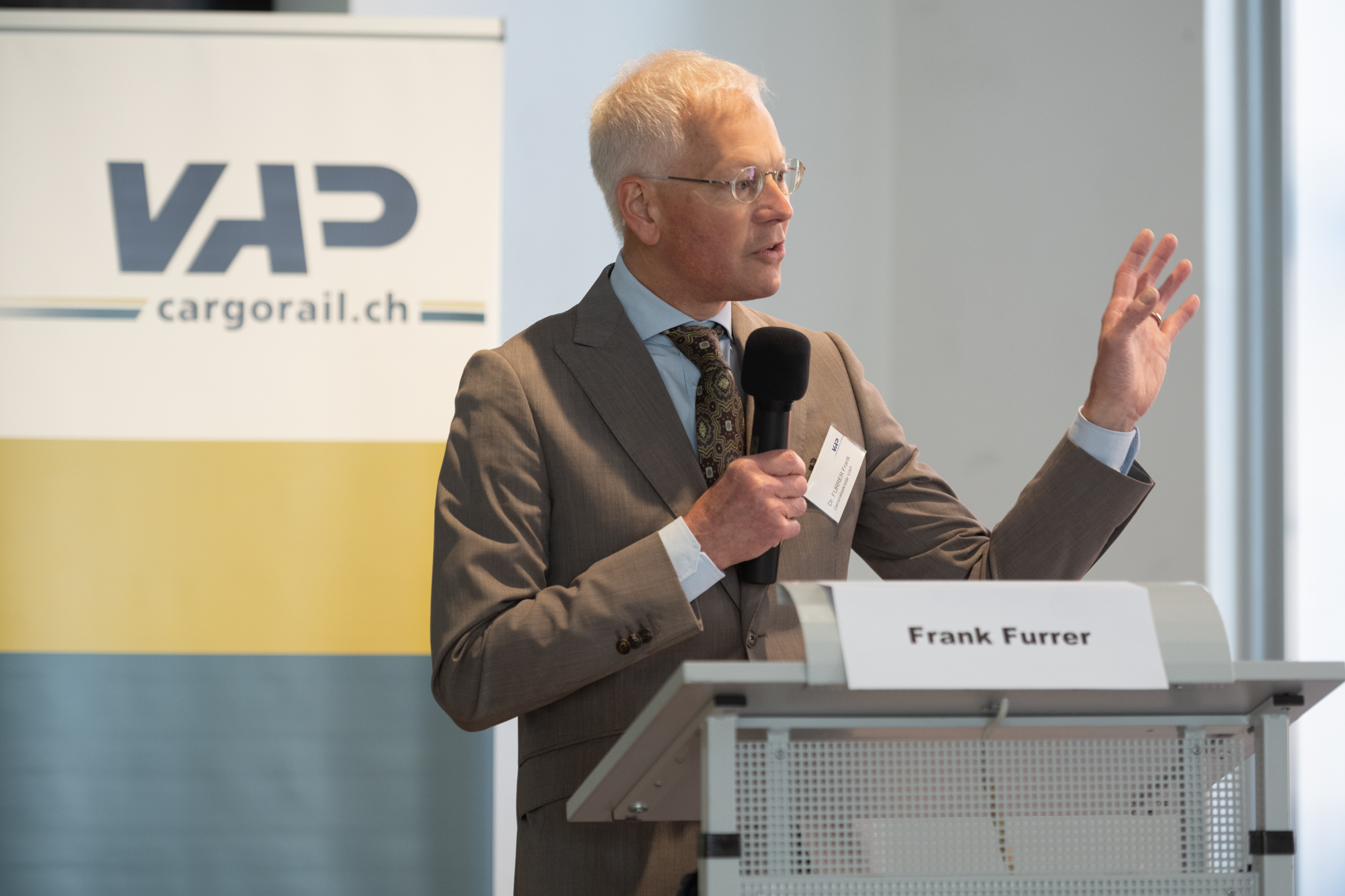
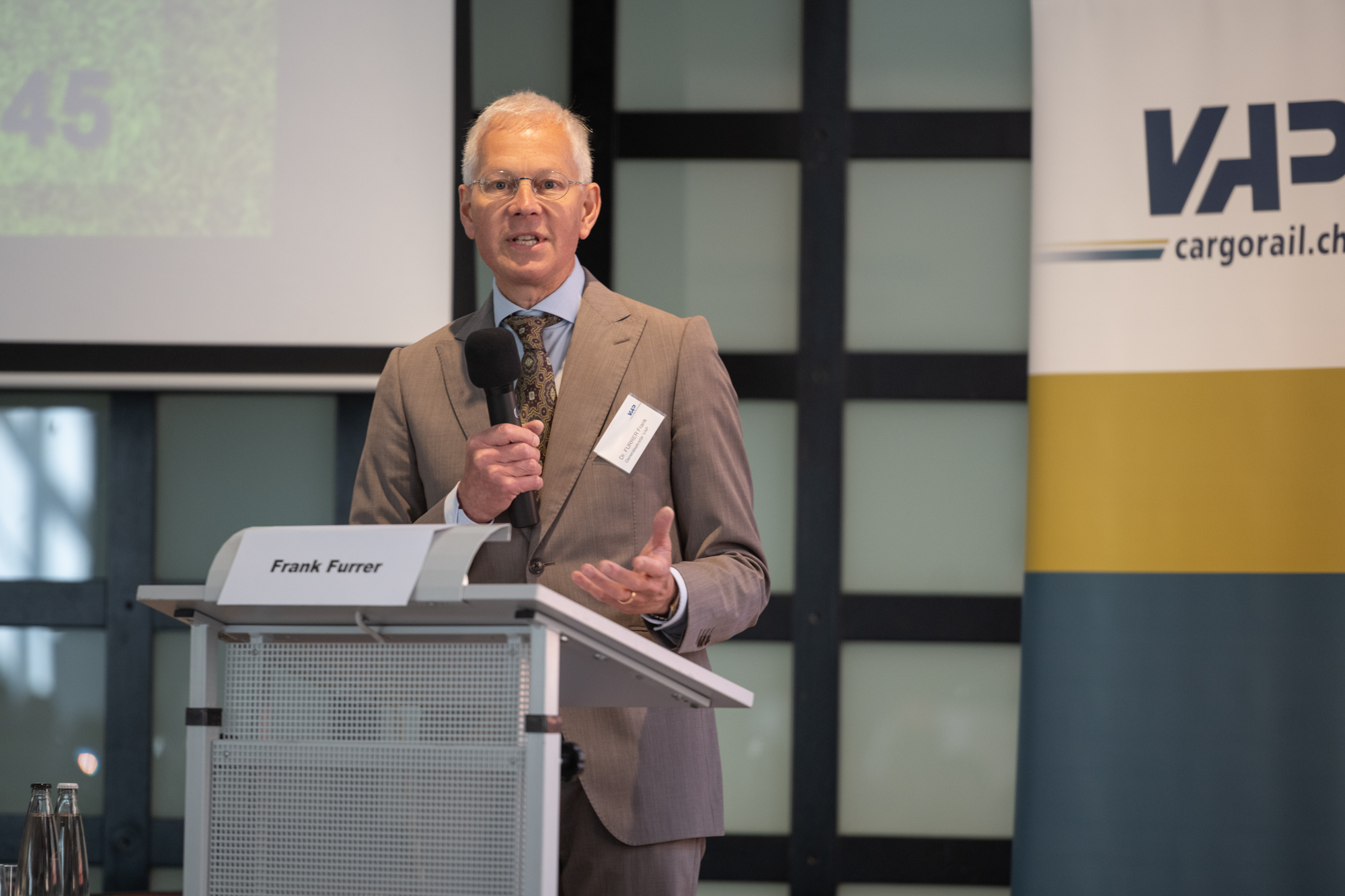
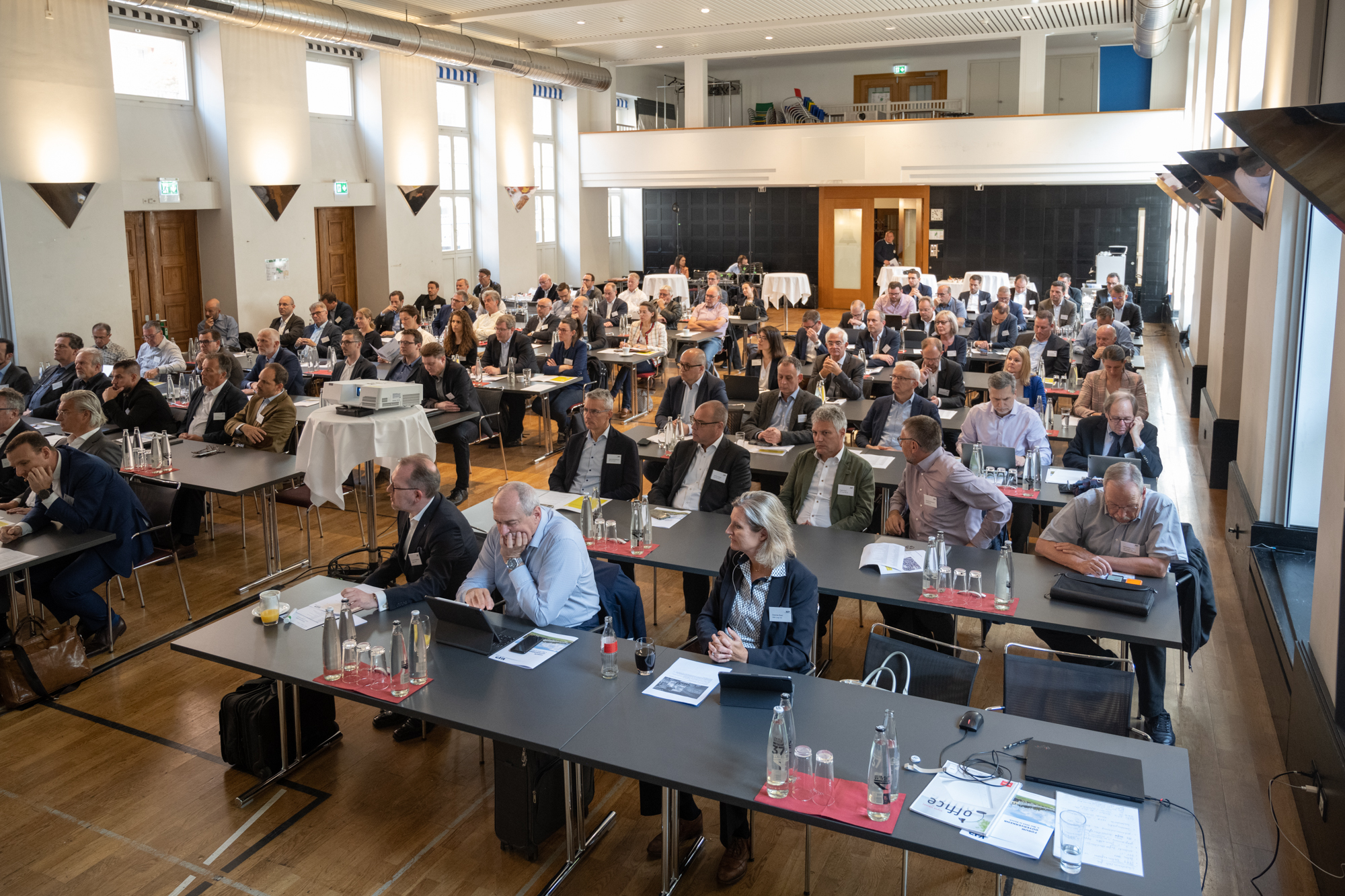
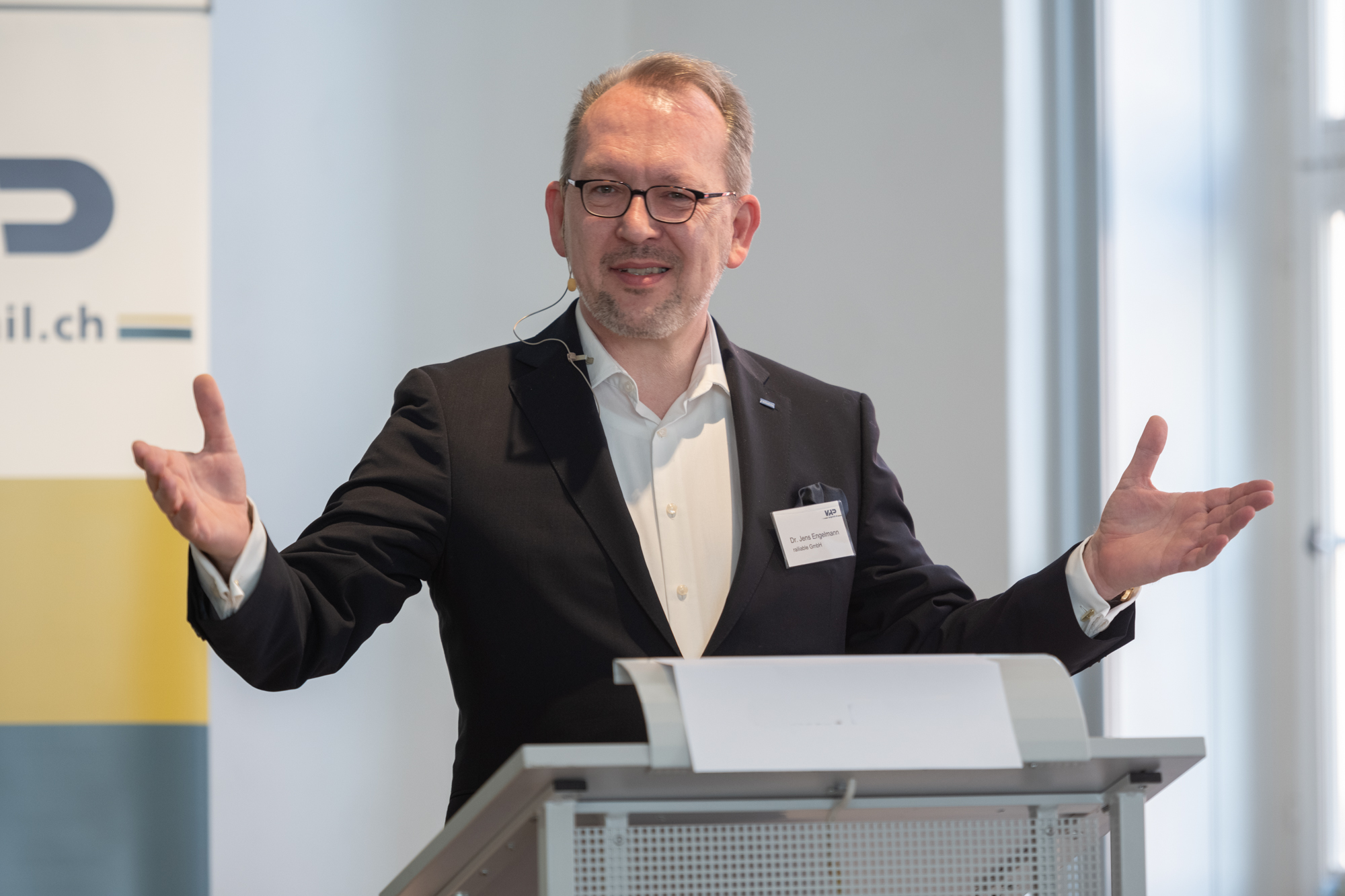
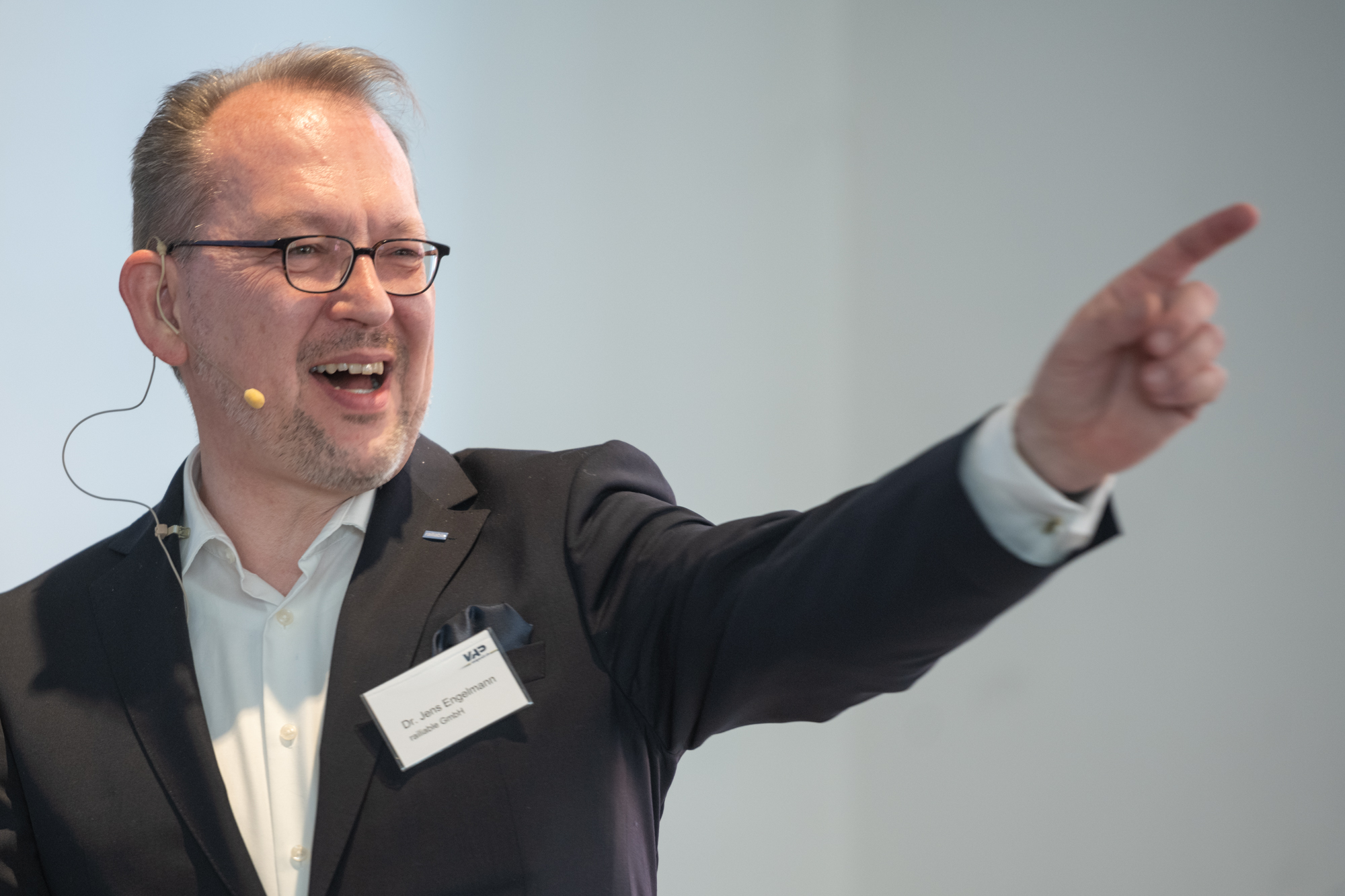
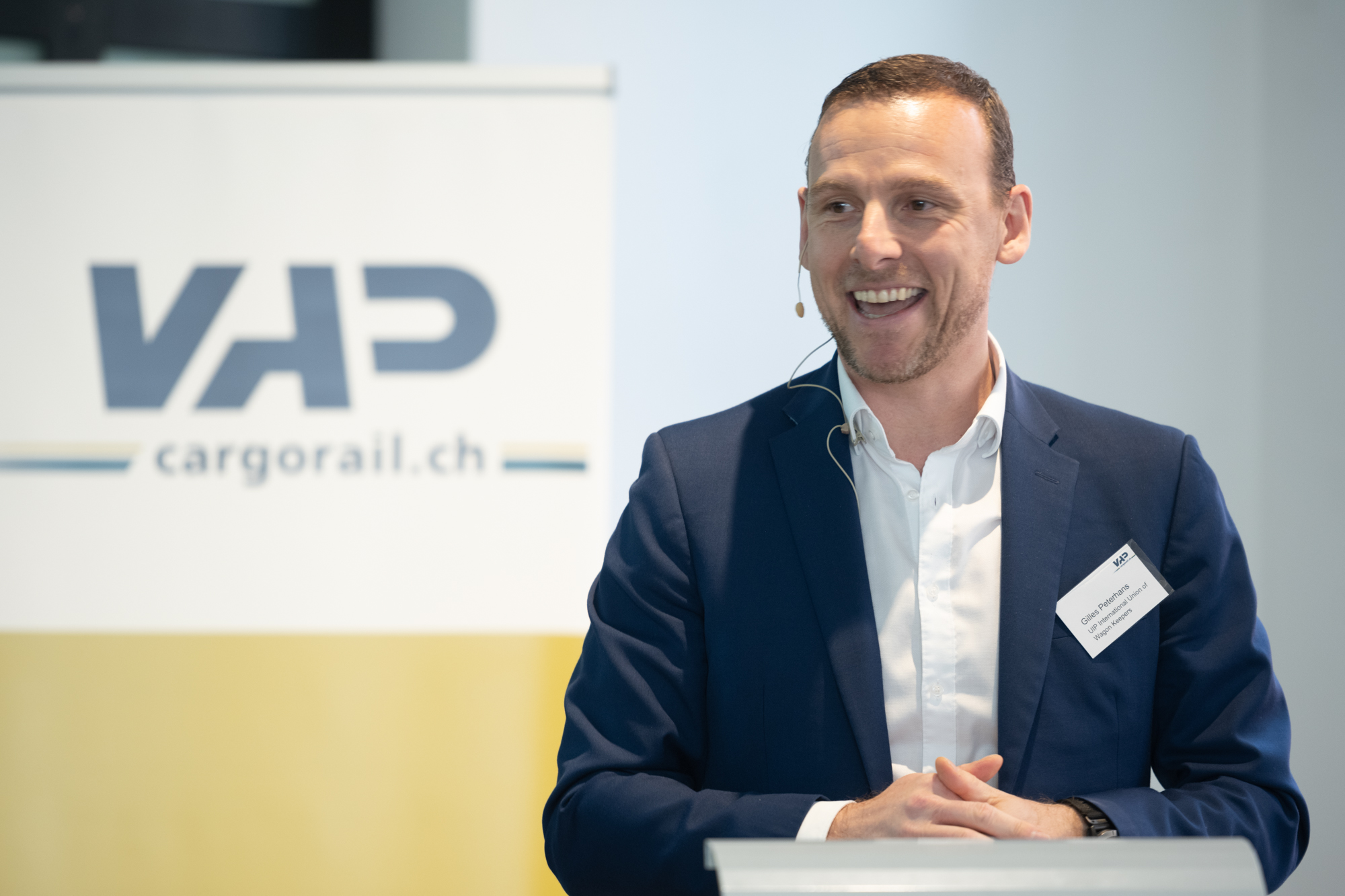
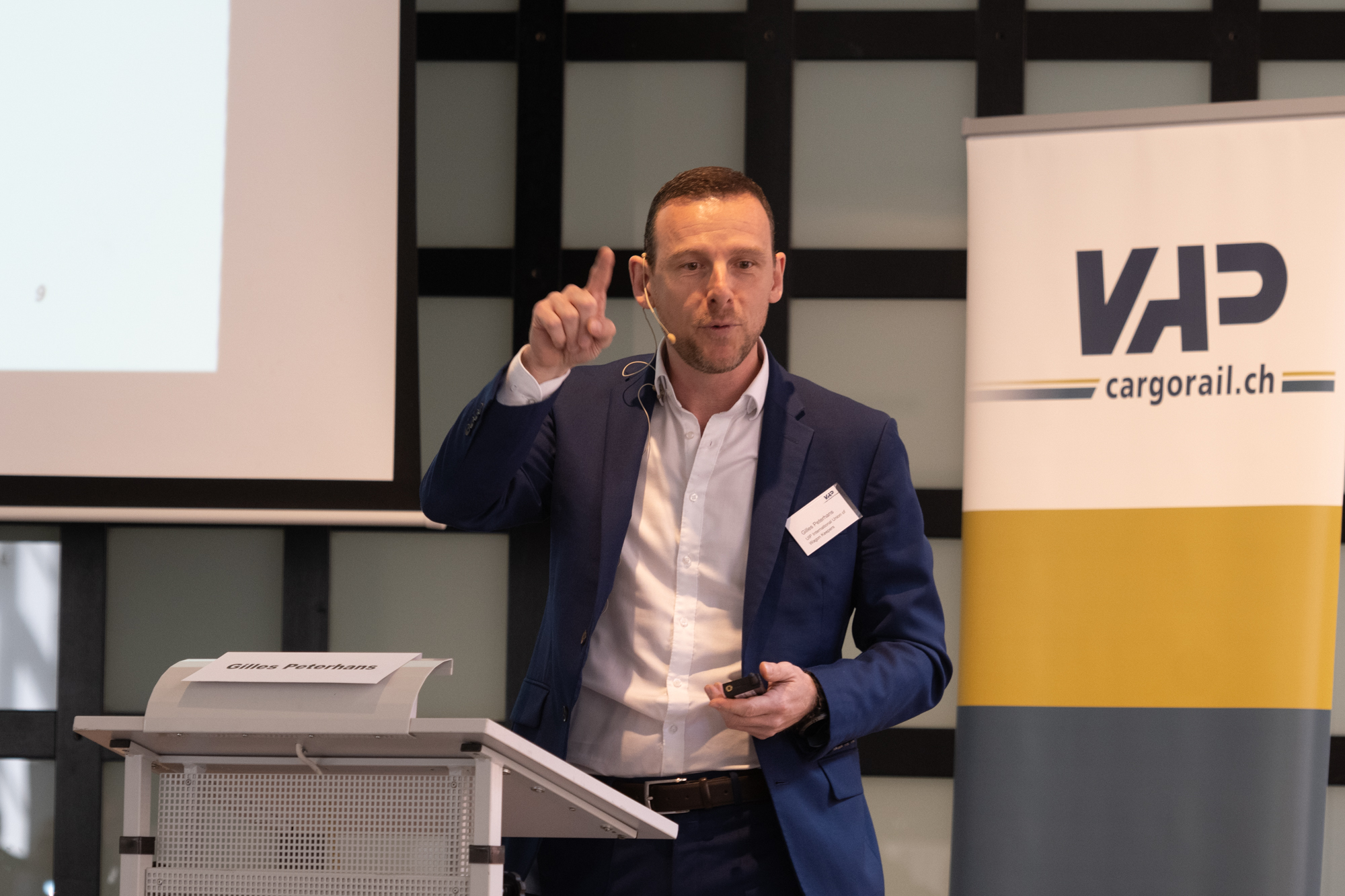
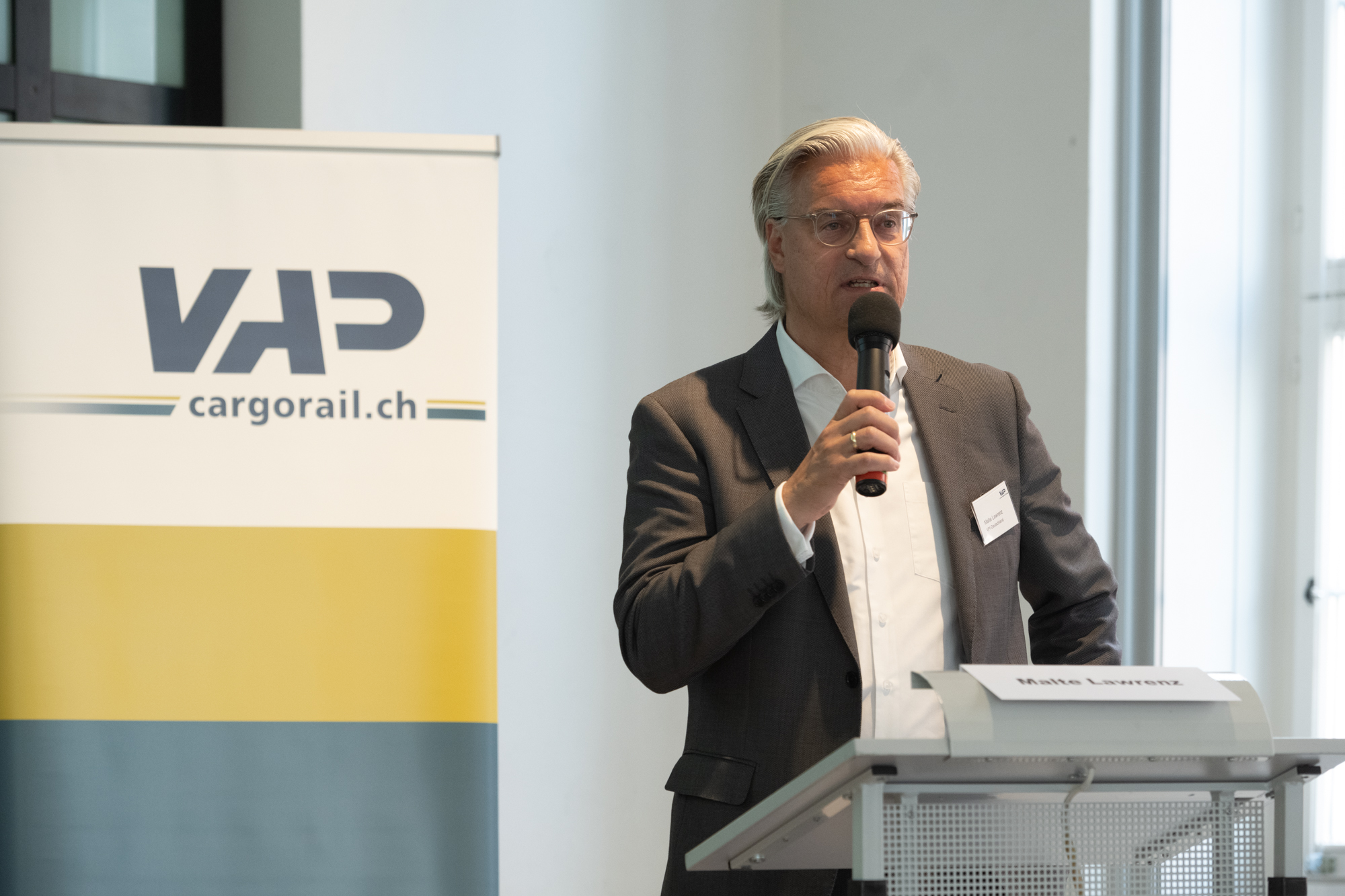
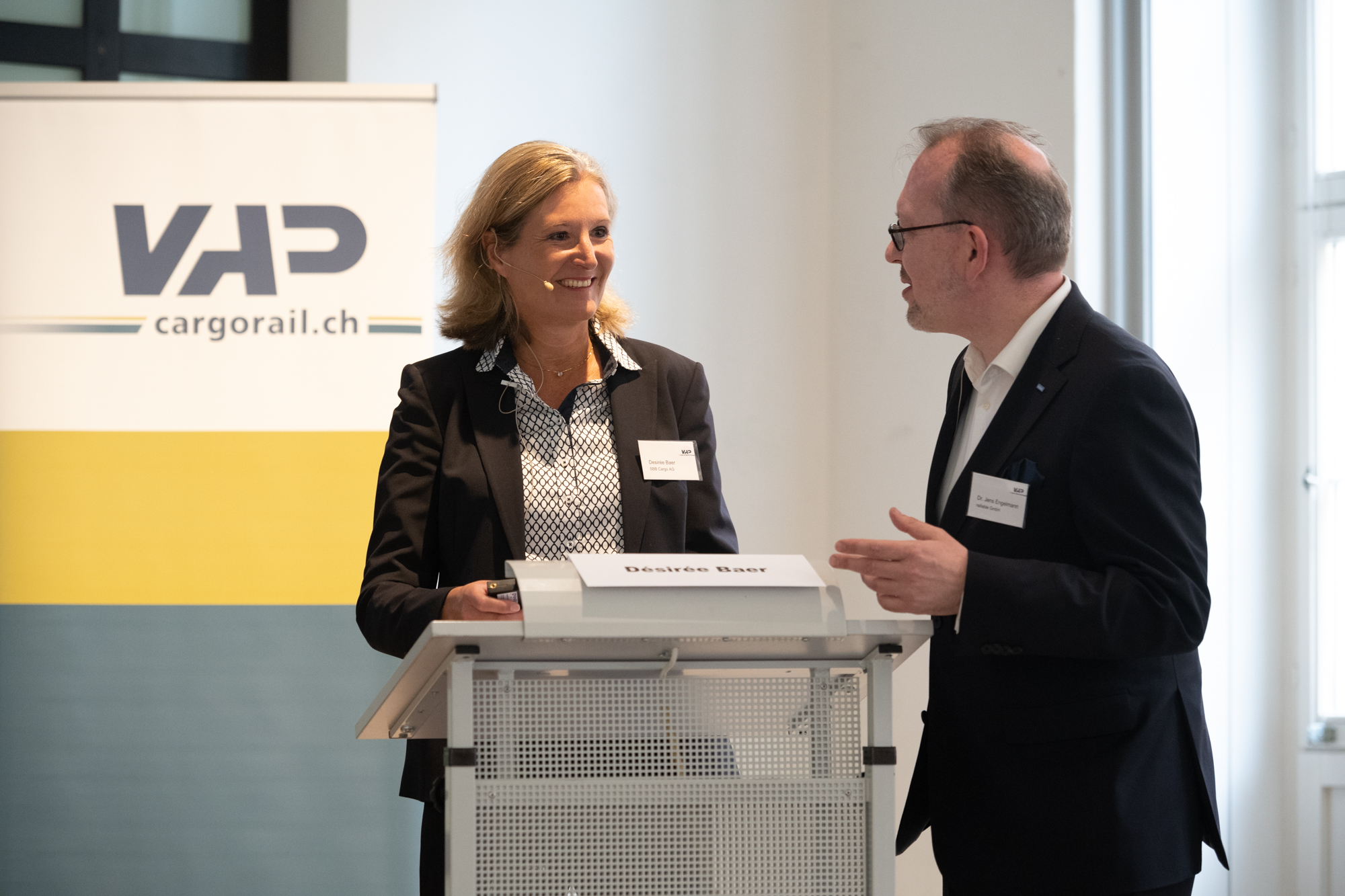
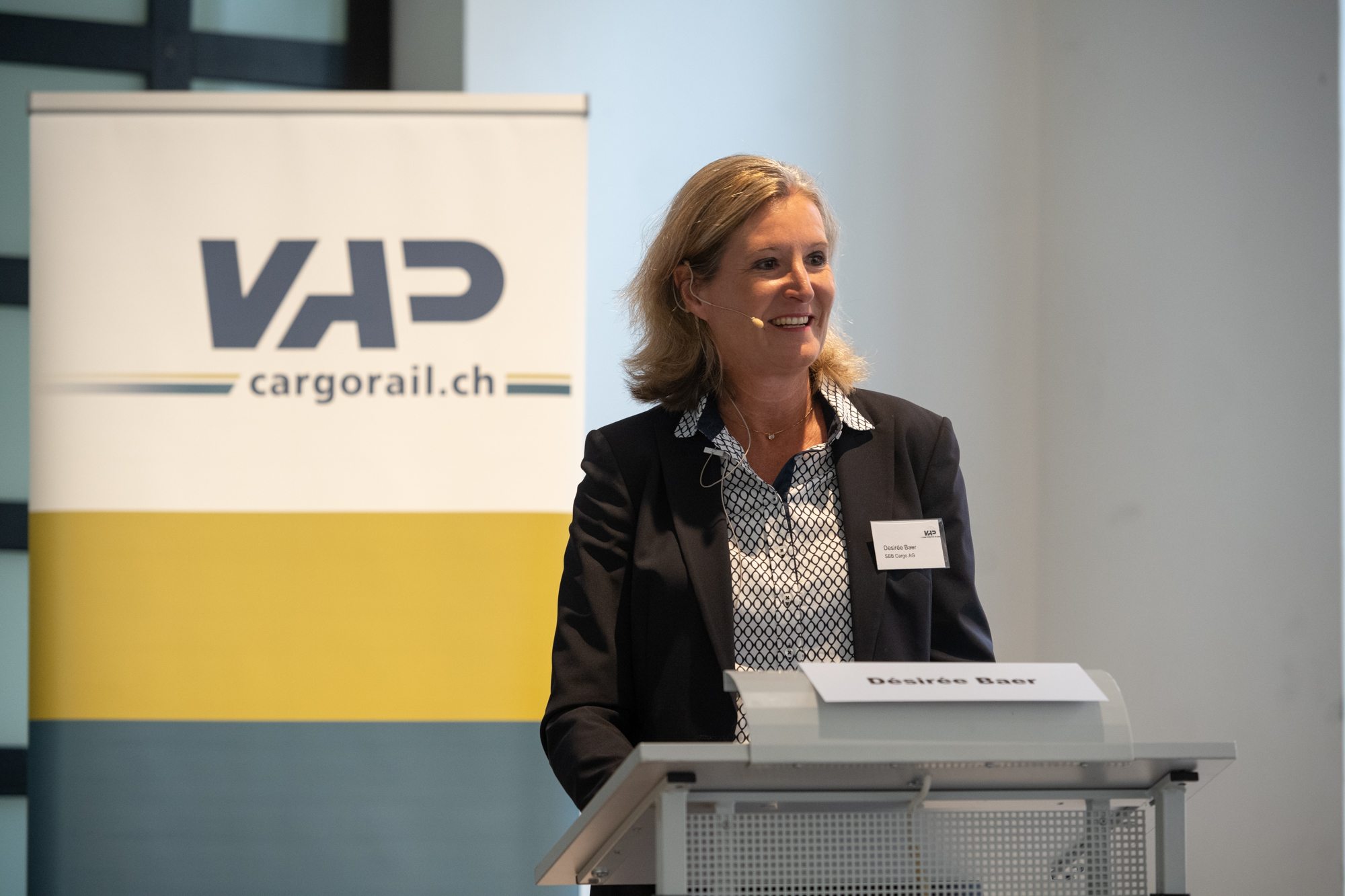
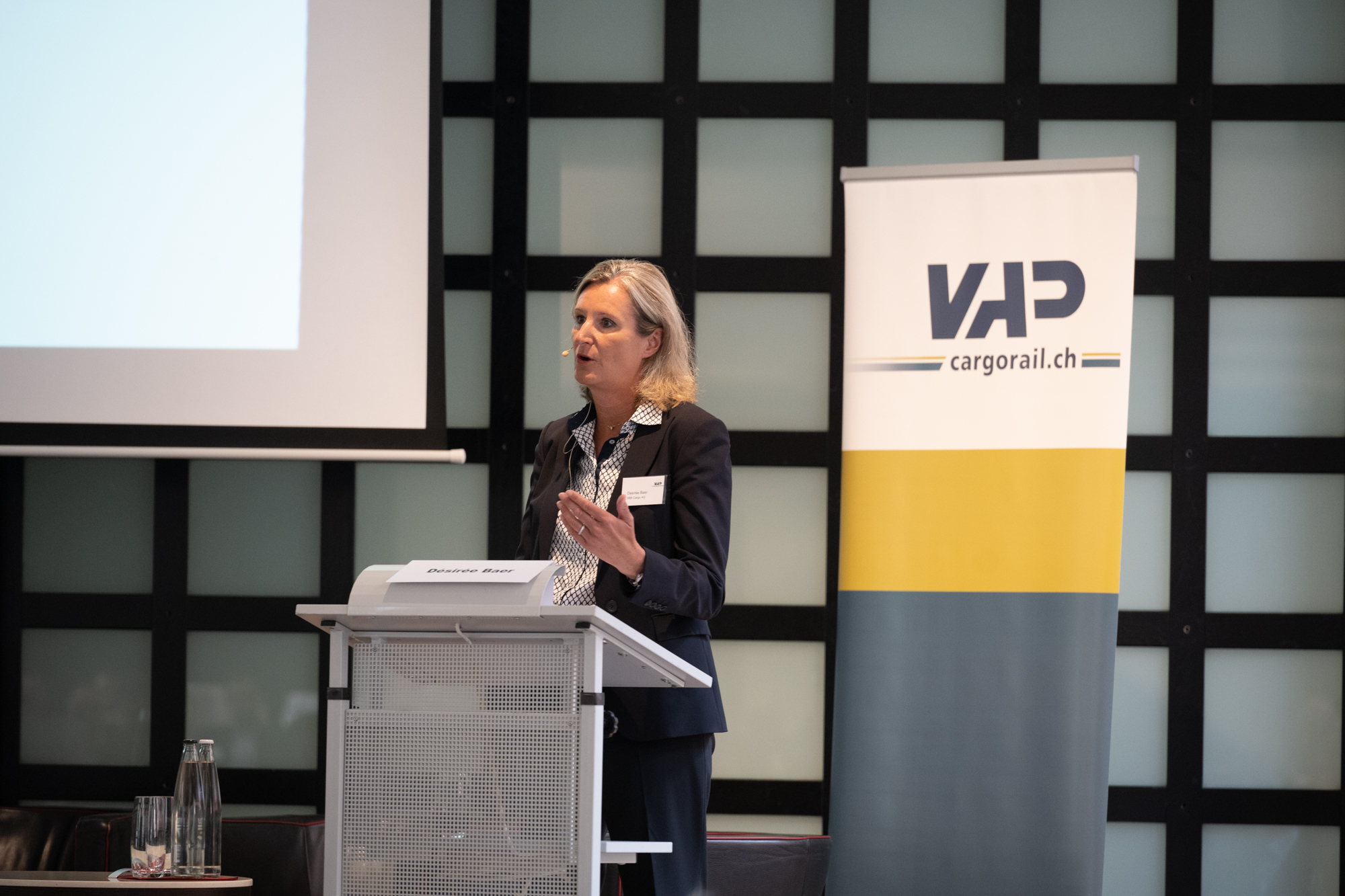
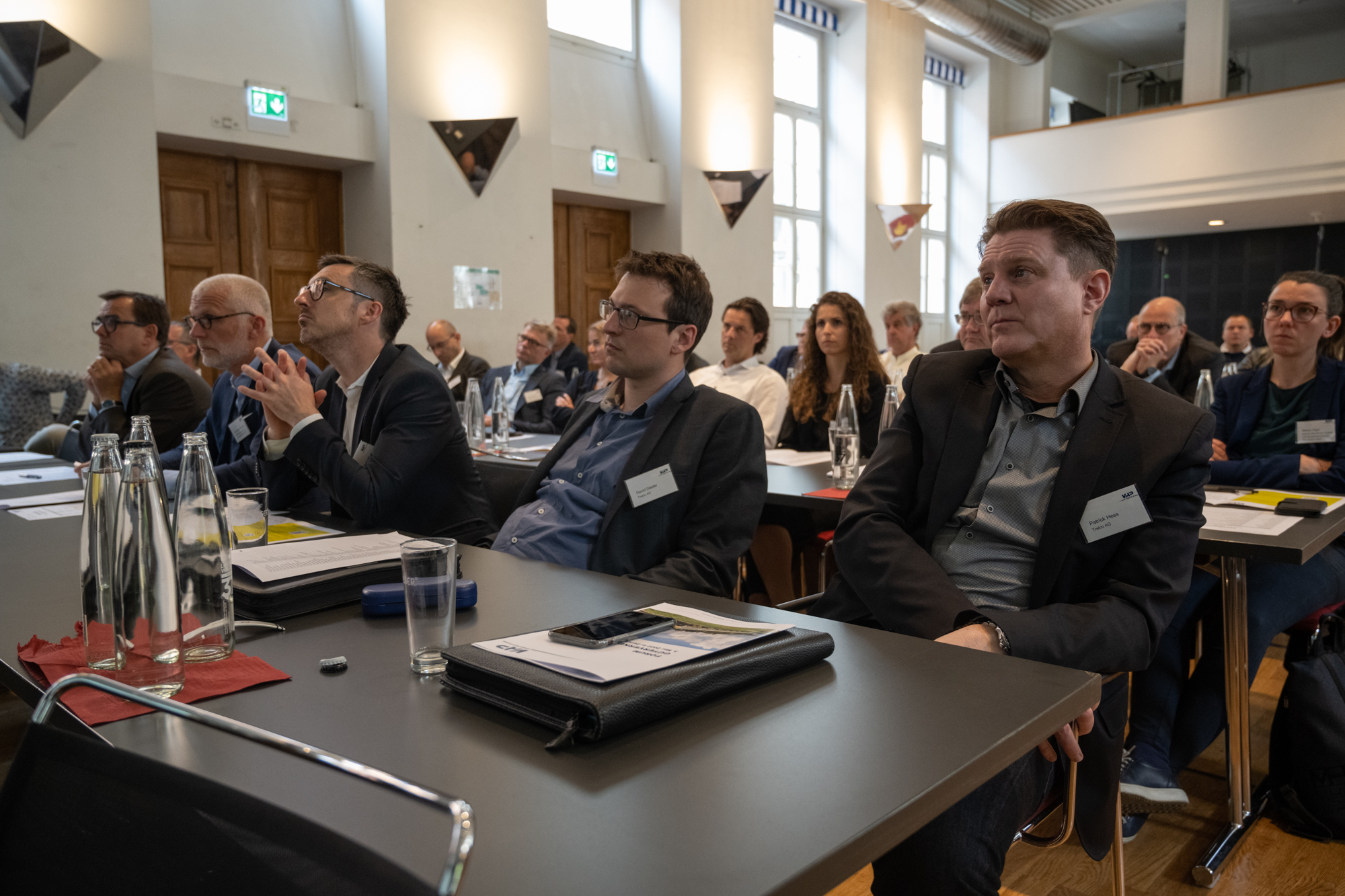






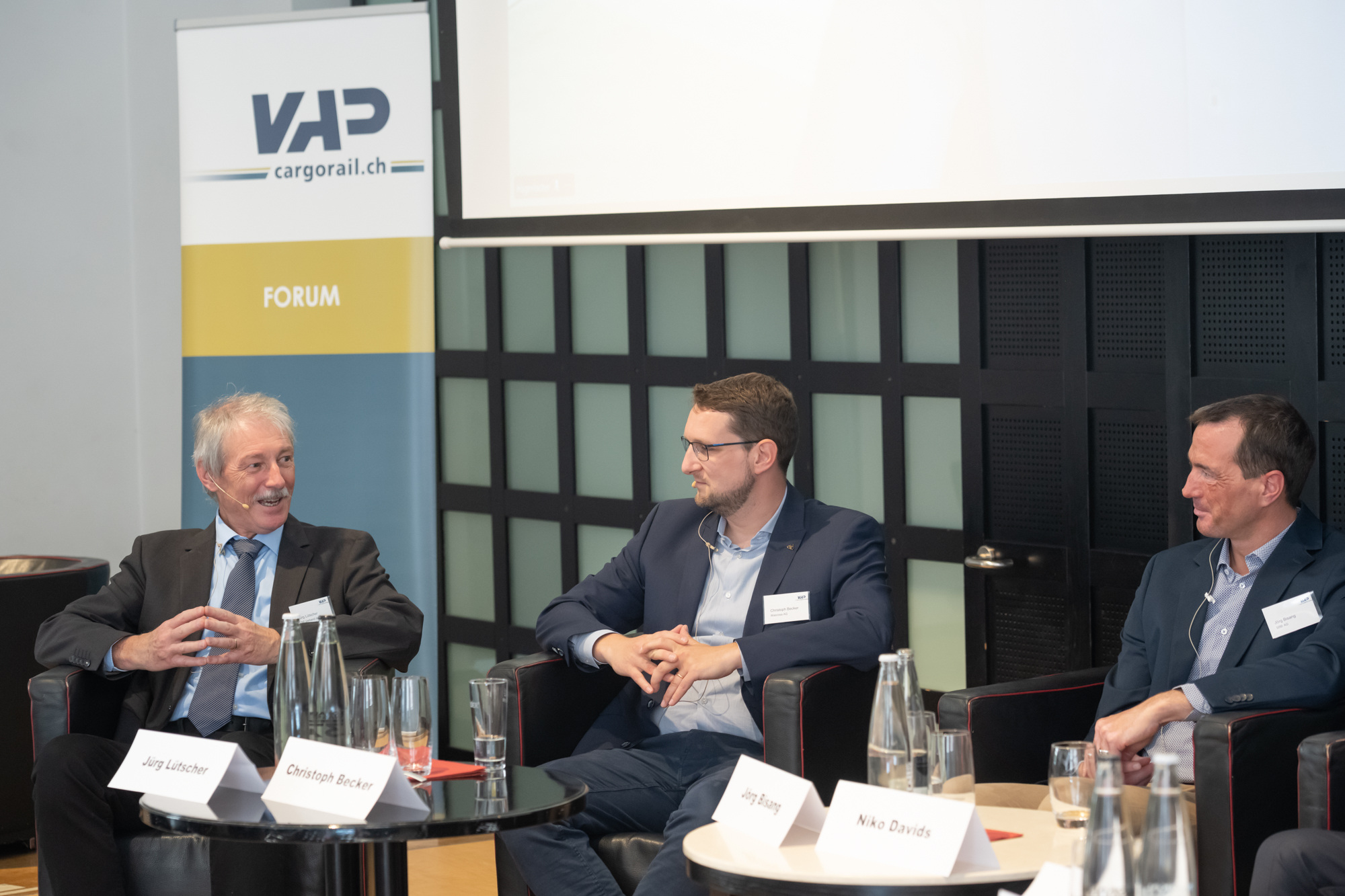
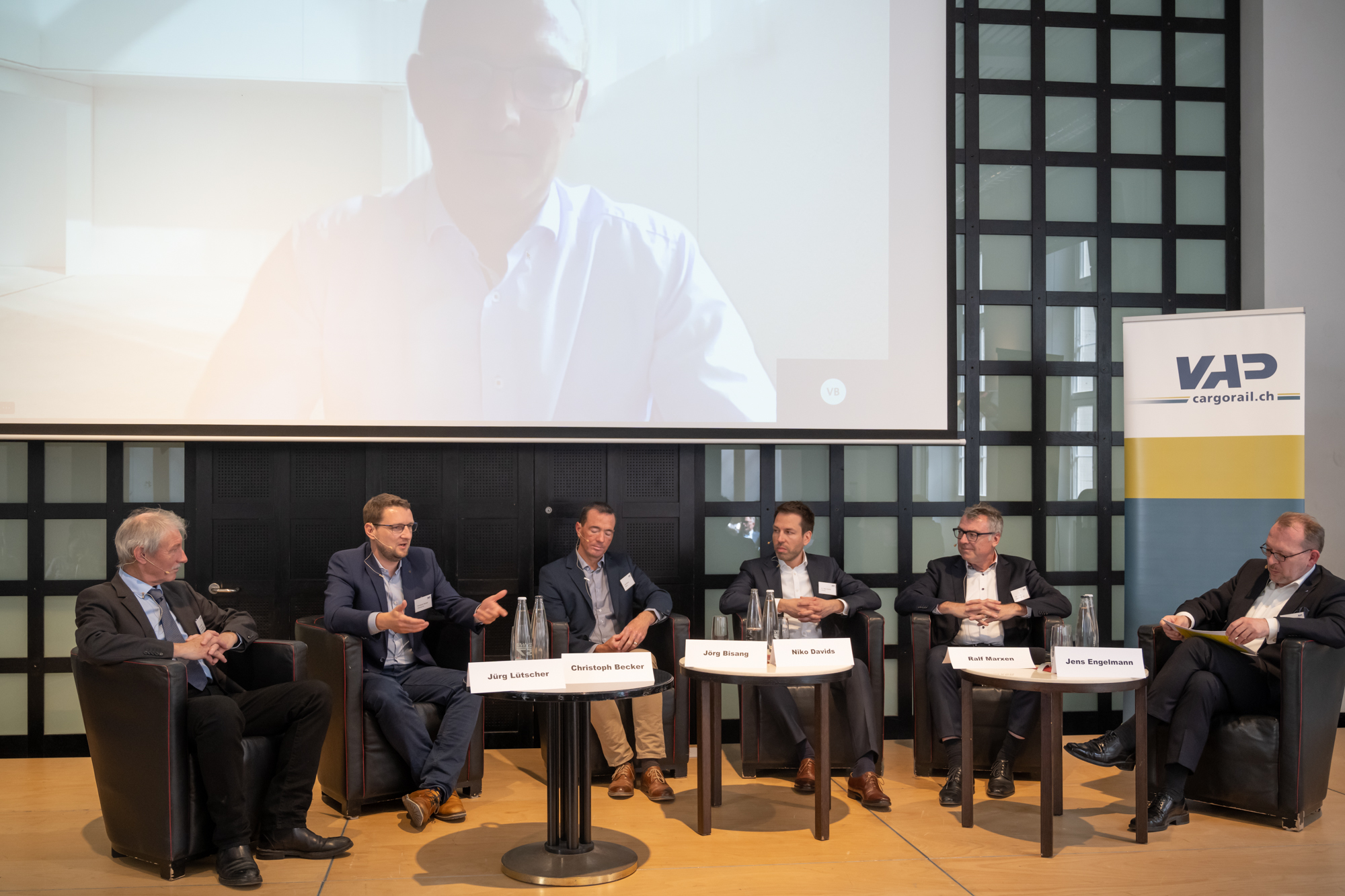
The course of the forum in detail
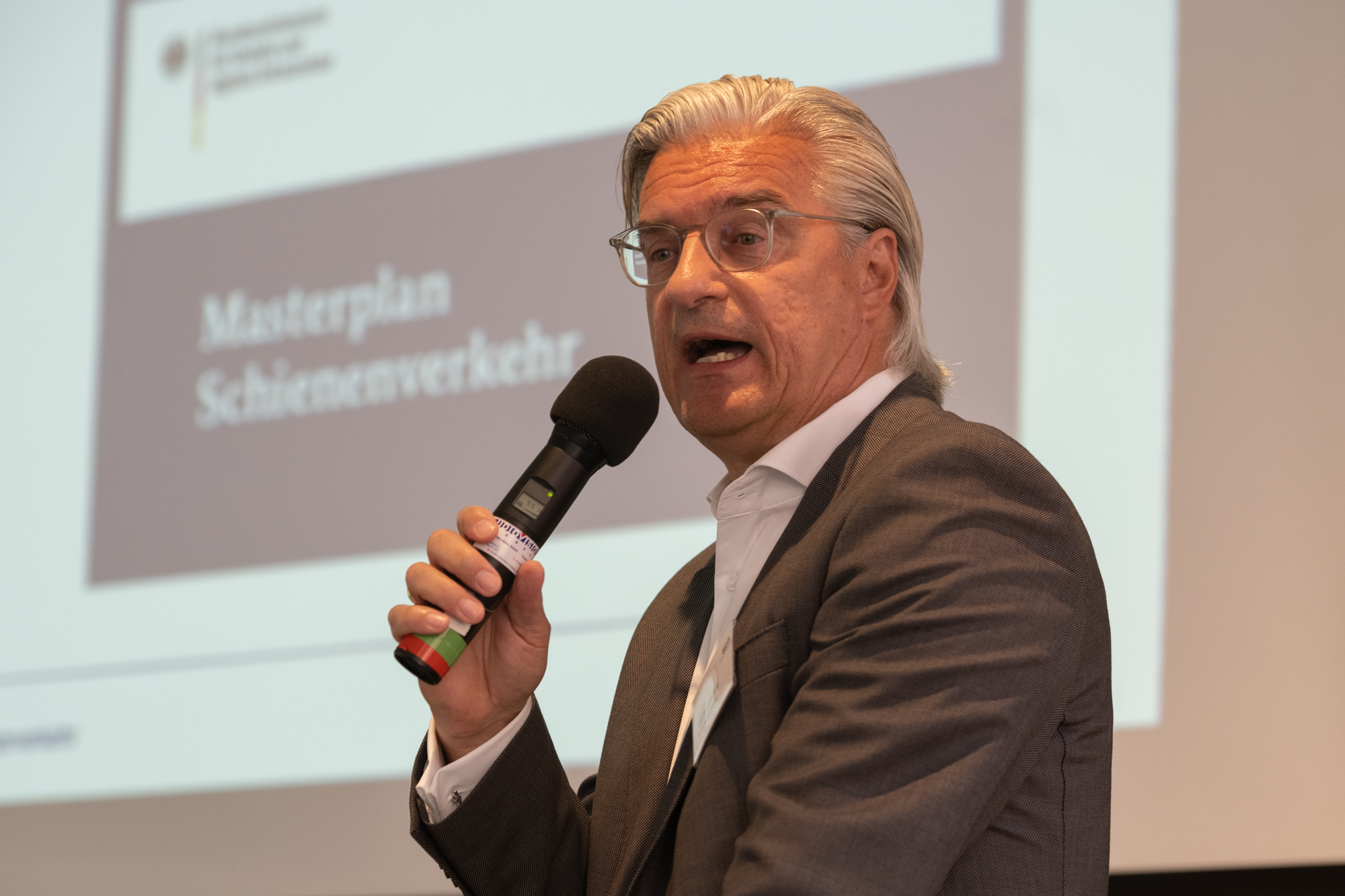
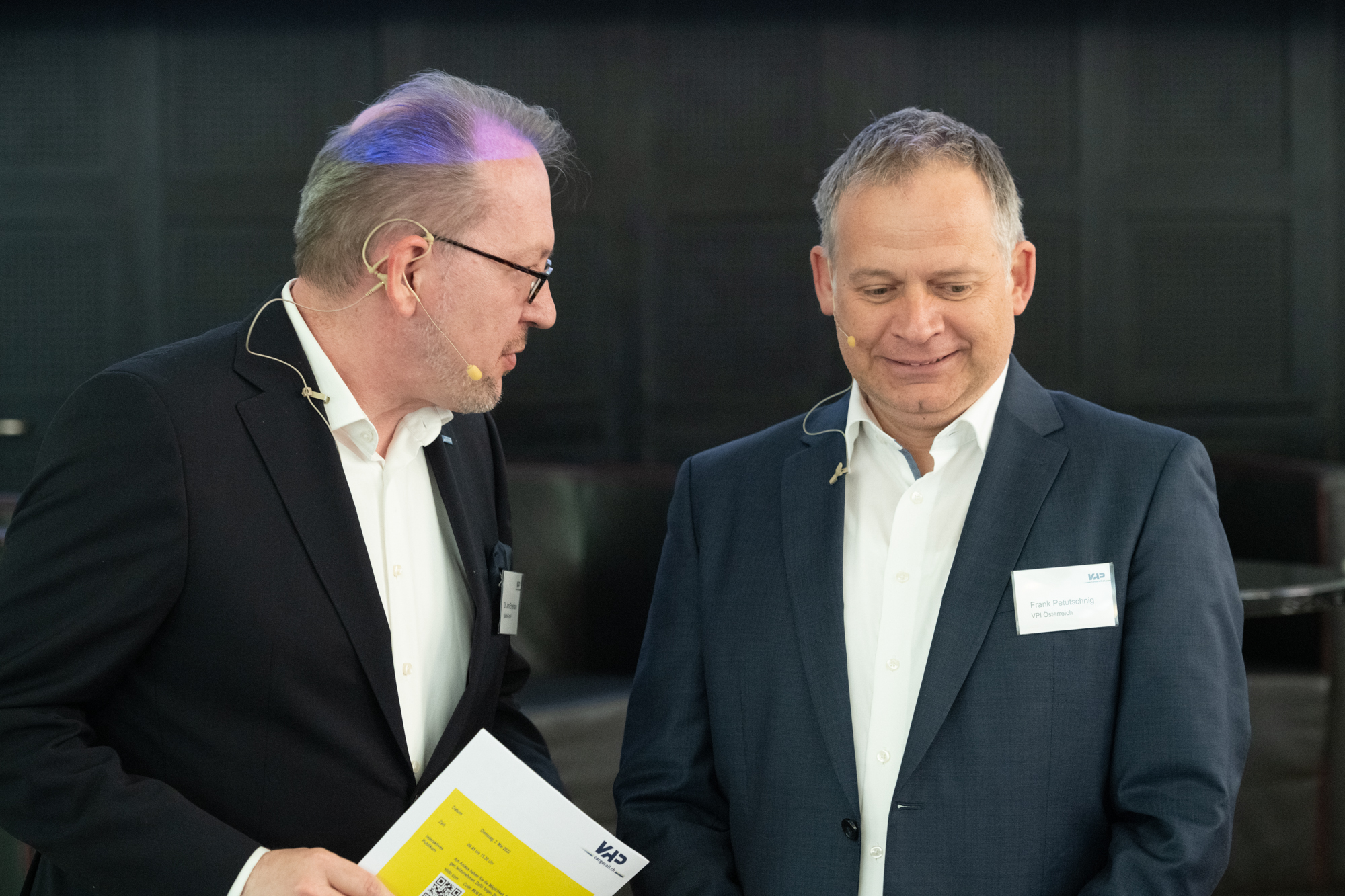
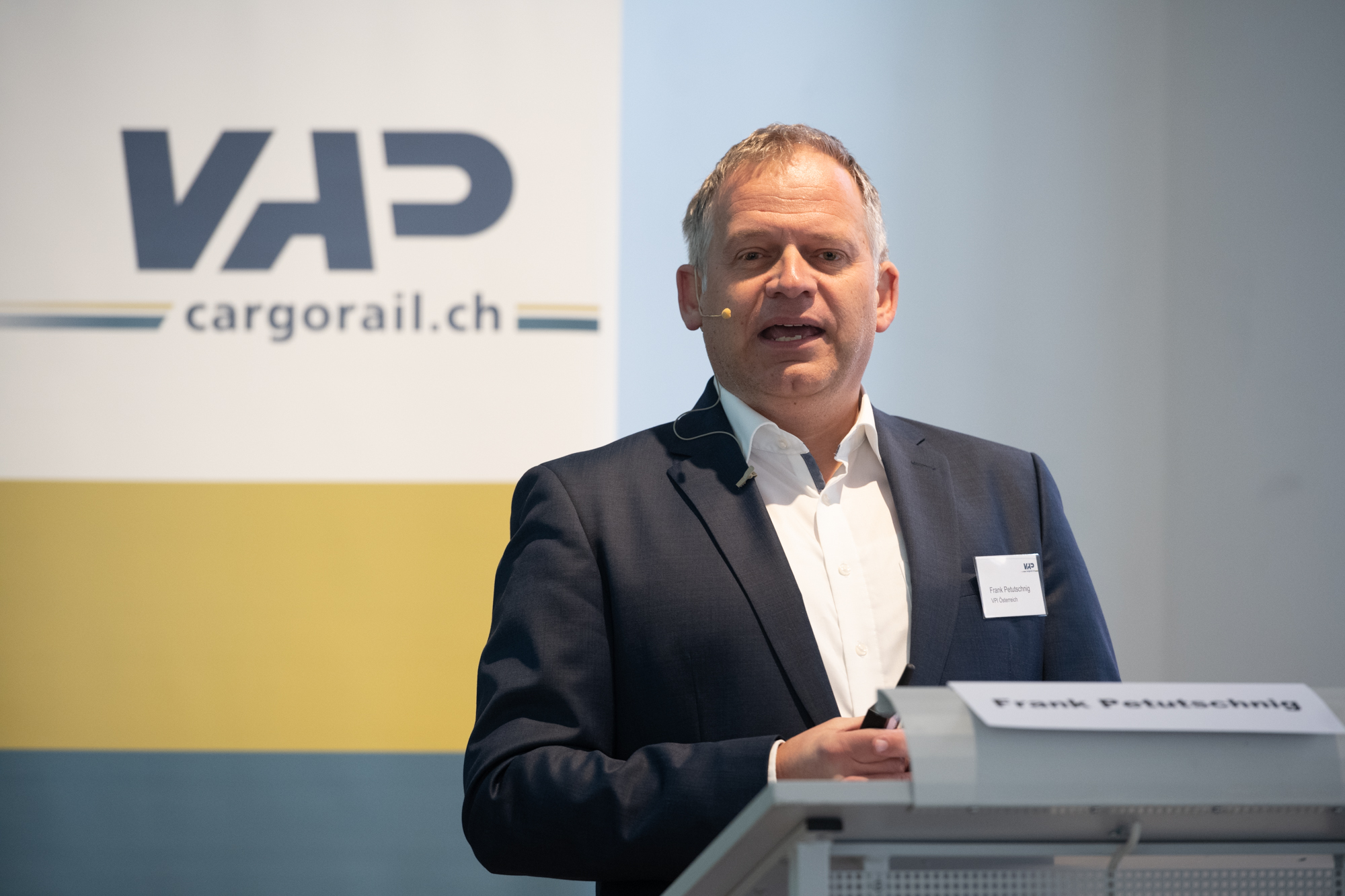
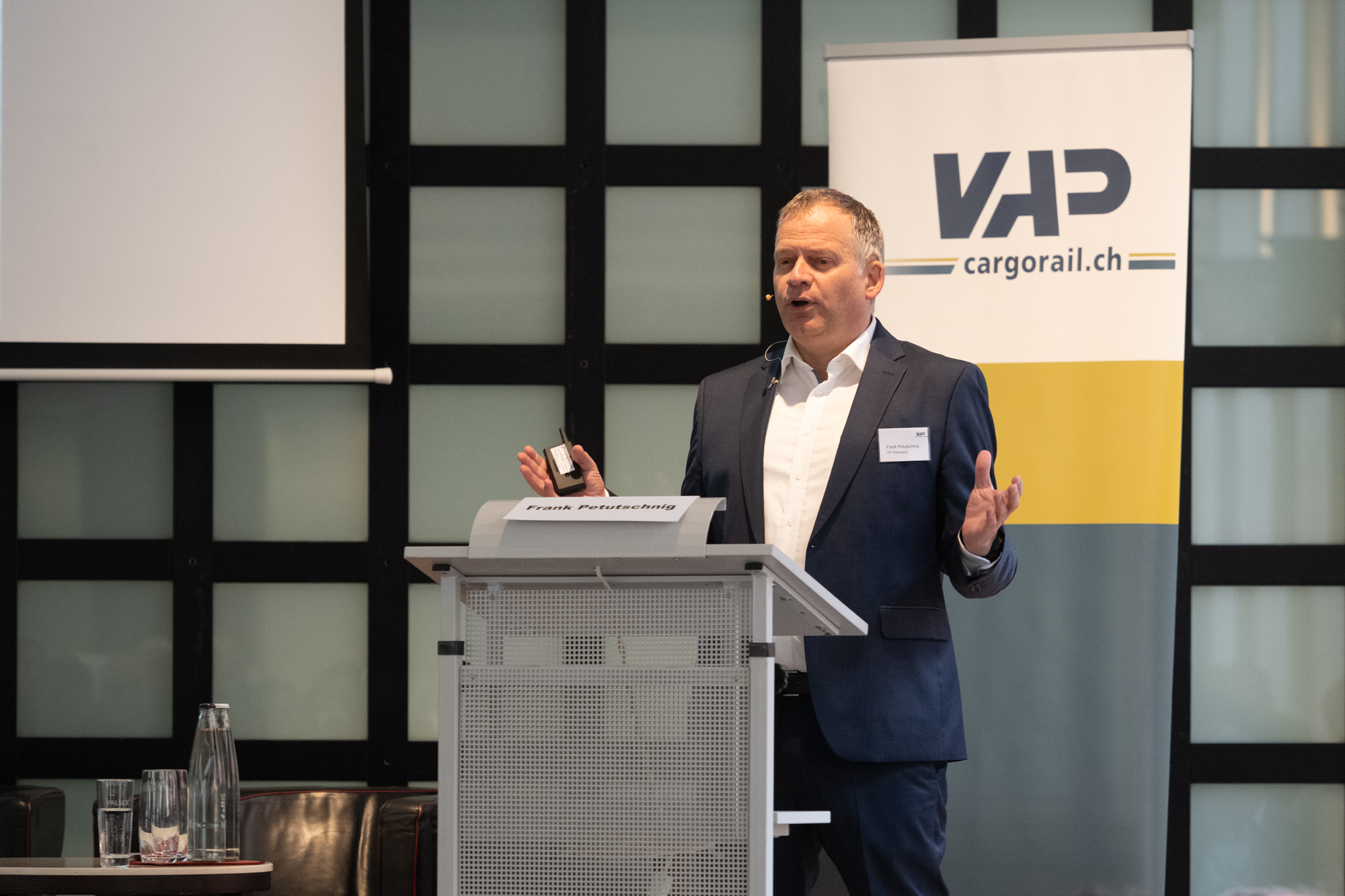
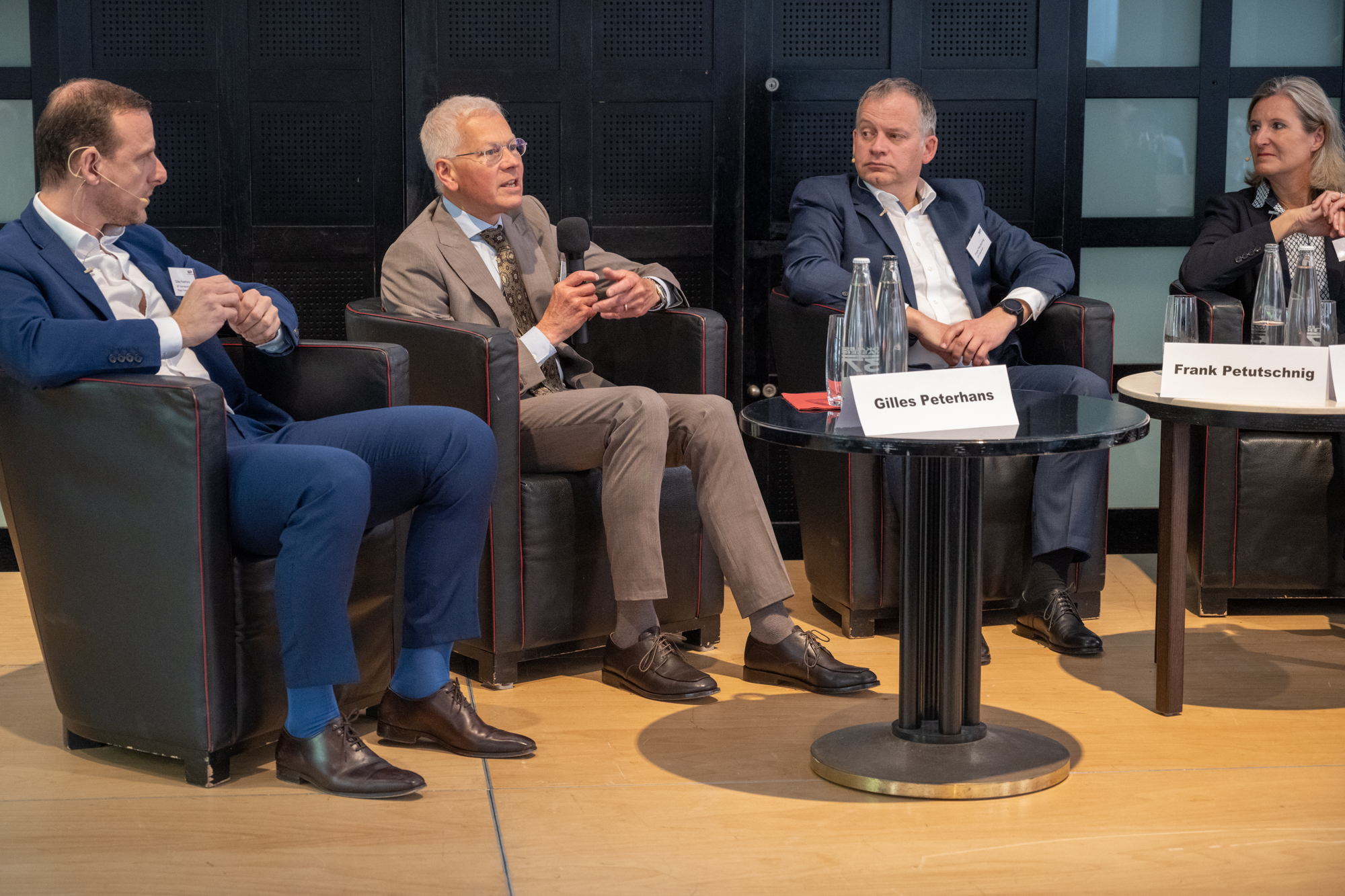
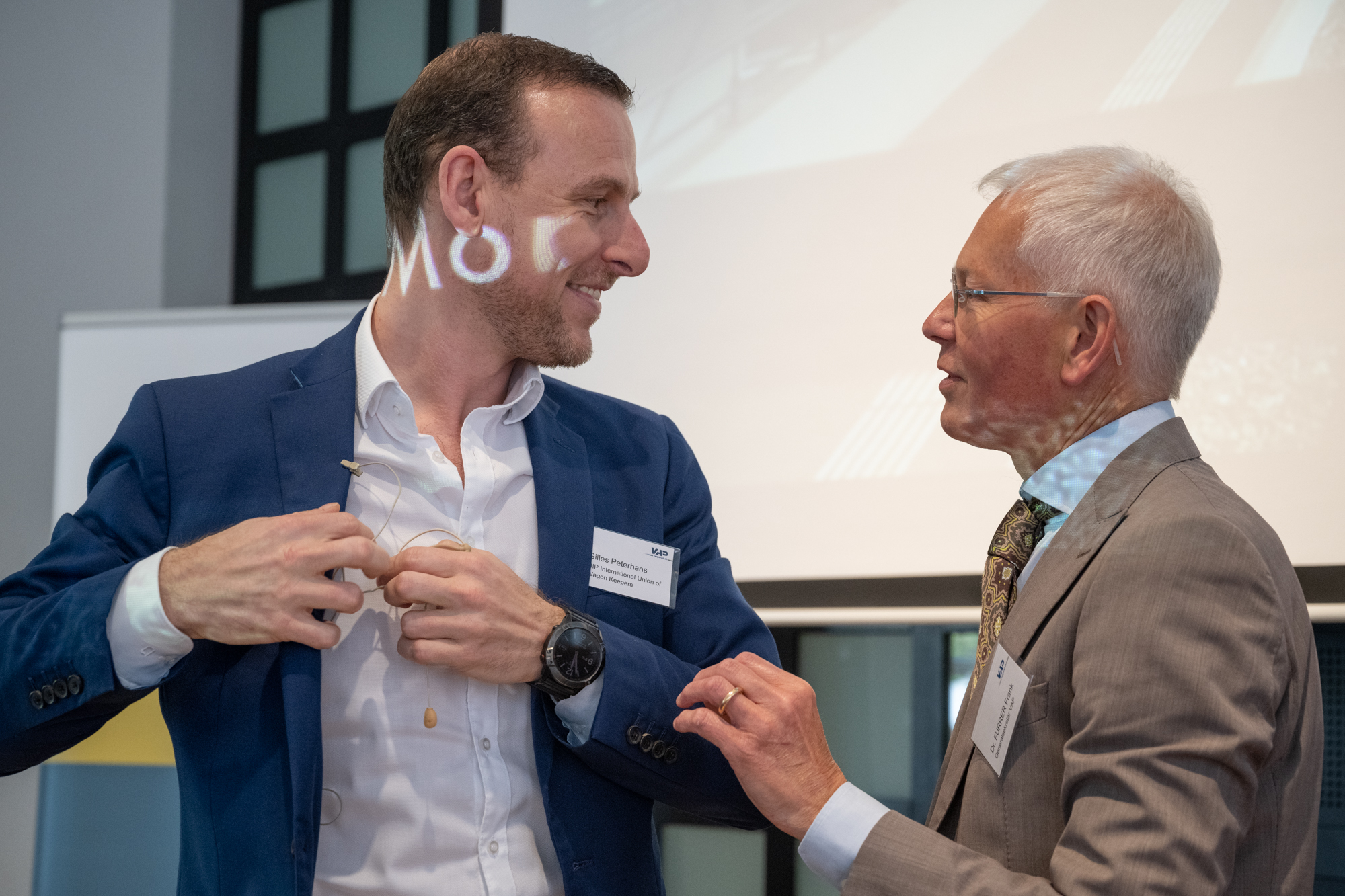
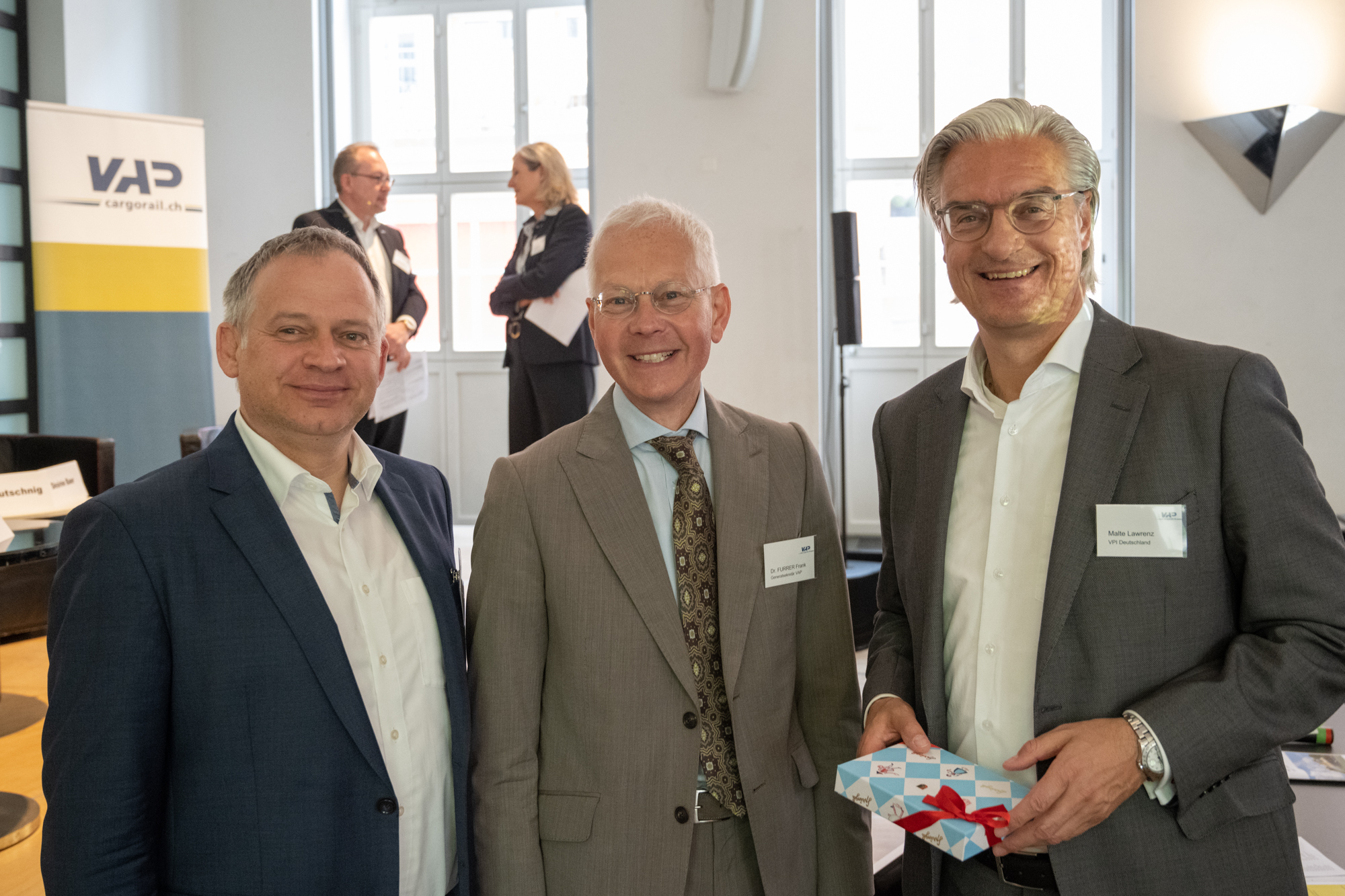
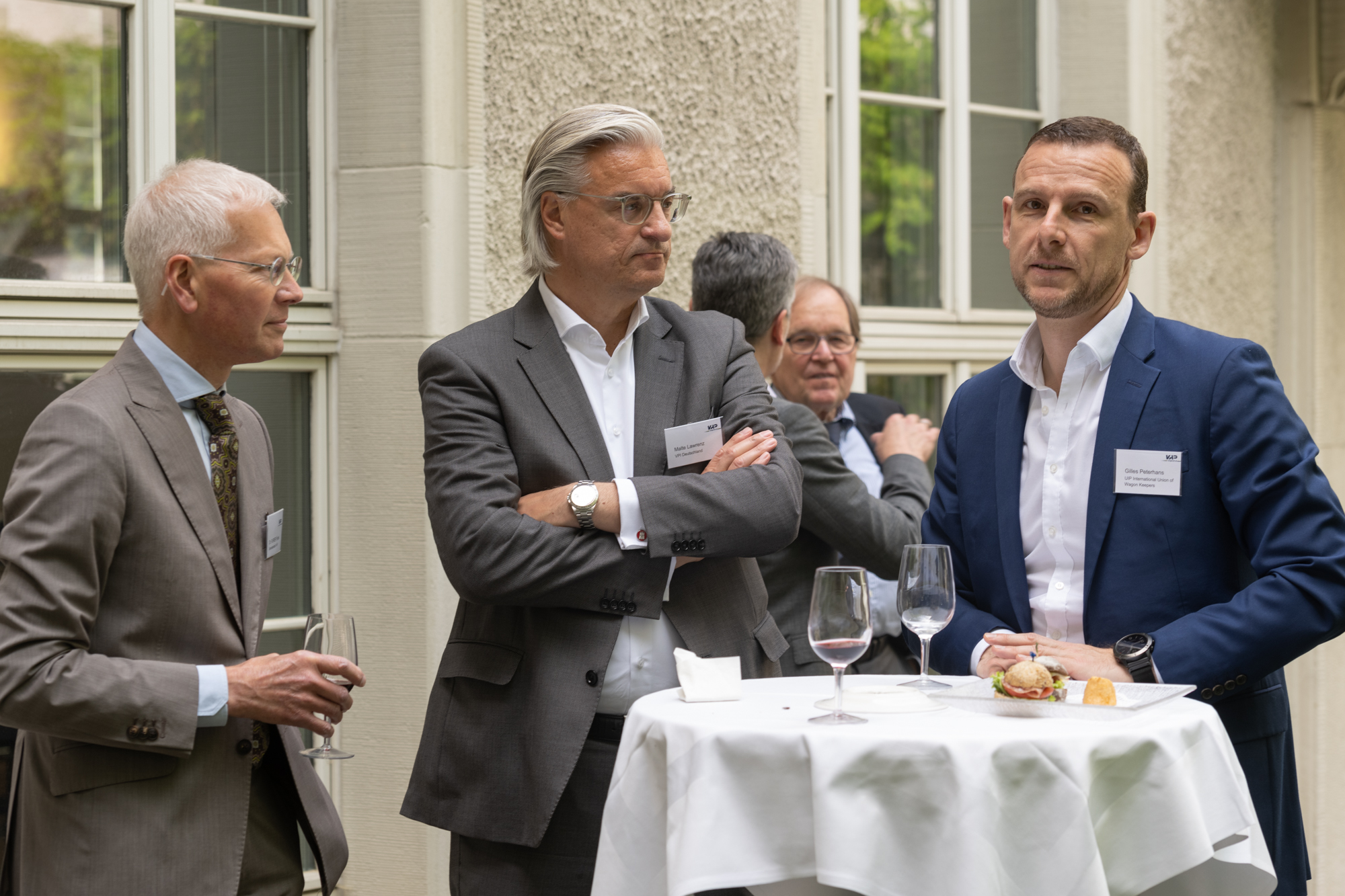
The morning revolved around the question «Transport policy in the green rush?». Gilles Peterhans, Secretary General of UIP explained the transport policy issues at European level. Malte Lawrenz, Chairman of VPI Germany, showed the transport policy framework for Germany, how priority should be given to rail and what funding is needed to be able to implement the master plan for rail freight transport. Frank Petutschnig, Secretary General VPI Austria, presented the situation in Austria on the same topic, where the focus is on the overall view of freight transport, namely the most efficient choice of transport mode in terms of energy demand per tonne. Désirée Baer, CEO of SBB Cargo, added to the situation of the transport policy framework in Switzerland with her presentation and introduced the Wagonload Transport Interest Group (IG WLV), the platform for cooperation between railways and shippers.
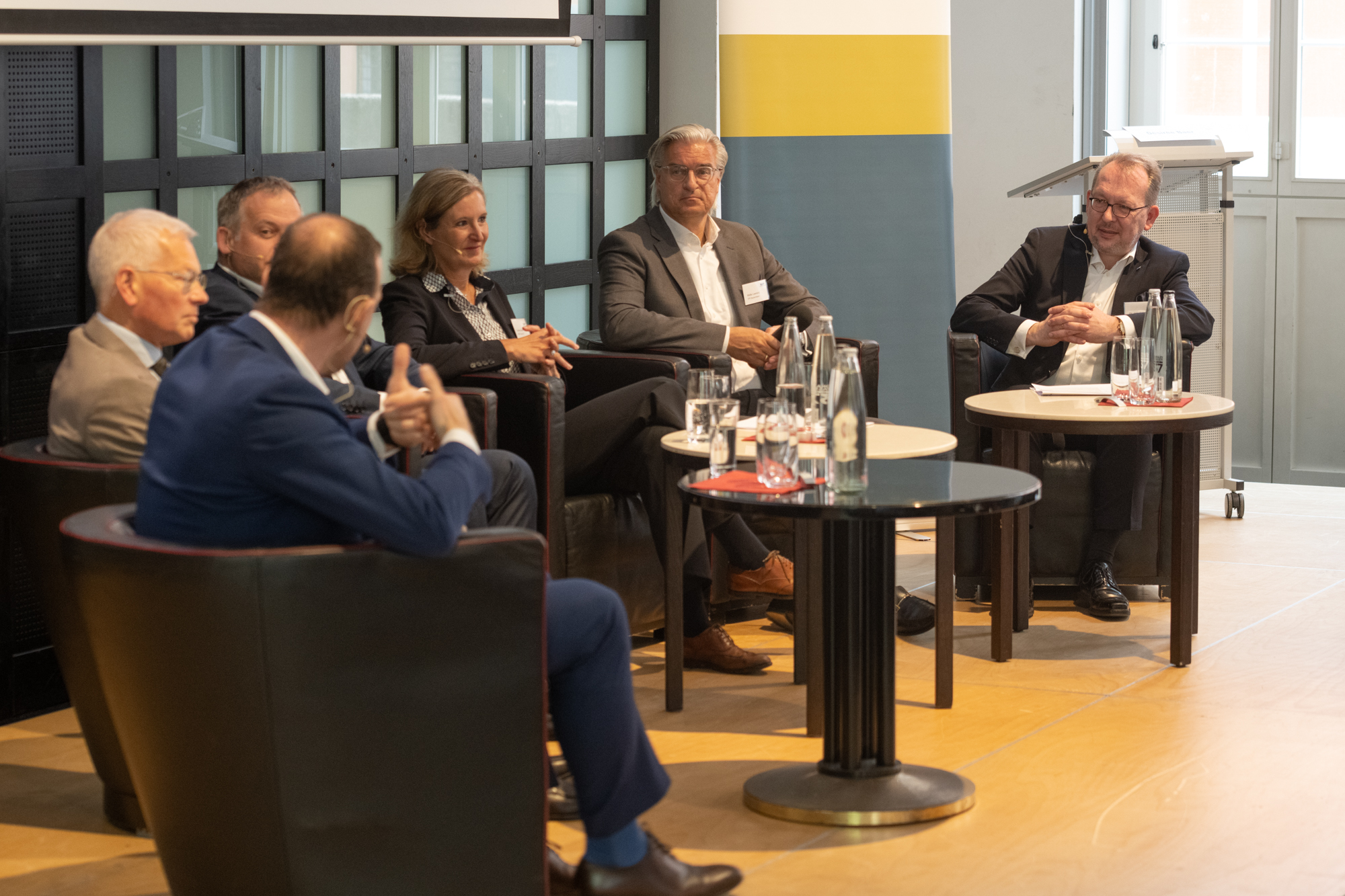
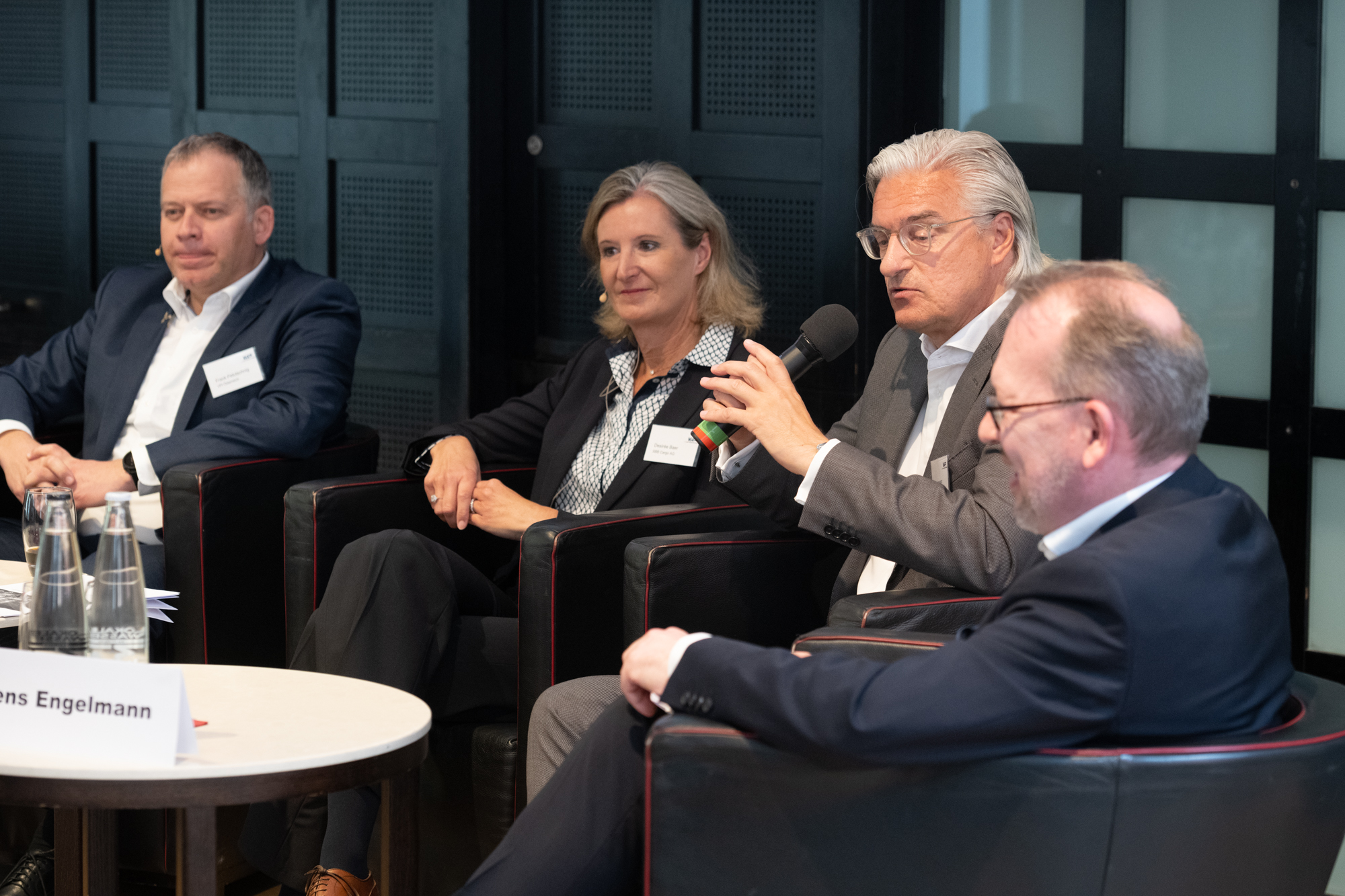
In the subsequent panel discussion it became clear that the course for the future of rail freight transport has been set for innovation and that the next step is to define how the investments will be financed. It became clear that the innovations affect all players and that a collaborative approach is therefore the right way forward. Cooperation and competition – or coopetition – are two other buzzwords that are not only desired by the rail actors, but also in the interaction between rail and road.
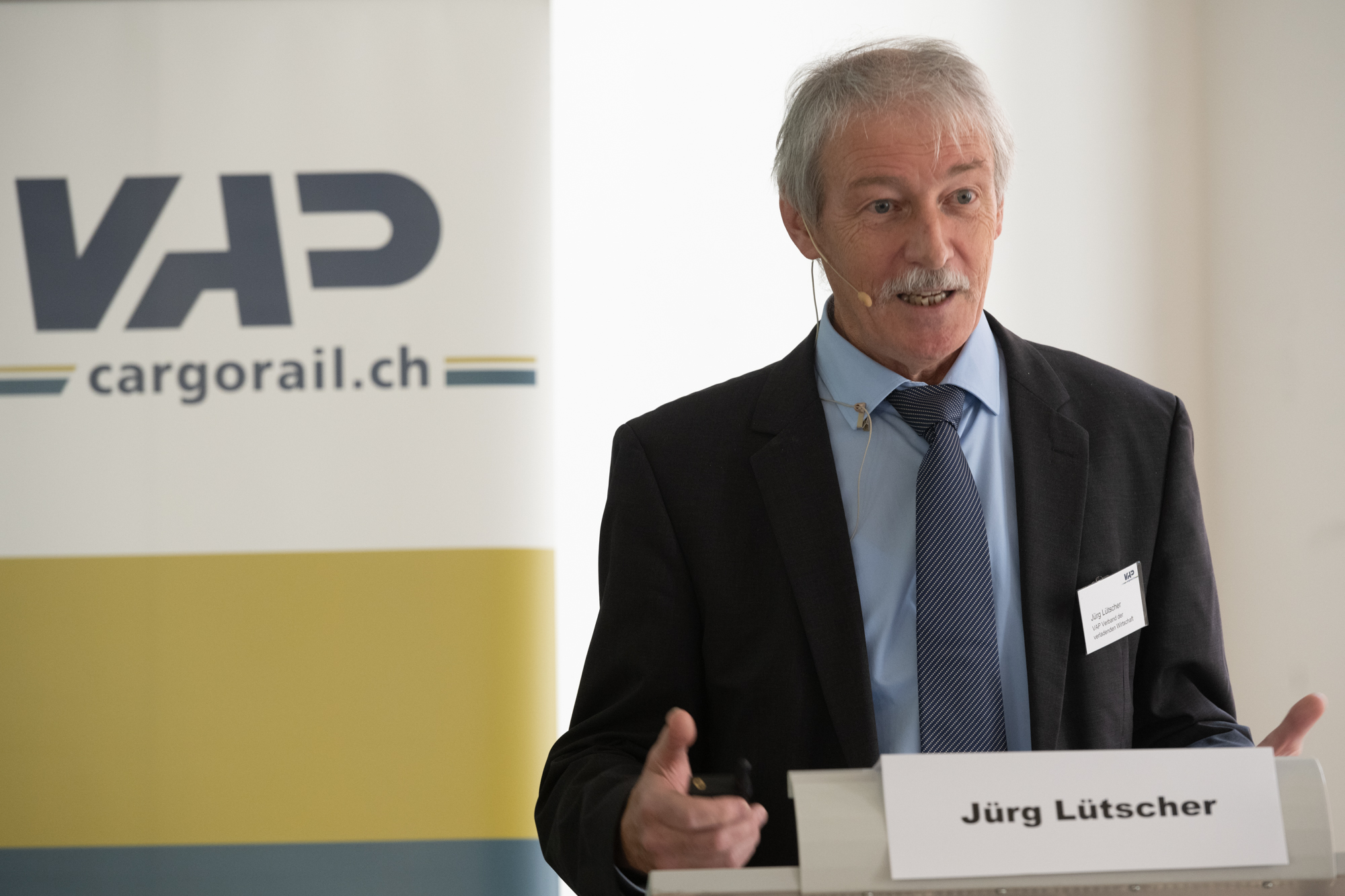
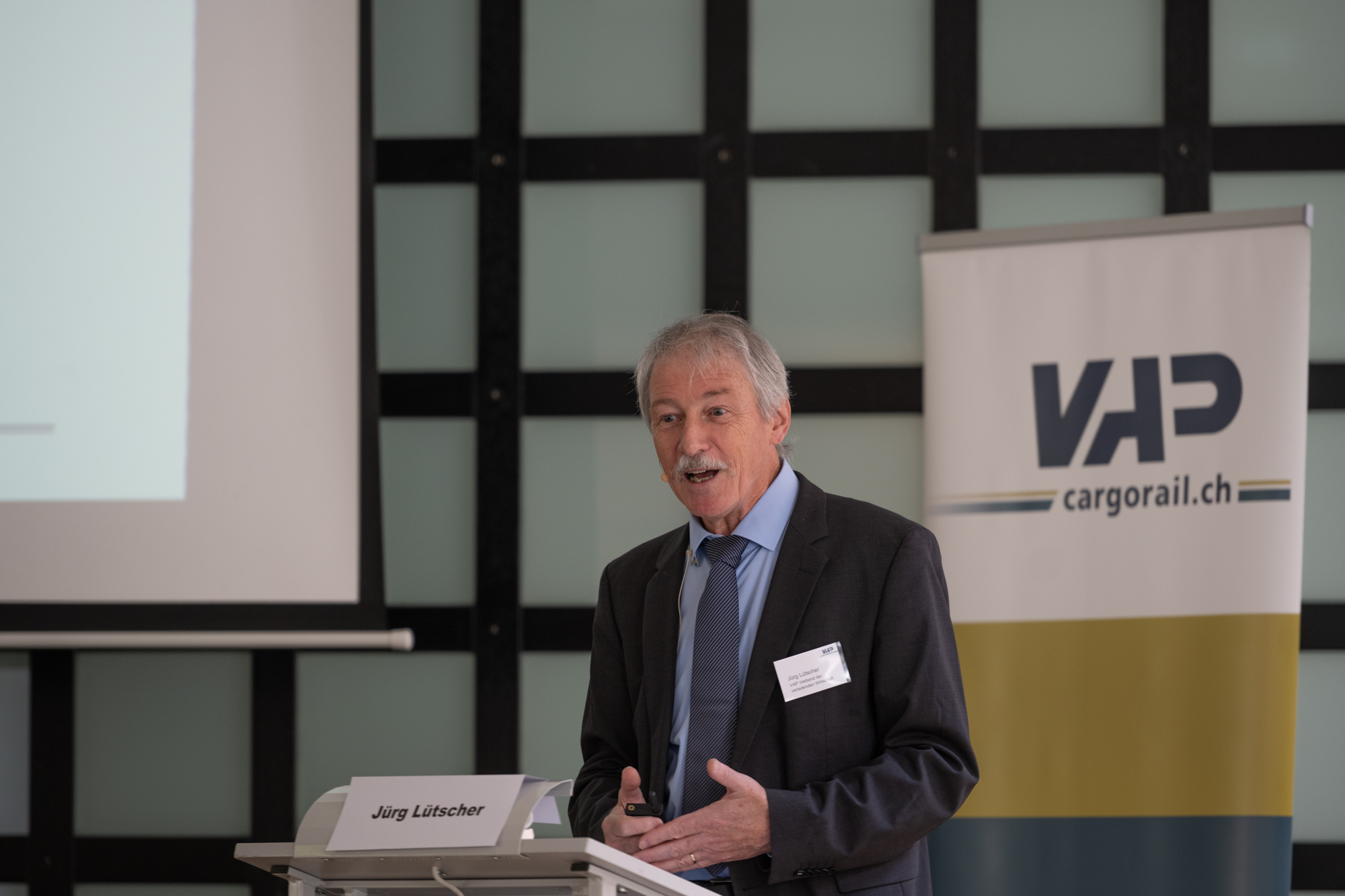
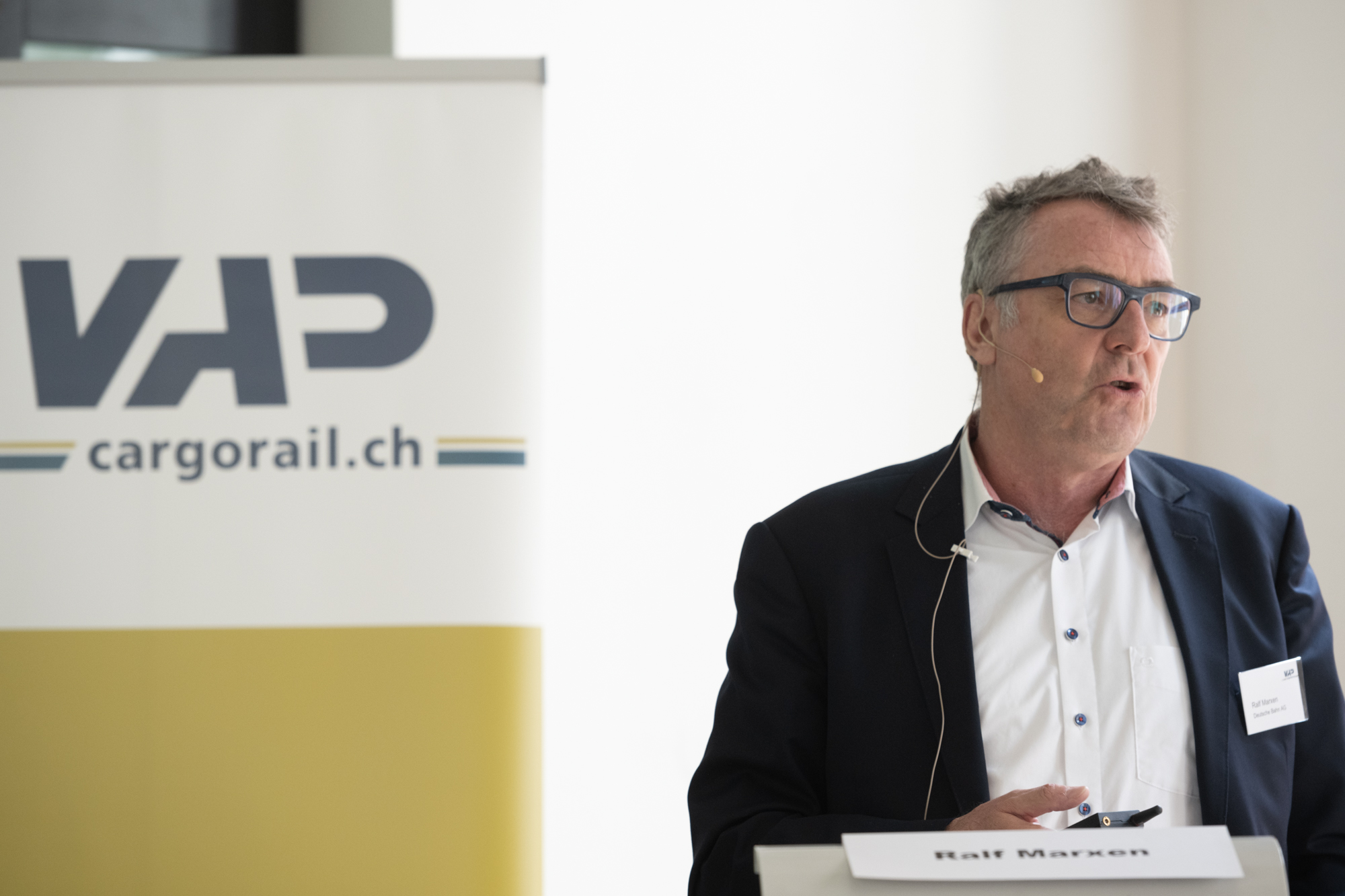
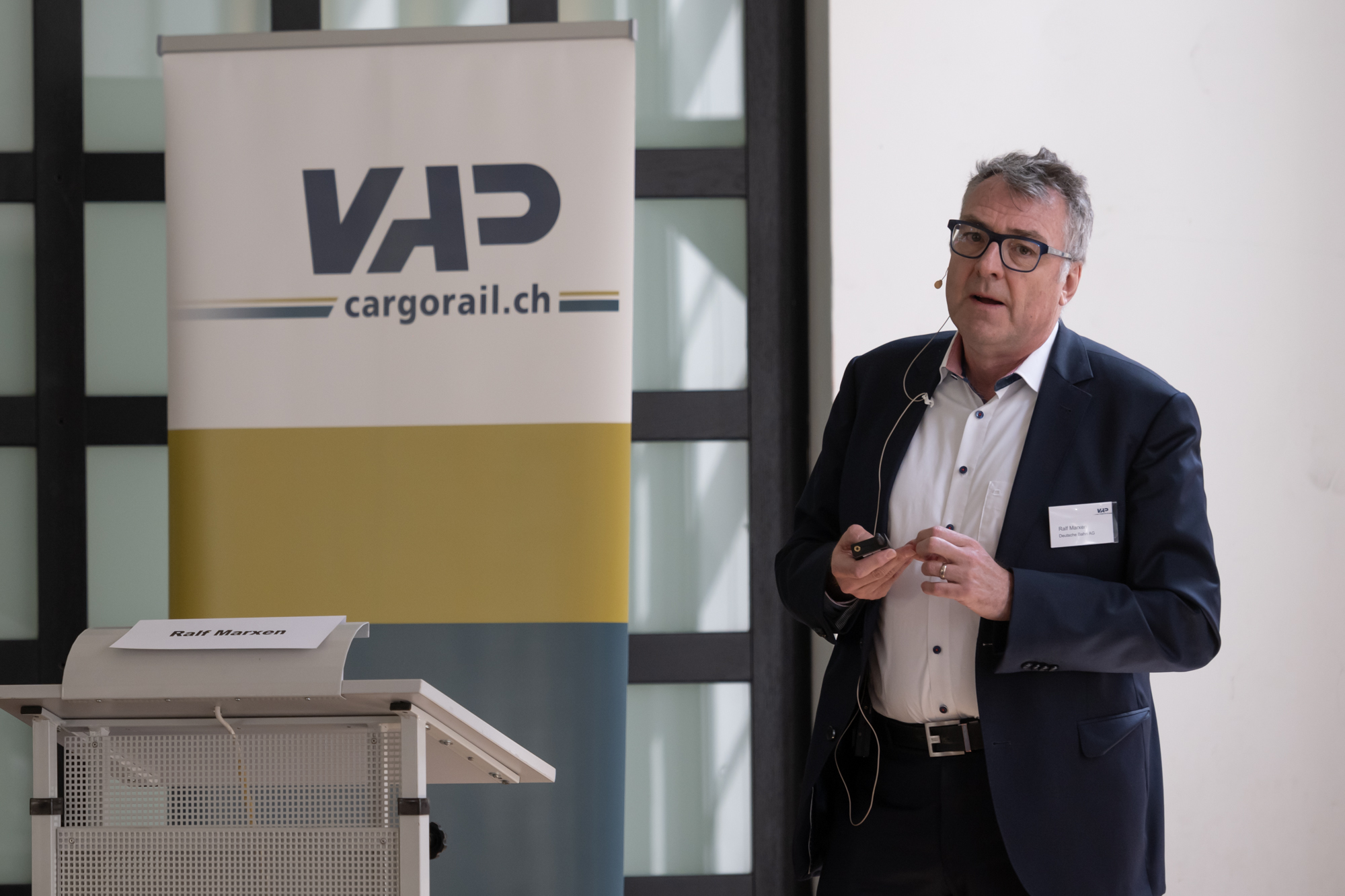
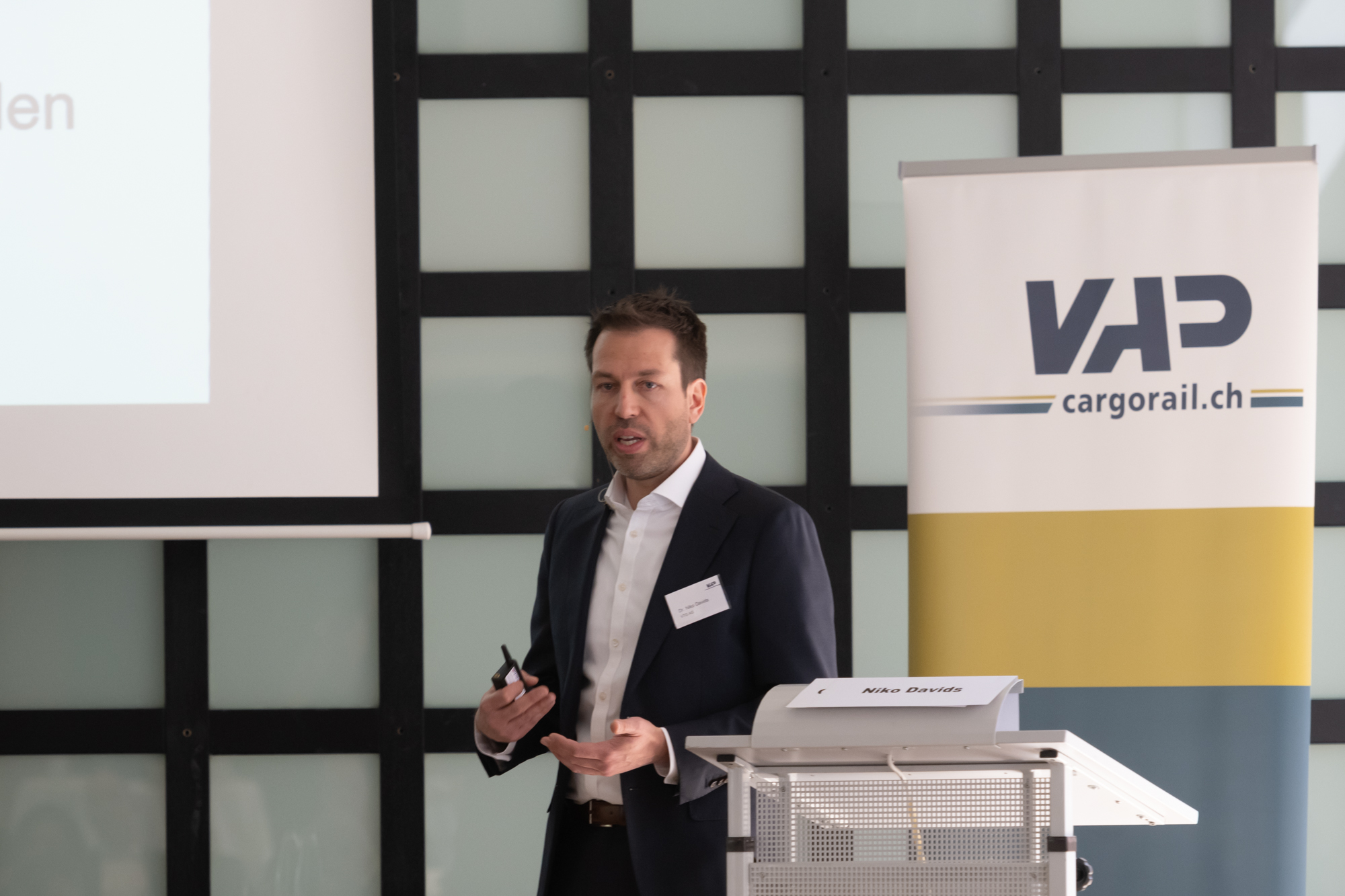
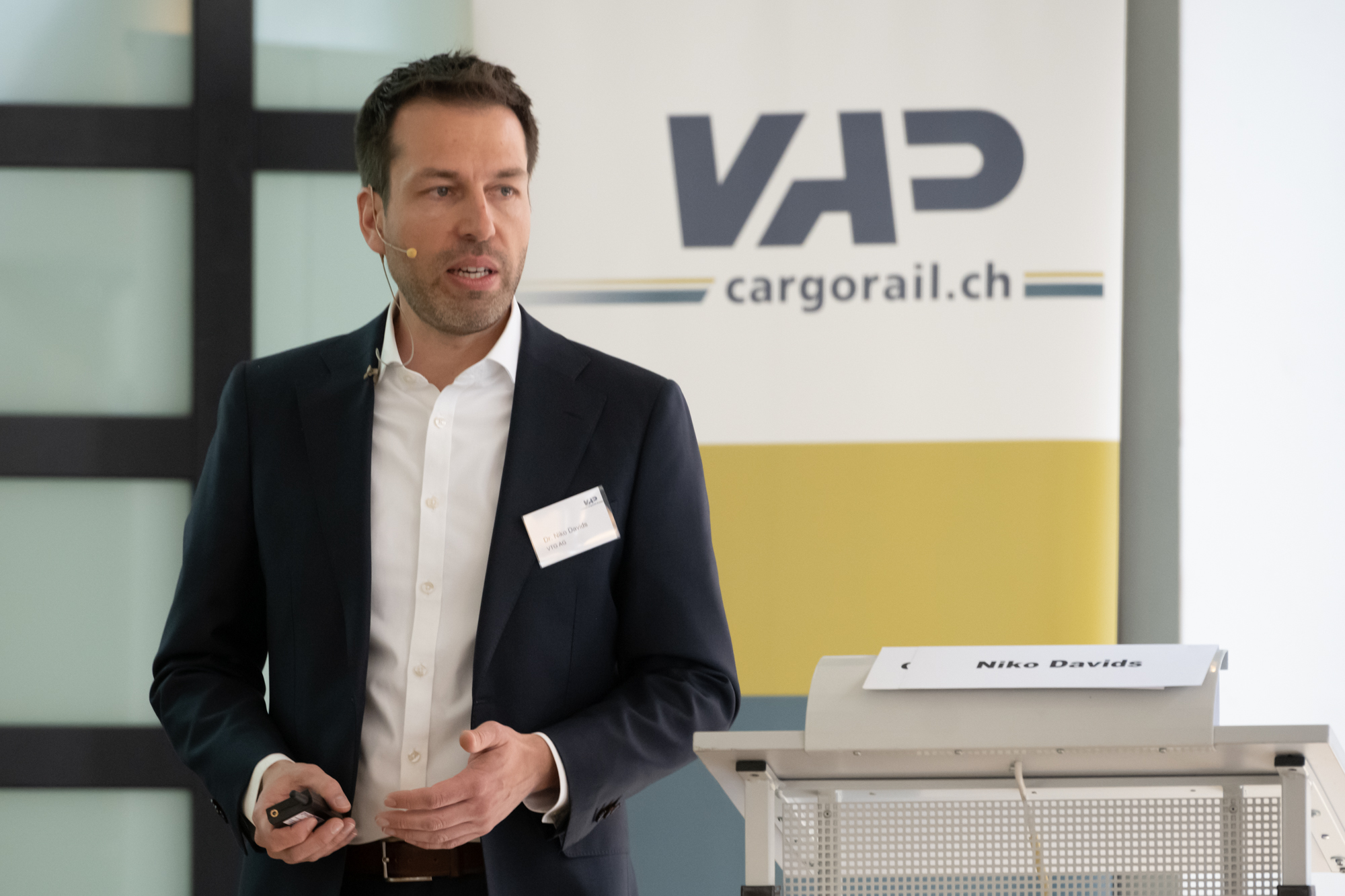
The afternoon was divided into the two exciting key topics «Innovations & possible implementation» and «Digitalisation with concrete measures». Jürg Lütscher, expert in innovation and regulation at the VAP, spoke about the automation of rail freight transport in Switzerland. He emphasised the importance of optimising processes and interfaces in the course of innovation, the so-called interoperability. Ralf Marxen, Head of External Technical Affairs at Deutsche Bahn AG, spoke about the path to the intelligent goods train: «From Shift2Rail to Europe’s Rail». He pointed out important milestones for innovation, with the Digital Automatic Coupling (DAC) taking on the key function for digitalisation and enabling, for example, automated processes and monitoring, as well as precise customer communication, thus raising the service level of the transport of goods by rail many times over. Stefan Hagenlocher, Managing Director of HWH and TIS Project Manager, who was connected live via video channel, showed what the Technical Innovation Circle for Rail Freight Transport (TIS) requires for digital and competitive rail freight transport. He clearly communicated that there will be no complete automation of rail freight transport without DAC and that standardisation of the technical aspects and a coordinated migration strategy are essential.
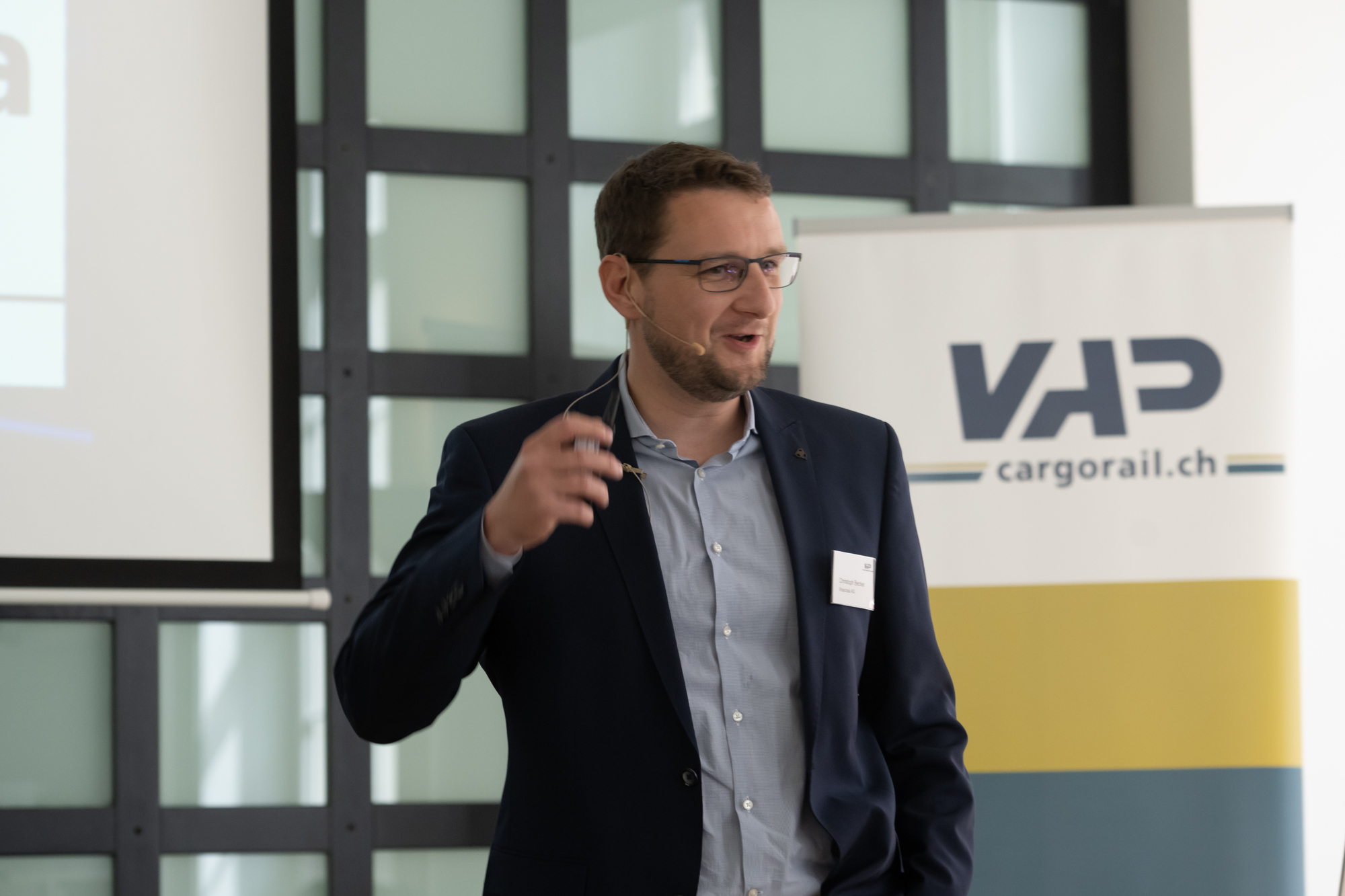
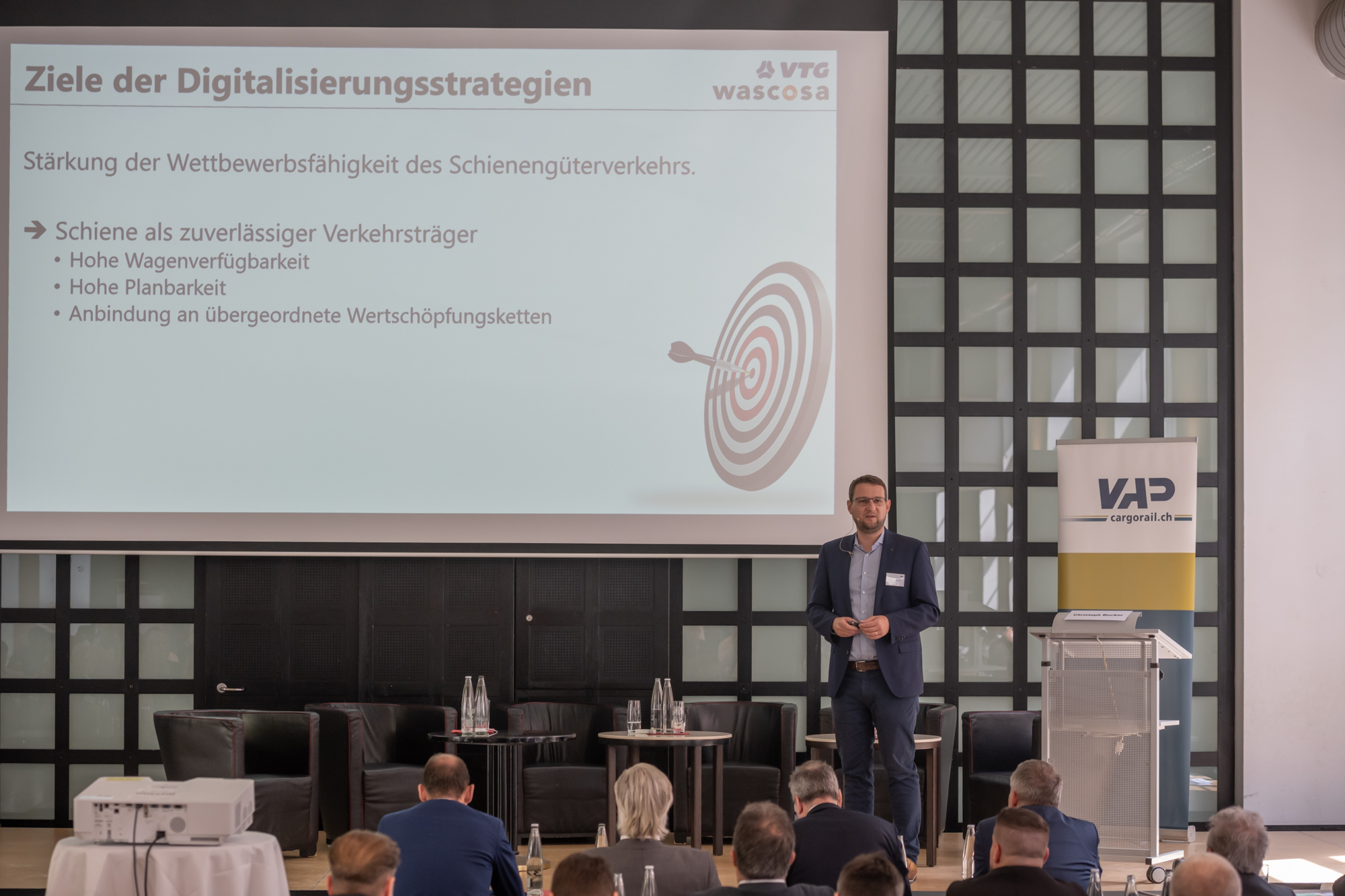
The two wagon hire companies Niko Davids, Chief Digital Officer, VTG AG, and Christoph Becker, Head of ECM II and Safety Management at Wascosa AG, demonstrated their digitalisation strategies to strengthen the competitiveness of rail freight transport. Their message too – especially as the two competitors were already sending out a signal with their joint appearance: «Collaboration and coopetition: digitalisation is not a project for one individual! Only through active and open cooperation will there be a benefit for the sector!»
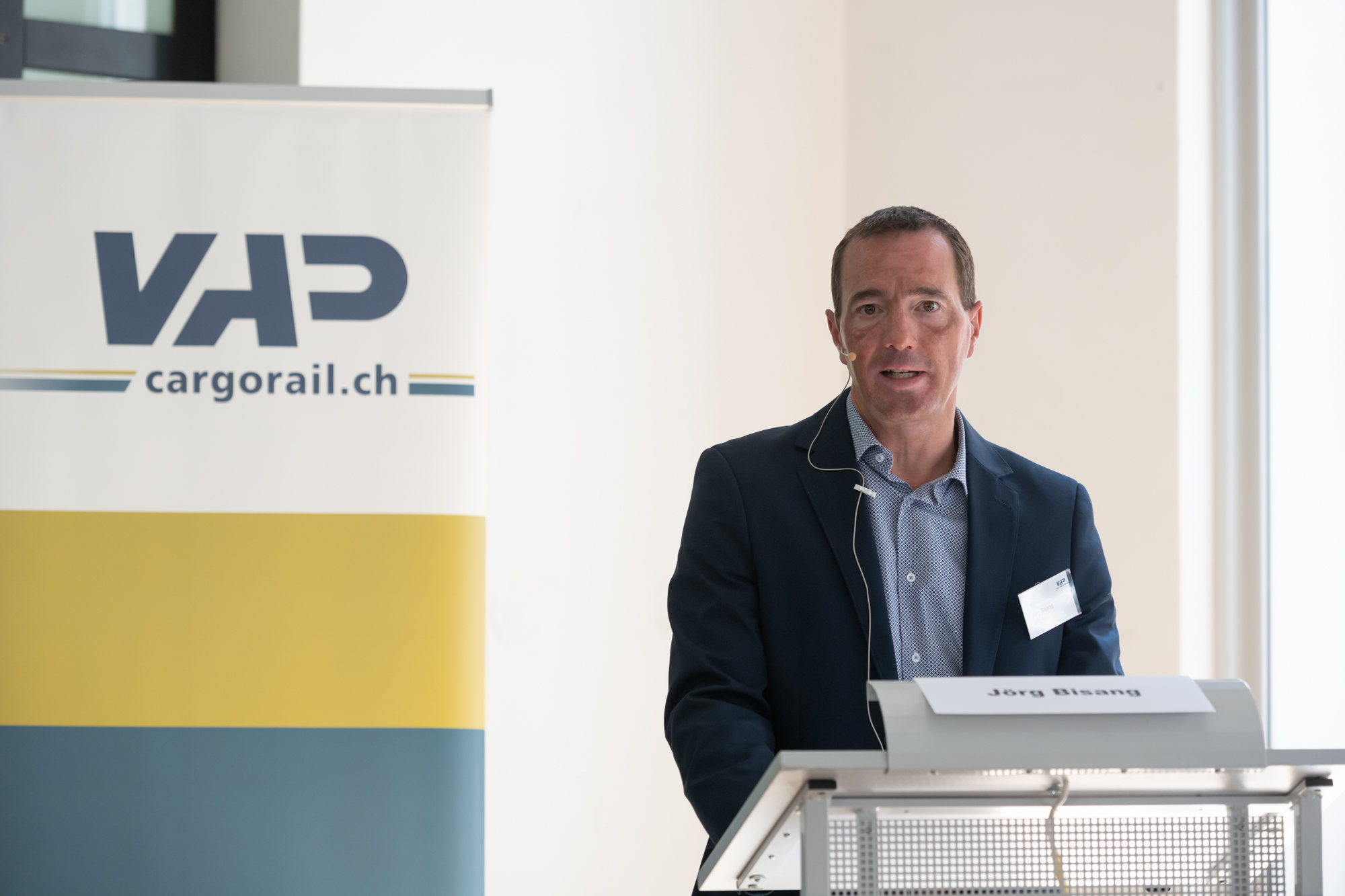
Jörg Bisang, Head of Product Management ZKE, impressed with the possibilities that digitalisation of technical vehicle control with «Wayside Intelligence» already brings today, and called on RUs and wagon keepers to make use of these possibilities.
In the concluding panel discussion it then also became clear that everyone wants to focus together on the migration of the DAC, in the sense of interoperable innovation. This cooperation concerns the entire railway system, which is why it is important to work together on this not as competitors, but as an innovation team that exchanges ideas about their goals. Quick and courageous decisions can enable efficient implementation.
We look back on a successful Freight Transport Forum, where everyone enjoyed finally being able to meet and exchange ideas in the «real world» again.
4th EU railway package: Making the most of the innovation boost
Climate protection is at the top of the political agenda in Europe. A high demand for mobility of people and transport of goods has been leading to massive climate-damaging emissions in our intensively industrialised region for a long time. On the way to net zero, policymakers expect the rail sector to consistently exploit its advantages and make a substantial contribution to more resource-efficient logistics. Thanks to innovation, we have the chance to make the production of freight transport more efficient, ergo more cost-effective and more customer-friendly, and on top of that, we increase the availability of train paths on our existing rail networks.
Railway sector must digitalise
The conditions for meeting these political expectations are actually good. Europe has a dense rail network on which the railways can move large masses with low energy and space requirements compared to other modes of transport, and the important centres are all connected. However, many standards and working methods in the railway sector are massively outdated. And the specific characteristics of the individual countries sometimes diverge diametrically. This is a major reason why the increase in performance demanded by the rail sector has so far failed to materialise. The rail sector can only convincingly fulfil the high political expectations – to take on the key role in the implementation of climate policy – if it fundamentally renews itself. To do so, it needs a system-wide innovation push and harmonised sovereign rules in line with the state of the art.
EU-wide harmonised interoperability
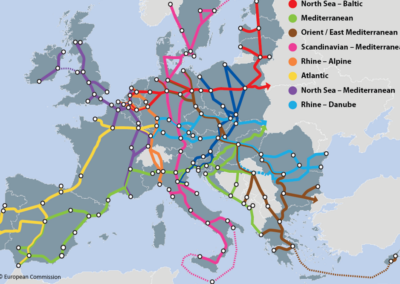
This is where the technical pillar of the 4th EU Railway Package comes into play. It aims at a systematic harmonisation in international standard gauge traffic. The member states are called upon to apply the interoperability standards consistently and to harmonise the corresponding approval procedures internationally. In this way, the existing hurdles for cross-border traffic will be removed and the way opened for joint European innovation steps. This makes the technical pillar decisive for successful innovations in the European rail sector.
These comprise four thematic fields and will significantly improve the market position of rail transport in the coming years:
- Internationally harmonised sovereign regulations
- Cross-border compatible technical systems
- Internationally harmonised processes for safety-relevant activities
- Joint activities for system-wide guided further development
- Automation becomes marketable
Europe’s Rail Joint Undertaking (EU-Rail) has initiated an important cross-European development with the European Freight Digital Automatic Coupler Delivery Program (EDDP). This is intended to enable digitalisation and automation in freight transport. The development work should be so far advanced by 2025 that digital automatic couplers are available ready for series production for the upcoming migration of rolling stock.
Switzerland in the middle
From both an economic and a geographical perspective, it makes sense for Switzerland to participate actively and consistently in the ongoing EU activities – even more so in the context of the tug-of-war over the institutional framework agreement. The triggered revision of the Swiss Railway Act (EBG) for the autonomous adaptation of our sovereign regulations to the established Interop and Safety Directive of the 4th EU Railway Package is a welcome impetus for actively tackling the envisaged innovation packages now. The Swiss railway sector should and will use this innovation push to its advantage as soon as possible, in order to remain a competitive partner in the highly competitive transport sector in the future.
Modal shift: In transit on the right track
The Federal Council’s “Modal shift report July 2019 – June 2021″ presents the development of transalpine freight traffic and environmental pollution on the transalpine transit axes. It then examines the status of implementation of the modal shift instruments and accompanying measures. Based on this, the Federal Council proposes various measures to support the modal shift. Finally, it makes an assessment of the continuation of the modal shift policy in the coming reporting periods.
Transit success story
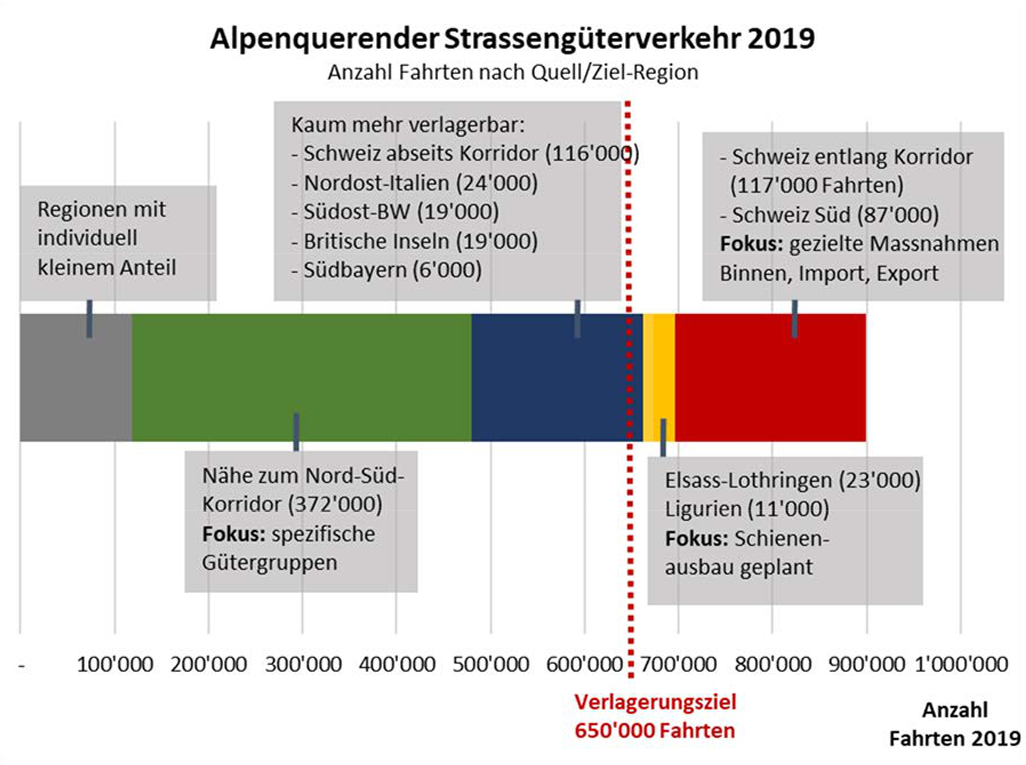
The 2021 modal shift report shows that the direction taken in the development of transalpine freight transport is the right one. Monitoring and reporting are proving their worth. Nevertheless, much remains to be done. The number of transalpine journeys by heavy goods vehicles in 2021 is just under 900,000, which still clearly exceeds the legal requirement of 650,000. Further measures are urgently needed, especially in view of the upcoming decarbonisation of transport to achieve the 2050 climate targets.
Much done, much to do
We at the VAP believe that previous measures need to be sharpened and, in particular, that the financial support measures need to be expanded in a technology-neutral way. Today, it is done in unaccompanied combined transport. Other forms of rail transport are not promoted. Of course, we have to accept the limits of modal shift in transit and ensure that forces are bundled here. Nevertheless, it is the task of politics and business to explore the potential for further modal shift in transit. This is what we have done below.
Potential No. 1: Multimodality
Road, rail and sea complement each other perfectly. Shippers can combine these modes of transport to create efficient, multimodal logistics solutions, with rail freight transport being considered the backbone of multimodal logistics chains. Accordingly, the promotion of multimodality should be technology-neutral. Today, mainly unaccompanied combined transport is promoted, but not conventional rail freight. The result: the share of wagonload transport in transit is falling.
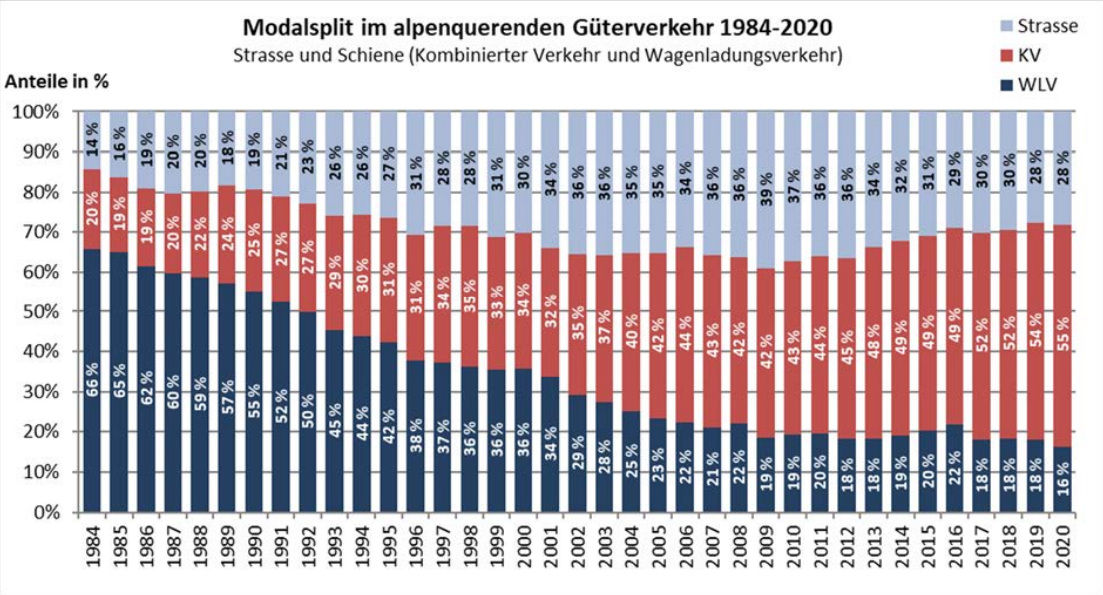
In our view, this is a missed opportunity. This is because the “Federal Act on the Transfer of Transalpine Heavy Goods Traffic from Road to Rail” (GVVG)1 allows the promotion of all rail freight traffic. We believe that all combined forms of road, rail and sea transport are part of multimodal logistics and must be treated equally both financially and in terms of infrastructure.
Potential No. 2: Quality monitoring
Currently, only unaccompanied combined transport is subject to monitoring. The aim is to determine the quality of transit traffic. In transit traffic, however, there is no quality monitoring in wagonload traffic. We also see this as a second missed opportunity. Because, as I said, the GVVG provides for the promotion of all rail freight transport. So the quality of all multimodal transports should be monitored. This applies equally to containers, semi-trailers, covered wagons, tank wagons and others.
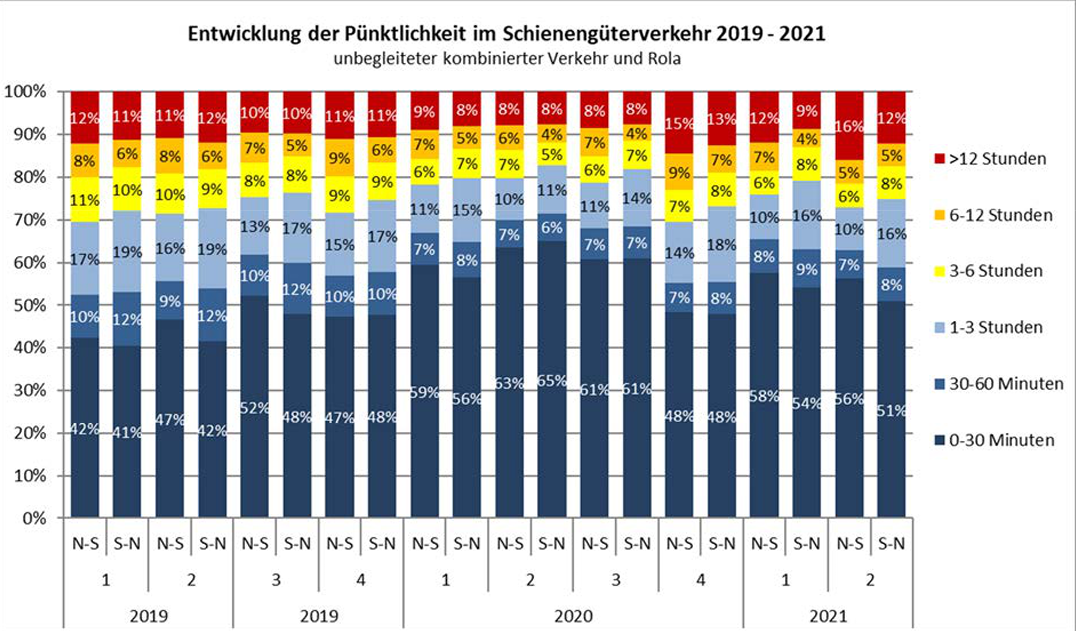
Potential No. 3: Connectivity and productivity
The Federal Office of Transport (FOT), the Association of Public Transport (VöV) and we at the VAP are tackling the digitalisation of rail freight transport as part of a major project (cf. motion “Transporting goods more efficiently by rail through automation” by Josef Dittli, Member of the Council of States and VAP President). With the help of digital technologies, consignments can be tracked in real time, the flexibility of the freight railways can be increased, temperature checks can be carried out, and thus the quality of the entire rail freight transport can be massively improved. Digitalisation also allows digital train control and train integrity. Thanks to the elimination of fixed signals, it enables significant capacity increases in the existing railway network without additional expansion measures. Digitalisation and automation are thus essential components of a future-oriented modal shift policy.
Potential No. 4: Train path prices
At present, train-path prices are not set according to the polluter-pays principle. In other words, freight transport has to co-finance expensive standards for passenger transport. In an international comparison, the train path prices in Switzerland are very high and thus outside a realistic value creation in rail freight transport. After the temporary price reductions in the context of the Covid measures, in which the train path price tended towards practically zero in the European environment, the train path price remains well away from the European benchmark. Therefore, we consider a permanent reduction of the track access charges to be an urgent and efficient support measure.
Potential No. 5: Performance-related heavy vehicle charge (HVF)
Currently, two thirds of the proceeds from the HVF are credited to the Rail Infrastructure Fund (BIF). This corresponds to one billion Swiss francs annually. We propose a review of the earmarking of the HVF for expansions in the interest of freight transport. Although the HVF is supposed to limit the growth of heavy road traffic and promote the shift of freight traffic to the railways, it is often decided to use the revenue for expansions in favour of passenger traffic. For comparison: the northern bypass of Zurich alone costs 1 billion Swiss francs to close capacities in the east-west axis. The construction project was discussed in the AS 2035, but the Stadelhofen station with a comparable cost was given priority.
Potential No. 6: Access routes
Traffic on the feeder lines is constantly increasing. In order to make them attractive for freight traffic, the Federal Council insists on compliance with the existing expansion agreements with neighbouring countries. In addition, the Federal Council was already instructed in motion 20.3003 State treaty for a Neat access route on the left bank of the Rhine to realise an efficient alternative route on the left bank of the Rhine (flat railway) by means of a state treaty with France and Belgium. This should now be given priority. We are in favour of co-financing the Karlsruhe-Basel section on the left bank of the Rhine for the rapid realisation of an alternative route. This is the only way to improve the quality of the northern access route in the short term. The KVF‑N has allowed itself to be convinced by these arguments and has submitted motion 22.300 “Continuation of the successful modal shift policy and guarantee of national supply security thanks to expansion of the Wörth-Strasbourg NEAT feeder on the left bank of the Rhine”.
Potential No. 7: Alternatives
Naturally, there are certain limits to modal shift. Accordingly, efforts should be concentrated on suitable transport. Rail and road complement each other. Environmentally compatible drive technologies decisively advance the sustainable development of road transport. We therefore advocate the promotion of environmentally friendly drive systems with freedom of choice for owners. The design of the HVF would promote environmentally friendly technologies and guarantee investment security for ten years. The transport of dangerous goods over the Simplon Pass should be secured with an industry solution. Read more about this in the blog article “Transport of dangerous goods on the Simplon”.
At its meeting in early April 2022, the KVF‑N will deal with the question of additional support for transalpine freight transport. On behalf of the commission, the administration will show in an additional report which options are available for financing such a measure in addition to an adjustment of the train path prices. It is to be hoped that these additional measures will already take into account all rail traffic in transit in a technology-neutral manner.
1 Cf. Art 8 GVVG