
The VAP promotes freight transport by rail.
The VAP Association of Shippers campaigns for market-oriented framework conditions and an attractive Swiss rail freight system. Relevant topics:
Freight industry
- How do we shape the future of freight transport?
- What moves the freight industry?
- An overview of the players in rail freight transport.
Network
Here you will find useful information on railroads, their organization and network access.
Financing
Information on financial support and charges in freight transport.
Sites
Everything about free loading, terminals, sidings or even multimodal logistics hubs.
Interoperability
The VAP is committed to harmonizing the framework conditions so that trains can run effortlessly on European rail networks.
Sustainability
For a far-sighted future, various areas need to be designed sustainably.
Innovation
How can we drive innovation in freight transport?
Operations
In favor of fair competition, we want to utilize the strength of all modes of transport and combine them optimally. Because this makes the route shorter – and more economical – for everyone.
Events
Here you will find further information and documents on our events Forum Freight Transport, our General Assembly and others.

Important transport of dangerous goods on the Simplon
According to the modal shift report of November 2021, the Federal Council is considering a consultation on a ban on the transport of dangerous goods at the Simplon. In doing so, it is revising its assessment submitted to parliament in 2015, according to which it considers the transport of dangerous goods at the Simplon Pass to be “sufficiently safe”. This is all the more surprising as FEDRO has been investing heavily in safety measures (retention basins, overtaking bans, emergency braking sections and the like) for years and the traffic statistics do not show any significant increase in the transport of dangerous goods.
We advocate that the dangerous goods situation be analysed in cooperation with the industry representatives and that any targeted potential for improvement be exploited, thus also guaranteeing entrepreneurial freedom. Such agreements have already made good progress in chlorine transport by rail.
A ban would endanger the supply of the population and the economy. It should also be taken into account that a great deal has been invested in the Simplon road in recent years to increase safety. According to the Federal Roads Office (FEDRO), the Simplon is the best developed pass in Switzerland. You can read a comprehensive argumentation in the scienceindustries factsheet.
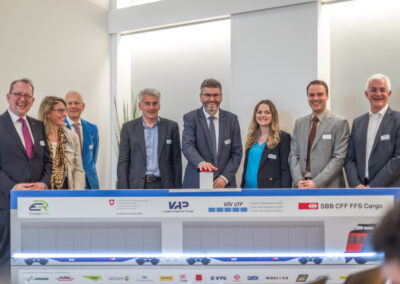
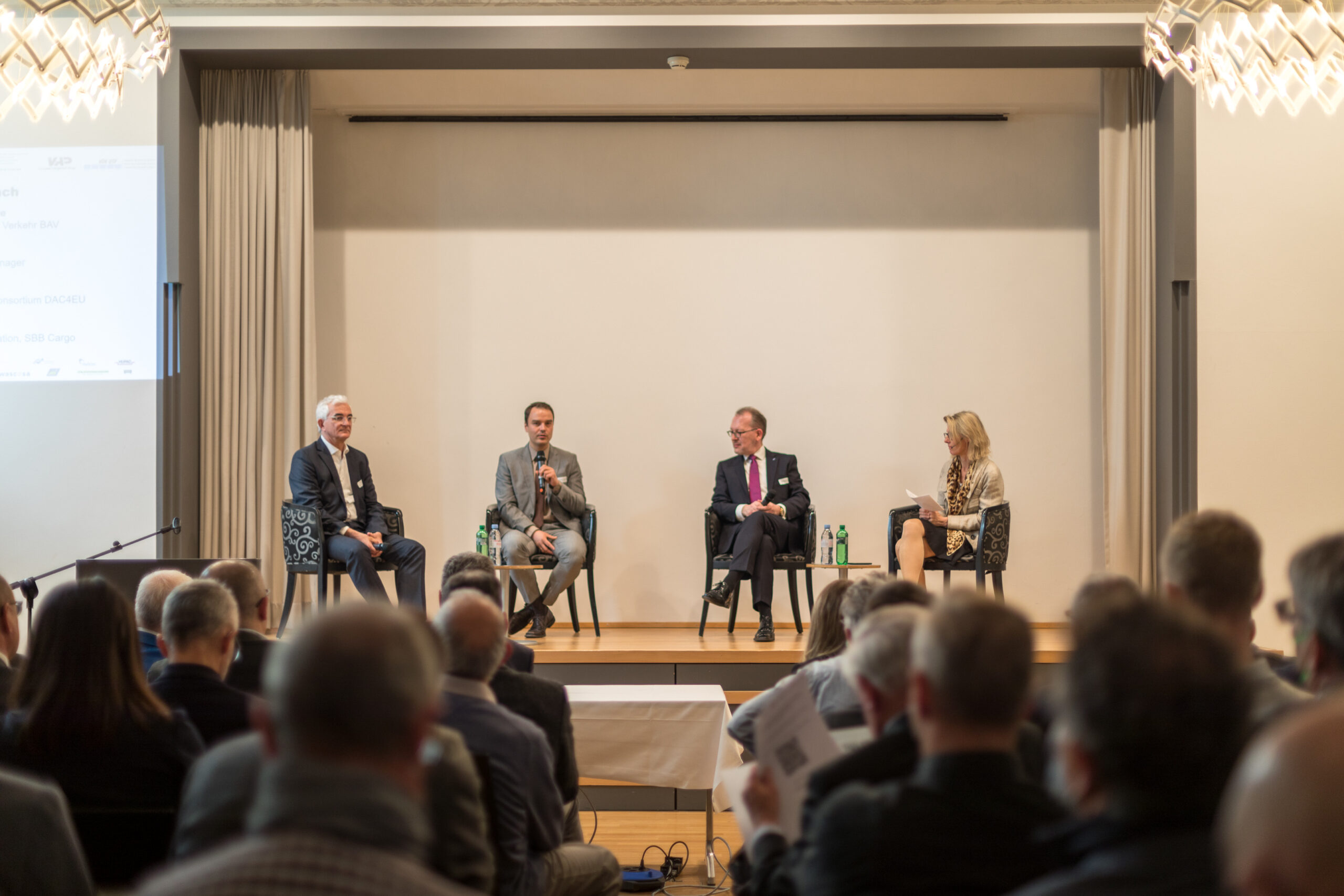
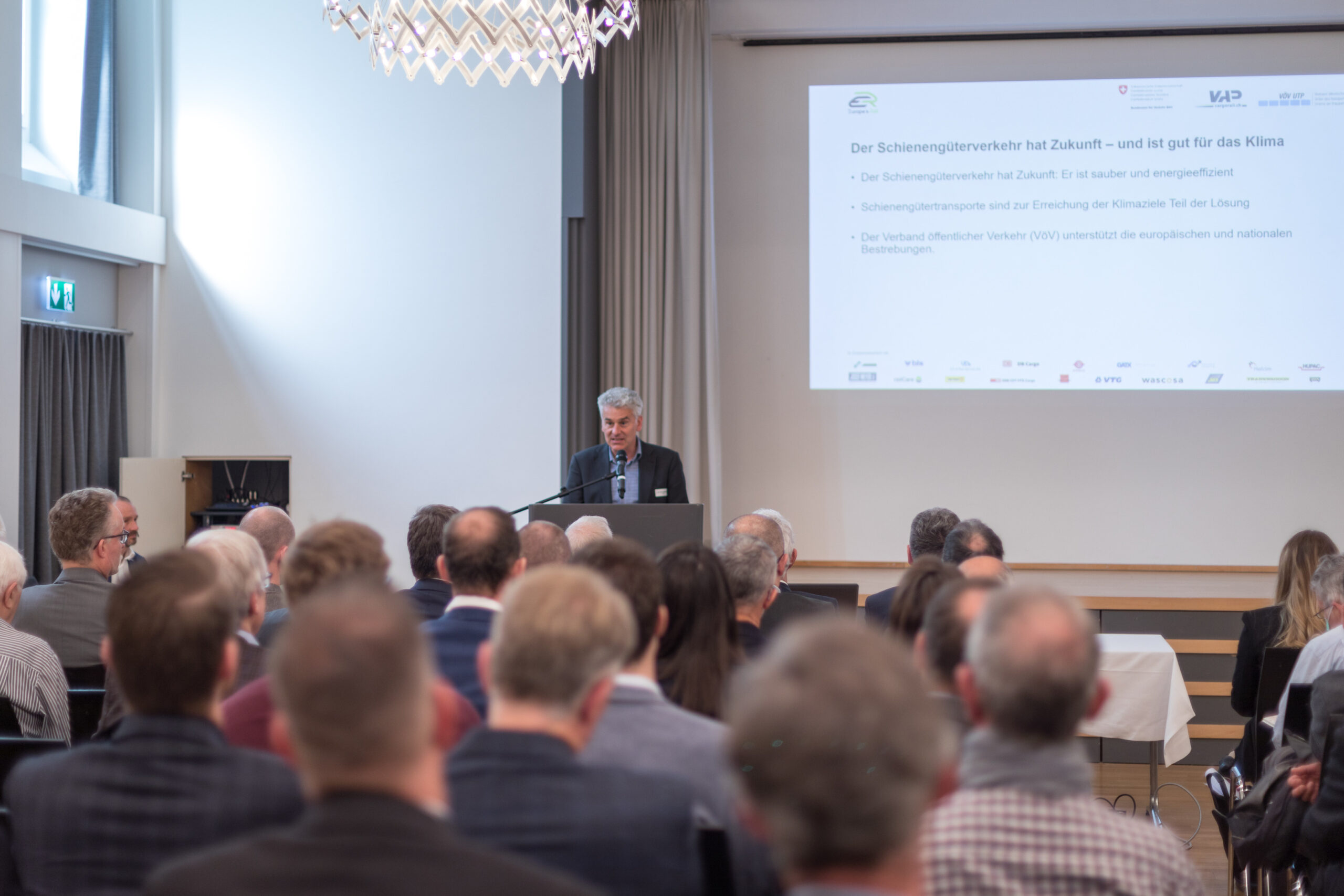
Industry and media event DAC4EU Demonstrator Train
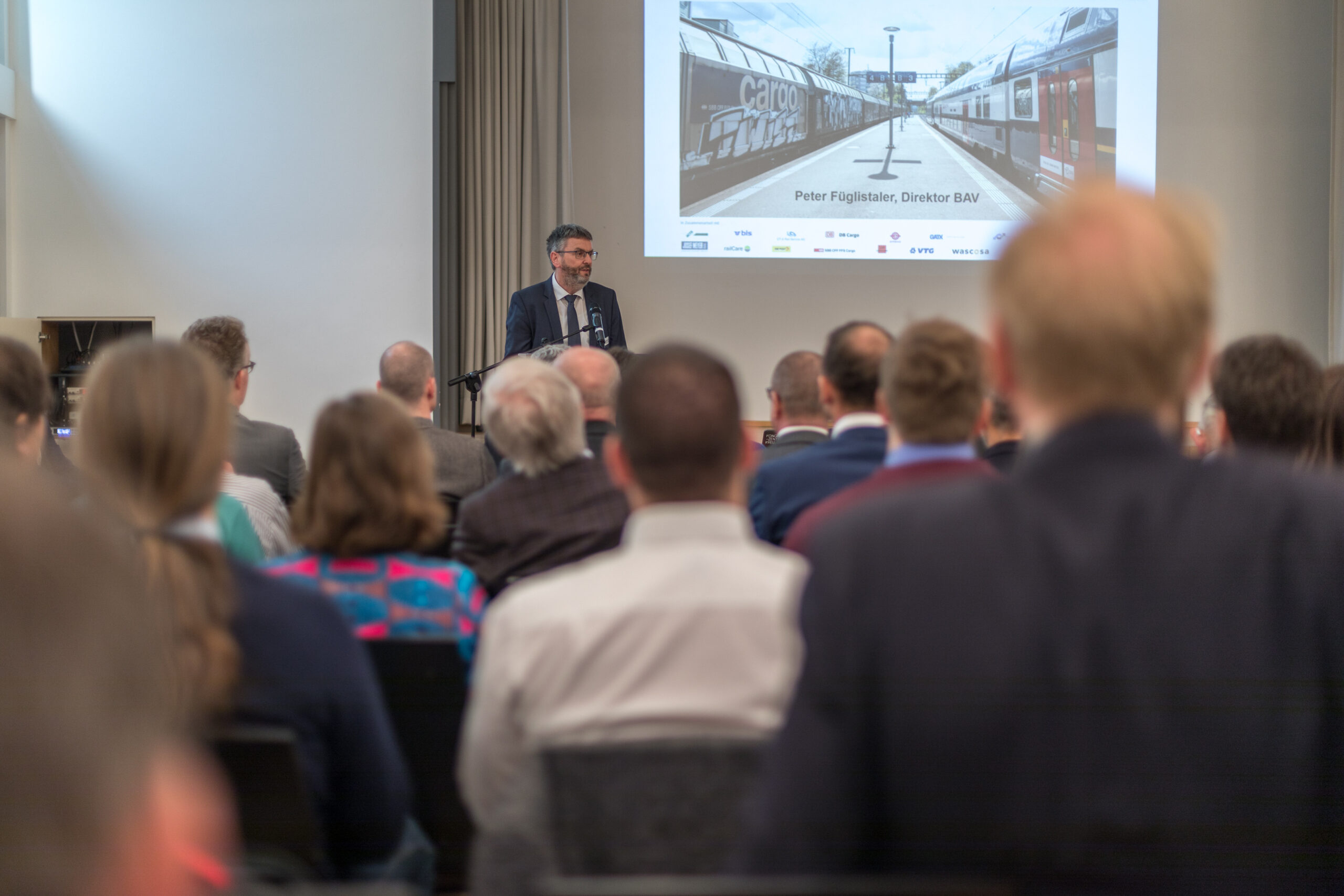
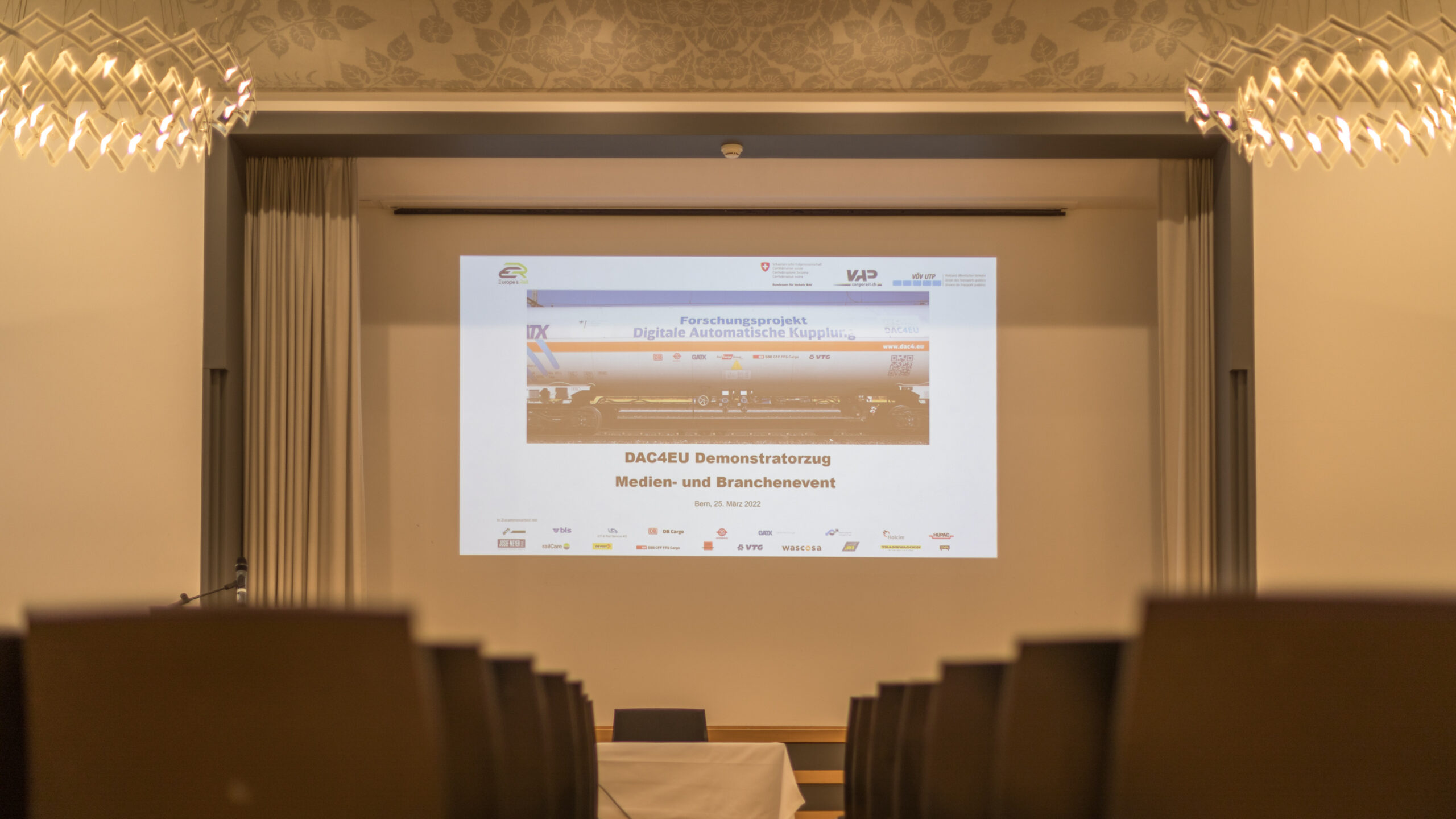
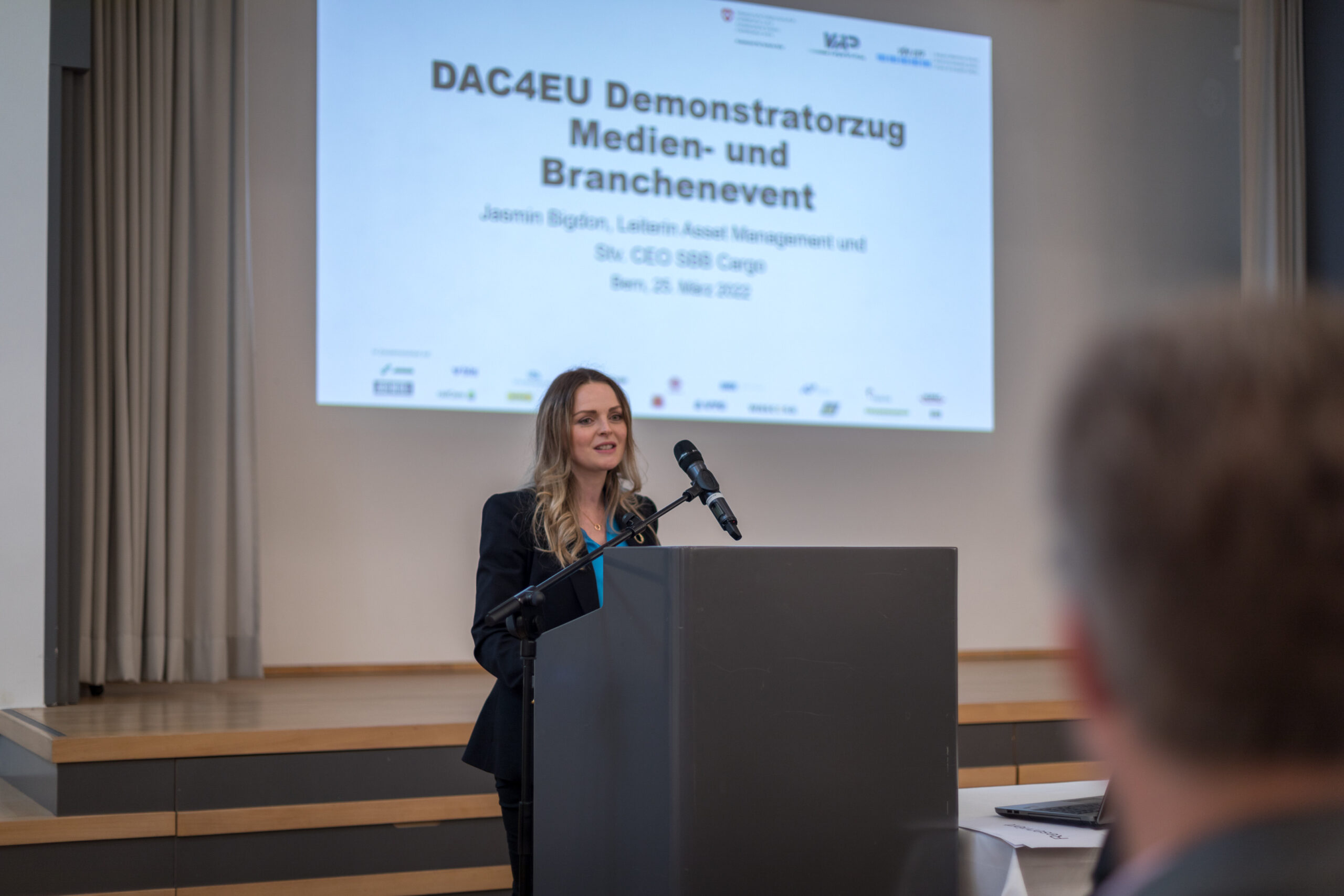
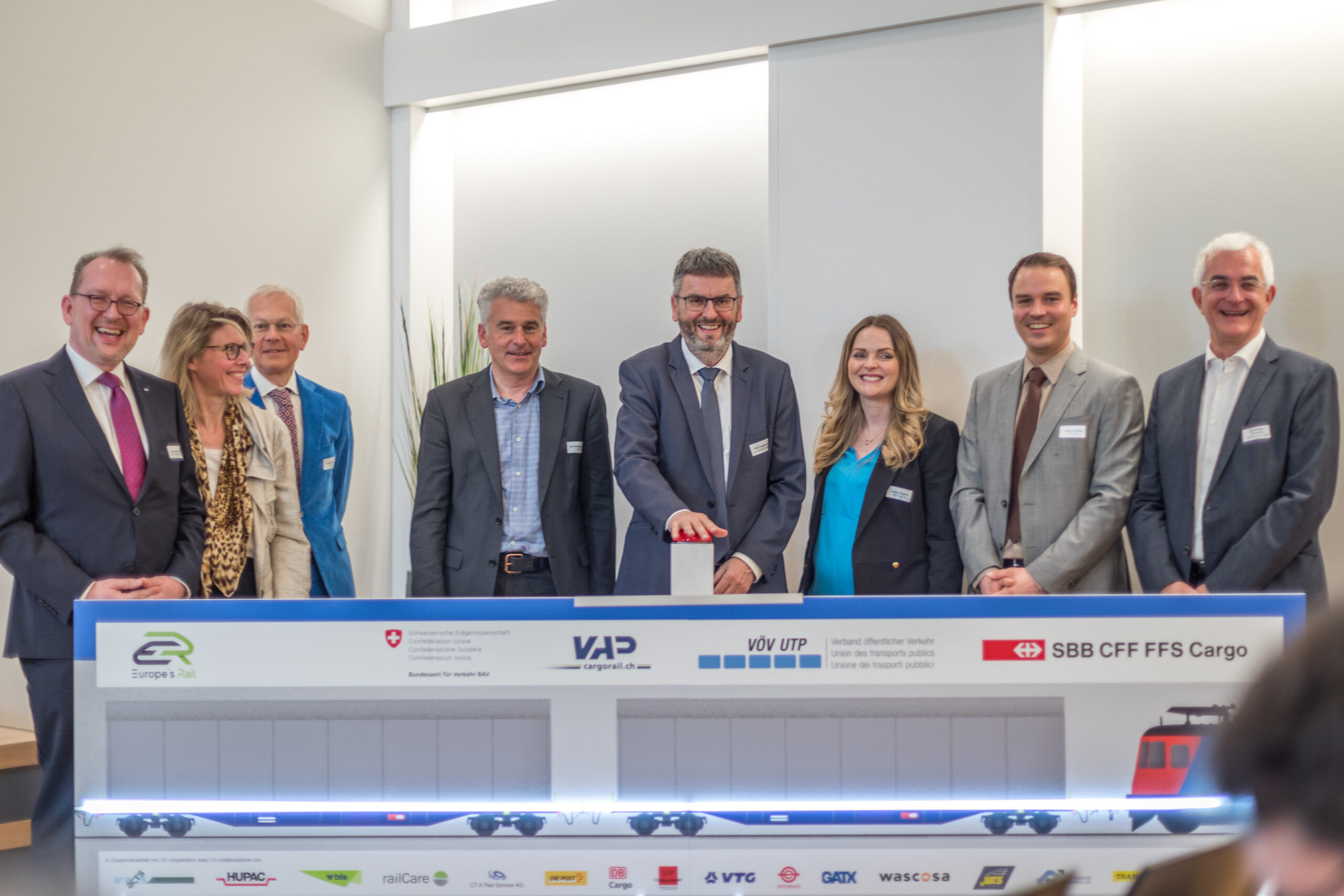
On 25 March 2022, the FOT, the SBB, the VAP and the VöV provided information about the test phase and the far-reaching advantages resulting from the Digital Automatic Coupling (DAK). The message was that the DAK lays the foundations for digitisation and thus for a groundbreaking innovation in rail freight transport.
Since autumn 2021, a digital goods train has been on the road for the first time in Europe for test purposes. The aim is to test the Digital Automatic Coupling (DAK) in real-life operation.
in real operation. SBB Cargo is subjecting the train to an extensive test programme until the end of March. The industry agrees that close national cooperation and coordination in Europe are important factors for the successful introduction of the DAK. The test train is funded by the German Federal Ministry of Digital Affairs and Transport (BMVD).
Presentations of the speakers:
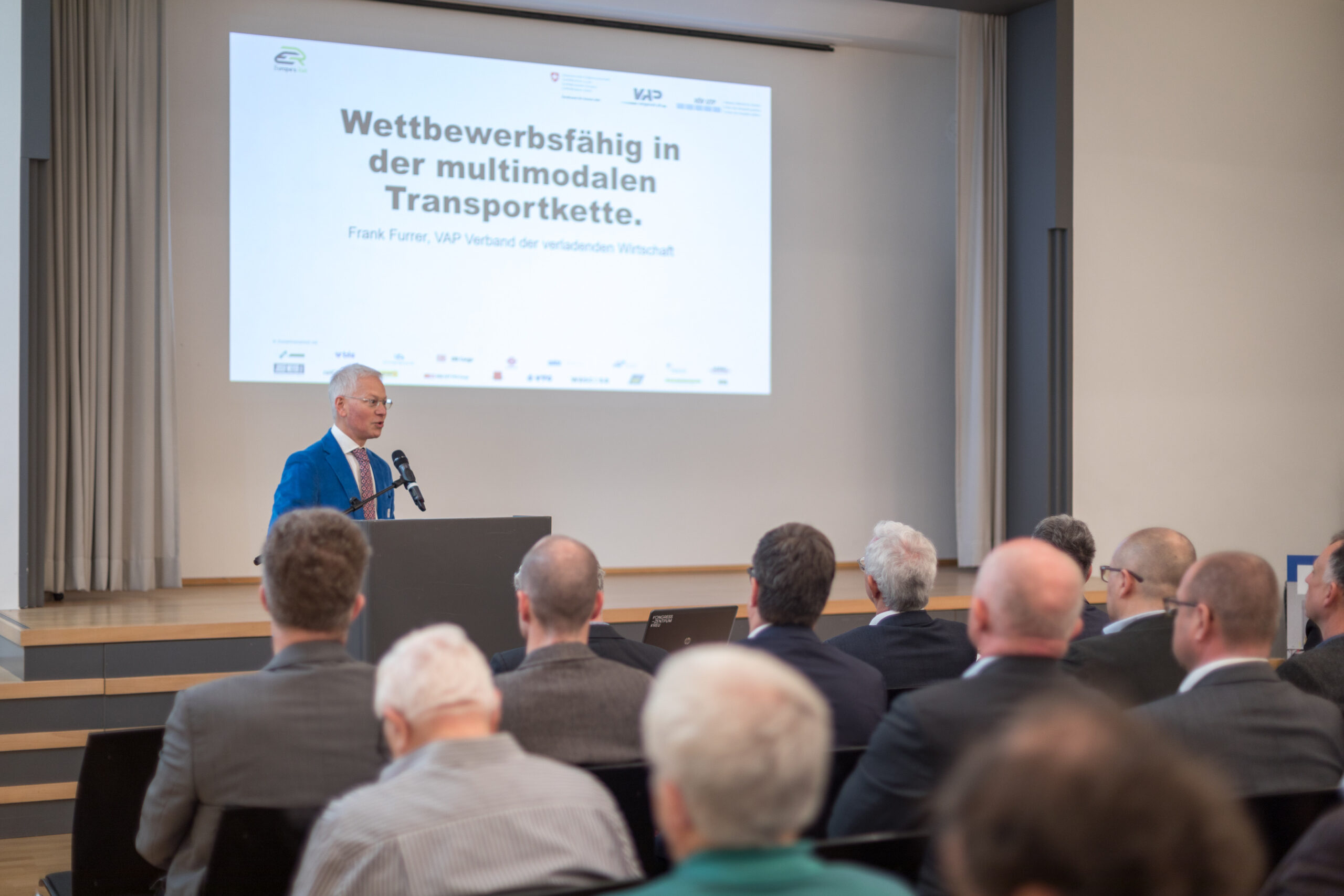
- Wettbewerbsfähig in der multimodalen Transportkette. Frank Furrer, VAP Verband der verladenden Wirtschaft
- Speech by Frank Furrer, VAP (in German)
- Erfahrungen und Details zur DAK. Jasmin Bigdon, Head of Asset Management and Deputy CEO SBB Cargo
- Presentation Peter Füglistaler, Director BAV
- Die ÖV-Branche unterstützt DAC4EU. Ueli Stückelberger, Director Verband öffentlicher Verkehr

Transport sectoral plan: programme with limited perspective
The background in advance
Various factors have an impact on the Sectoral Plan for Transport/Programme section and thus on the future of rail freight transport (cf. Figure 1). The Swiss Spatial Development Perspective, the Transport Perspectives and the Sustainable Development Strategy provide the strategic direction. At the implementation level, the sectoral plans, transport sectoral plan/part of implementation, agglomeration programmes as well as the expansion steps for rail and road and other bases come into play.
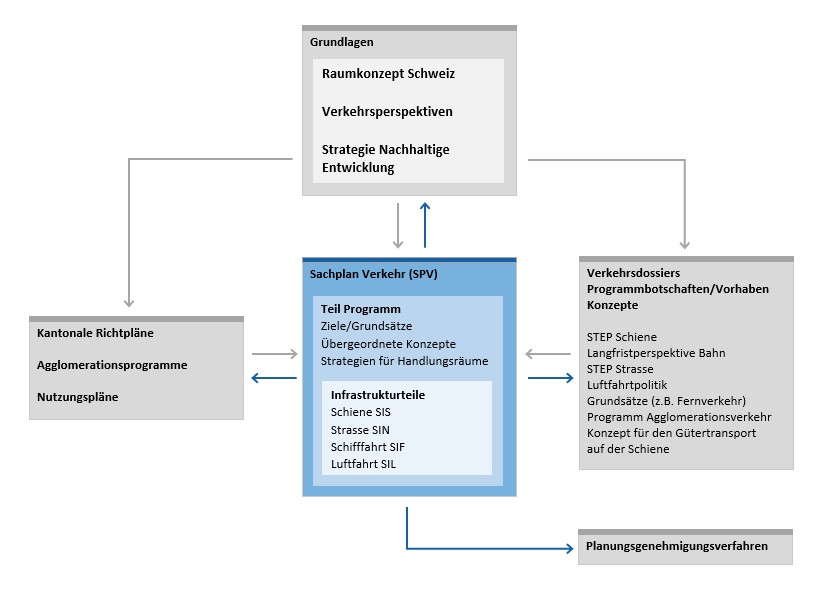
Figure 1: Integration and interaction of the Sectoral Plan for Transport, Programme Section with the spatial and transport planning instruments (Source: Federal Office for Spatial Development ARE, Sectoral Plan for Transport, Programme Section)
With the long-term perspective RAIL 2050, the Federal Department of the Environment, Transport, Energy and Communications (DETEC) will define the relevant directions for national and international passenger and freight transport by rail and for the railway infrastructure from the existing strategies as a basis for the next STEP expansion steps. However, RAIL 2050 is not a mobility strategy for all modes of transport.
With the Sectoral Plan for Transport, part of the programme, DETEC ensures the coordination of the transport modes road, rail, air and water with each other and with spatial development. Spatial concerns are the main focus here. The Sectoral Plan for Transport consists of a programme section, which addresses the strategy level and was last updated by the Federal Council on 20 October 2021, and various implementation sections relating to the modes of transport.
The development of settlements and transport infrastructures go hand in hand. The settlement structure affects the transport system – and vice versa. The shape of the transport networks influences the location choices of companies and people, so they shape the space. The spatial patterns in turn affect traffic flows and network utilisation. For the further development of the transport system and for coordination with spatial development, the Spatial Concept Switzerland of 15 December 2012 suggests combining modes of transport according to their strengths and developing settlements in those areas where there are already good public transport connections, such as in agglomerations, in cities or in regional centres.
A total growth of 45 percent is forecast for freight transport by 2040. If the expansion of the rail infrastructure were to be dispensed with, the accessibility of the cities and centres of the metropolitan areas could deteriorate. With the STEP Expansion Step 2035, the financing of the infrastructures is ensured above all in the east-west corridor, the Lake Geneva region and the Zurich and Central Switzerland areas. In addition, freight transport facilities will be expanded. In freight transport in general and especially during rush hour, additional capacities will be created and transport speeds increased. This supports the efforts for self-sustained operation, especially in freight transport in the area.
On 26 January 2022, DETEC adopted the Sectoral Plan for Transport, Rail Infrastructure Part. This identifies approaches to solving problems in the area of rail infrastructure, provides for federal measures and sets out how these measures are to be coordinated with each other and with other spatially effective activities over time. These measures concern the following areas:
- Rail routes relevant to the sectoral plan
- Transhipment facilities for combined transport of national importance
- Passenger stations, stabling facilities, maintenance and service facilities for rolling stock or freight transport facilities on the standard and narrow-gauge network co-financed by the federal government.
- Transmission lines for the power supply of the railway network
- Substations necessary for the commissioning of important infrastructure extensions
What we think of the matter
DETEC and the Federal Office for Spatial Development (ARE) submitted the revision of the Sectoral Plan for Transport, Part Programme, for consultation on 15 September 2020. You can find our response here. We from the VAP are also represented on the Sounding Board for the development of DETEC’s long-term perspective for RAIL 2050 and have been able to contribute to the work on various occasions. Below we have summarised our most important suggestions for improving the sectoral plan, programme section.
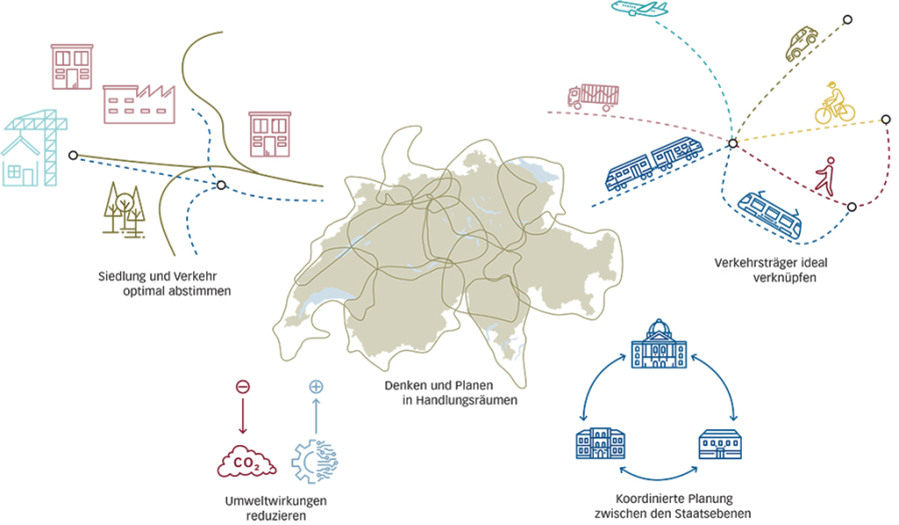
Figure 2: The Sectoral Plan for Transport, part of the programme, gives more – though not enough – importance to freight transport. (Source: Federal Office for Spatial Development ARE, Sectoral Plan for Transport, Part of the Programme)
1. General comments
The sectoral plan consistently follows a top-down approach. This excludes potential sustainable scenarios for a bottom-up approach. Such would offer a greater right of co-determination for the cantons, communes and private actors concerned. This top-down approach is in contradiction to the recognition that “the forms of supply and the providers are diverse” (cf. page 24). The definitive version adheres to the state levels and excludes the economy.
One of the most important goals is to achieve the CO2 targets. Unfortunately, the sectoral plan does not sufficiently reflect the current developments of the transport modes. For example, the complete abandonment of petrol engines by the automotive industry from 2030 or the use of the most modern traffic guidance systems in connection with (partially) autonomous driving and thus better use of the infrastructure.
VAP proposal: The Sectoral Plan should take better account of “green” logistics as the backbone of the Swiss economy and the basis for the secure prosperity of the Swiss population.
2. Counterflow principle endangered
In the chapters “Mobility and Spatial Objectives” and “Development Strategies and Principles for Action”, the Sectoral Plan contains highly detailed, binding provisions for the authorities. However, this severely restricts the iterative cooperation of all levels of government, which is also described in detail in the sectoral plan, and the countercurrent principle that it refers to. The sectoral plan pursues a centralist – not a federalist – approach without a legal basis.
Proposal VAP: The level of detail of the specifications, considerations and explanations binding on the authorities offers little room for cooperation in the sense of the counterflow principle. To facilitate interregional strategies, the Confederation could undertake an overall coordination.
3. Conflict of objectives between public transport and rail freight transport
The Sectoral Plan lacks a detailed differentiation between passenger and freight transport and the associated challenges and potential future solutions. Furthermore, the Sectoral Plan speaks of public transport as the opposite of private motorised transport. This view does not go far enough for rail freight transport, as the latter does not count as public transport.
VAP proposal: The adopted version of the sectoral plan does give rail freight transport a higher priority. However, public transport considerations still dominate. The representatives of rail freight transport, like those of public transport, should be included in the iterative processes of the state levels described. 4.
4. Private companies excluded
The sectoral plan was developed by the federal government, cantons, cities/municipalities and representatives of the agglomeration authorities. The infrastructure that is indispensable for freight transport (transhipment platforms, terminals, sidings, port infrastructure on inland waterways, air freight terminals, etc.) is built and maintained by the private sector. The sectoral plan summarises this private infrastructure under the term “transport hubs and development focal points”. Freight traffic is handled via these in multimodal logistics chains. Nevertheless, freight transport is not included in the proposed typology of transport hubs. Companies” are understood to mean public transport companies, not the private sector shippers who build, finance and operate the hubs. The latter should not be involved.
Proposal VAP: Successful, innovative, customer-oriented and thus sustainable mobility or the broad acceptance of offers can only be realised by involving the private companies involved. These must be involved in the implementation of the objectives of the sectoral plan for questions of traffic management, better capacity utilisation, increased efficiency and increased resilience of the transport hubs.
5. Infrastructure development not very demand-oriented
The proposal to specify that all other possibilities for good connections should first be exhausted before expansion makes the neglect of freight transport in the sectoral plan abundantly clear. There is no mention of production and logistics locations. Freight transport hubs remain irrelevant. Rail freight transport is discussed very cautiously in the sectoral plan and is not perceived as a transport hub or development focus.
The proposal to deal with freight transport alone in the “Freight Transport by Rail Concept” is insufficient. This is for two reasons: The share of rail freight transport in domestic traffic is only just under 20%. Moreover, the concept is under the overarching umbrella of the sectoral plan, which means that it lacks the level justice and binding nature.
VAP proposal: The Sectoral Transport Plan must not neglect freight transport and exclude the main private-sector actors. Otherwise, infrastructure development will not be demand-oriented.
6. Optimise the quality of connections
The central east-west axis for rail freight transport is predominantly located in the intermediate settlement area. Extensive production, processing and logistics locations as well as transport hubs (sidings, terminals) are located here. Their regional connection to long-distance freight transport between agglomerations, but also within or between agglomeration belts, is not described in the sectoral plan. In particular, no tangential connections bypassing the agglomeration cores are shown, although such a connection is planned in the action areas, for example with the Zurich freight bypass line. No tangential lines or outer belts are shown for public transport either, although the negative effects of congestion in the agglomeration cores are known and the sectoral plan assumes a significant shift in traffic.
Proposal VAP: The connection quality oriented towards public transport should be supplemented with differentiated spatial types for rail freight transport. Likewise, the bypassing of congested agglomeration cores through public transport connections between agglomerations and within agglomerations via tangential lines and bypass belts.
7. Regulate the transport of hazardous goods separately
The Sectoral Plan does not adequately address the conflict of objectives between environmental protection (accident prevention, modal shift to rail freight transport) and densification in the centres. Densification changes the risk assessment in the transport of dangerous goods. This means that risk-reducing measures may be necessary to maintain existing transport operations. In doing so, the polluter pays principle must be respected so that rail freight transport can not only be maintained, but also increased as envisaged.
The problem can be prototypically illustrated by a possible ban on the transport of hazardous goods on the Simplon. The Simplon is the best developed pass in Switzerland. An enormous amount of money has been invested in recent years to increase its safety. According to Article 4 of the “Ordinance on the Transport of Dangerous Goods by Road” (SDR), the provisions of the “Agreement concerning the International Carriage of Dangerous Goods by Road” (ADR) also apply to the transport of dangerous goods by road in national traffic. Domestic traffic on the Simplon is not relevant in terms of volume, as this is practically only international traffic.
Suggestion for improvement: Our request for a separate consideration of dangerous goods was included in the sectoral plan. However, without any reference to causation and levying of added value, but only in the sense of “forward-looking” planning. The connection between modal shift to rail freight transport and densified settlement in the case of hazardous goods transports must be presented, taking environmental concerns into account. This requires solutions that are fair to the polluter.
You can read the full text of our written hearing response to Federal Councillor Simonetta Sommaruga here.
Vorschlag VAP: Der Sachplan Verkehr darf den Güterverkehr nicht vernachlässigen und die privatwirtschaftlichen Hauptakteure ausklammern. Ansonsten erfolgt der Infrastrukturausbau nicht nachfrageorientiert.
6. Verbindungsqualität optimieren
Die für den Schienengüterverkehr zentrale Ost-West-Achse liegt überwiegend im intermediären Siedlungsraum. Hier befinden sich umfangreiche Produktions‑, Verarbeitungs- und Logistikstandorte sowie Verkehrsdrehscheiben (Anschlussgleise, Terminals). Ihre regionale Anbindung an den Güterfernverkehr zwischen Agglomerationen, aber auch innerhalb oder zwischen Agglomerationsgürteln, wird im Sachplan nicht beschrieben. Insbesondere werden keine Tangentialverbindungen unter Umfahrung der Agglomerationskerne aufgezeigt, obschon eine solche zum Beispiel mit der Güterumfahrungslinie Zürich in den Handlungsräumen vorgesehen ist. Auch für den öffentlichen Verkehr werden keine Tangentiallinien oder äussere Gürtel aufgezeigt, obschon die negativen Auswirkungen der Überlastung der Agglomerationskerne bekannt sind und der Sachplan von einer markanten Verkehrsverlagerung ausgeht.
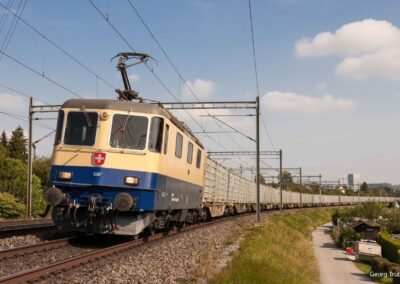
TR Trans Rail AG – a multimodal success story
We at the VAP are committed to competitive rail freight transport. In the meantime, several private RUs and VAP members operate important transports. We are happy to introduce them and their core competences. Let’s start with TR Trans Rail AG.
Between mid-September and the end of December is harvest time for sugar beet – a multimodal, logistical challenge for all involved. Here, rail plays to its strengths, especially on medium and longer distances, and delivers large quantities reliably and on time to the two plants in Aarberg and Frauenfeld.
As a long-standing logistics partner of Schweizer Zucker AG, TR Trans Rail AG’s cargo transports reach a peak in the last quarter of each year. During this time, a complex logistics project is ramped up for transport to the sugar factories. At the loading points, the rail wagons are loaded by the farmers and then transported by rail. Since the 2021 season, TR Trans Rail AG has been the sole national logistics partner of Schweizer Zucker AG in the area of rail transport, another milestone in its corporate history.
Thanks to the experience of the past seasons, meticulous planning coupled with a high degree of flexibility, the orders are handled smoothly. If, for example, drought or viral yellowing have a negative impact on yield and sugar content, various trains have to be rerouted at short notice. Only with the flexibility of everyone involved is it possible to optimise the utilisation of the two plants.
Shortly before Christmas 2021, the last load of beet reached the Frauenfeld sugar factory. For 100 days, TR Trans Rail AG transported around 555,000 tonnes of beet to the sugar factories in Aarberg and Frauenfeld with over 500 trains.
«The transport by rail and the cooperation with the partners involved mostly worked smoothly. Thanks to the rail transports, around 90,000 road kilometres could be saved. That corresponds to a distance of about two circumnavigations of the earth,» explains Peter Koch, who is responsible for the sugar beet transports east.
TR Trans Rail AG relies on the VAP when it comes to overarching know-how in rail freight transport.
André Pellet: To help our customers find new transport solutions for their wagon loads, we wanted to learn more about their needs, possibilities, but also hurdles. A business partner therefore recommended that we contact the VAP, which we already knew. The contact was quickly established and the cooperation started quickly and without complications.
What would you tell a colleague about the VAP?

André Pellet, Managing Director TR Trans Rail AGThe VAP is an extremely useful platform for the maritime industry. For only together can the urgent issues of freight transport by rail be tackled.
The rail freight system is extremely complex and therefore very demanding. Each customer or provider has different needs. But only the whole unit, bundled in an association, has the chance to master the challenges.
Where do you see the most urgent need for action to promote rail freight transport?
The transport policy framework must be right for the freight railways. The tightly organised railway organisation must not hinder the flexibility to find good transport solutions and the effort must remain within an economic measure. The ever leaner infrastructure must not restrict us any further.
What do you wish for the future of rail freight transport in Switzerland?
The railway should increasingly act as a unit vis-à-vis the road. The various service providers and private railway companies have different possibilities and each could contribute something to the implementation and handling of transports. The railways should not see themselves as competitors, but should contribute their individual strengths and thus offer holistic and customer-oriented solutions.
Thank you very much for your answers, André Pellet!
|
Information about TR Trans Rail AG: As a Swiss rail transport company, TR Trans Rail offers a wide range of offers and services with various domestic and foreign partners. Thanks to many years of experience, they are specialists in the areas of freight transport, modern services, train nostalgia, group charter trips, accompanied trips and themed event trips. |
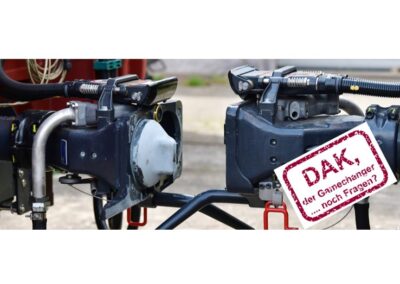
12th VPI Symposium “Digital Automatic Coupling“
PRESS RELEASE OF VPI Hamburg
The gamechanger for rail freight transport is up and running!
1,250 participants found out about the status of the DAC introduction at the digital event on 11 January 2022.
“Rolling out the DAC across Europe is a thick board. We have managed the first centimetres”. With these words, Chairman Malte Lawrenz welcomed the participants of the 12th VPI Symposium “Digital Automatic Coupling” (DAC) in Hamburg. He referred to last year’s agreement on a uniform European coupling standard, the anchoring of the DAC in the coalition agreement of the German government and the work of the European DAC Delivery Programme (EDDP) in Brussels. More than 1,250 participants had joined the symposium via livestream – a record number. Interest in the event was also high in non-German-speaking countries: more than half of the audience followed the symposium in simultaneous English translation.
A dozen experts, all members of the EDDP, reported at the digital event on the state of the European DAC discussion in the fields of “technology”, “migration”, “costs/benefits” and “financing” and presented current results of initiatives such as the DAC4EU demonstrator train.
With the event, the VPI offered the sector the opportunity to ask questions to the EDDP representatives. Keepers, shippers and rail transport companies were particularly interested in aspects of migration and financing, but also in safety issues in the transport of dangerous goods.
“The symposium was definitely worthwhile for everyone involved,” said Jens Engelmann, EDDP Programme Manager, at the end of the event. Not only were the stakeholders happy to answer questions, but conversely, they also took important clarification topics back to Brussels, which will be taken into account in the design of the complex implementation process.
The 12th VPI Symposium took place this year in cooperation with the VPI Austria as well as with important DAC institutions at the European level: European DAC Delivery Programme, DACcelerate and Shift2Rail.
In an interview on Journalistico.de, Malte Lawrence talks about the current status of the DAC project, how much higher productivity will be with DAC and what hurdles there are to overcome until then.
https://journalistico.com/wirtschaft/digitale-automatische-kupplung-das-ebnet-den-weg-fuer-den-intelligenten-gueterzug/

4th EU railway package: Rail free for innovation
Barrier-free across borders
With the technical pillar of the 4th railway package, the European Union (EU) is striving for rapid and sustainable harmonisation in international standard-gauge traffic so that cross-border rail traffic can run without obstacles. The member states are to consistently apply the interoperability standards and adapt the corresponding approval procedures. The basis for this standardisation is the Directive on the interoperability of the rail system in the European Union and the Technical Specifications for Interoperability (TSI) for the subsystems (infrastructure, energy, control-command and signalling, operations and traffic management, maintenance and telematics applications). Switzerland is adopting the elements of the technical pillar of the 4th railway package in partial steps.
What has happened so far
For many years, the authorisation procedures were the responsibility of the national authorities. In 2015, the Directorate-General for Mobility and Transport (MOVE) of the EU Commission came to the conclusion that the thrust of the harmonisation measures already implemented was correct, but that the implementation of the uniform regulations in the member states was only progressing at different speeds and that the national authorisation procedures still differed greatly from authority to authority despite common rules. As a result, the EU adopted the 4th EU Railway Package. Since 16 June 2019, the EU Railway Agency (ERA) has been responsible for issuing uniform safety certificates and approvals for rolling stock for cross-border traffic. For this purpose, it operates the online vehicle approval portal “One Stop Shop”. It works closely with the national supervisory authorities in checking the approval dossiers. On 21.12.2021, the FOT announced that Switzerland’s cooperation with the European Agency, in connection with the technical pillar of the 4th railway package – 1st step – was extended by a further year until the end of 2022. To the media release.
Three core elements
With the technical pillar, the EU Commission wants to remedy the identified weaknesses and strengthen the market position of the railway sector in the highly competitive travel and transport business (cf. Figure 1). The 4th EU Railway Package contains three essential elements:
- The applicable regulations are to be systematically harmonised in all participating states. This is done through institutional entry-into-force procedures of the TSIs and their updates. This means that TSIs published by the EU Commission are now directly valid in all states; there is no longer any need for national implementation processes.
- The ERA will now monitor the timely and complete removal of obsolete national regulations by the competent national supervisory authorities.
- The ERA now coordinates the licensing procedures and centrally issues uniform operating licences that are valid across all countries.
From summer 2019 to autumn 2020, all EU member states adapted their national regulations to the 4th railway package. Today, an application for authorisation can be made in ERA’s “One Stop Shop” and the corresponding dossier can be submitted. ERA examines the dossier with the involvement of the national supervisory authorities concerned and issues an operating licence that is directly valid in all the countries applied for.
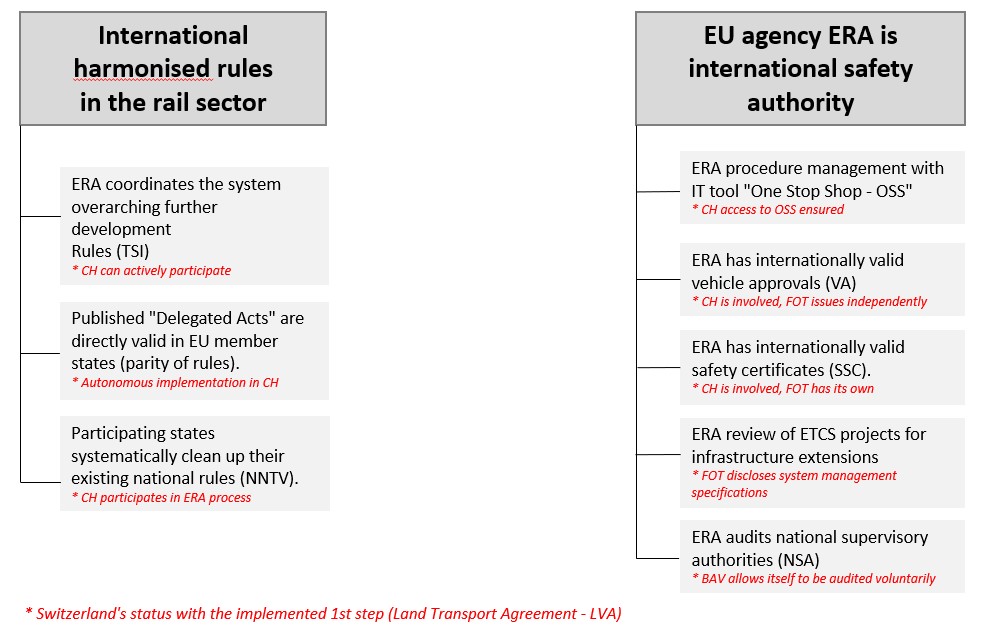
Figure 1: Elements of the technical pillar of the 4th EU railway package at a glance
Advantages outweigh disadvantages
The unification of standards and the centralisation of approval procedures bring significant advantages:
- Leaner and internationally uniform rules ensure more efficiency and clarity in the specification of subsystems and the provision of evidence for operating licences.
- The transparency of processing times and fees increases.
- An internationally valid ERA operating licence ensures faster and more predictable licensing procedures.
- There are no longer multiple procedures for multi-country approvals.
- For complex projects such as multi-system traction vehicles, the improvements are already clearly noticeable after a short introduction period.
There is still potential for optimisation in the approval procedures for standard freight wagons. This is because the scope of regulations here is enormous: numerous regulations are outdated and there are still many different additional national requirements.
Accelerated national streamlining
The streamlining of the still existing national regulations requires extensive adjustments in all Member States. It will soon lead to a significant reduction in the number of rules that need to be verified and in national differences. More uniform and up-to-date sovereign regulations in all European countries and a transnationally valid authorisation are a basic prerequisite for significantly strengthening European rail transport in the future and for establishing future-oriented innovations.
Switzerland follows suit
The Swiss standard gauge network is an integral part of the interoperable European railway system. We, too, are interested in obstacle-free rail transport across borders. For example, the Federal Office of Transport (FOT) has been striving for years within the framework of the overland transport agreement to ensure that the EU rules are appropriately implemented in Switzerland. In Switzerland, too, the TSIs now form the basis for the relevant railway subsystems in the standard gauge sector.
The central hub of EU-CH cooperation within the overland transport agreement is the joint committee. It meets every six months and its decisions are set out and published in the annexes to the Agreement on Land Transport.
In December 2019, Switzerland adopted a first part of the technical pillar of the 4th railway package. It includes the TSIs currently in force as well as access to the “One Stop Shop” of the ERA. The FOT already recognises the ERA examinations for the TSI proofs without any further examinations of its own. It only assesses compliance with the national regulations. This means that double checks are a thing of the past.
The EU recognises this first step of adoption only as a transitional solution and makes its continuation dependent on Switzerland’s progress in implementing the entire package. While the EU is satisfied with the progress of our adoption work, political tensions are increasingly jeopardising its continuation.
However, the power of disposal remains with the FOT and the legal process under Swiss law continues to apply. For legal reasons, ERA cannot currently issue an operating licence for Swiss territory. Nevertheless, the international harmonisation of licensing procedures is already leading to a noticeable simplification for applicants and, in most cases, to an acceleration of the licensing procedures.
Revision of railway legislation
If Switzerland were to comprehensively adopt the technical pillar of the 4th EU railway package, the players in the Swiss railway industry could benefit further. To this end, the FOT has initiated a systematic revision of the Railway Act (EBG) as well as the relevant ordinances (in particular the Railway Ordinance EBV); the consultation was opened on 17 December. The revision package brings the following advantages: On the one hand, state-of-the-art regulations are the prerequisite for plannable approval procedures. On the other hand, the FOT will be able to update the technical and operational rules more efficiently and promptly in future thanks to leaner entry into force procedures at the level of the implementing provisions.
In principle, the internationally harmonised EU requirements should also apply in the Swiss standard gauge sector. Where necessary, these will be supplemented by national rules.
Adaptation process underway
The FOT is consistently continuing the process of dismantling previous national rules and thereby streamlining the sovereign regulations. In future, the uniform ERA operating licences will be sufficient for the Swiss standard gauge network without an additional FOT decree.
After the consultation, the FOT evaluates the feedback from the industry, completes the dispatch on the amendment of the EBG and submits it to the Federal Council for consideration in parliament. The revision of the EBG and the adaptation of the EBV will continue the harmonisation of the rules between the EU and Switzerland. In addition, the Land Transport Agreement is to be adapted. To this end, Switzerland and the EU must reach agreement at the political level.
Innovation boost needed
The technical pillar of the 4th EU railway package will enable future innovations in the railway sector – which the sector urgently needs in order to remain a competitive partner in the highly competitive transport sector. Under the leadership of the EU Commission, specification work was initiated in the areas of system (System Pillar) and innovation (Innovation Pillar). The European Freight Digital Automatic Coupler Delivery Program (EDDP) has the mandate to develop operational solutions for the innovation of freight transport.
The path taken is crucial for the future-oriented further development of the rail sector – in the EU as well as in Switzerland. Only in this way will Europe and Switzerland have a real chance of meeting the high political expectations with regard to the desired energy transition within a reasonable timeframe.
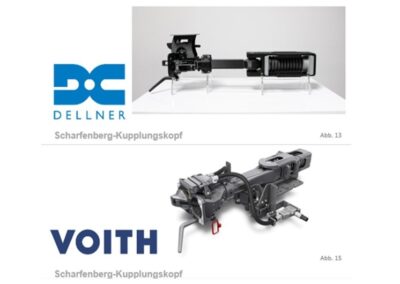
DAC: Uniform coupling head design selected throughout Europe
Scharfenberg design to win the race
On 21 September 2021, the EDDP Supervisory Board made its choice of the future Europe-wide standard designs of the digital automatic coupler (DAC) for European rail freight. With this, the body has taken a big step after an intensive test phase of almost one year. In the coming phases, the definitive design of the selected coupler head will be developed. This will enable interoperability and operational efficiency without licence fees.
What has happened so far
In a detailed test phase, the European consortium Digital Automatic Coupling for Europe (DAC4EU) had four prototypes of the DAC tested according to a clear procedure and catalogue of criteria. Two Scharfenberg designs and one Schwab design from the development laboratories of Dellner Couplers AB, Voith GmbH & Co. KGaA and Wabtec Corporation ended up as prototypes in the EDDP. This is funded by the European funding programme Shift2Rail (S2R). First, the EDDP defined a catalogue of criteria for the selection process. Around 100 EDDP experts from 36 companies with a strong rail connection took part in the evaluation across Europe. In summer 2021, they examined the results from the two test designs DAC4EU and Trafikverket/Swedish Winter Tests for each model. The Scharfenberg design finally emerged as the winner from the test phase.
Next steps
In the next stage, the manufacturers will present solutions that meet further requirements. In addition, they will determine the life cycle costs and show the further procedure on the way to series production. The so-called DAC demonstrator train will be on display in Germany, Austria and Switzerland in the coming months. Here, further operational tests with the new DAC clutch design will take place on site. The results of these will flow into the further development phases.
Improved railway competitiveness
If the DAC is successfully introduced, it will strengthen the competitiveness of European and Swiss rail freight transport. With the help of new technologies, it will increase the efficiency, capacity utilisation and quality of the freight railways. In this way, it favours the modal shift to rail and becomes central to the ambitious climate goals of Europe and Switzerland.
The DAC makes the much-cited digitalisation and automation of the European rail system a reality. In doing so, it is helping to increase the share of rail freight transport within the framework of multimodal systems in Europe. Thanks to its power and data bus line throughout the train, the DAC not only optimises the coupling process, but also other processes of operation and maintenance. In particular, it allows train integrity checks, which are considered a prerequisite for the introduction of the next generation of the European Train Control System (ETCS Level 3).
DAC4EU
Members of the DAC4EU consortium are Deutsche Bahn and its subsidiary DB Cargo, the Swiss and Austrian freight railways SBB Cargo and Rail Cargo Austria as well as the wagon keepers Ermewa, GATX Rail Europe and VTG. The research project is funded by the German Federal Ministry of Transport and Digital Infrastructure (BMVI) with around 13 million euros and has been running since June 2020 until December 2022. The consortium’s goal is for trains to be equipped with DAC throughout Europe by 2030. In this way, the new technology can contribute to rail freight transport in Europe becoming the core of the future mobility system.
S2R JU
The Shift2Rail Joint Undertaking (S2R JU) is the first European rail initiative to promote targeted research, innovation and market-oriented solutions for rail systems of the future in passenger and freight transport. In doing so, it aims to promote smart and sustainable growth and a climate-neutral Europe. In doing so, it targets the life-cycle costs and efficiency of rail systems. Through demonstration activities and the dissemination of relevant results for market deployment, S2R JU aims to promote the competitiveness of the European rail industry while creating a multiplier effect for European Union (EU) financial resources. S2R JU is funded by the EU’s Horizon 2020 programme.
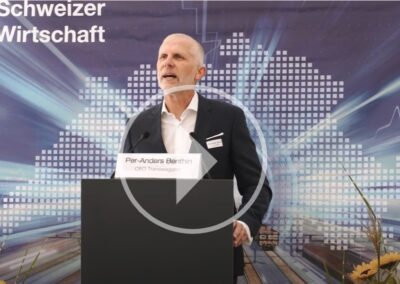
Impressions of the publication of the declaration of intent on automation
Next Stop: Container Terminal Basel Wolf
On 28 September 2021, the signatories publicly presented the declaration of intent for the automation of Swiss rail freight transport. The occasion was a stop of the “Connecting Europe Express” – a special train of the EU for the “Year of Rail” – at the container terminal Basel Wolf. This special train convinces the transit countries in Europe of the feasibility of automatic coupling.
Click here for the video with the complete interviews.
Joining forces for the future
Together with the Federal Office of Transport (FOT) and the Association of Public Transport (VöV), we at the VAP have signed a declaration of intent for the automation of Swiss rail freight transport. The long-term major project started on 1 October 2021 with the preparation and implementation of the migration of the screw coupler to the digital automatic coupler (DAC). Background information on the declaration of intent can be found here.
Revolutionary technology
At the event at the Basel Wolf container terminal, BAV Director Peter Füglistaler, VAP/UIP Board Member Per-Anders Benthin (CEO TRANSWAGGON AG), Désirée Baer (CEO SBB Cargo AG) and Dirk Stahl (CEO BLS Cargo AG) from VöV presented the declaration of intent to their guests and the media. They emphasised that the DAC will revolutionise rail freight transport. Especially for the actors in the logistics chain, it provides indispensable real-time data for a high-quality and thus competitive performance. Finally, the hosts demonstrated the simple coupling process to the interested audience.

Notable facts from the autumn session 2021
Dispatch 20.081 on the Federal Law on the Underground Transportation of Goods
With the adoption of the federal bill, the legal basis for the Cargo Sous Terrain (CST) logistics project has been created. A final difference over expropriation must be settled in the coming winter session. From 2031, the first CST goods are to be transported through the underground tunnel. However, this will hardly relieve freight traffic above ground, as freight transport is continuously increasing. We therefore continue to adhere to our goals of making rail freight transport more efficient for the future. Our commitment to the «automation of rail freight transport» is an important starting signal for this.
Postulate 21.3597 «The Future of Freight Transport»
By accepting the postulate, the Federal Council undertakes to submit a report on the future direction of rail freight transport policy by the end of the first quarter of 2022. In doing so, it must examine aspects of domestic and import/export traffic in depth and answer these questions, among others:
- How should the impact and achievement of objectives of a market-oriented and self-supported offer by SBB Cargo AG be assessed with regard to organisational structure, modal shift effects, transport performance, infrastructures, service points, needs of the loading industry and staffing levels, climate-friendly and resource-saving orientation of the supply chains?
- What are the effects and prospects of the strategic realignment of SBB Cargo AG?
- What are the political scenarios for the further development of rail freight and, if applicable, the need for legislative action?
- What framework conditions for the use of rail infrastructure (track access charges) and the financing of the necessary investments are necessary so that the service can be operated in a way that covers the area and costs as far as possible?
- What investments in new rolling stock, automation and digitalisation are necessary and how can these be financed?
Thinking in terms of opportunities
We at the VAP see a great need for action in the legal framework, the infrastructure and the logistics platforms. The market should focus on evaluating opportunities and chances. We focus on multimodal transport concepts that make use of the strengths of the respective transport modes. Wagonload transport is part of this multimodality. As a classic network transport, it requires new cooperation between all actors in order to increase efficiency and effectiveness. For this purpose, we have founded the IG Wagenladungsverkehr together with other stakeholders.