
The VAP promotes freight transport by rail.
The VAP Association of Shippers campaigns for market-oriented framework conditions and an attractive Swiss rail freight system. Relevant topics:
Freight industry
- How do we shape the future of freight transport?
- What moves the freight industry?
- An overview of the players in rail freight transport.
Network
Here you will find useful information on railroads, their organization and network access.
Financing
Information on financial support and charges in freight transport.
Sites
Everything about free loading, terminals, sidings or even multimodal logistics hubs.
Interoperability
The VAP is committed to harmonizing the framework conditions so that trains can run effortlessly on European rail networks.
Sustainability
For a far-sighted future, various areas need to be designed sustainably.
Innovation
How can we drive innovation in freight transport?
Operations
In favor of fair competition, we want to utilize the strength of all modes of transport and combine them optimally. Because this makes the route shorter – and more economical – for everyone.
Events
Here you will find further information and documents on our events Forum Freight Transport, our General Assembly and others.
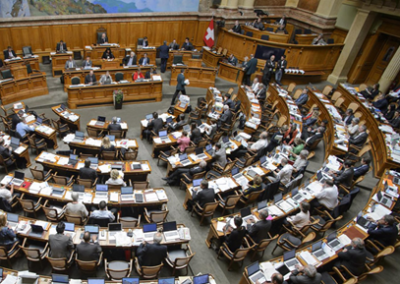
Agenda for the spring session 2023
In the spring session from 27 February to 17 March 2023, some industry-relevant agenda items were on the agenda. Here is a brief overview with our critical appraisal.
This is what it’s all about:
- More funding for the rolling highway (Rola).
- Completion of the Swiss transport hub
- Development of the railway infrastructure fund
Accompanied combined transport (Rolling Road, Rola)
On 8 March 2023, the National Council treated the Federal Council Dispatch of 30 September 2022 on the amendment of the Freight Traffic Transfer Act and on a federal decree on a payment framework for the promotion of accompanied combined transport (Federal Council business 22.064). Our assessment: There is a lack of technology-neutral promotion of transport, especially also in selected regions with volume potential. Quality control should also be extended to conventional transport. We would have considered the extension of the ROLA until 2026 as proposed by the Federal Council to be expedient. In the spring session, the National Council voted in favour of continuing the ROLA until 2028. The upper chamber approved 106 million Swiss francs for the years 2024 to 2028. The proposal now goes to the Council of States.
«Swiss transport hub»
On 9 March 2023, the Federal Council dealt in the second instance with motion 22.4258 «Perspective Rail 2050: A focus also on the realisation and completion of the Swiss transport hub». From the point of view of freight transport, this motion is one-sided and does not lead to the desired results, as a mixed use of passenger transport with high-speed trains and freight transport does not work due to excessive speed differences on the Swiss infrastructure. There is a risk of a deterioration in the quality of freight transport, which fundamentally contradicts Switzerland’s environmental, energy and supply goals. The VAP, however, supports Rail 2050 in principle. The Council of States has accepted the proposal. The prioritisation of the long-distance network was a matter for discussion; transport with short and medium distances should also be taken into account accordingly. Transport Minister Albert Rösti stated that the differences between Parliament and the Federal Council were not great and promised that the Federal Council would present the message on the «Rail Perspective 2050» strategy at the end of the summer and take the motion into account.
Rail infrastructure fund
Matthias Michel, member of the Council of States, has submitted the interpellation 22.4367 «Development of the railway infrastructure fund». This was discussed in the Council of States on 9 March 2023. We are of the opinion that the rail infrastructure fund is healthy and currently see no need for action for the VAP. The liquidity of the fund is less critical than the readiness for execution of the projects and the construction or maintenance under ongoing operations. Federal Councillor Albert Rösti also confirms that, according to current forecasts, the fund will be able to finance operations, substance maintenance and the decided expansions until the end of 2030.
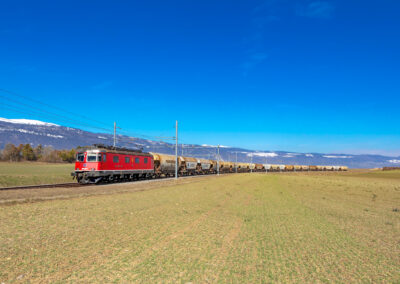
No stabilisation of SBB despite CHF 3 billion in additional federal funding
With motion 22.3008, Parliament wants to amend the Federal Act on Swiss Federal Railways (SBBG) and grant SBB financial aid of CHF 1.2 billion to compensate for pandemic-related revenue shortfalls in long-distance transport and to relieve the financial burden on long-distance transport with a reduction in train path prices of CHF 1.7 billion. Here is a first critical look.
This is what it’s all about:
- VAP rejects capital subsidy of a total of 3 billion francs to SBB – entrepreneurial responsibility is needed
- Maintaining the SBB monopoly in long-distance traffic is problematic from a European policy point of view – an orderly migration strategy is needed to open up the market.
- The amendment of the law should demand more entrepreneurial responsibility and provide for monitoring of SBB in long-distance traffic.
- LSVA must not be misused for reserves in the BIF
Motion 22.3008 “Support for the implementation of SBB investments and a long-term vision in Covid 19 times” calls for a draft law according to which SBB’s deficits caused by the Covid 19 pandemic would be considered extraordinary and SBB would be granted corresponding financial aid. This should enable the investments to be carried out as planned in accordance with the decisions of the Federal Assembly.
Initial situation
The politically approved extensions to the railway infrastructure will lead to an expansion of services. This requires investments in rolling stock. The expansion of services – at least in the initial phase – is recording deficits in long-distance and regional transport; the latter is financed by the corresponding credit decisions in regional passenger transport (RPV) by the federal government and the cantons.
During the pandemic, long-distance transport suffered large deficits which, unlike RPV, were not financed. Instead, the Federal Council took the view that it was in the entrepreneurial risk area of profitable long-distance transport to bear the consequences of the pandemic.
Investments by the SBB in investment properties near stations require large sums of money, but overall they increase the attractiveness of the rail passenger service. This ignores the fact that rail freight traffic suffers at locations in conurbation centres; where investment properties are built, logistics locations disappear (Zurich Justice Centre, Europa-Allee Zurich, etc.). SBB Real Estate benefited from a generous opening balance sheet and generates substantial profits. These are used for the pension fund (PF), which regularly attracts media attention with the highest conversion rates.
Proposal of the Federal Council
The Federal Council proposes a one-off capital contribution of CHF 1.25 billion (losses in long-distance traffic from 2020 to 2022). This means that SBB does not have to make any entrepreneurial contribution, just as it does in the RPV.
The Federal Council also proposes the waiver of contribution margins in the years 2023 to 2029 amounting to 1.7 billion francs in order to raise profitability in long-distance traffic to an appropriate level (4 to 8% return on sales). These must be compensated for as missing revenues in infrastructure by additional operating contributions to SBB Infrastructure from the Rail Infrastructure Fund (BIF). According to the Federal Council, the liquidity in the BIF is sufficient for this.
Furthermore, the financing instruments are to be corrected. The previous granting of vault loans, which led to SBB’s indebtedness outside the debt brake, is to be replaced in future by loans via the federal budget. This means that parliament will now decide on loans, and at the same time the debt brake will apply. The change is to take effect from a debt level to be defined, as of the end of 2023: CHF 11.7 billion. Expansion steps that lead to unprofitable service expansions will therefore be subject to the debt brake. After the capital injection of CHF 1.25 billion, vault loans can continue to be granted until the threshold of CHF 11.7 billion is exceeded again.
The liquidity of the BIF is to be additionally ensured. To this end, the Federal Council proposes that two-thirds of the HVF be placed in the BIF. The federal share of the HVF should only be used to offset the uncovered costs from road transport once a reserve of CHF 300 million has been shown.
Our assessment
We reject a capital subsidy, as this would mean that SBB would not have to make any entrepreneurial contribution to the consequences of the pandemic in its own economic and monopolised long-distance traffic. At the very least, monitoring of SBB’s entrepreneurial activities in long-distance traffic should be introduced to accompany the capital subsidy.
The correction of the financing instruments is necessary. Since the state-owned enterprise has a de facto state guarantee, vault loans should no longer be possible in future. Instead, parliament should decide on loans in compliance with the debt brake and in awareness of this state guarantee. We therefore reject the reservation of the debt ceiling of CHF 11.7 billion with the option of further vault loans. Unless the upper limit is noticeably reduced again.
Ensuring the liquidity of the BIF is unnecessary in view of sufficient reserves. By waiving contribution margins, the Confederation is reducing the entrepreneurial pressure on SBB. At the same time, it maintains SBB’s monopoly in long-distance transport. This is highly problematic in terms of European policy, as the EU has liberalised long-distance transport and expects Switzerland to adopt this liberalisation step. We therefore demand a migration strategy from the Federal Council for the opening of the market in Switzerland and, in parallel, monitoring of the entrepreneurial activities of the SBB in long-distance traffic.
We also reject the misuse of the HVF to ensure the reserve of the BIF. The HVF is intended to compensate for the environmental costs of road transport and to contribute to a more climate-friendly choice of transport mode. As an incentive tax, it is not levied for infrastructure expansion and maintenance.
-and maintenance of infrastructure, from which passenger transport essentially benefits. On the contrary, the HVF should be earmarked for rail freight transport and for measures for the climate-friendly development of road transport.
Alternatives such as adjustments to the offer, foregoing investments or selling assets are mentioned in the consultation documents but rejected. We do not agree with this assessment. Non-operational assets such as Gateway Basel Nord and other combined transport transhipment companies, all of which must be available on a non-discriminatory basis in accordance with Art. 8 GüTG, could be sold. Sales of SBB’s other real estate portfolio would also be possible without operational restrictions. Reductions in services in the off-peak hours would also contribute to easing the construction site situation at night.
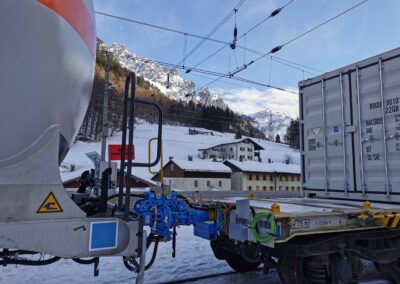
Innovation in rail transport: DAC as a pioneer
In step with Europe and with substantial à fonds perdu financing, the migration to DAK will succeed. We at the VAP are joining forces with the BAV, VöV, partner companies and coordinated with European institutions to develop the project for the digitalisation and automation of Swiss rail freight transport. In this blog article we present a current overview.
This is what it’s all about:
- Why DAC migration is so important for Swiss rail freight.
- What realistic and fair financing must look like.
- How a smooth, cross-border migration of DAC can be achieved.
In Switzerland, the political discussion on the future of rail freight transport has been initiated. Until mid-February 2023, the federal government will consult on the question: how much freight transport by rail do we want in the future? A key element of this is the comprehensive modernisation of rail freight transport by means of a modern digital automatic coupling (DAC) – this is intended to comprehensively renew previous labour-intensive and time-consuming work processes in rail freight transport. Thanks to digitalisation and automation, rail freight transport should then become more efficient, more powerful and thus more competitive, and in future play a leading role in multimodal logistics. The innovation of rail freight transport is a European matter, as Switzerland is part of the interoperable European railway network. Transports should also continue to take place across borders without obstacles. This is why Swiss companies are actively involved in the EU’s Europe’s Rail innovation programme.
We would like to take this opportunity to give you an interim update on our current work and challenges.
General
The VAP is committed to very close coordination with the European project – European DAC Delivery Program (EDDP) of Europe’s Rail. Why?
European freight transport urgently needs comprehensive innovation to be able to survive in the highly competitive transport sector in the future or to be part of a modern supply chain – the DAC is the key project for this.
Most wagon fleets are used or rented out internationally and accordingly the migration must be coordinated across borders.
The technical specifications, which are defined at EU level, apply to all countries and must also be applied in Switzerland.
A common purchasing policy for the new couplings helps to reduce the unit price and one can fall back on uniform requirements.
The challenges – with a few exceptions – are identical in many countries. Regarding the migration timeline, there are major differences.
International coordination means optimal use / deployment of limited resources and experts.
In Switzerland, we are currently focusing on important preliminary work for the concretisation of the overall migration and also on the contents for the message, which will be the basis for the implementation of the migration.
Financing
VöV, VAP and SBB, as important representatives of the railway industry, agree that such a large investment for the DAC migration must be supported with appropriate financing tools and mechanisms.
There is agreement that a predominant “à fonds perdu” participation of the federal government and supplementary interest-free loans are necessary. Furthermore, the VAP in particular repeatedly pointed out the need for a clean cost-benefit balance. It ultimately found its way into the agreements on the DAC with the BAV. As is well known, the investments in the DAC migration are mainly incurred by the vehicle owners, while the benefits will only materialise much later after full implementation. On the one hand, it is therefore necessary to regulate the longer phase of pre-financing until the benefits begin to accrue. Above all, however, the benefits will be felt first and foremost by the railway undertakings (RUs) and the infrastructure managers (IMs). They will benefit from more efficient processes, whereas vehicle owners will see little benefit. The investment must be borne jointly by the actors in accordance with the potential benefits. In view of the market conditions, it will only be possible to a limited extent to generate this process through higher rental income. The financing concerns a time span of at least 15 years. Consequently, we suggested that the draft law should define appropriate mechanisms for joint financing according to the actual benefits that accrue, in a binding and fair manner for all parties involved, on the basis of “cost-benefit analyses”.
To this end, the VAP – together with the umbrella organisation of the UIP – will contribute data and facts on investment and cost/benefit planning and actively participate.
The concrete financing modalities within the EU are still open at present; solutions still have to be found in particular regarding the participation of the EU and the member states.
Engineering
For a successful and efficient implementation of the DAC migration, competent engineering is required, which defines the conversion measures for the specific fleet, provides the technical specifications for the orders and the conversion work, and defines the verification for quality assurance. In the coming months, the European EDDP programme will work together to develop the necessary foundations. On this basis, the prerequisites for the national DAC migration must be worked out.
Migration
Each country must carry out extensive preparatory work so that the information and basics are available at time X of effective implementation. Accordingly, the project deals with the following questions, among others:
Determination of workshop capacities
- Necessary “pop-up” workshops
- Necessary resources
Owner-specific planning of the conversion
- Vehicle type and fleet sizes
- Critical elements and possible solutions in cooperation with EDDP
- Owner-specific scheduling
Data and information pool
- Updating the vehicle register as a basis for funding
- Timely provision of information to individual actors / stakeholder groups
Material pool
- Procurement of components for DAC migration
- Planning of material quantities and delivery dates
- Coordination of material flows to the conversion workshops
- Ensuring support in operation (repair material)
Currently we see a focus on the locomotives to be converted, as these are primarily on national routes in the WLV and must be equipped with DAC trains at the start of operation.
In Switzerland, as is already the case with SBB-Cargo, further “pilot transports” will be planned as early as possible in order to be able to introduce the resulting findings and results at EU level and to be able to advance the project as a whole.
Organisation
On the one hand, the VAP has increased the resources in the General Secretariat, on the other hand it is represented with its members in various national and international meetings and working groups.
For the future or the effective implementation we see some challenges in the design and staffing of the overall organisation – be it in the international context (where is which aspect coordinated or also monitored) as well as in the cross-sectoral organisation of Swiss DAC migration.
Did you know that…
- …without DAC, no freight train – WLV, block train or Rola – will be able to run on fully equipped ETCS Level 3 (European Train Control System) lines in future, as the technical requirements, especially train integrity, are not met. The infrastructure upgrade to ETCS Level 3 will mainly take place on busy main lines and will enable an increase in capacity with the dynamic block. Allowing trains to continue to run without train integrity on sections of line operated in this way will involve a great deal of effort.
- …the DAC will be an important component for digital data exchange and sustainable logistics, in the sense of customers and the climate, can only be realised with the participation of all players. This is the reason why the VAP is in any case committed to the realisation of a data platform based on “MODIG”. With DAC we achieve an increase in efficiency of the entire “supply chain”.
- …DAC will allow the traditional WLV to be run more efficiently and will help to make it self-sustaining at the latest after the migration has been completed.
→ To learn more about the DAC programme, click on: https://rail-research.europa.eu/european-dac-delivery-programme/
Subsidising wagonload traffic: preventing distortion of competition and discrimination
We comment on the Federal Council’s consultation draft “Further development of the framework conditions for Swiss freight transport”. We critically assess the proposals from the point of view of freight rail customers and demonstrate the necessity of a legal independence of system transport.
Yes and but to variant 1
With variant 1, the Federal Council wants to digitalise rail freight transport with automatic digital coupling (DAK). In this way, it positions rail as part of multimodal logistics. Accompanying this, it provides for spatial planning measures, investment aid and transhipment and loading incentives that cushion the additional costs of the system break between rail and other modes of transport. Until automation is implemented, the Federal Council wants to compensate for the uncovered costs of system traffic. We welcome the thrust of variant 1 in essence, but have reservations and note a fundamental need for adjustment.
Making the subsidised first/last mile independent
We want to and must make system transport more sustainable. This requires a redesign of all processes, incentive instruments, market mechanisms and interfaces within multimodal freight logistics. The goal must be a self-sufficient and market-based system that does not discriminate against any freight railways and is reliably available to shippers.[1] Until this new concept is implemented, we agree to temporary financial aid for SBB Cargo’s network traffic. This financial aid is based on performance-related, competition-neutral and non-discriminatory incentives – and on making the first/last mile independent in a legally independent SBB company. This is the only way to guarantee Switzerland’s security of supply and the future viability of the railways.
Preventing distortion of competition and discrimination
By transferring responsibility for system traffic to SBB Cargo, the Federal Council is monopolising around 70% of the freight transport volume. At the same time, SBB Cargo is also the main provider of block train and combined transport services. This combination of interests can lead to discrimination against system and block train customers on the one hand, but also to distortions of competition vis-à-vis other providers of block train and combined transport services on the other – irrespective of the compensation paid to system transport. This consists of the nationwide service of transhipment and loading facilities and should therefore be legally independent. Since the corresponding services and resources are already combined in an independent organisational unit today, the transformation effort would remain low. However, the Federal Council would have to specify Art. 9a para. 7 of the Freight Transport Act (GüTG).
Consistently supervise new system operator
During the limited phase of public compensation, but also afterwards, the system operator should be consistently monitored in terms of performance, quality, productivity and costs. Care must be taken to ensure that the financial aid is quickly reduced and that SBB Cargo’s business model is modernised. This prevents disadvantages and ensures smooth, nationwide system traffic in the long term. Targeted monitoring of the development of volumes and customer structure should guarantee the latter in particular in the long term. Such monitoring requires an amendment to Art. 9a GüTG.
Additional background information and opinions can be found in our response to the consultation on the «Weiterentwicklung der Rahmenbedingungen für den Schweizer Gütertransport».
[1] Cf. video “Rail freight transport of the future”: www.cargorail.ch/#video
«An excellent neutral negotiation partner»
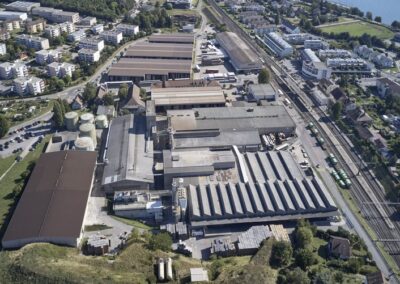
The Vetropack Group is a listed and family-run glass packaging manufacturer in Switzerland. We at the VAP accompanied Vetropack during the negotiations on the new siding contract and the renewal of the sidings. We talk about this cooperation and the future of rail freight transport with Philippe Clerc, Head of the Vetropack site in St-Prex.
Mr Clerc, how did the collaboration between Vetropack and VAP come about?
Philippe Clerc: First we carried out an operational analysis to prove that Vetropack had been allocated too many tracks. VAP’s expertise and negotiating skills meant that we were able to make significant savings on the siding contract and renewal.
How important are the sidings for Vetropack?
The conditions of our market are becoming increasingly difficult. If we want to remain a leader here, we have to become more agile and faster. The VAP has helped us to improve the overall management of the railway infrastructure and the production processes. This helps us to increase our competitiveness and Switzerland’s security of supply. Vetropack’s strategy is based on the development of a green factory. Here we want to make the best possible use of sustainable energy in order to significantly reduce our CO2 emissions. Rail as a mode of transport is an essential part of this strategy. Our customers appreciate the fact that we are increasingly using rail. They approve of our method of transport in the area of glass recycling.
How did the VAP support you?
The VAP actively supported us in negotiating the siding dossier with SBB Infrastructure. Thanks to its excellent legal expertise, we were able to negotiate a good contract. This enables us to continue our environmental strategy by expanding rail transport.
How did you experience the cooperation with the VAP?
The VAP represents the interests of the owners of railway sidings. Thanks to its neutrality, it can effectively support its members. It has helped us to find an optimal solution so that we can continue to use our railway tracks.
Did you have any previous contact with the VAP?
We have been members of the VAP for several years and appreciate the work of the association.
What strengths do you see in the VAP?
The association is innovative in the development of new systems or infrastructures and adheres to the guidelines of the Federal Office of Transport FOT. It is committed on behalf of the owners of systems or wagons both to the expansion of the rail network and to the improvement of transport services by the freight railways. Thanks to the extensive legal expertise of the VAP, we were able to conclude an ideal follow-up agreement for our company and the continuation of our activities on the railways. As a result, we were able to optimise rail production at our site in St-Prex and minimise operating costs. I consider the VAP to be an excellent neutral negotiating partner.
What did you appreciate most during the cooperation?
The professional approach, the competences in the railway and legal field, the knowledge in the operational field as well as the relations with politics. All this contributed to a quick and optimal solution.
What else would you like to see from the VAP?
That it should be even more committed to the development of single wagonload traffic. The delivery windows, for example, are far too narrow. The capacities for freight transport on the rail network must be increased overall.
Who would you recommend to work with the VAP?
Any company that wants to build a rail facility in its operations centre. The VAP can be useful to all companies that have a railway infrastructure but do not have the necessary knowledge to negotiate and conclude contracts in this area.
Where do you see the most urgent need for action in rail transport?
As mentioned, we need an opening of the time windows for freight wagons. The number of goods trains must increase, for example through a clockface timetable. Rail freight transport should eventually come up to the level of passenger transport. In addition, we must ensure our connection to Europe. We must not be isolated from Europe.
What are the advantages of rail freight transport?
It is considered the safest mode of transport, which is why it is preferred throughout Europe. Rail is the best alternative to road, just look at the CO2 footprint. Large quantities can be transported by rail with just one train. And even at night or in the early morning.
What do you wish for the future of rail freight transport in Switzerland?
That the rail freight network can be maintained and expanded. Only in this way can we increase the environmental compatibility of freight transport. It would also be desirable to push ahead with innovations. This will enable us to remain competitive in the future, as innovations can reduce costs for operation, shunting, administrative tasks and other things. Overall, it is important to improve the operation of single wagons and thus the competitiveness of the rail network. We have to prepare rail freight for the future so that we are not overrun by trucks one day.
Good to know: The VAP advises and accompaniesVAP members benefit from our in-depth expertise in all areas of freight transport at national and international level as well as from our networking with business and politics. In the years 2020 to 2022, we supported our members with the following services:
|
Switzerland risks isolation in international rail traffic
From 2024, Switzerland will lose access to the EU platform for harmonised approval procedures for new rolling stock. This is tantamount to a further step towards isolation in international rail transport. Unless European-Helvetic relations normalise.
This is what it’s all about:
- Access to “One Stop Shop” will only be extended until the end of 2023
- From then on, the EU will treat Switzerland as a third country.
- This jeopardises modal shift, digitalisation and automation
The decision of the joint committee on the land transport agreement with the EU on the fourth railway package has so far secured Switzerland access to the “One Stop Shop” (OSS) database of the European Railway Agency (ERA). OSS contains common simplified procedures for vehicle approvals and safety certificates in cross-border rail traffic. According to the FOT (cf. publication in german), this access will only be extended until the end of 2023.
This decision is due to the unresolved issues in the bilateral relationship between Switzerland and the EU. Separate procedures are expected to take effect from 2024. The same applies to the agreements on border operating routes.
It is urgently necessary for Switzerland to clearly declare its support for cooperation with the European states. Otherwise, both the modal shift and the digitalisation and automation of rail freight transport are at risk.
Consultation on surface rail freight transport: two variants, many question marks
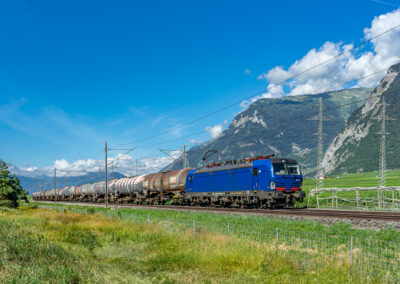
The Federal Council’s report on the «Future orientation of rail freight transport in the area» was sent out for consultation. In it, the economic viability of single wagonload transport is presented as impossible without any evidence. As alternatives, the federal government envisages shifting rail freight transport to the road in the medium term or subsidising it permanently. We think: It’s more complicated than that.
That’s the point:
- Two variants and what they do not take into account
- Fundamental reorganisation of the network necessary
- Outsourcing of the last mile central to more competition
The further development of rail freight transport in the country is currently the subject of heated debate. On 2 November 2022, the Federal Council submitted its dispatch on the «Further development of the framework conditions for Swiss freight transport» for consultation. The report suggests that there will be no more single wagonload transport without financial support; block trains will not be subsidised anyway. The Federal Council proposes two options:
- The single wagonload transport in the area is further developed and modernised through digitalisation, automation and the creation of a data exchange platform. Locations that are necessary for successful area service will be better integrated into the spatial planning of the cantons and the federal government. Until the modernisation measures take effect, the single wagonload transportwill be financially supported by ordering the service in the form of investment and operating contributions.
- The single wagonload transport in the area will be discontinued. The rail system will be reduced to block trains, resulting in a massive downsizing of SBB Cargo.
Both variants are supported by the migration to digital automatic coupling (DAK), the promotion of multimodality and Rhine navigation, and the financing of climate-neutral drives on rail and Rhine.
Fundamental reorganisation instead of rhetoric
The single wagonload transport in the area comprises a good 70% of the traffic volume in inland transport by rail. The Federal Council’s question as to whether it should be preserved is therefore rather rhetorical. However, his conclusion that it can be successfully operated by SBB Cargo after modernisation with the help of DAK is not a realistic option either. Rather, the rail freight transport in the area must be fundamentally restructured and opened up to other market players. In this respect, the Federal Council’s report falls far short of the expectations of customers and its own announcements.
Digitalisation and automation will make rail freight transport more efficient and, above all, more interesting for the logistics industry: For the first time, rail freight transport can be integrated online into the logistics chains of the economy and into the train protection of the infrastructure managers. The DAK in conjunction with the state data exchange platform in accordance with the Federal Mobility Data Infrastructure Act (MODIG) is thus THE central lever for the competitiveness of the rail freight transportand success factor number one of this legislative proposal.
However, the single wagonload transport, which has been a monopoly of the SBB since the railway reform in 1999, must be fundamentally restructured. The roles and processes must be completely rethought. This internal renewal requires the involvement of other market players in order to design a service with lower fixed costs and correspondingly higher flexibility. In this respect, the Federal Council falls behind its report of 30 March 2022. While in its diagram there it showed a new interplay of the various players in the rail freight transport system (p. 50/75), in the draft message it merely proposes a continuation of the currently not very successful model of «all services from a single source» of SBB Cargo. Once again, the question of the future viability of a broad range of services in the single wagonload transport in Switzerland is equated with the further development of the state-owned company SBB Cargo.
In fact, customers want a variant 1+. In addition to the digitalisation of rail freight transport and promotional measures for more multimodality, this also includes the reorganisation of single wagonload transport. This includes the neutralisation and financial support of short-distance delivery (last mile), the creation of a neutral digital booking and data exchange platform and the possibility of integrating private wagonload services.
Industry united for big changes
The IG Wagonload Transport interest group calls for an efficient network offer (hub and spoke) with more competition and less discrimination. The Federal Council should take up our common vision of rail freight transport – which, by the way, was supported by the Federal Office of Transport FOT – in the definitive Federal Council message (cf. VAP blog post «Critical view of the federal government’s long-term perspective»). The same applies to the consolidated position of the freight railway managers of the VöV on how the rail freight transport can be operated successfully in the long term in the area (cf. blogpost «Industry develops joint solution»).
The Federal Council expects a common stance from the freight transport industry. It should take a more differentiated look at their joint assessment and the numerous nuances of the rail freight transport in the area when shaping its future and take greater account of them.
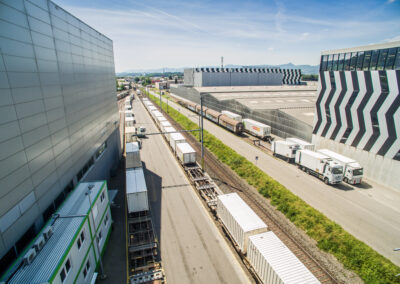
Outsourcing the last mile and making it non-discriminatory
That’s the point:
- Why free access to the last mile is important
- Preventing discrimination instead of fighting it
- Redistributing and refocusing forces
Importance of the last mile
Serving the last mile (local delivery) is solely in the hands of a local or regional provider. Accordingly, non-discriminatory access to the last mile determines whether an offer is competitive in the main run or not. Whoever provides services in local delivery by rail is obliged to do so in a non-discriminatory manner. This is the intention of Article 6a of the Freight Transport Ordinance (see box).
Article 6a of the Freight Transport Ordinance (GüTV)All companies that provide (partial) services over the last mile must provide their local delivery services by rail in a non-discriminatory manner. This means that they must also provide their services for third parties, provided that capacities are available for this. In addition to the freight railways, this obligation concerns siding operators with their own rolling stock and personnel, specialised personnel leasing companies and shunting service providers. Shunting and other services related to short-distance delivery, such as technical inspections or brake tests, are considered last-mile services.> Further information from RailCom in German or French |
Preventing discrimination instead of fighting it
Art. 6a GüTV relies on regulations, market controls and legal remedies. However, it would make more sense to prevent discrimination by having a single provider ensure the service of the first/last mile. Ideally, this would be the infrastructure manager who does not otherwise provide transport services. In a market environment, rail freight access to sidings, local and central marshalling yards, free loading facilities or terminals is regulated in a non-discriminatory manner. The allocation of train paths and the operation of system-relevant infrastructures are the responsibility of independent institutions. System leadership by a single large operator – as is currently the case with SBB Cargo – does not exist. The boundaries between single wagonloads and block trains are abolished, and the last mile is managed by an infrastructure manager.Reorganisation of forces
In order to achieve the ideal state described above, roles have to be redistributed and forces have to be bundled. Such a reorganisation will only succeed if the following framework conditions are created:- SBB Cargo retains its role as network provider for the time being. It is responsible for the planning of network traffic and ensures the efficient bundling of traffic with individual wagons or wagon groups. In providing the services, it limits itself to the main transport runs between formation and marshalling yards, insofar as it does not procure these from third parties.
- The entire railway infrastructure such as the network, combined transport terminals and local marshalling yards are freely accessible to freight railways.
- The service of the first/last mile is a non-discriminatory service of the infrastructure managers for all freight railways. The system-relevant resources of SBB Cargo, such as traction units, shunting teams, shunting tracks/stations, shunting services or internal operational changes, are available to these.
- This creates competition with equal players and transparent costs. You can read more about this in our publication «From integrated to market-based railways» (in german).

Power shortage (Part 4): Emergency measures are concretised
Energy security is and remains one of our top issues. The Federal Council is currently concretising the management measures in the event of an electricity shortage in the form of prepared ordinances. Special provisions are envisaged for licensed public transport companies, including rail freight transport. The FOT is preparing a draft ordinance for public transport together with the working group of industry associations, while the VAP represents the interests of freight transport.
This is what it’s all about:
- Federal Council has plan of measures for security of electricity supply drawn up
- Gradual quota system to prevent critical grid shutdowns
- Next step: preparation of specific draft ordinances
- Traction current will become more expensive next year
At its meeting on 23 November 2022, the Federal Council discussed the management measures to be taken in the event of an electricity shortage. For the draft ordinances with graduated
measures until 12 December 2022. The system leader rail commented on behalf of the industry.
Avoiding the worst with each level of measures
With the measures adopted so far, the Federal Council is strengthening the security of electricity supply: maintaining hydropower reserves, providing thermal reserve power plants, increasing the transmission capacity of the electricity grids. In addition, it wants to prepare graduated measures to reduce electricity consumption. Calls for economical electricity consumption and the energy-saving alliance of the business community are intended to raise awareness among companies across the board.
Should a critical power supply bottleneck occur during the winter period, the Federal Council will regulate the power supply with temporary measures. In the event of a crisis, it would issue targeted consumption restrictions with the help of decrees. This is intended to ensure grid stability and thus the supply of electricity. The aim of each stage is to avoid even more drastic measures.
Quota system to prevent grid shutdowns
The Federal Council sees the quota system as a key measure to prevent critical grid shutdowns. In order to ensure its effectiveness, it does not want to exempt any electricity purchasers.
However, it envisages special provisions for licensed public transport companies. Public transport as a core service should be guaranteed for as long as possible. In order to ensure its functioning even in the event of power shortages, measures are to be implemented according to the «public transport management model».
Management measures for public transport
In a working group of VöV, SBB, BAV and VAP, we have worked out the graduated measures for passenger and freight transport in the last few months. In the case of a power quota, freight logistics should basically be maintained and scaled as quickly as possible according to the development of demand. The industry must prepare to react quickly. For it is impossible to predict today in which areas decreases or increases in demand will occur. Based on the “public transport management model”, our working group will develop a corresponding draft ordinance of graduated management measures for public transport. We at the VAP support the approach that has been developed, especially the special measures for public transport.
Traction current will become more expensive
The fact that traction current is not excluded from sudden turbulences is shown by the latest announcement of the SBB. Here, the energy division announces a serious deficit of CHF 180 million for 2022. According to SBB, as a result of the persistent drought in the summer, 90% of the railway’s electricity could not be generated from its own hydroelectric power plants as usual. SBB had to buy expensive electricity on the market at short notice.
After negotiations with the BAV, the SBB will raise the electricity price for 2023 by 3 centimes to 13.5 centimes per kilowatt hour. The BAV wants to pass on the higher electricity costs in the train path price to the various transport sectors on a differentiated basis. In long-distance traffic the full amount of 3 centimes will be passed on, in regional and freight traffic only a part with 1 centime. The fact that SBB’s application for full deficit coverage with a surcharge of 10 centimes was not approved by the FOT may be good news for the railway companies for the time being. But the uncertainty of further surcharges remains, and this will also have an influence on future offer calculations.
Transparency needed
We believe that the provision of electrical energy at a predictable cost rate is central to the future design of offers. The recent price turbulences already seem very adventurous; even more so when one looks back at the many years with a positive balance. We expect a transparent review of the recent events.