
The VAP promotes freight transport by rail.
The VAP Association of Shippers campaigns for market-oriented framework conditions and an attractive Swiss rail freight system. Relevant topics:
Freight industry
- How do we shape the future of freight transport?
- What moves the freight industry?
- An overview of the players in rail freight transport.
Network
Here you will find useful information on railroads, their organization and network access.
Financing
Information on financial support and charges in freight transport.
Sites
Everything about free loading, terminals, sidings or even multimodal logistics hubs.
Interoperability
The VAP is committed to harmonizing the framework conditions so that trains can run effortlessly on European rail networks.
Sustainability
For a far-sighted future, various areas need to be designed sustainably.
Innovation
How can we drive innovation in freight transport?
Operations
In favor of fair competition, we want to utilize the strength of all modes of transport and combine them optimally. Because this makes the route shorter – and more economical – for everyone.
Events
Here you will find further information and documents on our events Forum Freight Transport, our General Assembly and others.
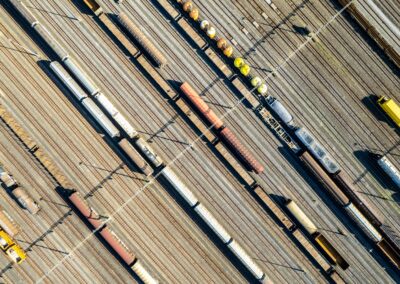
Now or never: groundbreaking debate on Swiss rail freight transport
In the spring, the Council of States’ Committee for Transport and Telecommunications (KVF‑S) took up the total revision of the Goods Transport Act (GüTG) and triggered ground-breaking discussions on Swiss domestic goods transport in Parliament. Together with other stakeholders, we at the VAP will help shape this debate. Our aim is to find a workable compromise and to emphasise the interests of our members.
That’s what it’s all about:
- Good news for parliament
- First proposals from the KVF‑S
- Lively dialogue between the stakeholders concerned
- Challenges for the economy and European logistics as a whole
- Pain threshold reached
- This is the way forward
Good news for parliament
On 9 February 2024, the Swiss Federal Council published its dispatch on the Freight Transport Act (total revision of the Federal Act on the Transport of Goods by Rail and Shipping Companies). In our view, particular attention should be paid to the following financial aspects
- Operating charges: In order to maintain single wagonload transport (EWLV) at the current nationwide level during the conversion phase, the Federal Council plans to subsidise it financially on a degressive basis for a limited period of eight years. At the end of this period, the aim is to achieve self-sufficiency. It is requesting CHF 260 million for the first four years.
More on this in the freight transport factsheet. - Incentives for shippers: The plan is to introduce unlimited transhipment and loading contributions and to compensate for the uncovered costs of the ordered freight transport services for a total of CHF 60 million per year.
Initial proposals of the KVF‑S
The KVF‑S, as the preliminary advisory committee of the First Council, adopted the total revision of the GüTG this spring after consulting the industry, including the VAP. The discussions in parliament over the coming weeks and months will be groundbreaking for the future of rail freight transport across the country. In its detailed deliberations, the committee examined numerous points. The majority of the committee is of the opinion that the total revision of the GüTG is suitable for ensuring and improving sustainable interaction between the various modes of transport for Swiss transport policy. It suggests making the following changes to the content:
- Explicit strengthening of competition in freight transport
- Clear regulation of RailCom’s responsibility for reviewing and enforcing the non-discriminatory non-discriminatory provision of EWLV services
- Specification of the content of the guidelines for rail freight transport (basis for the service agreement in the EWLV)
- Transfer of authority to extend certain provisions (in particular compensation) from the Federal Council to Parliament
The committee is expected to finalise the detailed discussion with additional information from the administration at its next meeting. The matter will then go to the plenary session of the Council of States.
Lively dialogue between the stakeholders concerned
Over the past few weeks, we have held discussions – with the support of our members – with the stakeholders of the Wagonload Transport Interest Group (IG WLV), the Federal Office of Transport (FOT) and the SBB Cargo subsidiary of Swiss Federal Railways (SBB). Alexander Muhm, CEO of SBB Cargo, presented the rough concept for a transformation towards self-sufficiency to the VAP’s Executive Committee. Muhm’s presentation triggered an intensive discussion between the parties involved and further talks on the possibilities and risks.
Challenges for the economy and European logistics as a whole
A look at the statistics shows that the transfer figures in Switzerland and Europe are stagnating or even shrinking slightly. There are many reasons for this. In Germany, there is great uncertainty about potential investment programmes and the timing of a noticeable economic upturn. Italy and France are struggling with modest growth figures and high levels of debt. This, combined with consumer sentiment, is having a direct impact on companies and their financial situation.
In logistics, in addition to the closure of the Suez Canal or natural disasters, there are other enormous challenges such as major construction sites (e.g. on the German rail network) and corresponding diversion traffic or higher track prices. All of this is fuelling operating costs and putting pressure on the competitiveness of the railways. The state of overall European logistics is important insofar as the majority of goods used in Switzerland originate from abroad and influence the EWLV in and through Switzerland.
Pain threshold reached
Since our foundation, we have been committed to attractive, competitive and customer-oriented rail freight transport and thus to the best possible modal shift to rail. We are committed to this goal either as a partner to numerous freight transport stakeholders or with our own ideas and projects. In transport policy, we advocate sufficient capacity on all infrastructures, favourable logistics locations and sensible framework conditions.
In view of global competition and the current framework conditions for the Swiss economy, the shipping industry as our membership does not have to or cannot afford massively higher costs on the railway. Our members can no longer cushion the impact of mistakes such as the lack of (investment) strategy in the area of rolling stock over the last 20 years, the ongoing dismantling of infrastructure facilities (dismantling of tracks, construction of investment properties) or insufficient integration into overall concepts from the perspective of users and customers. The consequences of such mistakes, such as massive price increases (beyond inflation), are fatal for the economy and society. The competitiveness of rail compared to road is dwindling and the optimisation of the modal split is being thrown into disarray. In addition, increasing cost sharing for the operational use of service points can send the wrong signals.
For our members, the pain threshold has long since been reached. We are prepared to provide significant support for the further development and transformation of rail freight transport. Provided that those responsible ensure complete transparency regarding costs and their breakdown and take measures within a fair, compatible and harmonised framework.
The way forward
We are taking the findings from the numerous discussions with the KVF‑S and other stakeholders as an opportunity to initiate numerous activities within our membership and organise further coordination meetings. Anyone who would like to talk to us about logistics as the backbone of the Swiss economy is cordially invited to join the dialogue.
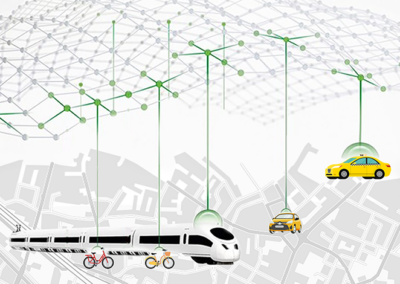
Data ecosystems: Industry round table with Federal Councillor Rösti
On 24 June 2024, Federal Councillor Albert Rösti brought together representatives from the public sector and the logistics industry at a round table to discuss the importance of a national data infrastructure for the exchange of information. We at the VAP have been driving the networking of data within our industry for some time now. We will continue to play this pioneering role in the future.
That’s what it’s all about:
- What has happened so far
- Kick-off for a broad-based dialogue
- Putting customer benefits at the centre
- In small but sustainable steps
- Laying the foundations for sustainable rail freight transport
What has happened so far
The topic of data ecosystems has been on our transport policy agenda for some time. For years, we have been campaigning for the establishment of a meaningful platform and for the networking of relevant data within the entire logistics chain and its stakeholders. We have reported on the benefits of data integration and the latest developments in various blog posts. (see “Data ecosystems: Sharing data to double its added value”, “Ready for the next level of digitalisation” and “Wagonload transport can become competitive”).
The discussions surrounding the Federal Act on the Mobility Data Infrastructure (MODIG) and the National Data Network Infrastructure Mobility (NADIM) initially only involved decision-makers and those affected by passenger transport. Fortunately, those responsible took up the concerns of freight transport and the needs of shippers at our suggestion. This enabled us to support the public administration with arguments and use cases and subsequently involve our industry in the exchange of opinions.
Kick-off for the broad-based dialogue
On 24 June 2024, Federal Councillor Albert Rösti, Head of the Federal Department of the Environment, Transport, Energy and Communications (DETEC), welcomed representatives of the public administration and the logistics industry to the round table. Heads of office and representatives from DETEC, parliament, numerous associations and companies from various areas of rail transport and the entire logistics sector were invited.
Mr Rösti wanted to find out what our industry thinks about a data infrastructure for exchanging information and what role the federal government should play. By inviting us to the discussion, he gave our members and partner associations the opportunity to play a key role in the further development of data networking. Those present agreed that a platform for the exchange of data for a mobility data infrastructure (MODI) is needed in order to simplify multimodal logistics solutions and flexible partnerships in networks such as single wagonload transport. Some expressed constructive criticism, but this did not fundamentally call into question the idea as a whole.
The chair of the meeting presented five use cases from different perspectives for a first phase of the MODI as a basis for discussion. One case presented the possibilities of better capacity utilisation on the railways and transparency of basic information and explained the extent to which these would benefit shippers and how the barriers to entry could be lowered.
Putting customer benefits at the centre
In our view, these considerations also include those aspects that have an impact on the range of freight transport services. Data ecosystems help to align multimodal logistics chains with the needs of customers and create added value for them. This requires innovative approaches at an organisational level and cooperation between market players. This is the only way to make freight transport more sustainable, more competitive and more customer-orientated.
Information on freight transport flows (domestic transport, foreign trade transport, transit) should be available to all parties involved in a timely and comprehensive manner, regardless of the mode of transport. This would enable those responsible at federal, cantonal and municipal level to utilise infrastructure components such as network capacities or transhipment areas more flexibly, coordinate them better, plan them in a more targeted manner and, if necessary, re-dimension them. As much of the necessary data is held by the federal government or is collected on its behalf, we believe that the public administration must play a central role in endeavours such as MODI and NADIM. In addition, with the introduction of the DAK, the associated, newly developed data sources can be meaningfully and additionally transferred to this data infrastructure.
In small but sustainable steps
In the coming weeks, DETEC will prepare a draft for the Federal Council and Parliament and involve the sector once again in order to reflect on the draft. The following elements are important to us for a harmonised further course of action:
- Remain pragmatic in order to provide practice-orientated data at a strategic and operational level with the greatest possible benefit for the stakeholders
- Utilise existing tools from Switzerland and abroad as well as well-prepared data (sources)
- Business and the logistics sector should play a key role in shaping this process; possible tasks for conceptual and operational phases will be discussed in the coming months
We at the VAP will play our part in ensuring that our members benefit from significant added value from the outset and that the needs of our industry are covered. With this ambitious goal in mind, we are already taking the first steps by promptly transferring the internal database of private connectors into a modern and internationally recognised tool and updating its content at the same time. To this end, we are in close contact with our colleagues in Germany and Austria in order to make further progress.
Foundation for sustainable rail freight transport
We are convinced that the public sector and the private sector must work together in equal measure to create a data ecosystem for rail (freight) transport and the entire logistics industry. This will make it possible to plan more effectively and operate more efficiently and to utilise investments in an even more targeted manner. It also forms the foundation for new business models, service improvements and partnerships between providers and customers.
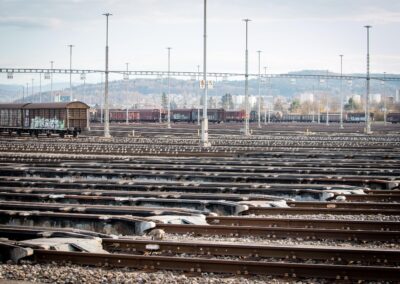
«MODERATE» ADJUSTMENT OF THE TRACK ACCESS CHARGE: A FATAL BURDEN FOR RAIL FREIGHT TRANSPORT
The Federal Office of Transport (FOT) has announced that it will increase the train path price for rail transport by 2.1 per cent from the beginning of 2025. This measure is aimed at meeting the legal requirements for cost recovery, but carries the risk of placing a considerable burden on rail freight transport and jeopardising the modal shift to rail.
That’s the point:
- Track access charge increase unacceptable
- Economic crisis, rising energy prices, global downturn make rail freight transport more expensive
- What we can do for the shift to rail transport
Our opinion on this is clear: we reject an increase in track access charges for freight transport. With an increase of 2.1%, it is also extremely misleading to describe the adjustment as “moderate”, as it could lead to fatal and irreversible consequences. Against the background of traffic losses in domestic, import, export and transit traffic as well as the significantly more favourable track access charges in Europe, a price increase is unacceptable.
Economic background and challenges
The European economy is currently struggling with a profound crisis, which is being exacerbated by the ongoing conflict in Ukraine, rising energy prices and the global economic downturn, particularly in China. These factors are leading to a decline in the exchange of goods and are having a significant impact on the transport sector.
Since mid-2022, we have seen a continuous decline in rail freight transport volumes in Europe. The average 10% increase in the cost of rail traction is driving many companies to shift more of their freight to the road. The umbrella organisation of combined transport providers UIRR reports a decline in rail freight transport of around 15% for 2023, while road transport has only fallen slightly.
Cost increases and their toxic effect
In this difficult environment, the planned price increases for energy and the wear factor are having a disproportionate impact on freight transport. The wear factor will be increased by 9% from 0.33 to 0.36 CHF/BTkm, and a decision on how energy costs will rise will be made in July.
The reason given for the increase in the basic wear and tear price is the rise in weight-dependent marginal costs, although the calculation of these costs is not transparent and is based on the infrastructure expansion standards for passenger transport. This price component, intended as an incentive for the procurement of rolling stock that is gentle on the track, does not accelerate the replacement of railway carriages with their long service life of 2–3 decades. The incentive is too low to cover the additional costs for low-wear rolling stock, which significantly increases the costs for rail freight transport and reduces its competitiveness.
Conclusion
Although a 2.1% increase in the track access charge is intended to meet the legal requirements for cost recovery, it will lead to considerable additional costs for freight transport. This measure could undermine efforts to shift traffic to the railways and further exacerbate the economic burden in an already challenging environment. It would be desirable for rail freight transport, which suffers from the high expansion standards of passenger transport in the mixed operation of passenger and freight transport, to be fundamentally relieved. This is the only way to make rail freight transport competitive and successfully drive forward the mobility transition.
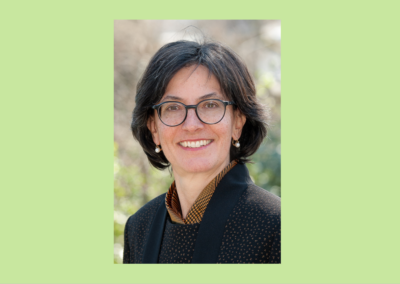
RailCom: Promoting a competitive railway system through innovation and transparency
Patrizia Danioth is a lawyer and notary and has been President of RailCom since 2013. In this interview, she gives us an overview of RailCom’s tasks, her position on the draft legislation for freight transport and talks about the future mobility infrastructure (MODI).
That’s what it’s all about:
- RailCom ensures non-discriminatory access to the railway network
- Promotes competition in the railway system
- Supports the strengthening of the EWLV
- Access to data for greater transparency and innovation
Mrs Danioth, what is RailCom responsible for?
RailCom ensures non-discriminatory access to the railway network, CT transhipment facilities and local delivery services. In this way, RailCom contributes to a competitive Swiss railway system. RailCom also expresses its views on issues that fall within its remit as part of the legislative process. This is the case with the current draft legislation on the future of Swiss rail freight transport.
What is RailCom’s position on the current draft legislation on the future of Swiss rail freight transport? Where do you see a need for action?
RailCom supports the strengthening of single wagonload transport and the further development of multimodal transport chains. However, RailCom identifies two critical aspects in particular in the draft law on Swiss freight transport, which need to be regulated in a coherent manner with existing legislation.
What are the critical aspects? What requirements would the draft legislation have to fulfil in order to be consistent with existing legislation?
Firstly, the state subsidisation of single wagonload transport must be competition-neutral. Block train transport, which is self-sufficient, must not be cross-subsidised by the subsidised single wagonload transport. Such a distortion of competition must be prevented with the present draft law on Swiss freight transport. Be it that the provider of single wagonload transport makes a financial, legal and organisational separation between the self-economic services of block train transport and single wagonload transport. Be it that stricter requirements as well as control and sanction options effectively prevent cross-subsidisation.
The aim of the proposal is to promote an innovative offering in single wagonload transport with a high level of customer orientation. Fair framework conditions are essential for this.
Secondly, existing legislation in the railway sector and in freight transport stipulates that if a company receives financial support from the state, it must make its services or access to its facilities available to third parties on a non-discriminatory basis. Although the draft law on Swiss freight transport provides for non-discriminatory access to single wagonload transport services in principle, it does not yet sufficiently specify this requirement. This is shown by a comparison with the legislation on the promotion of CT transhipment facilities or the law on underground freight transport: For example, the legislator regulates the rights and obligations of the operators of CT transhipment facilities in more detail than those of the network provider in single wagonload transport.
With MODIG, a bill is being drafted to ensure that the infrastructure and services of public and private transport can be optimally operated and utilised thanks to a better flow of information. The mobility infrastructure (MODI) should one day enable the various players to be networked and data to be provided and exchanged. What does RailCom think of MODI?
Data and data exchange are an indispensable prerequisite for mobility. Alongside rail and other transport facilities, data therefore forms a system-relevant infrastructure. Data is also a prerequisite for the utilisation of infrastructure: Data that is relevant for access to the rail network, CT transhipment facilities and last-mile services, for example, must be available to all users in a transparent and user-friendly manner and be easy to find. The data must be made publicly accessible in a non-discriminatory manner, i.e. complete, correct and free of contradictions. MODI can make a significant contribution to this.
MODI and open data in general also strengthen non-discrimination through increased transparency, equal treatment and the possibility of third-party participation. Open data thus promotes economic efficiency and customer-orientation by strengthening competition. The potential for innovation in the sector is increased. The privately operated website www.puenktlichkeit.ch, for example, allows insightful comparisons to be made on the punctuality of trains.
Mrs Danioth, thank you very much for this interview!
Wagonload transport can become competitive
Forum Freight Transport, 7 May 2024. Nationwide wagonload transport has a very high market share in domestic transport throughout Europe. In export and import transport, on the other hand, it is declining despite long distances. This is due to market compartmentalisation and outdated production structures. Exclusively state railways, exclusively on their home market is the motto. Wagonload transport is seen as system transport. Cooperation in networks, as is common and successfully applied on the roads, is not envisaged on the railway.
However, it is possible to transform wagonload transport into an automated, digitally networked and internationally open railway system. The states are offering the railway sector political and financial support for this.
That’s the point:
- Leading minds from the European transport and logistics industry in Zurich at the Freight Transport Forum
- Morning with an overview of the current legal framework
- Afternoon topic: Transformation of rail freight transport
- Focus on shaping a sustainable freight transport landscape
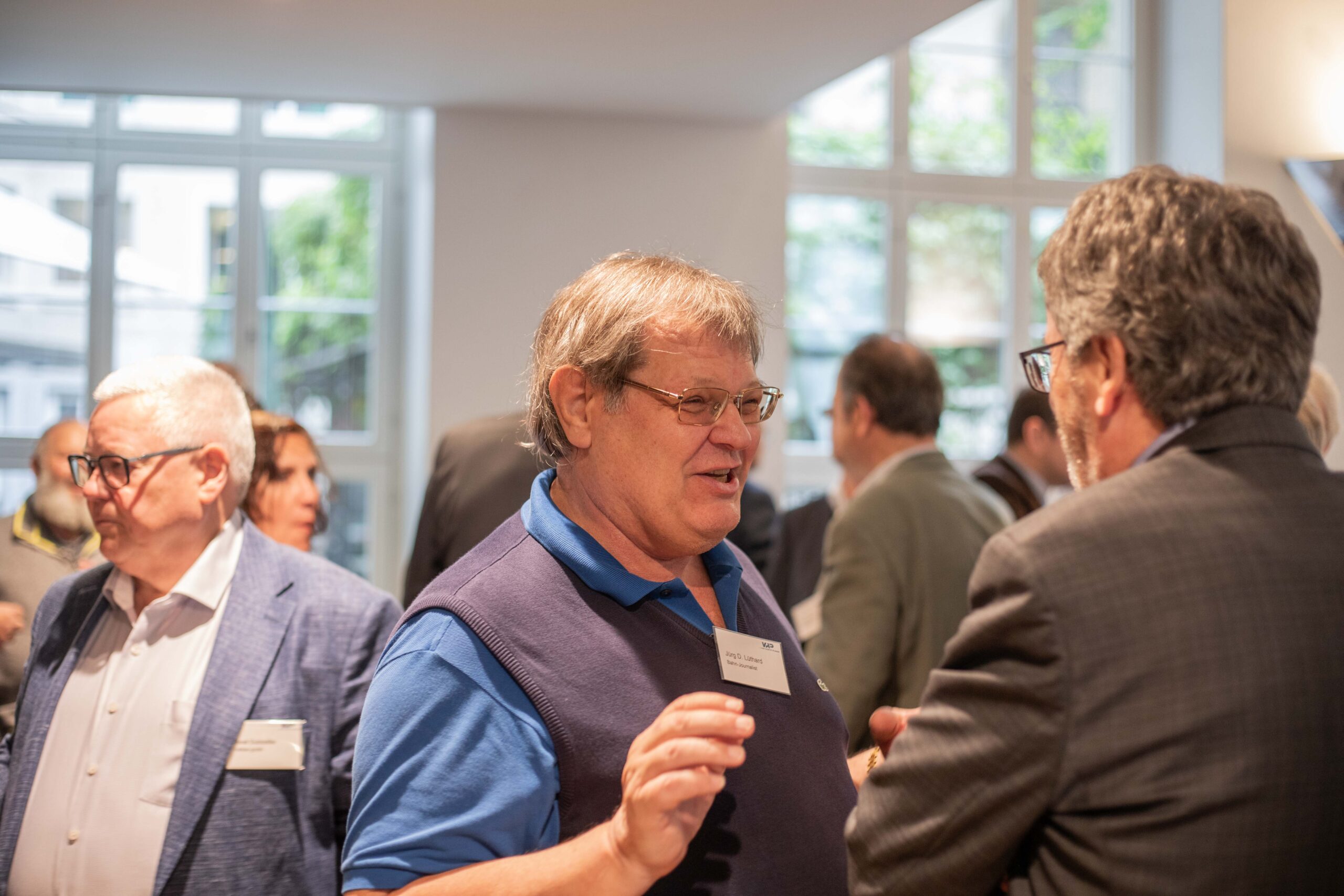
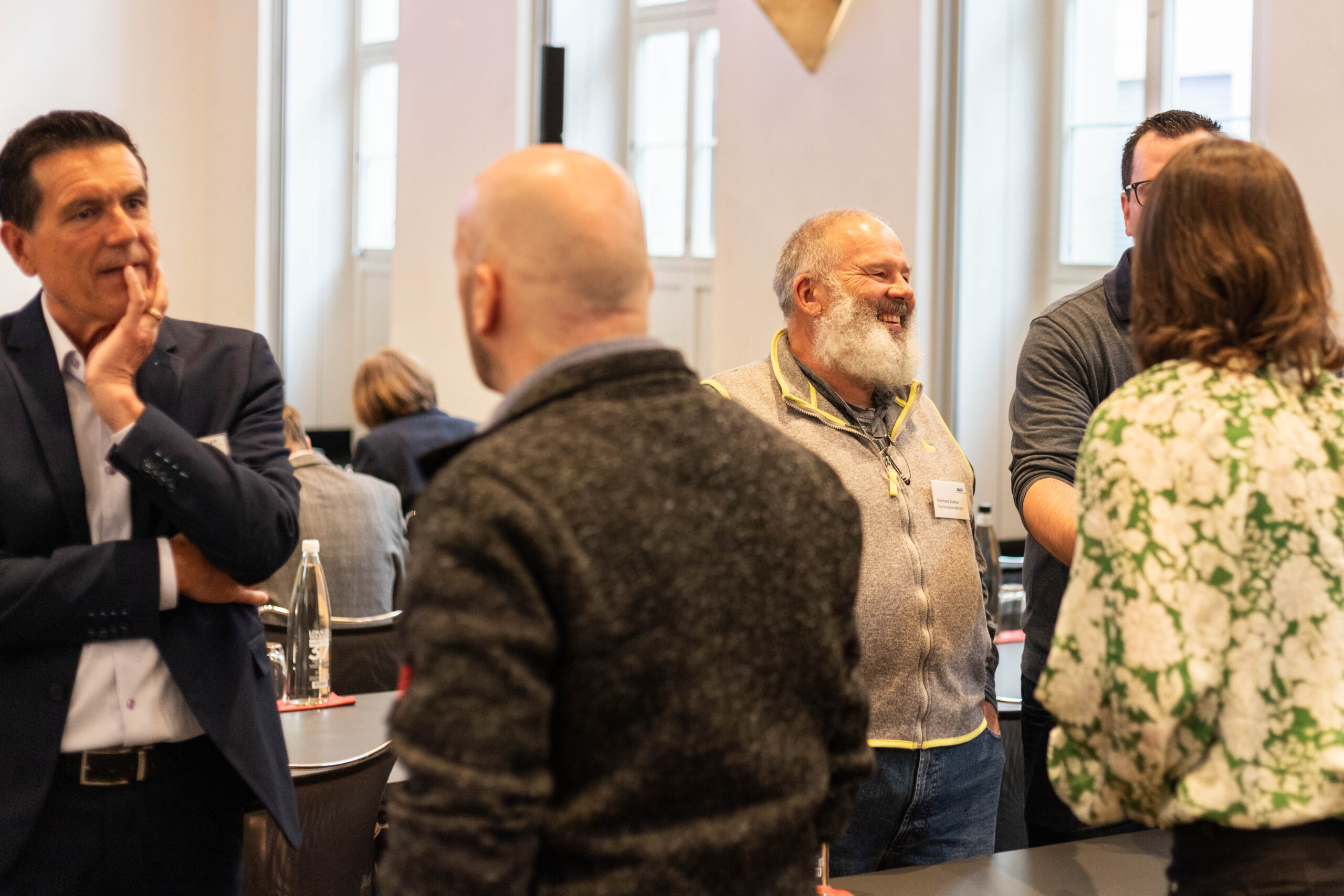
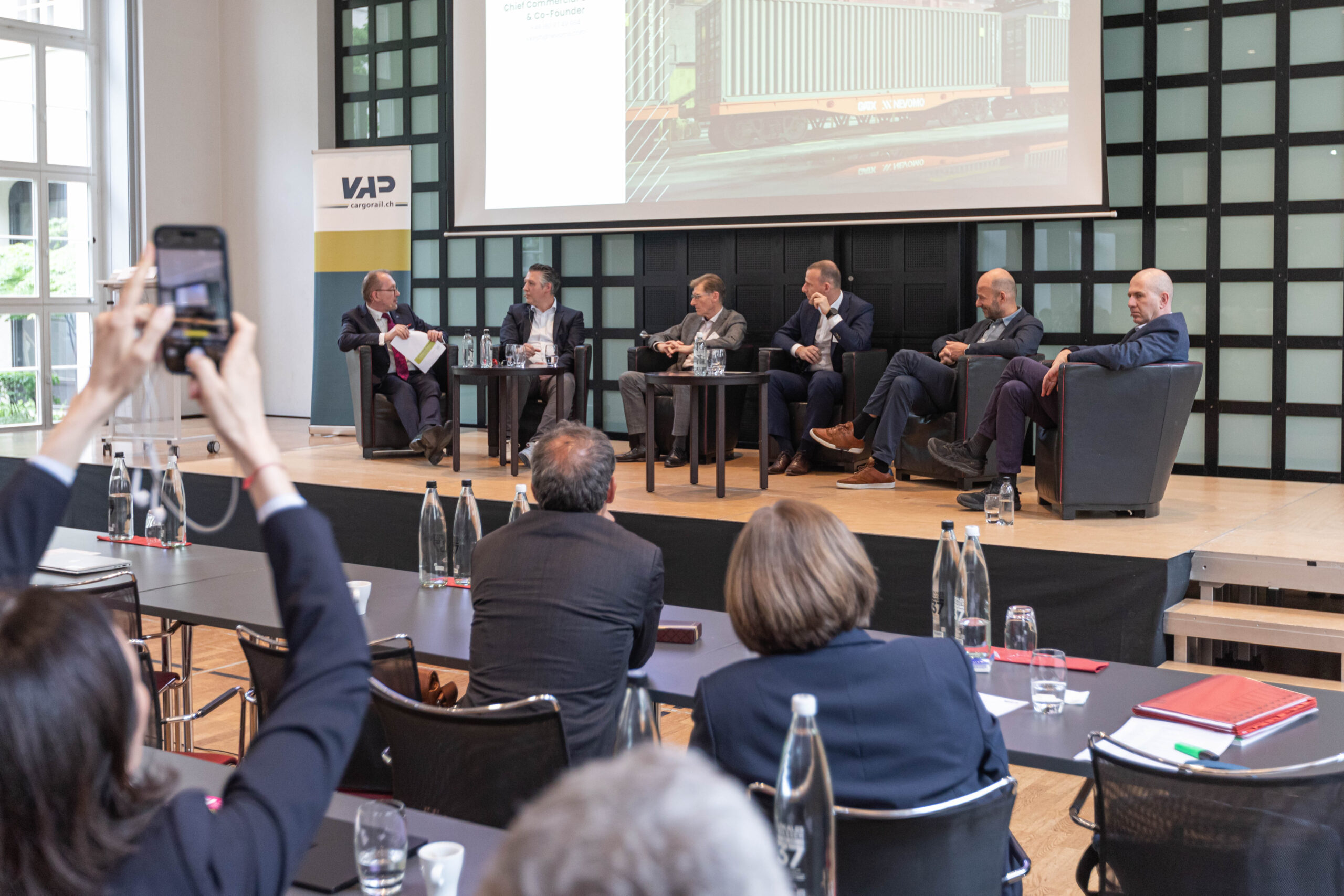
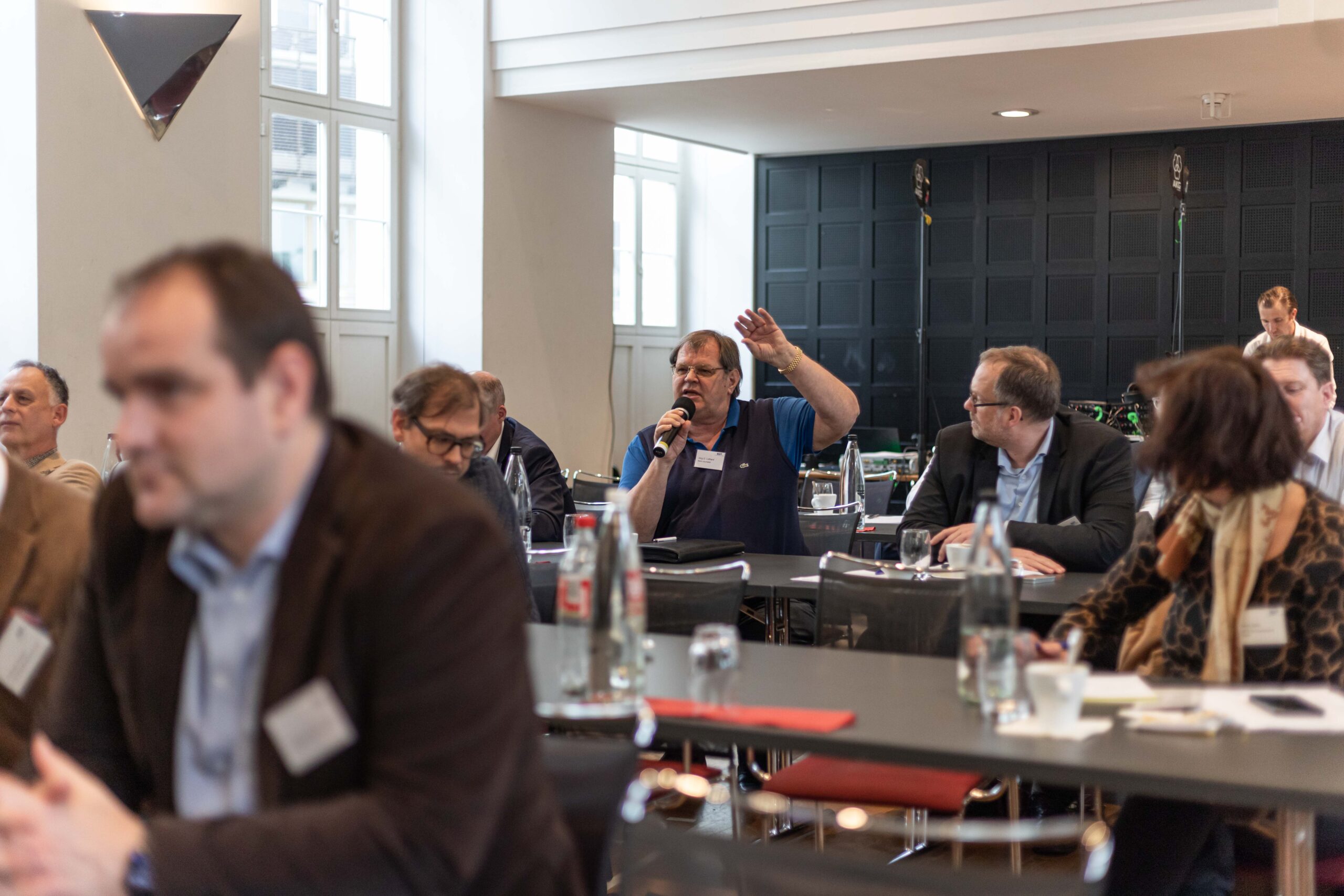
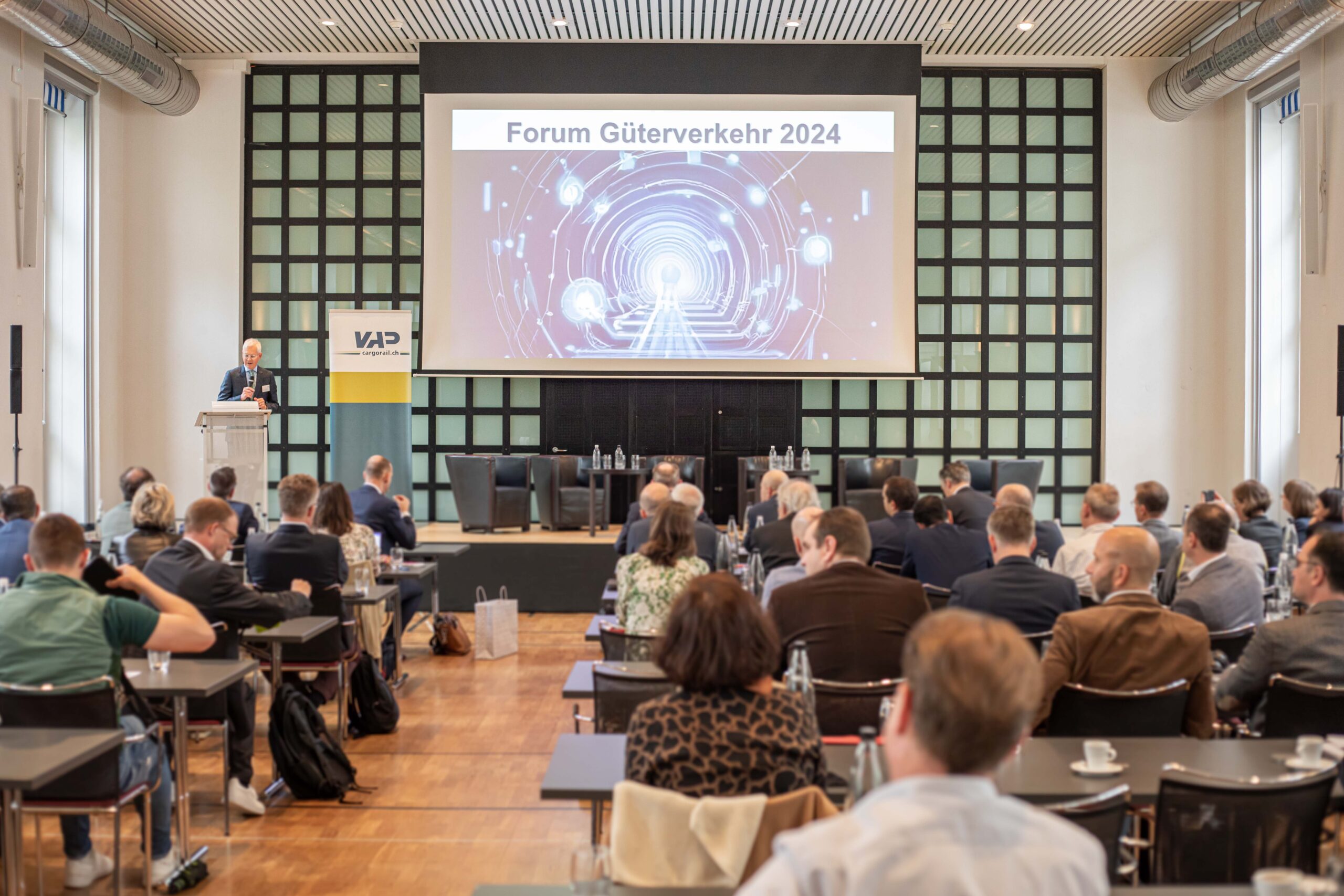
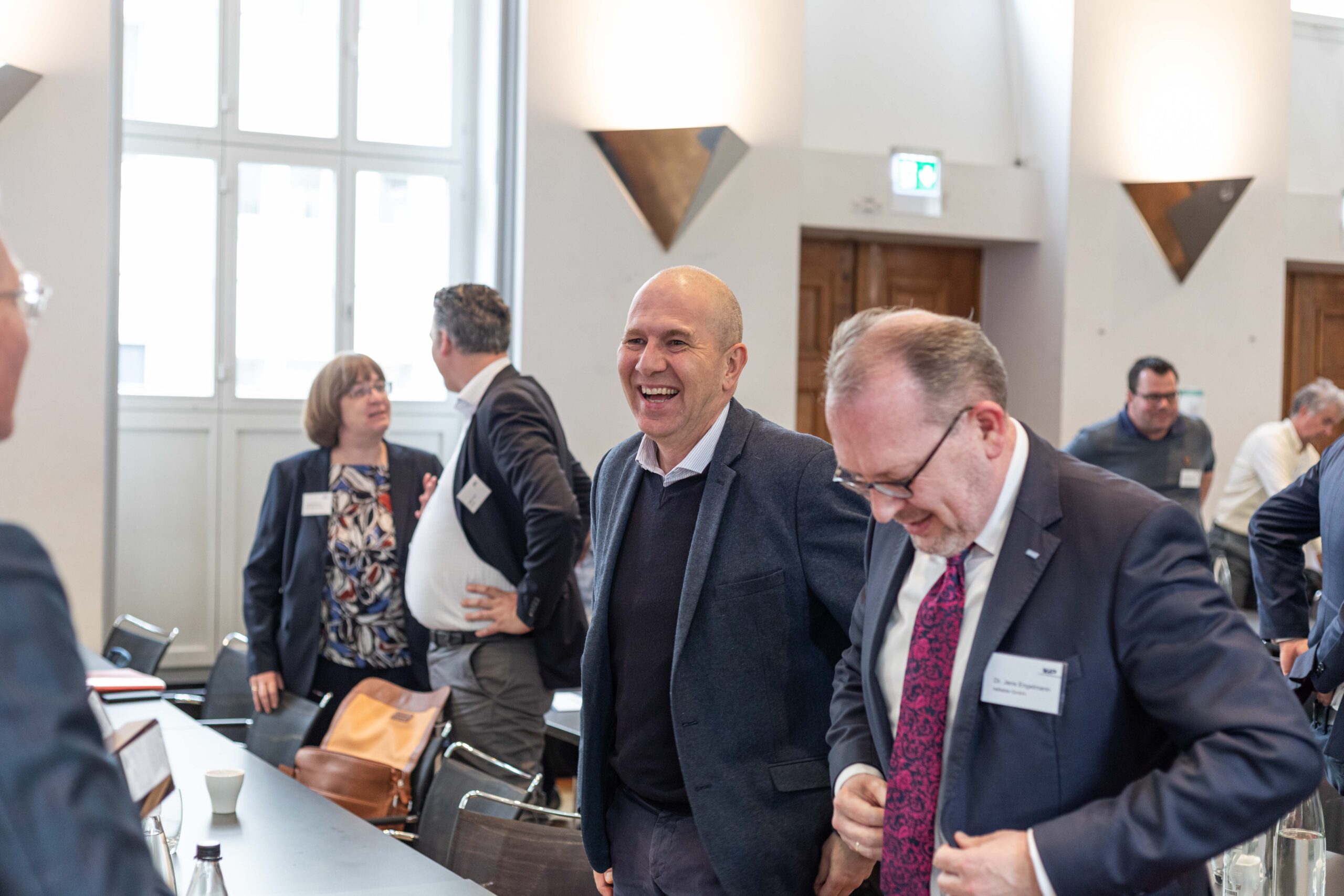
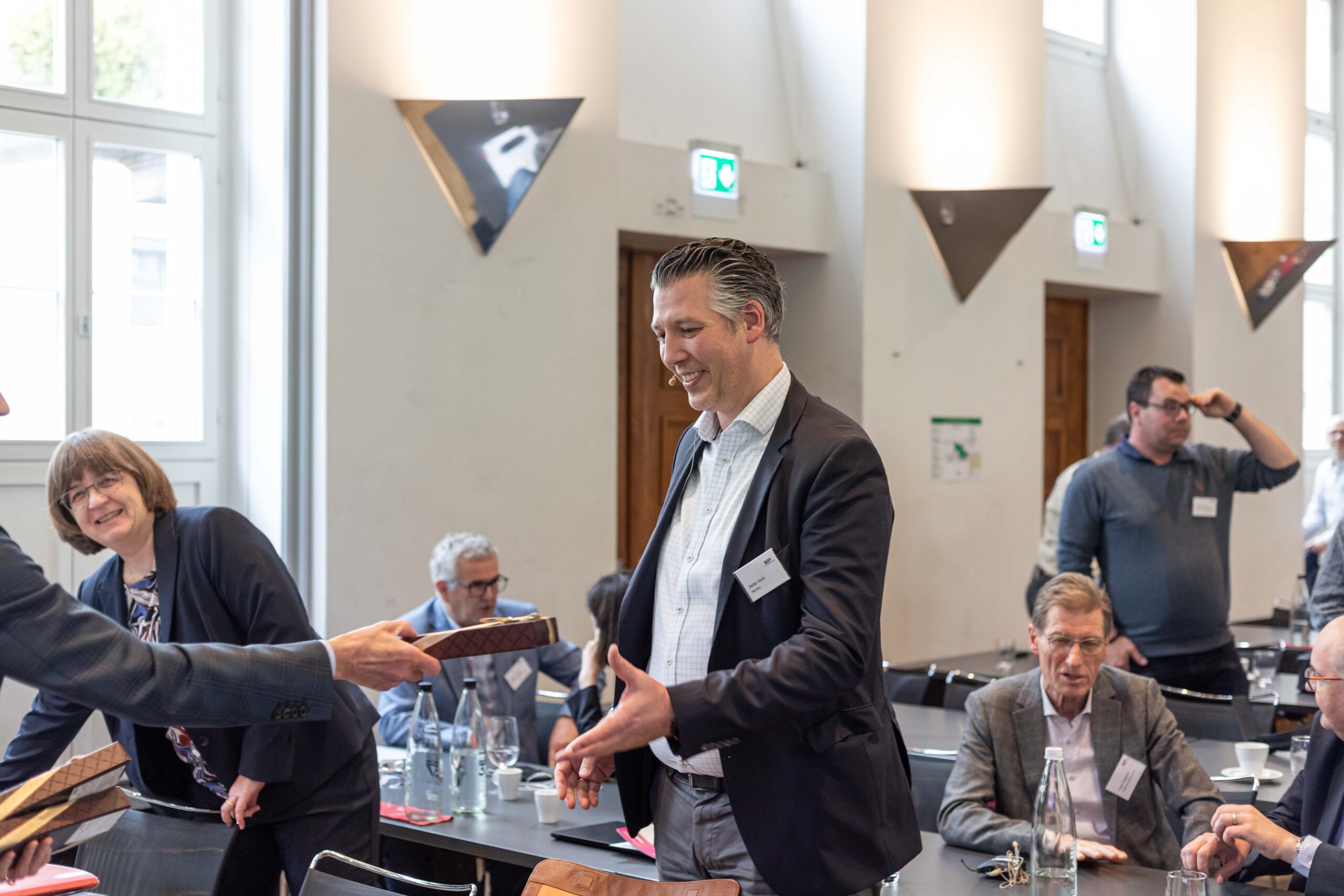
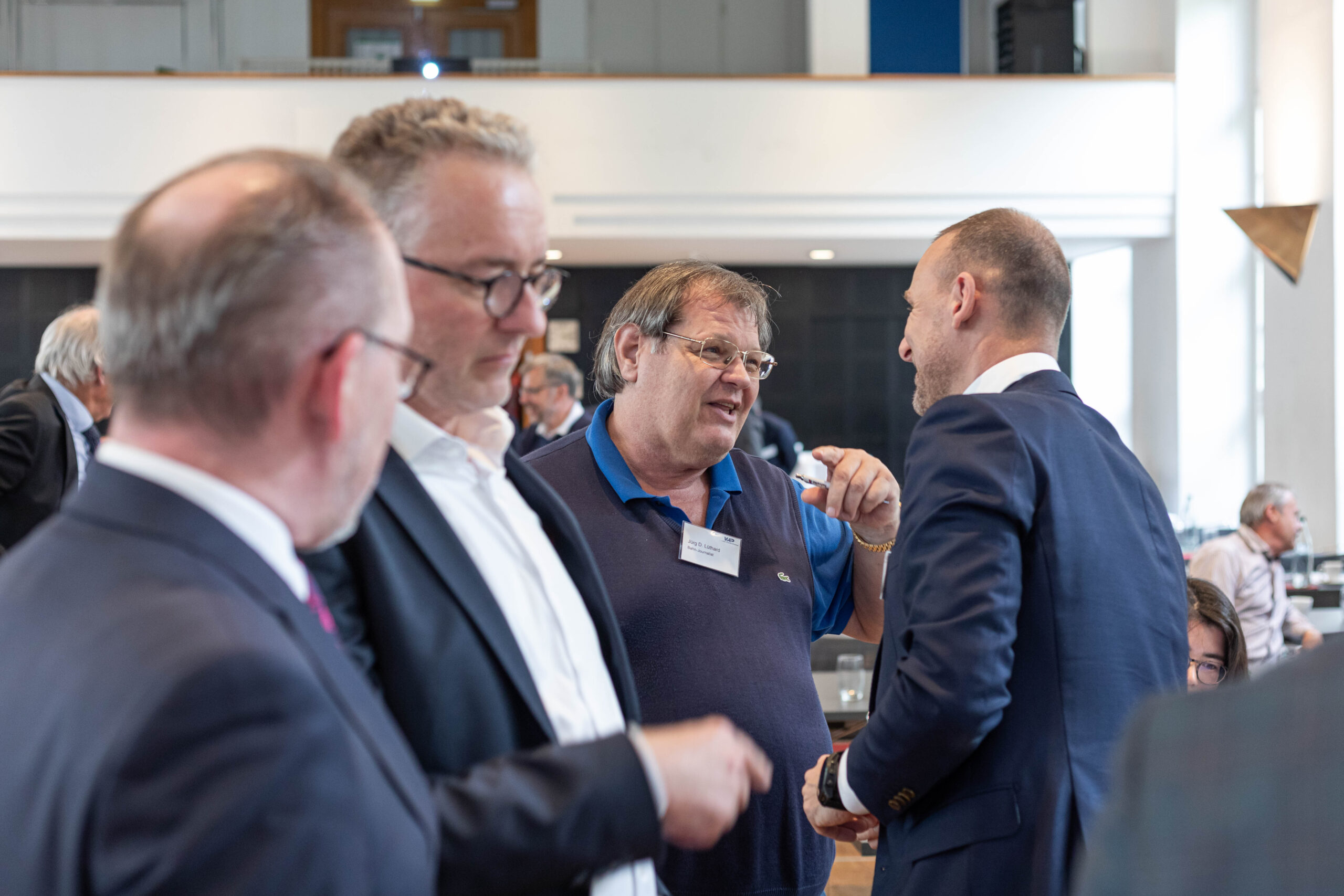
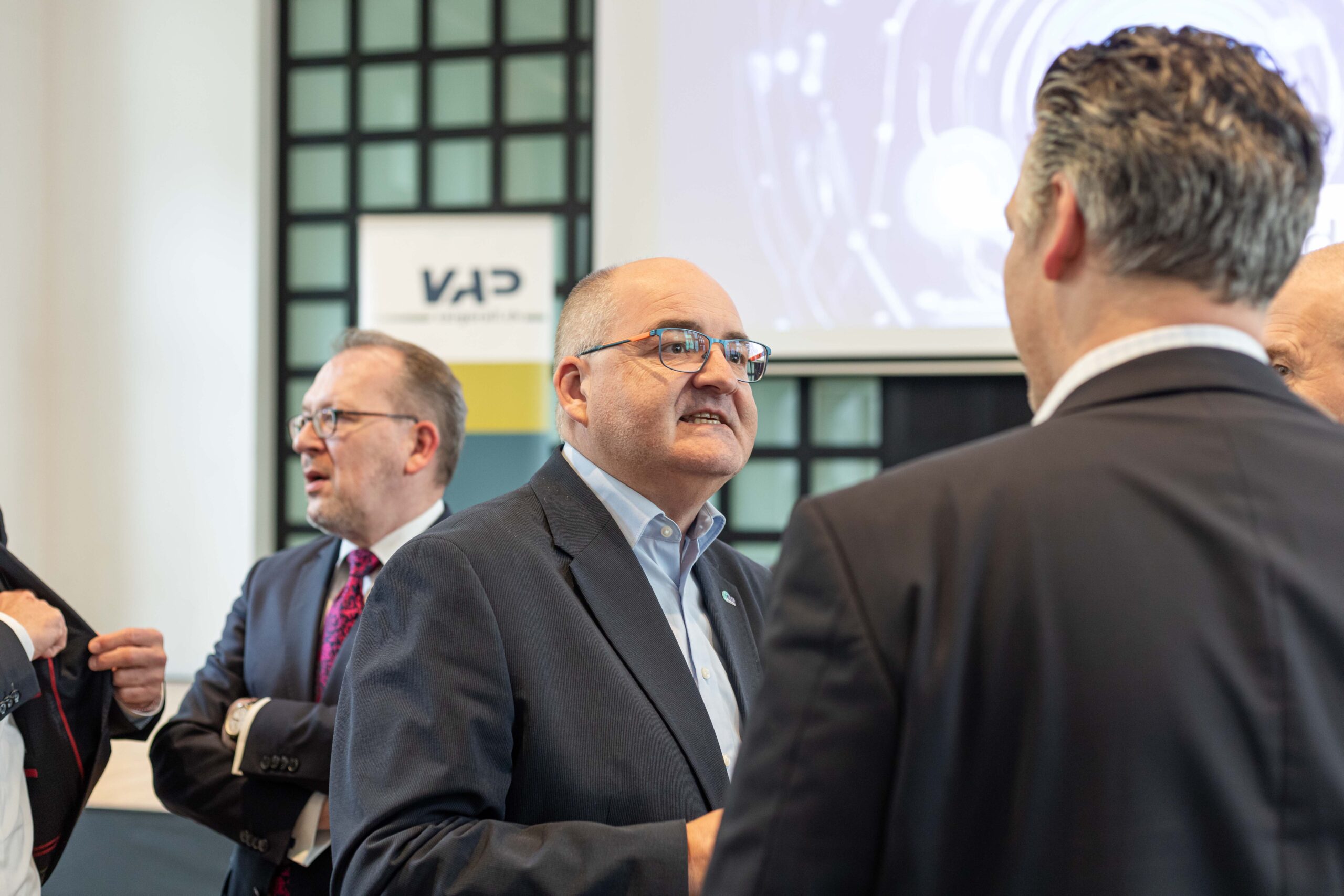
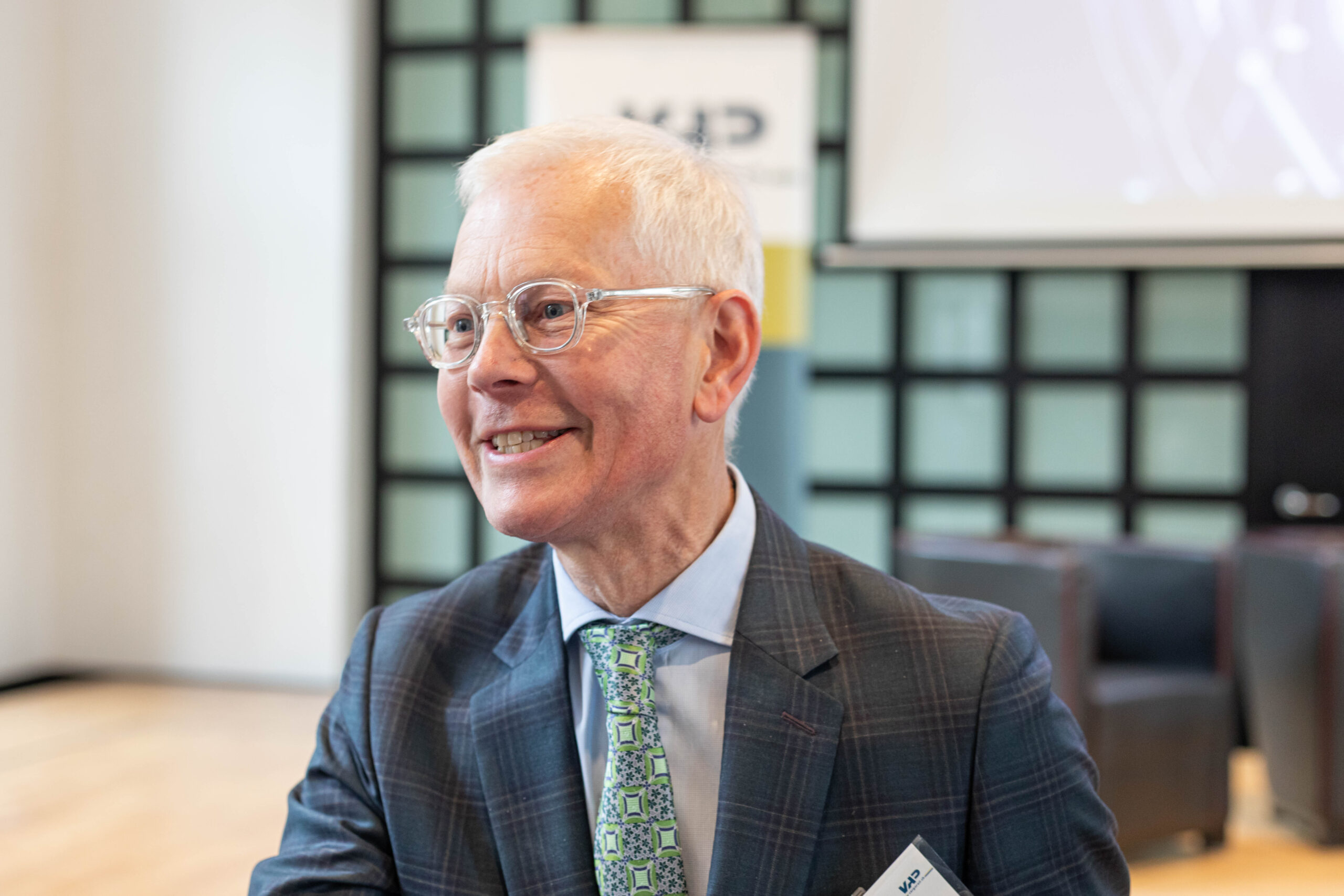
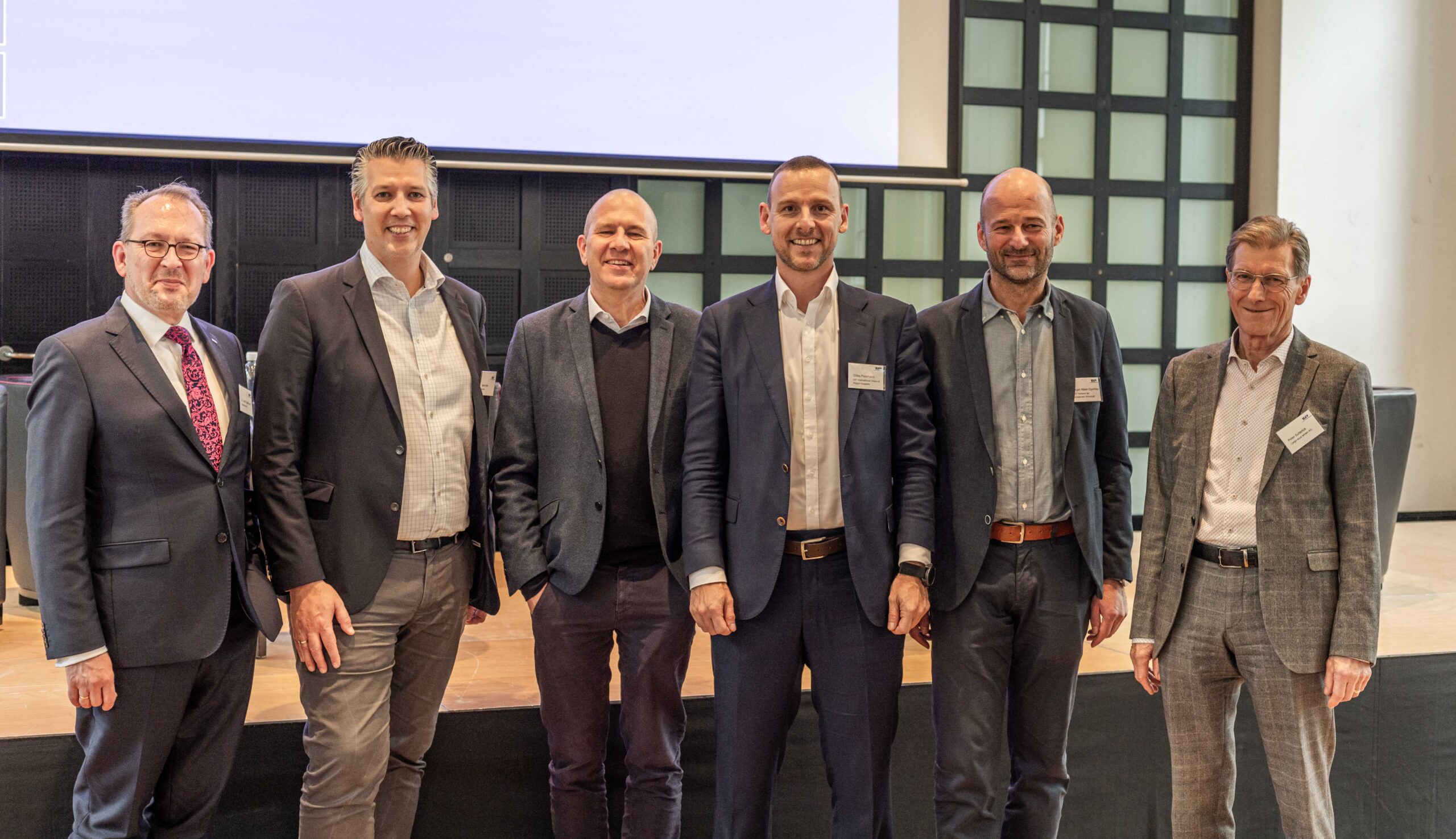
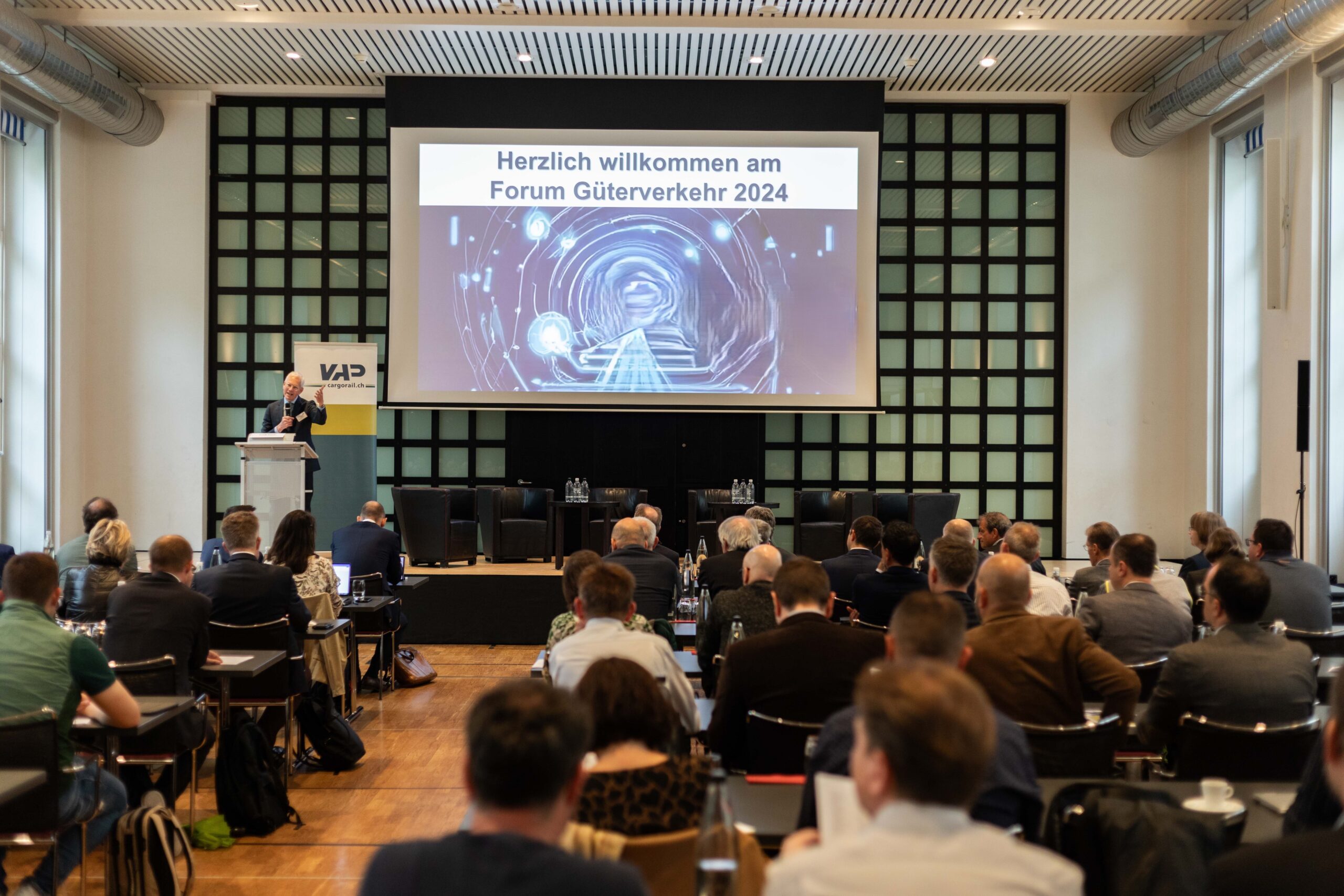
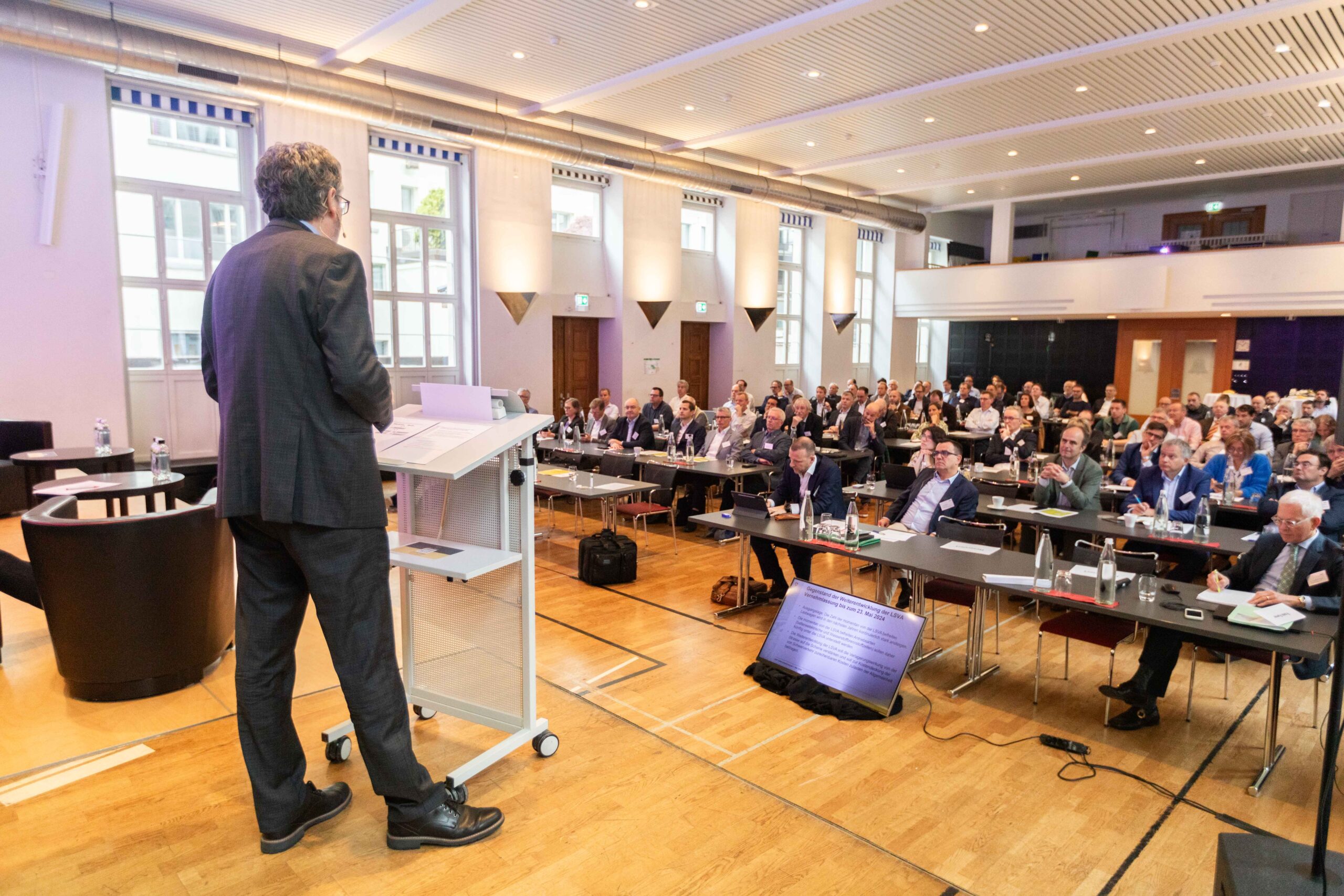
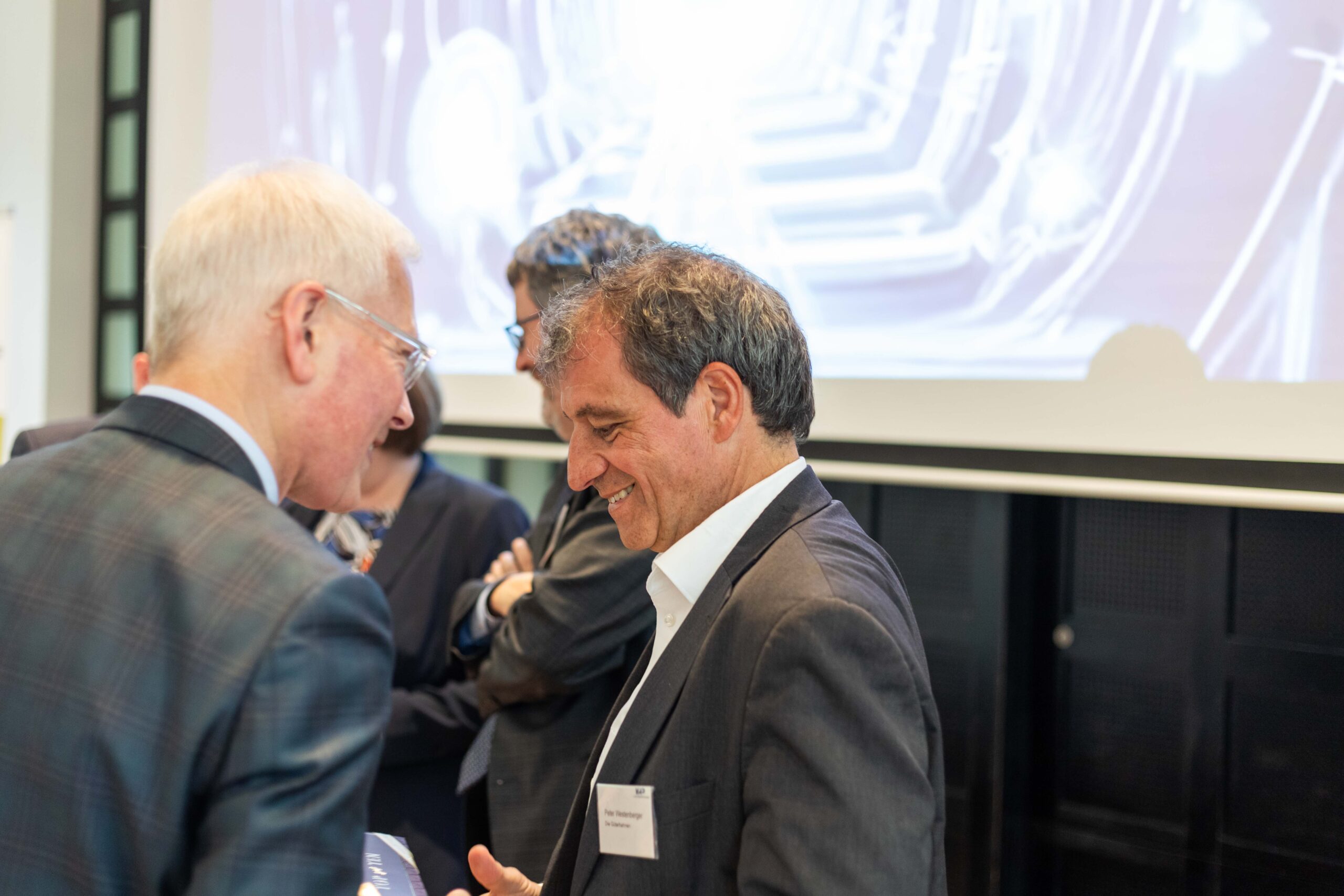
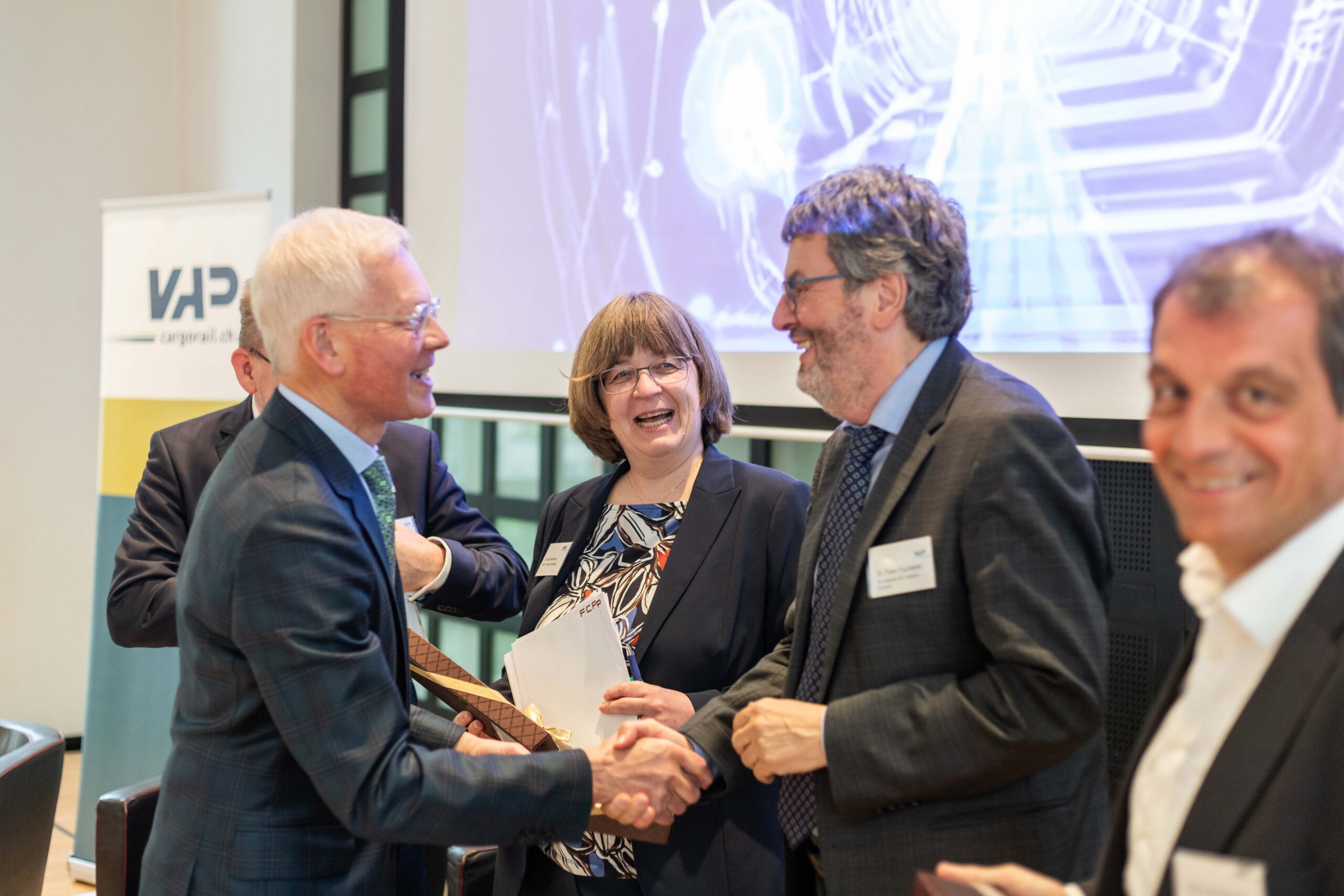
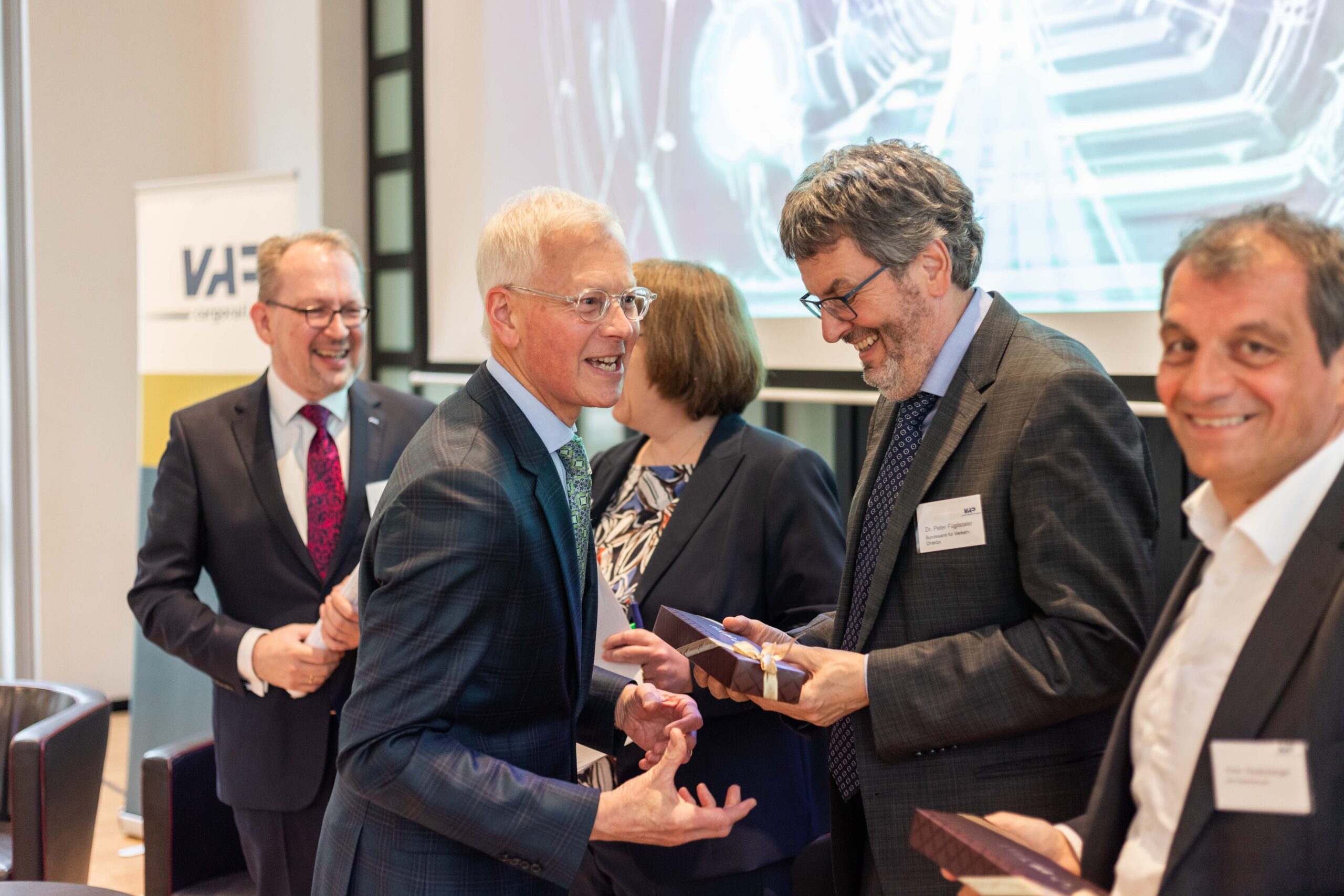
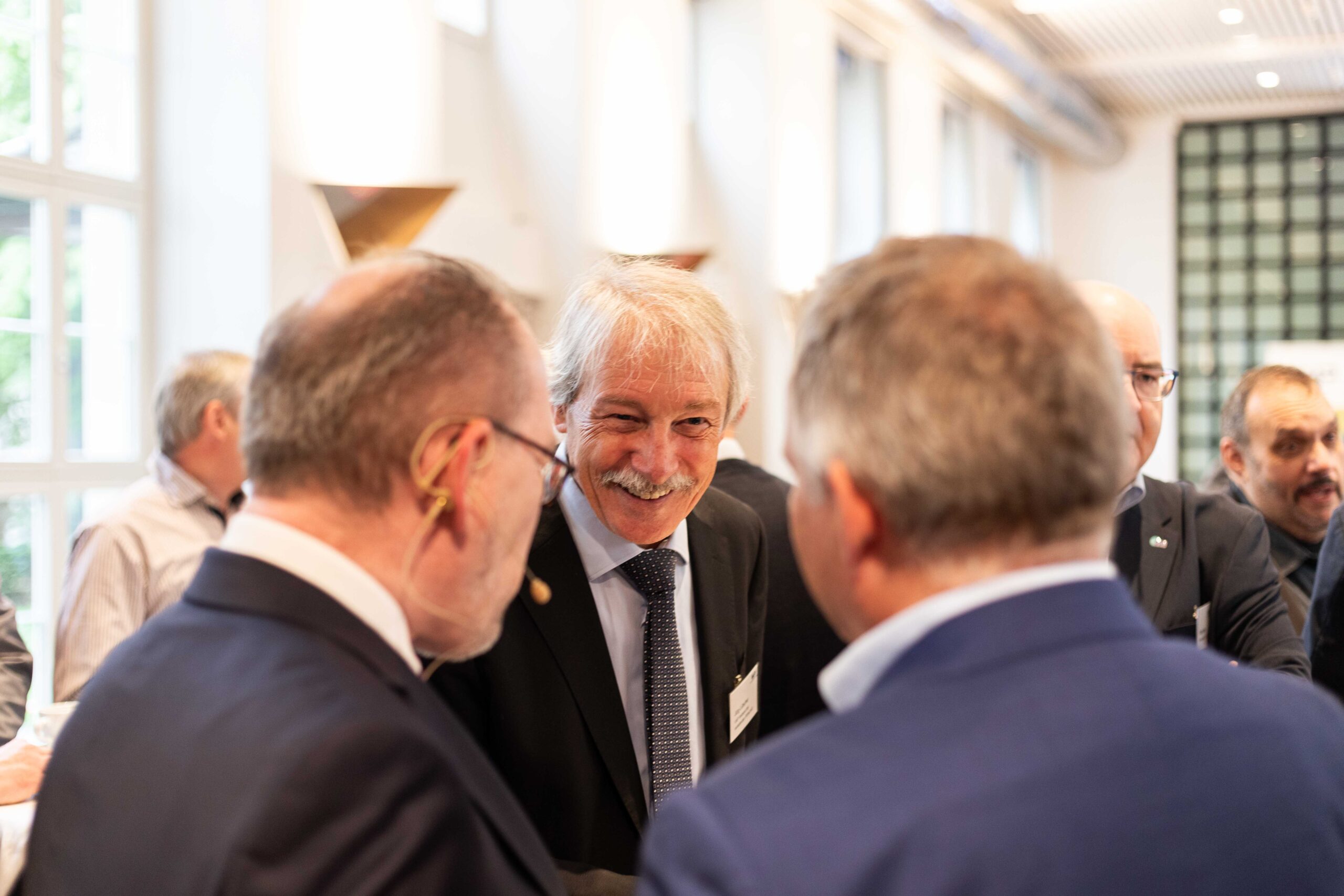
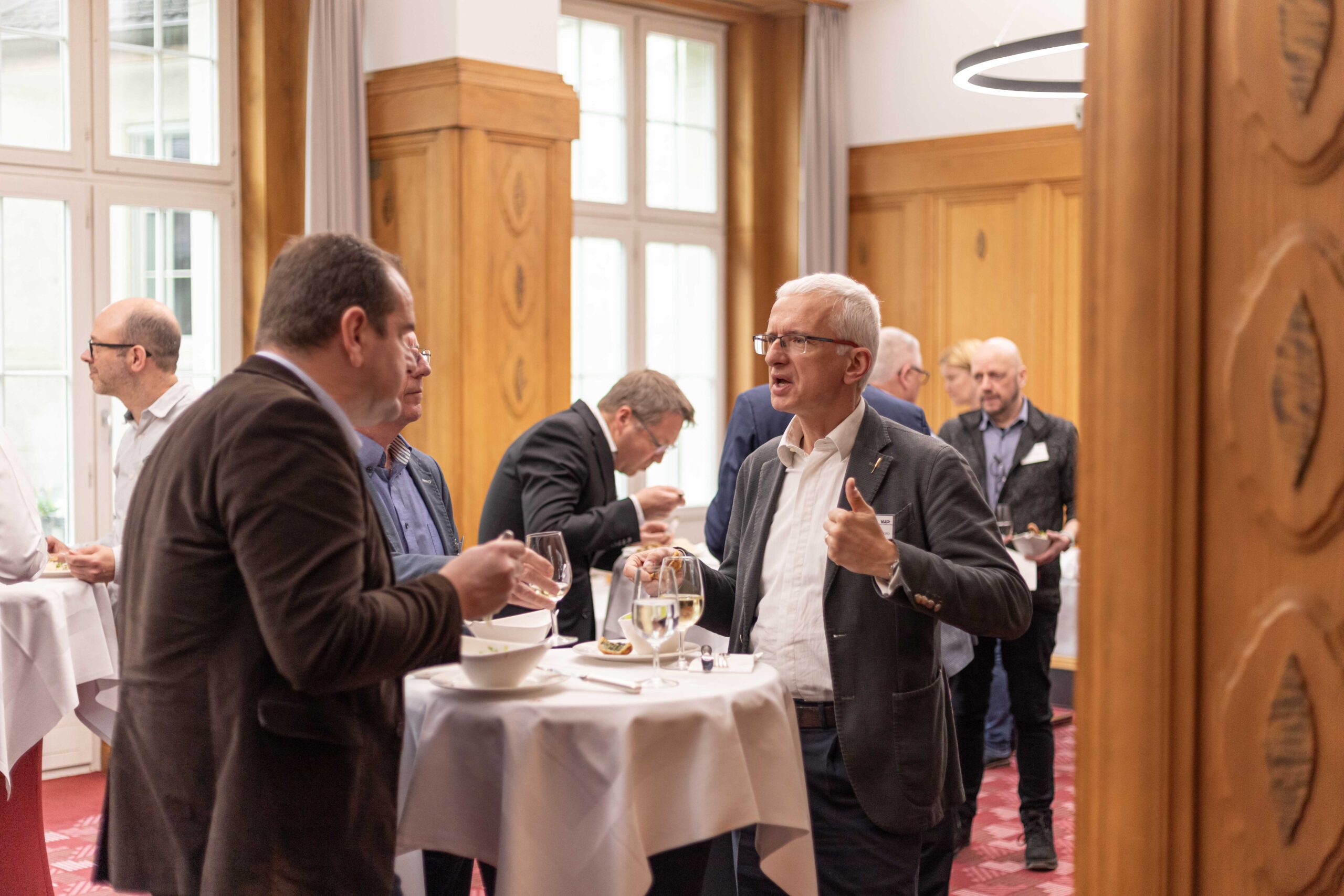
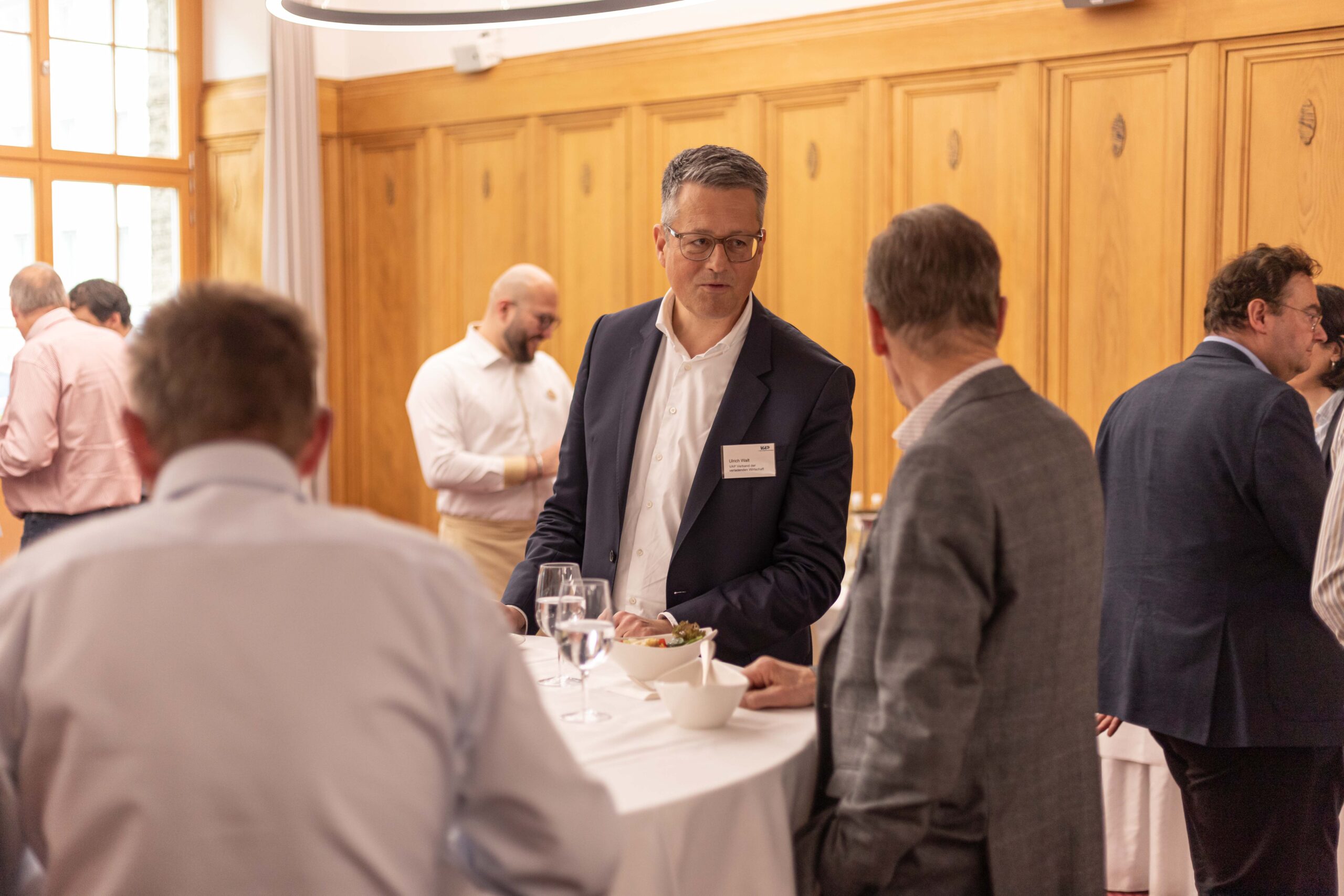
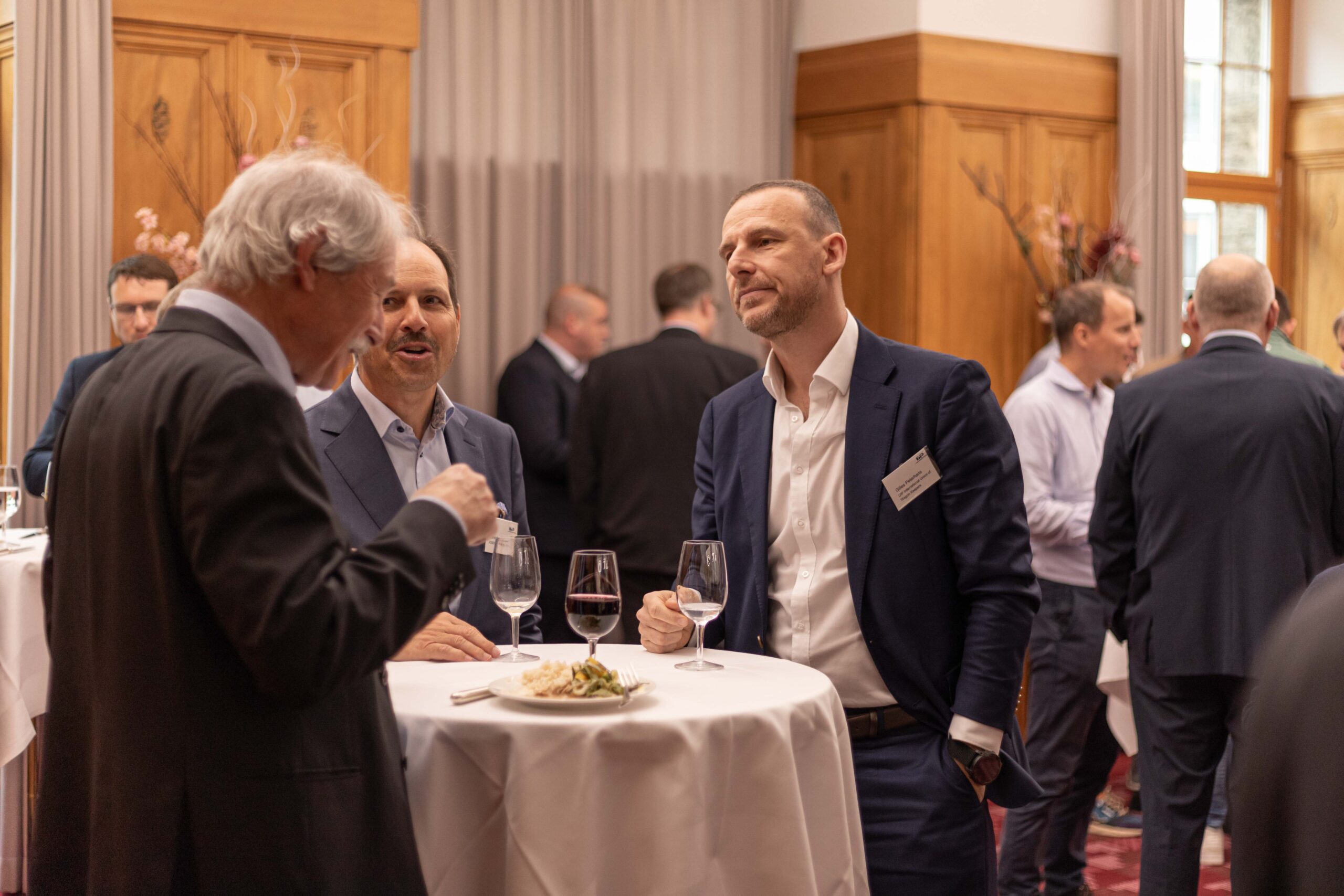
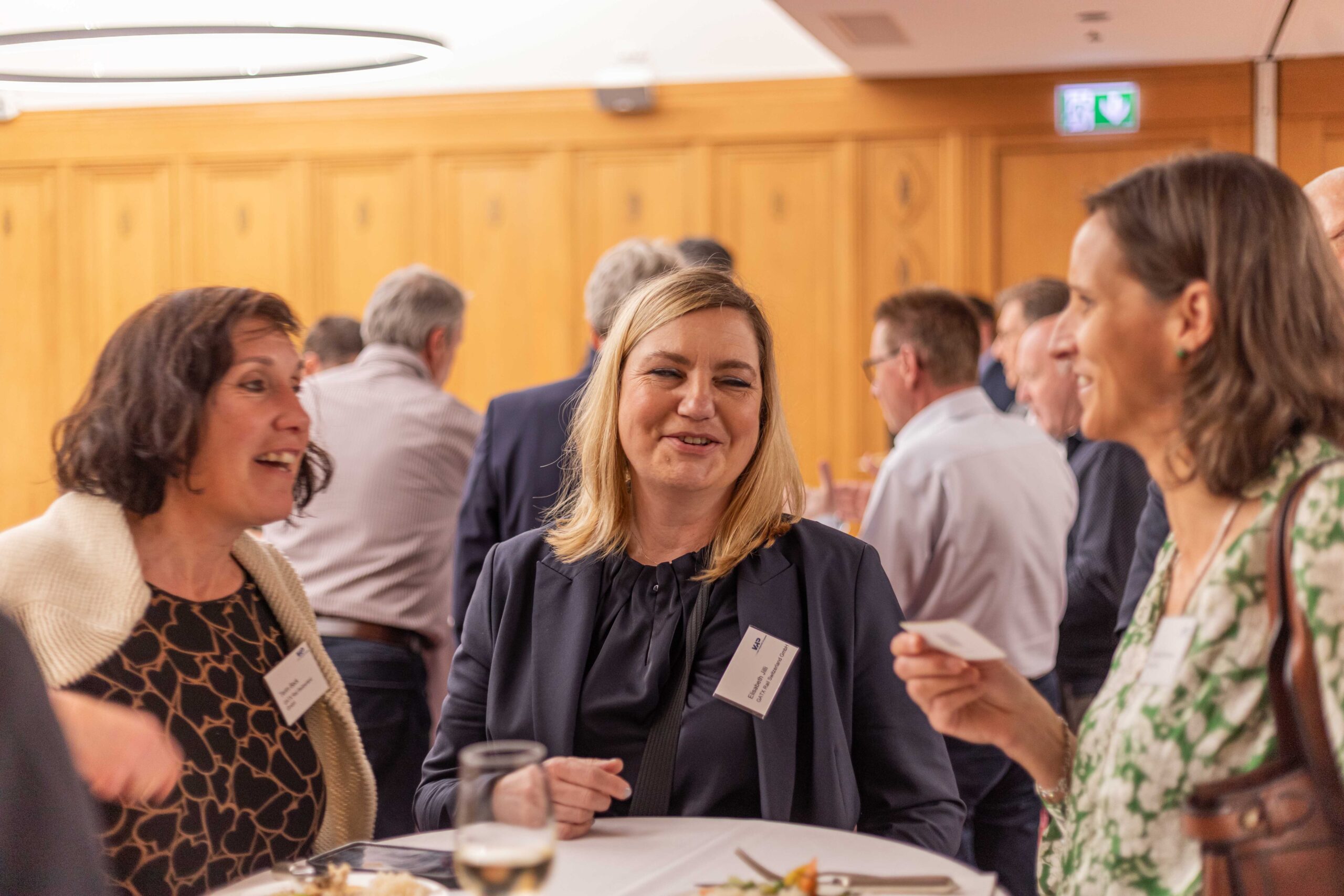
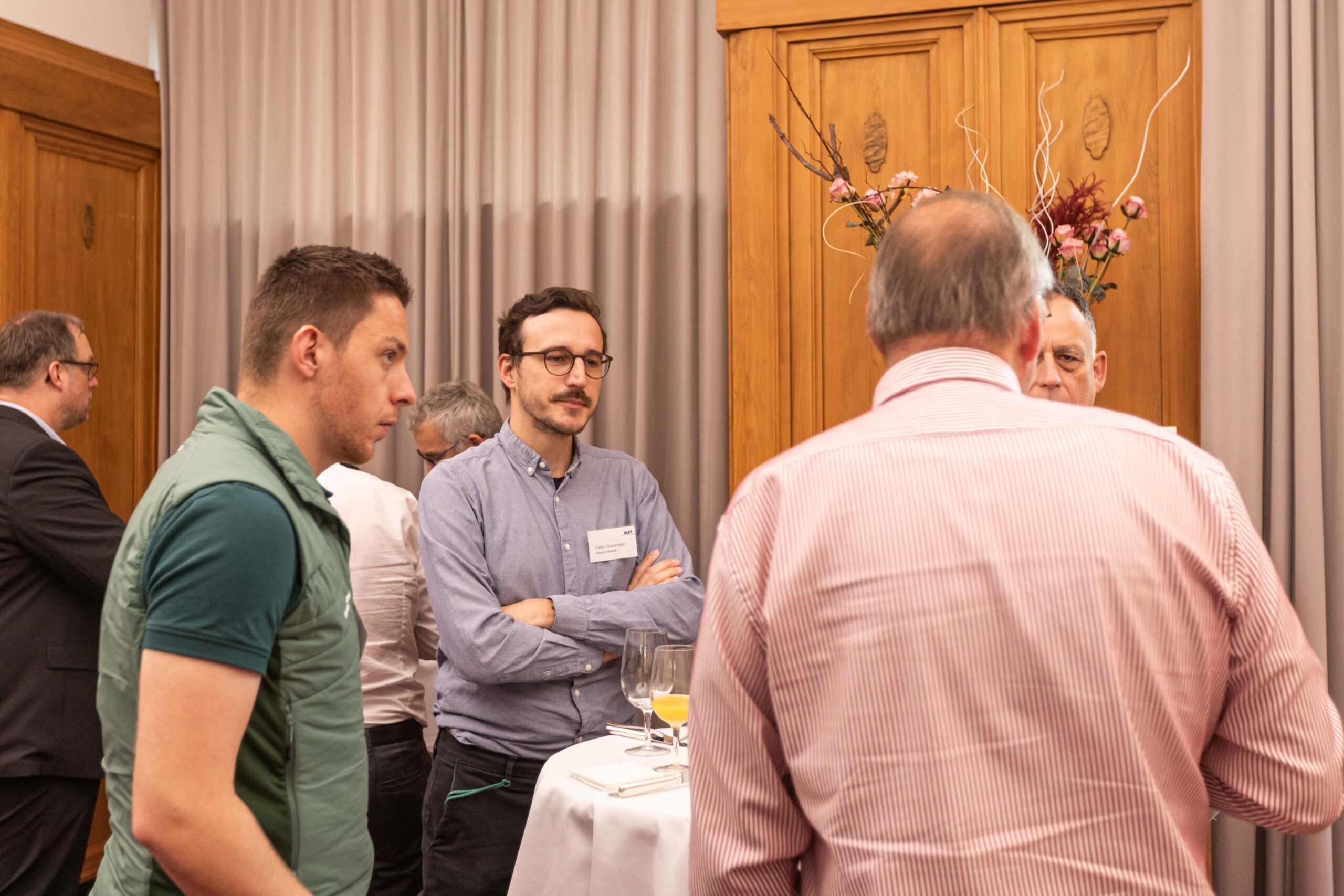
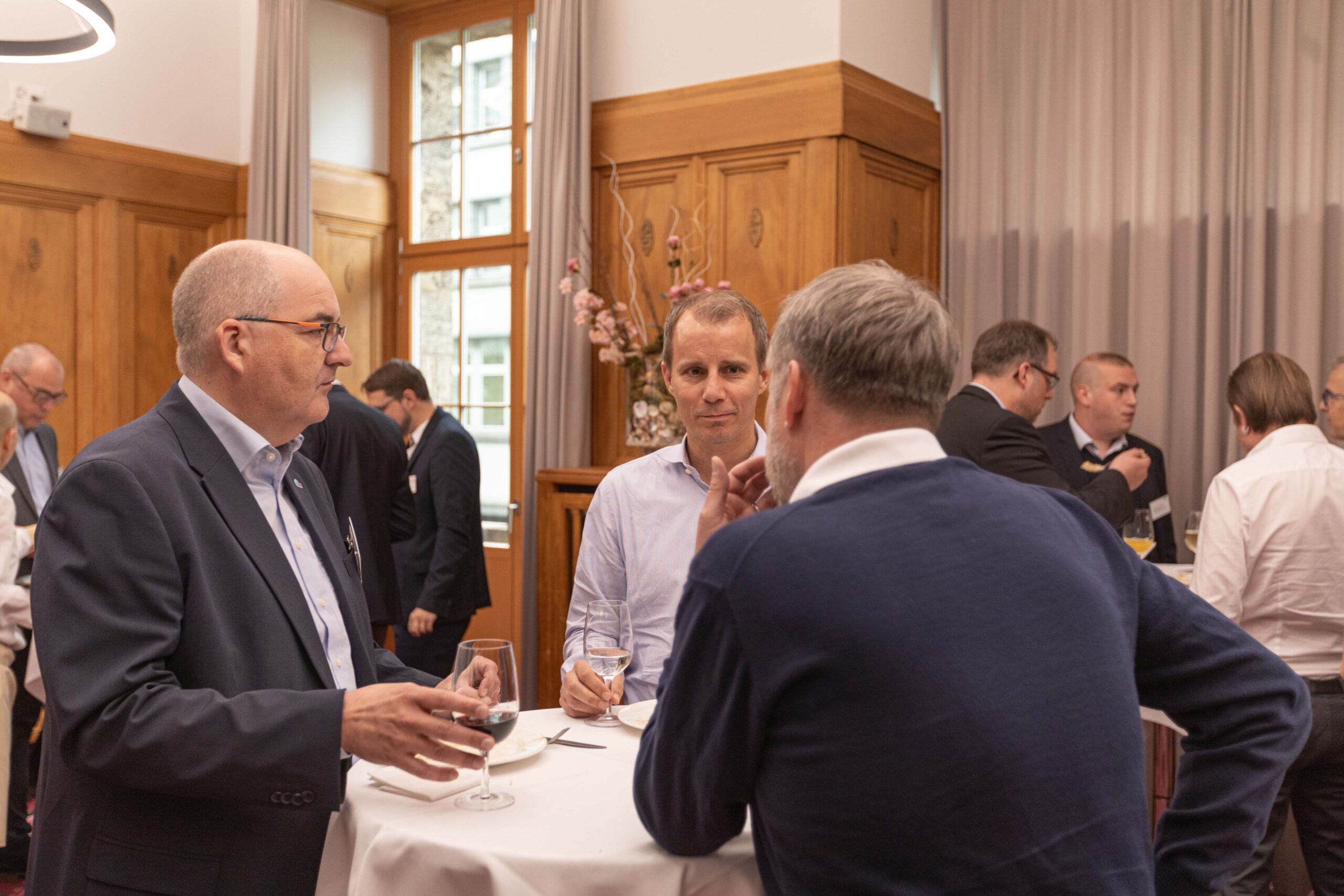
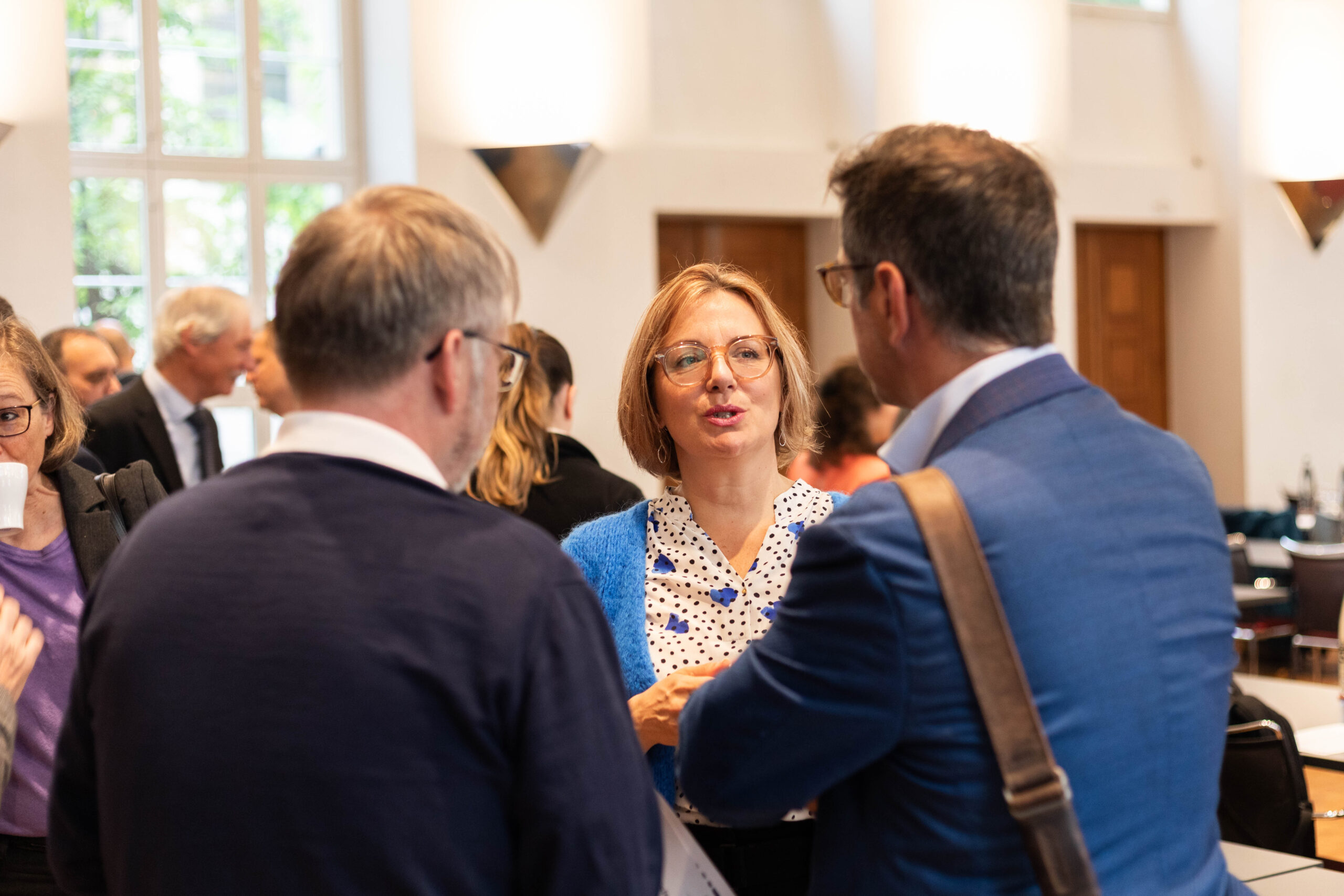
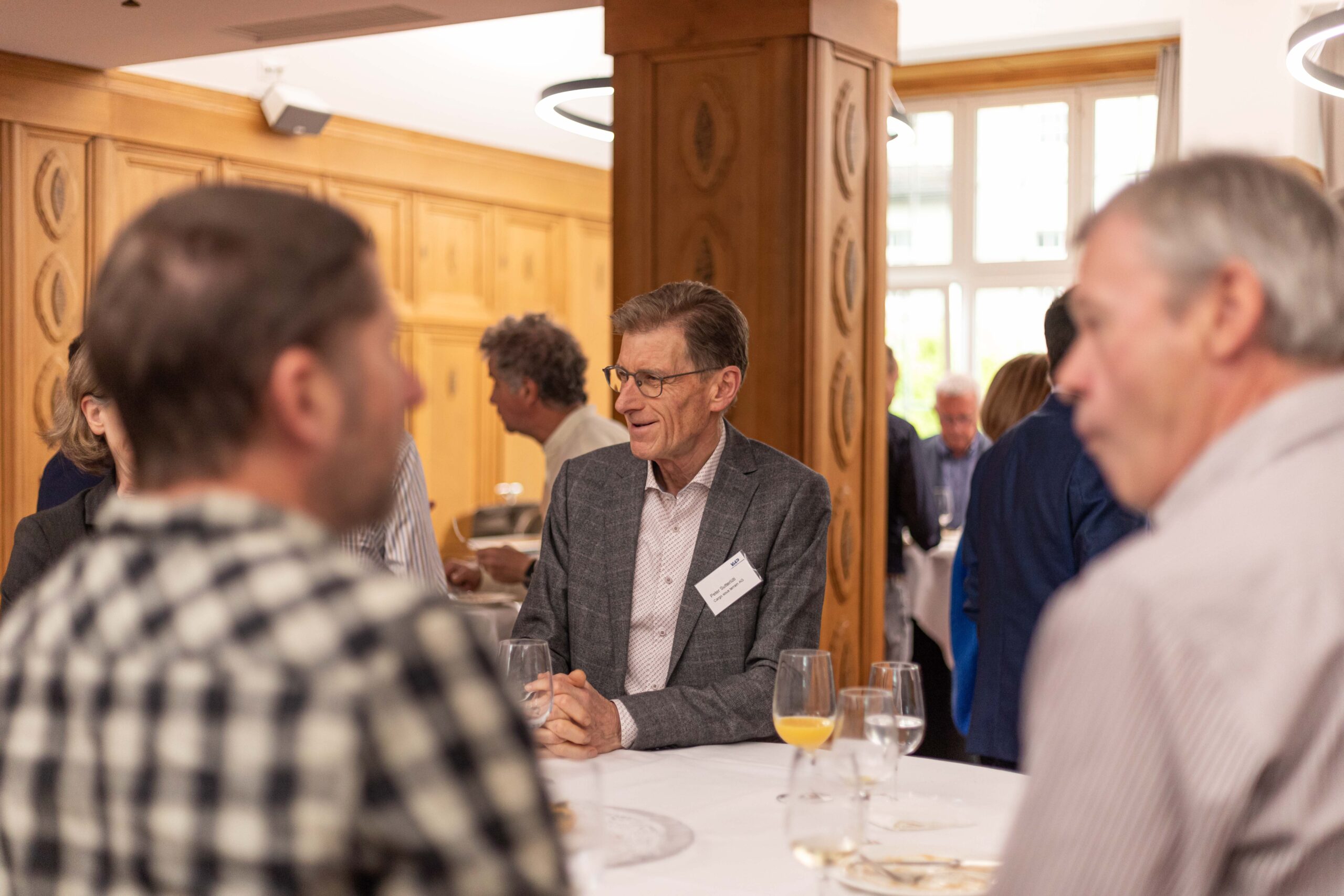
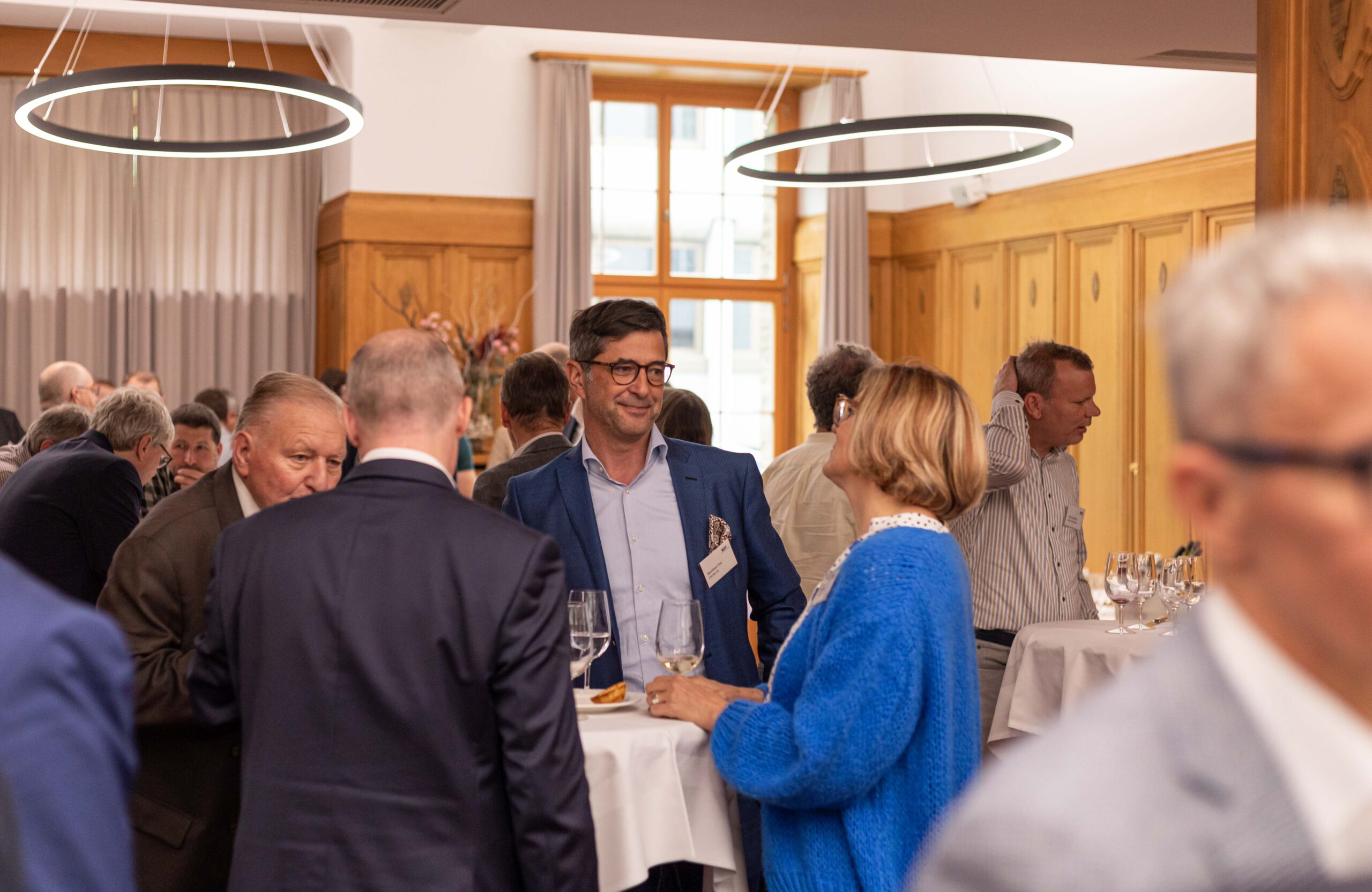
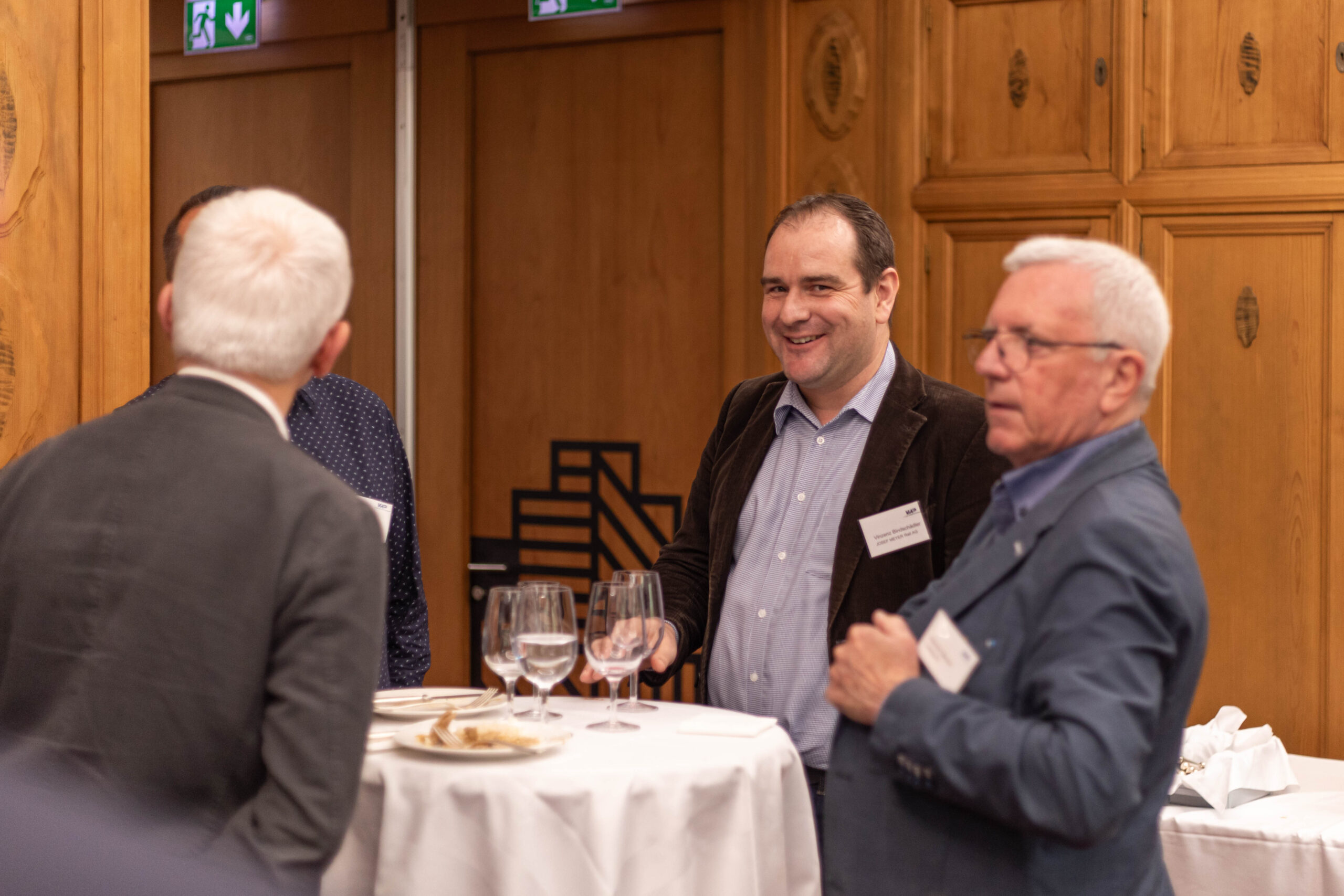
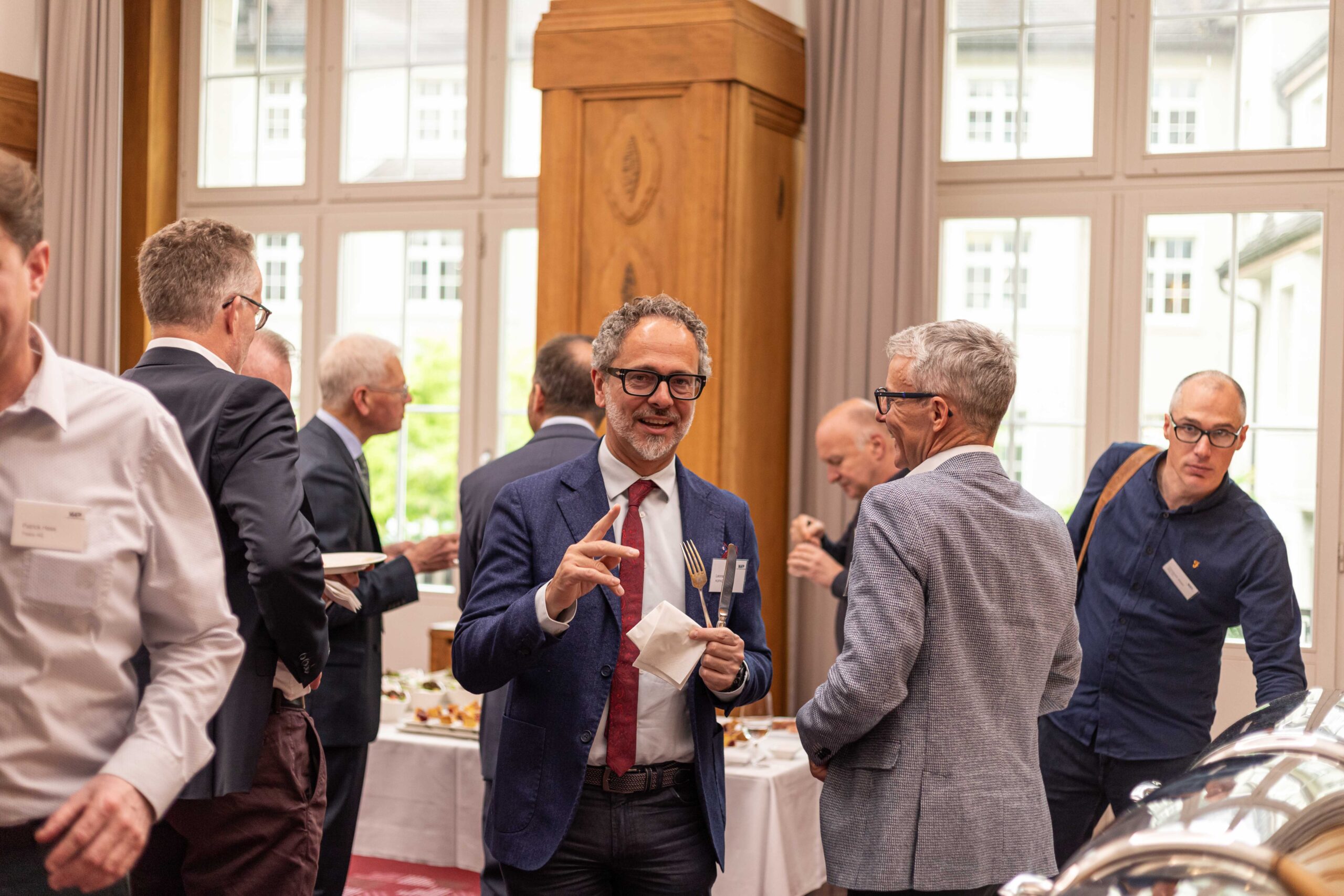
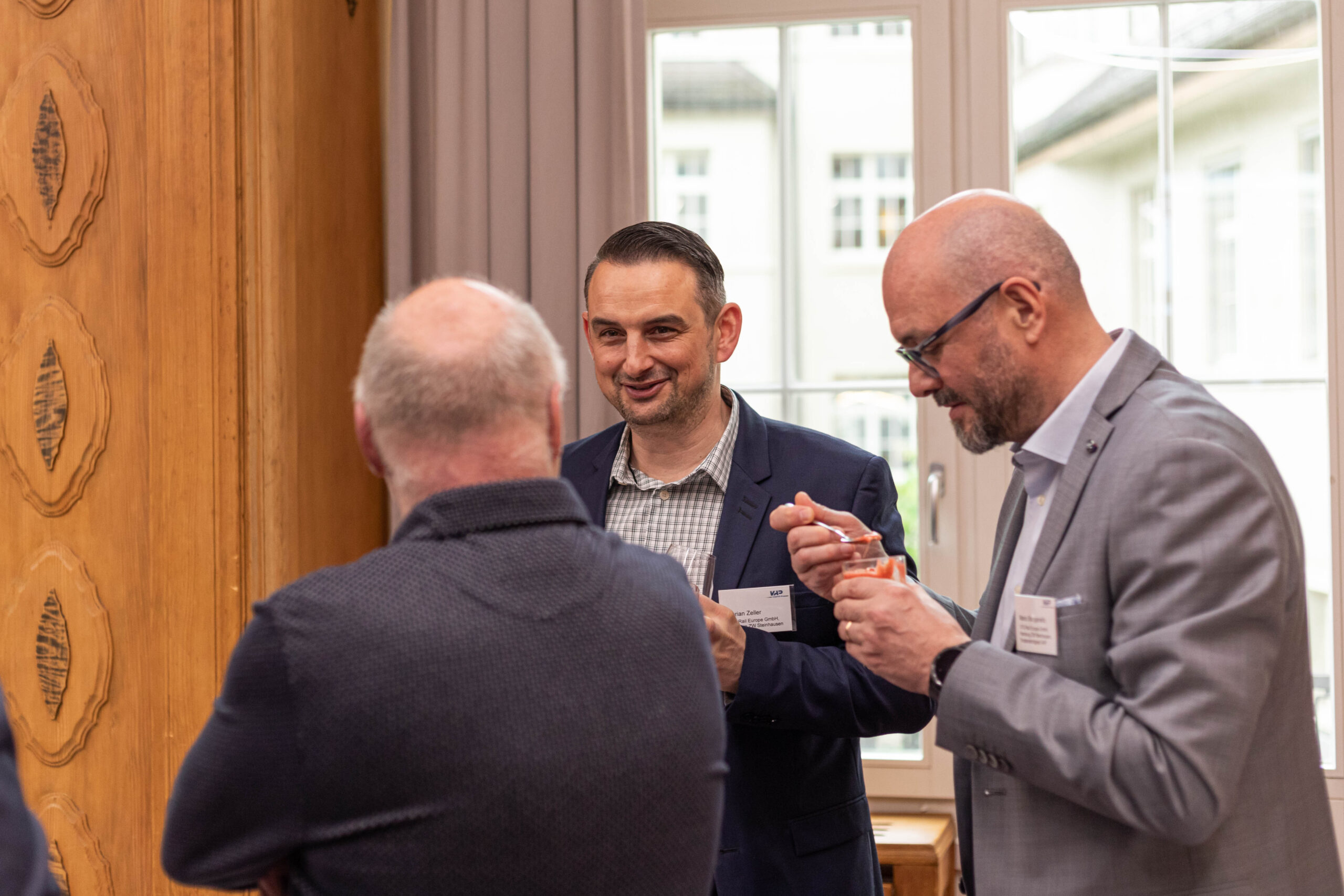
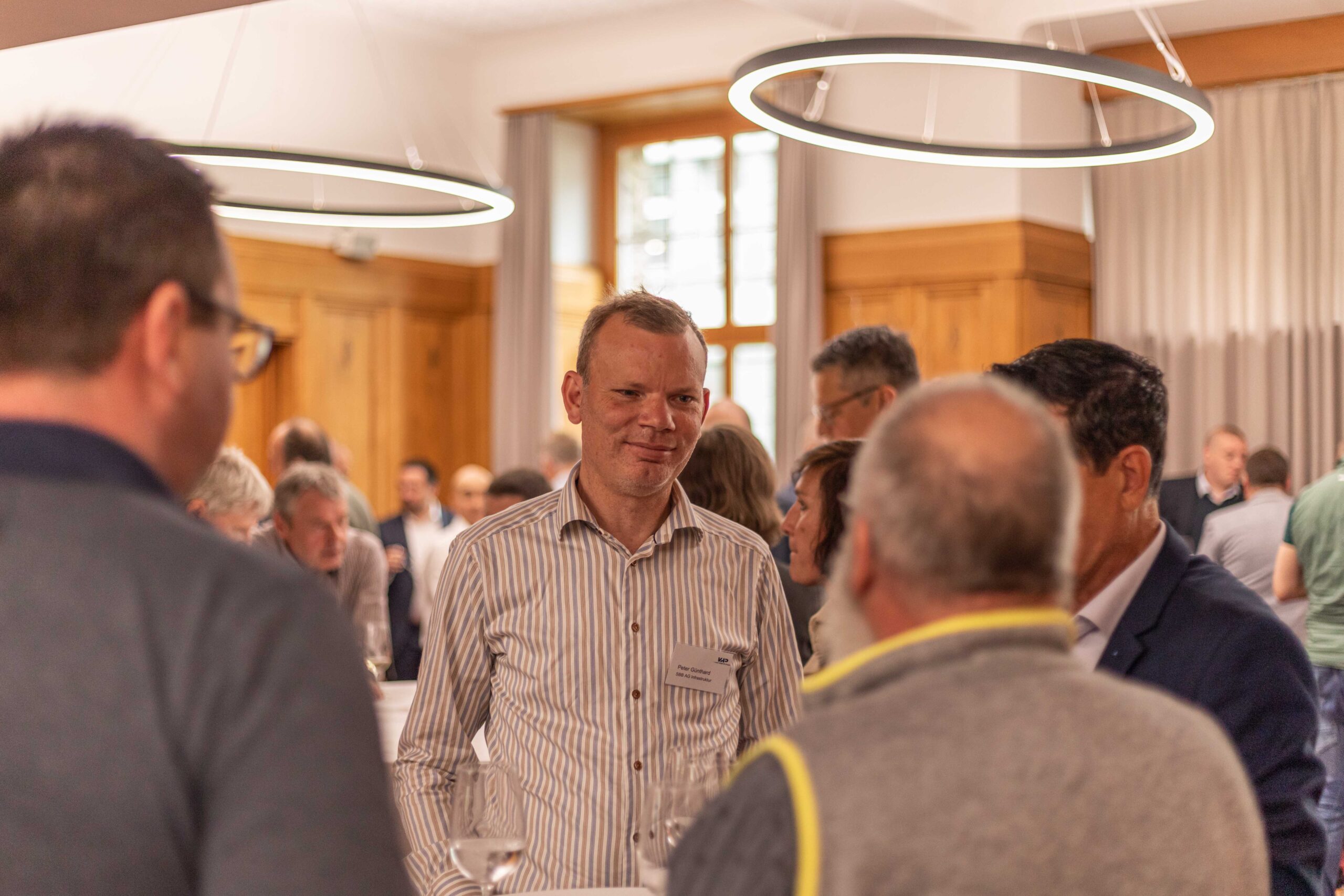
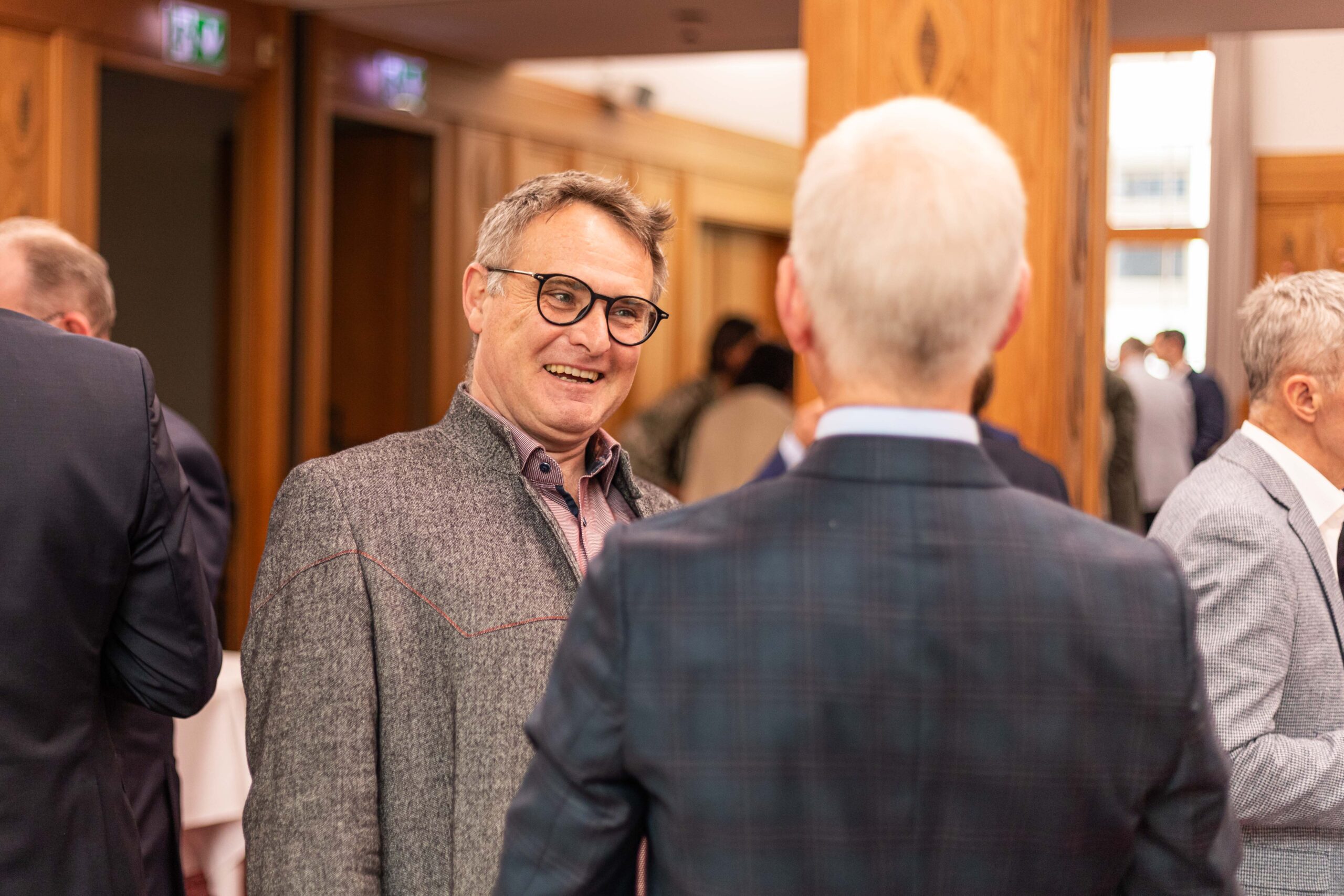
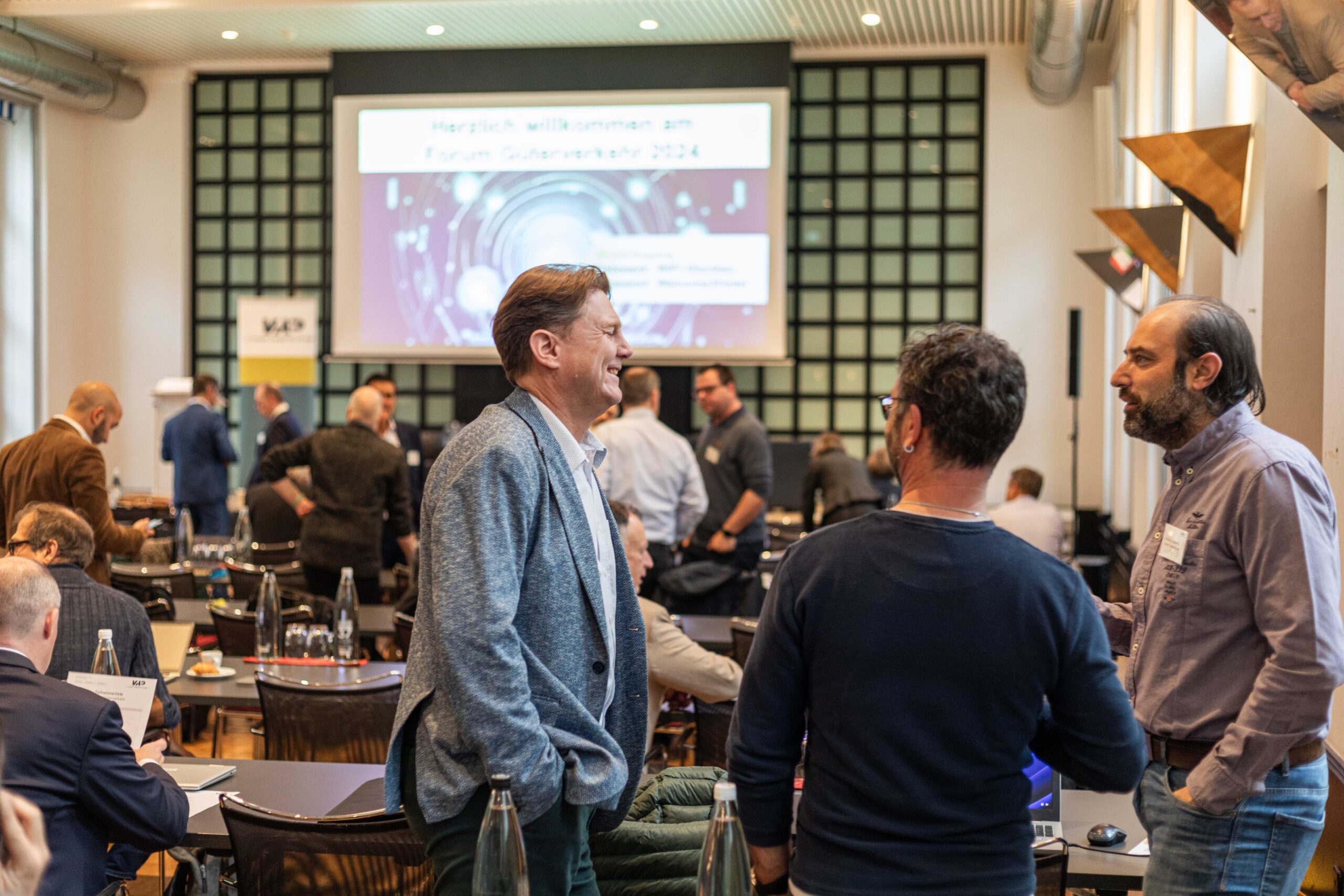
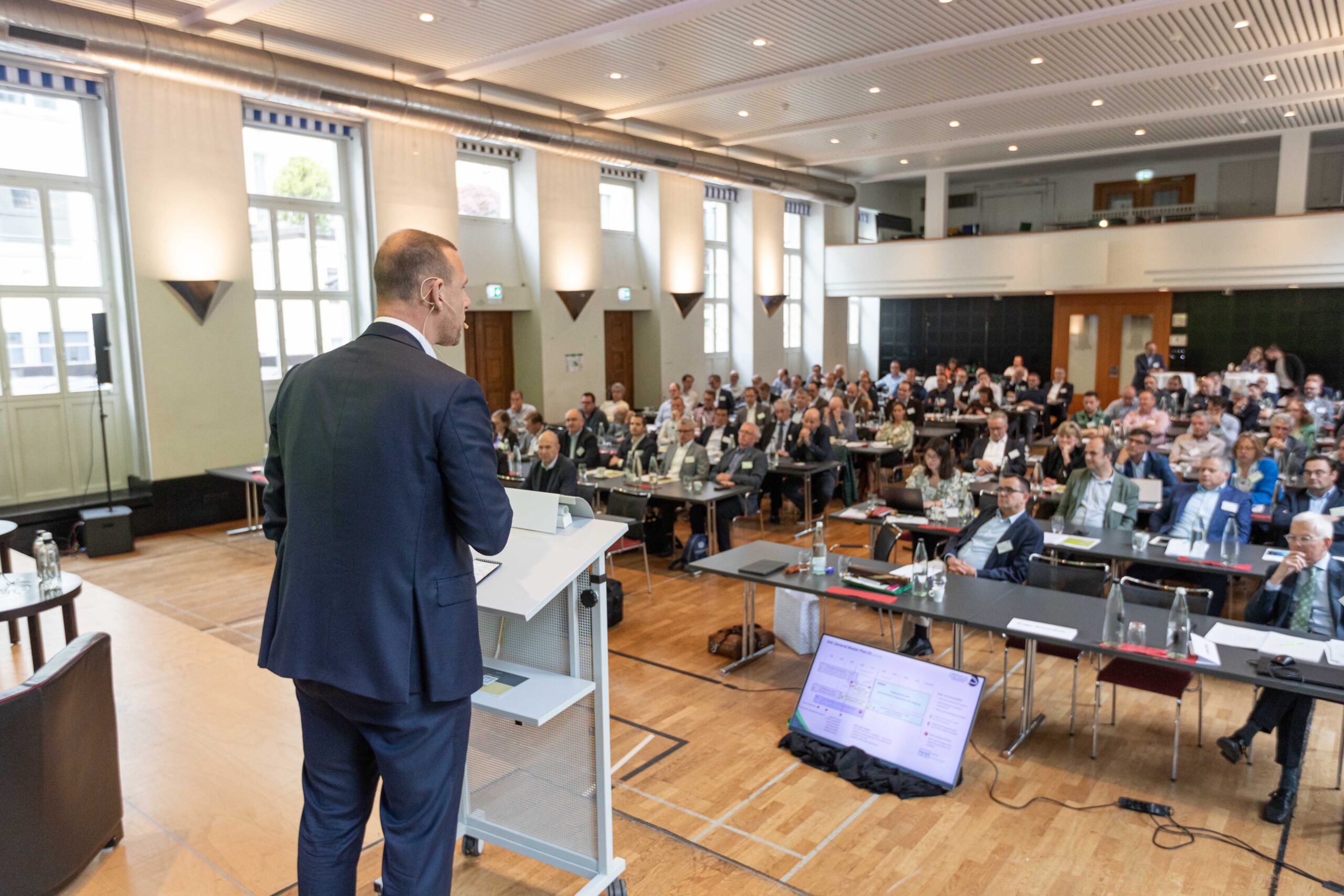
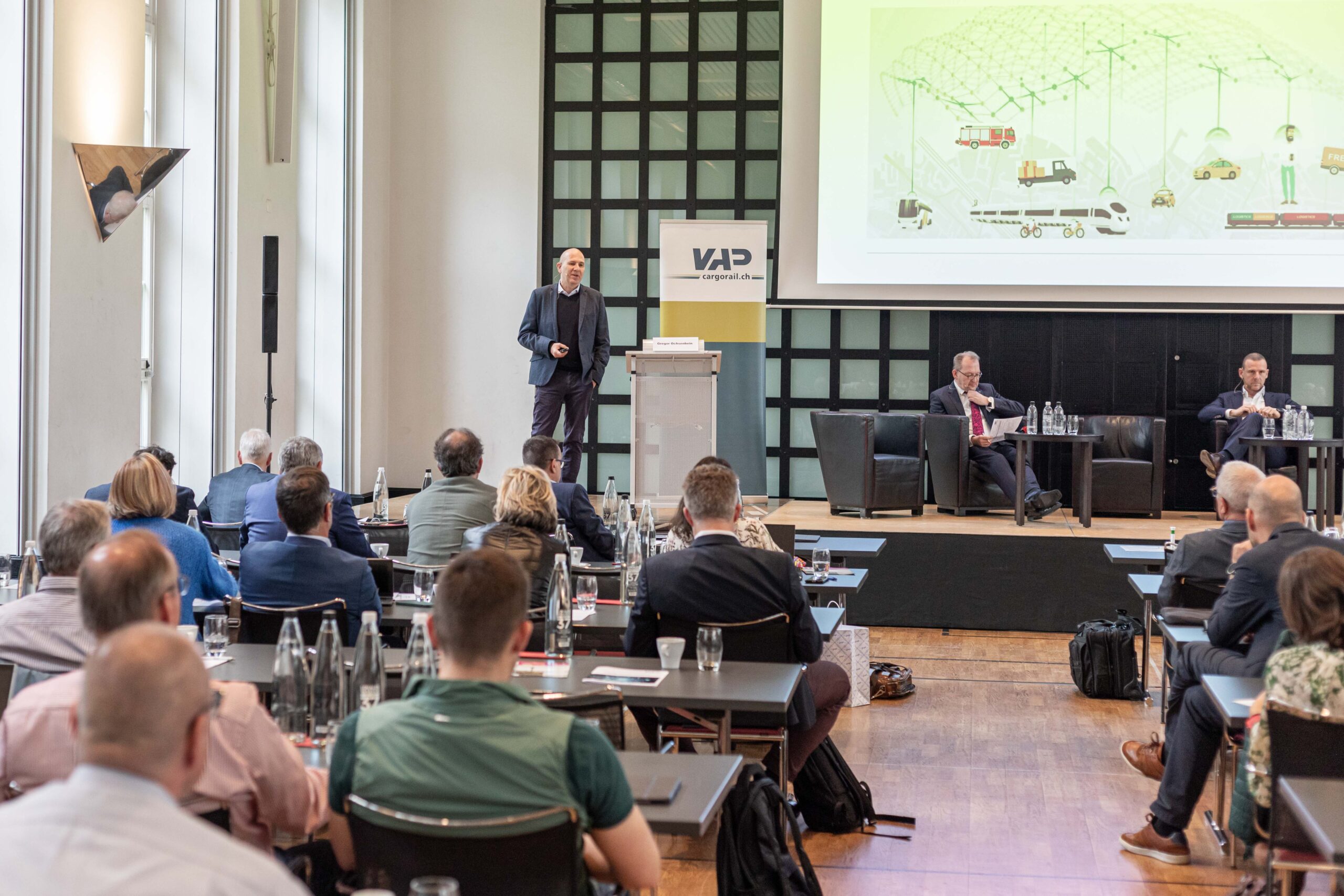
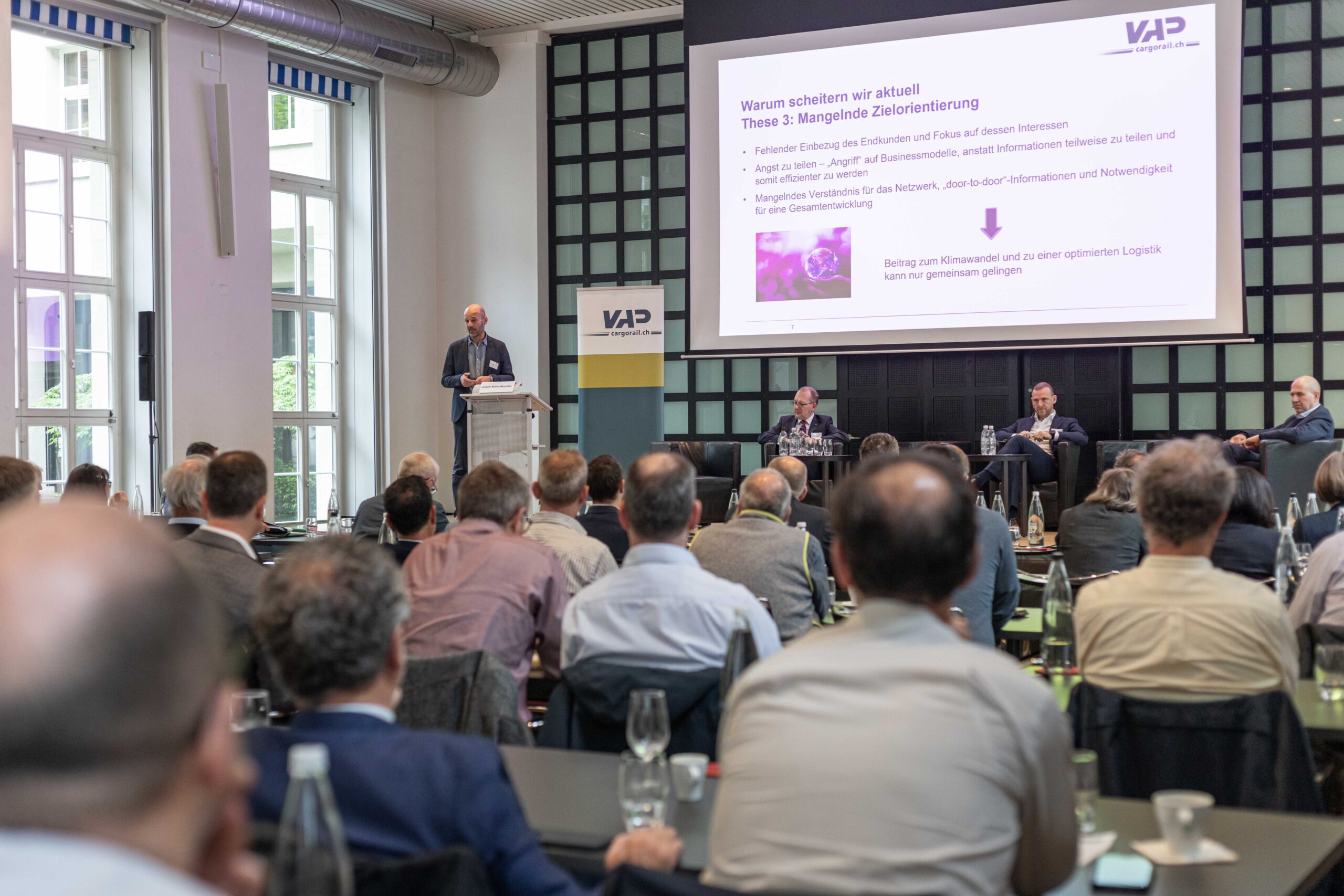
On 7 May 2024, leading figures from the European transport and logistics industry gathered at the Freight Transport Forum in Zurich to discuss the future of rail freight transport.
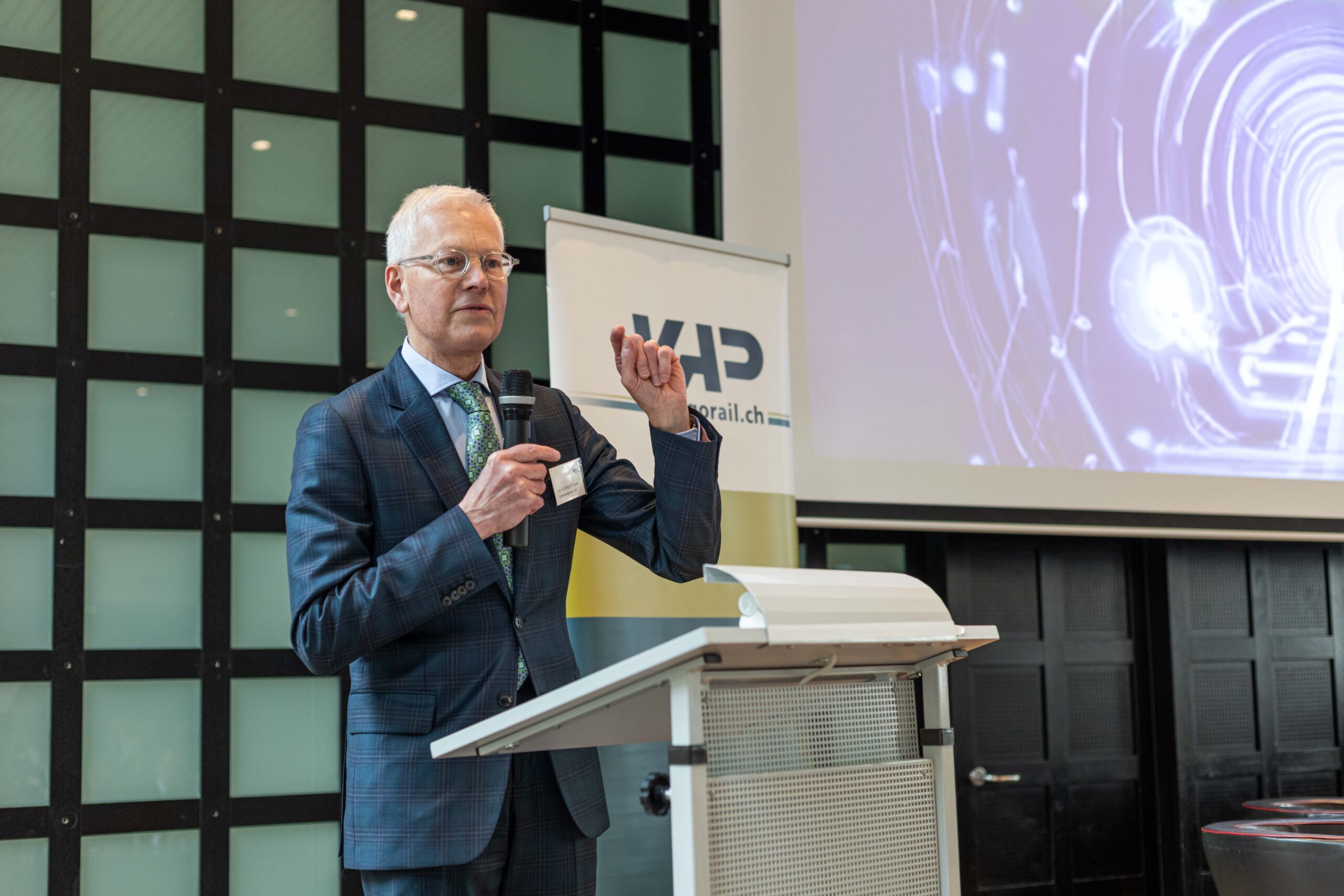
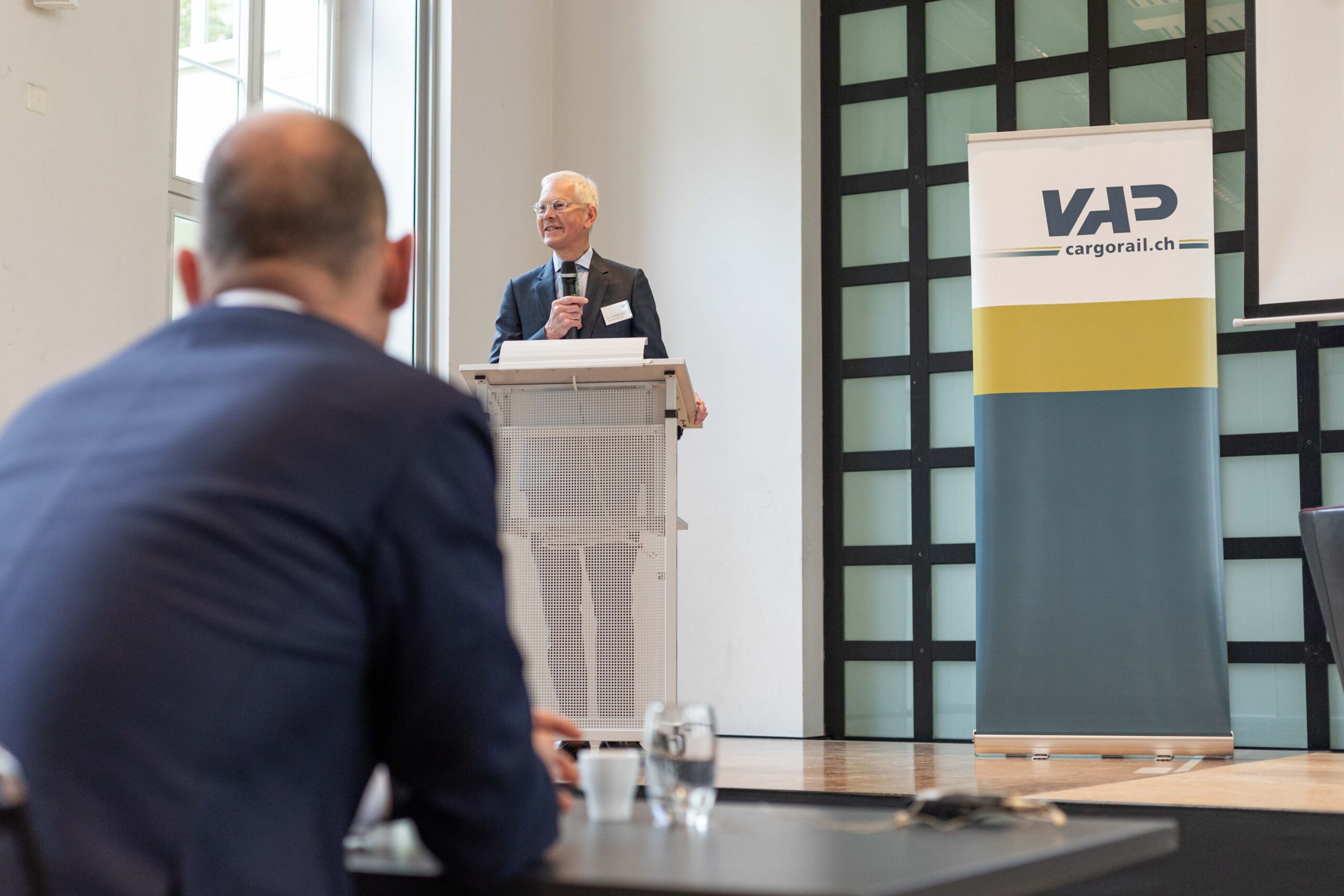
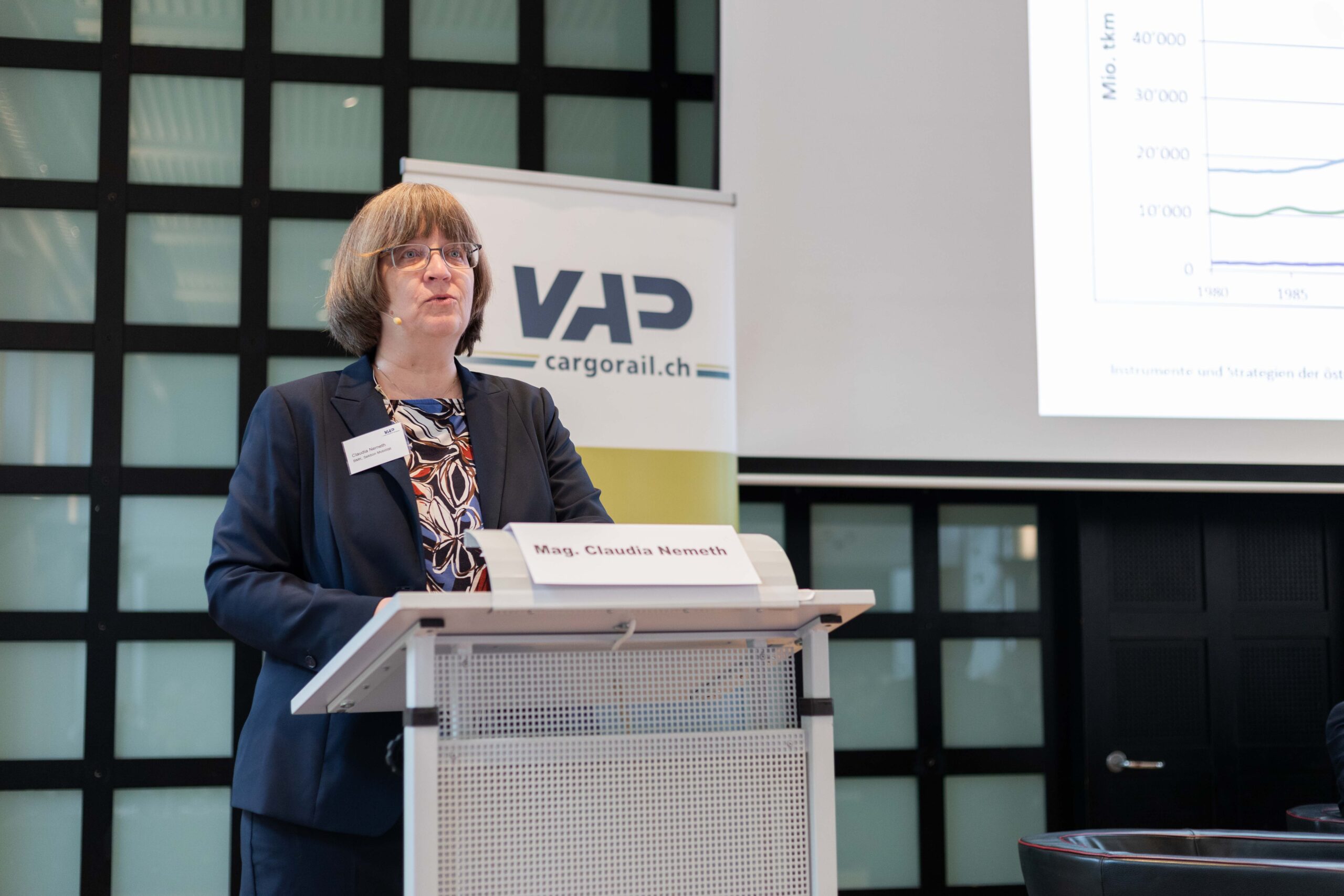
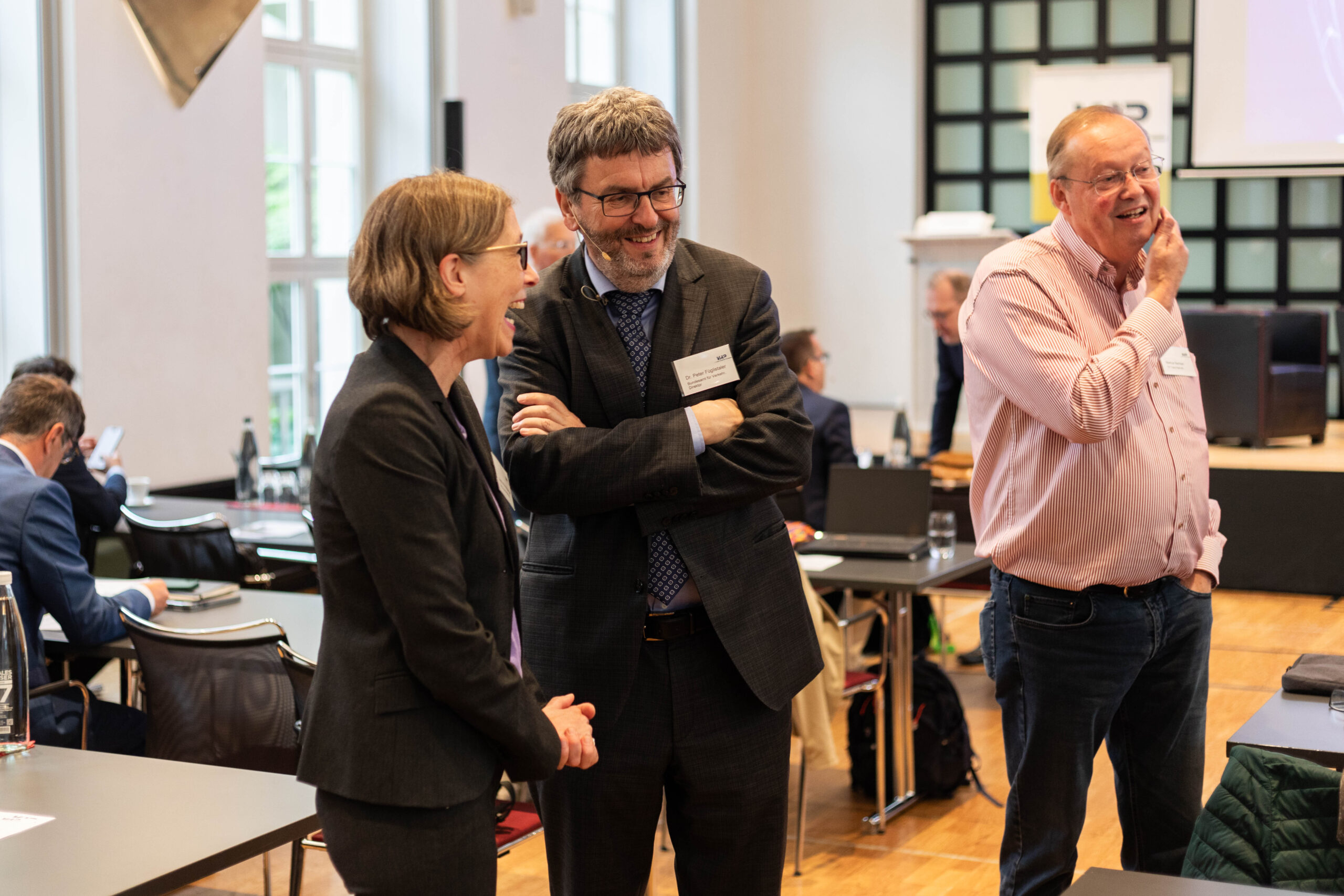
In his welcoming address, Frank Furrer, Secretary General of the VAP Association of the Logistics Industry, looked back on the previous forums from 2018 to 2024, at which an ongoing discussion was held on the development of freight transport. The focus was on topics such as multimodality, safety, innovation and digitalisation. He particularly emphasised the role of transport policy as a driver of change. In 2024, the focus will now be on new framework conditions for sustainable freight transport, in particular the transformation of rail freight transport. Frank Furrer emphasised the importance of favourable framework conditions for competition in order to enable multimodality, innovation and environmental protection. He cited the partnership between politics and business, cooperation between rail freight operators, logistics providers and shippers as well as the principle of subsidiarity as fundamental principles. The current bill to modernise rail freight transport was discussed in parliament. The VAP supports measures such as the introduction of digital automatic coupling (DAK) and bridging funding for single wagonload transport (EWLV) under certain conditions.
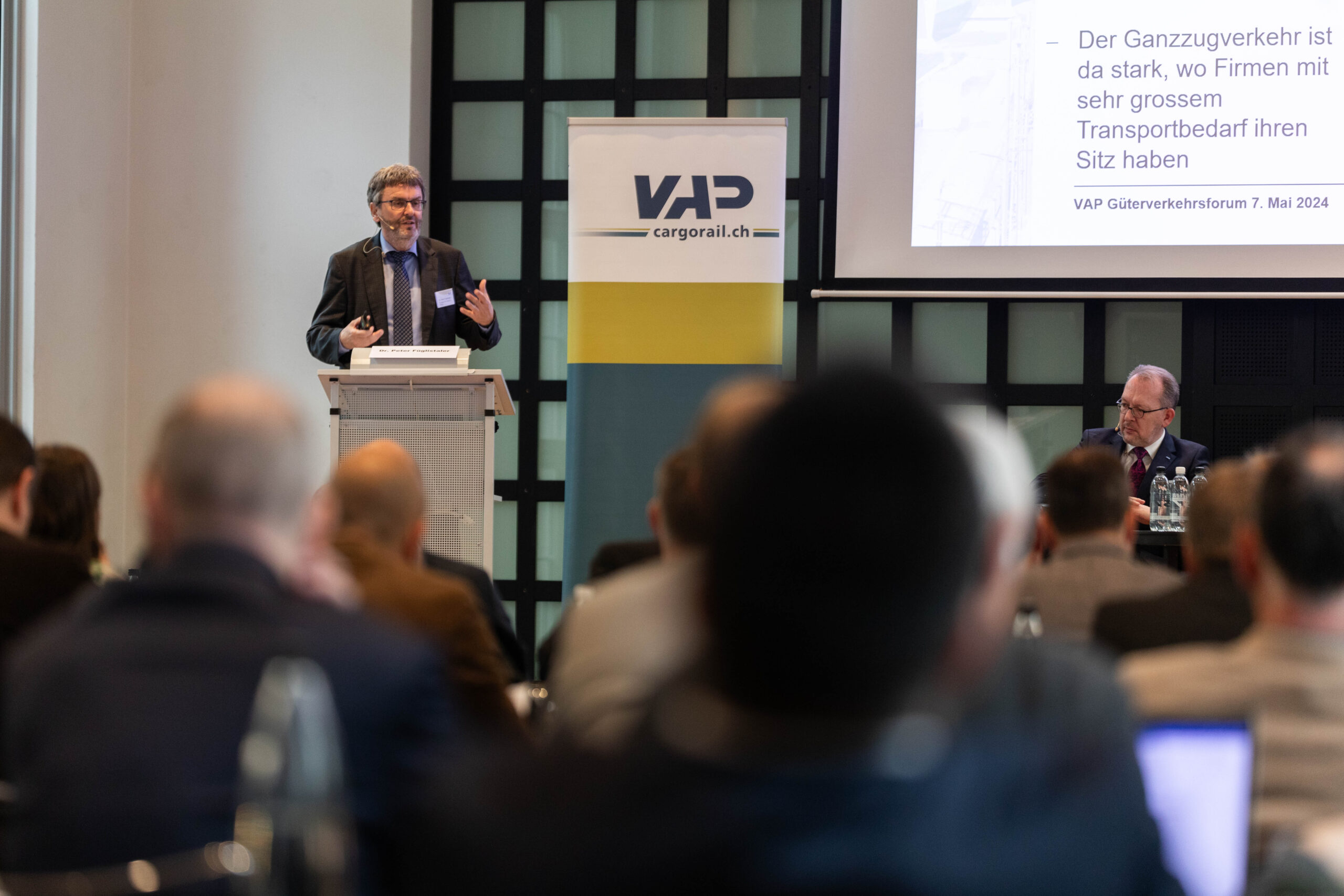
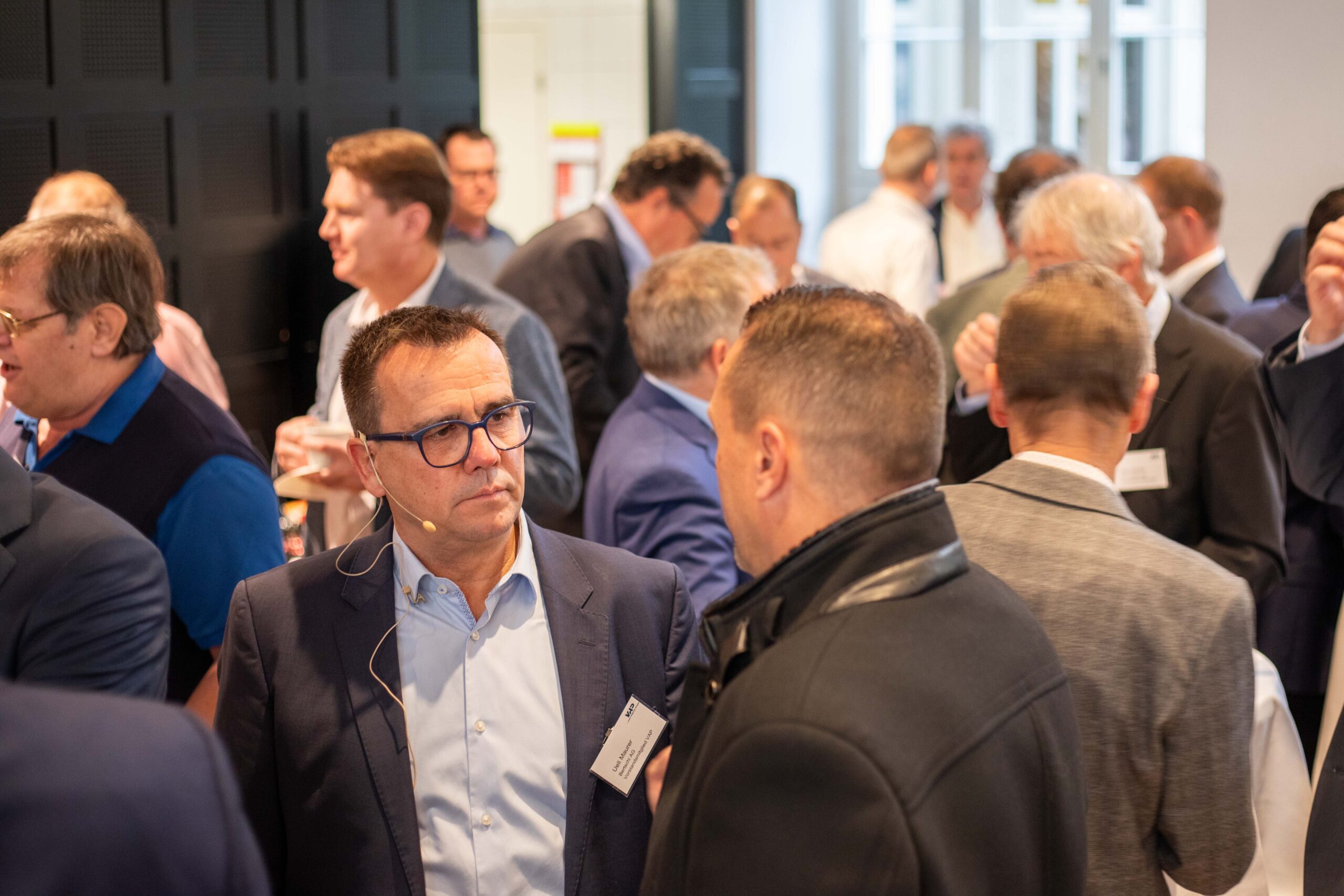
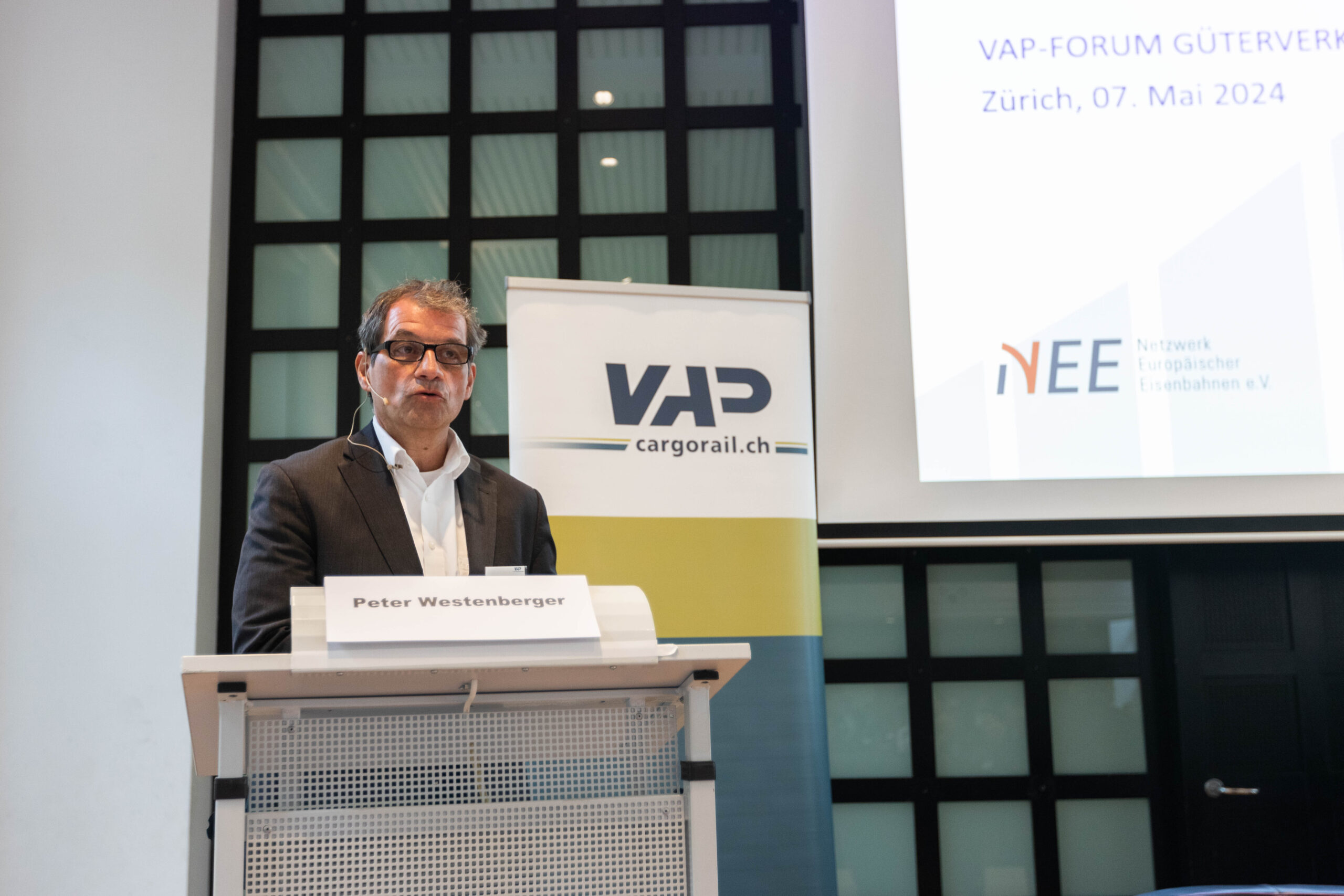
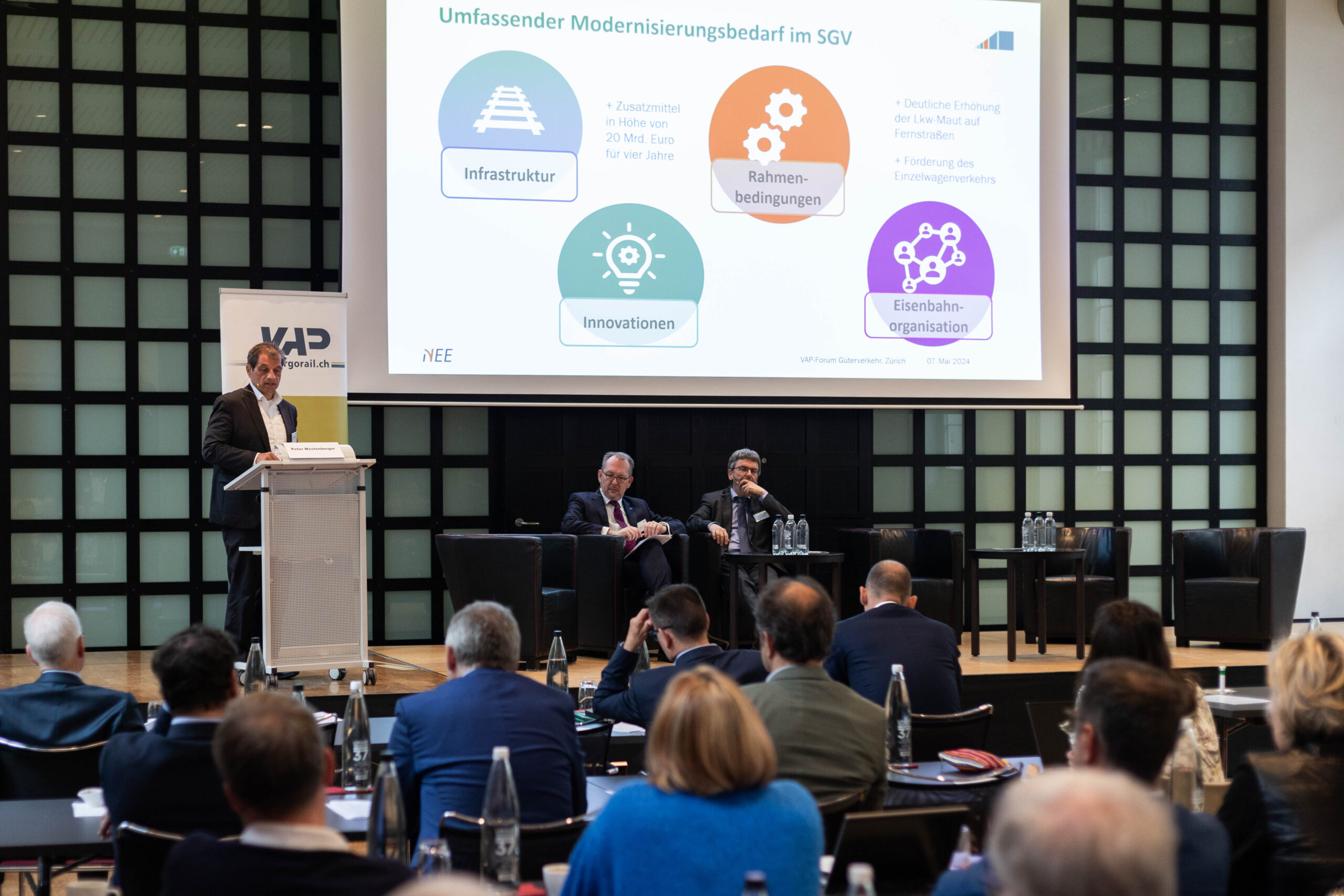
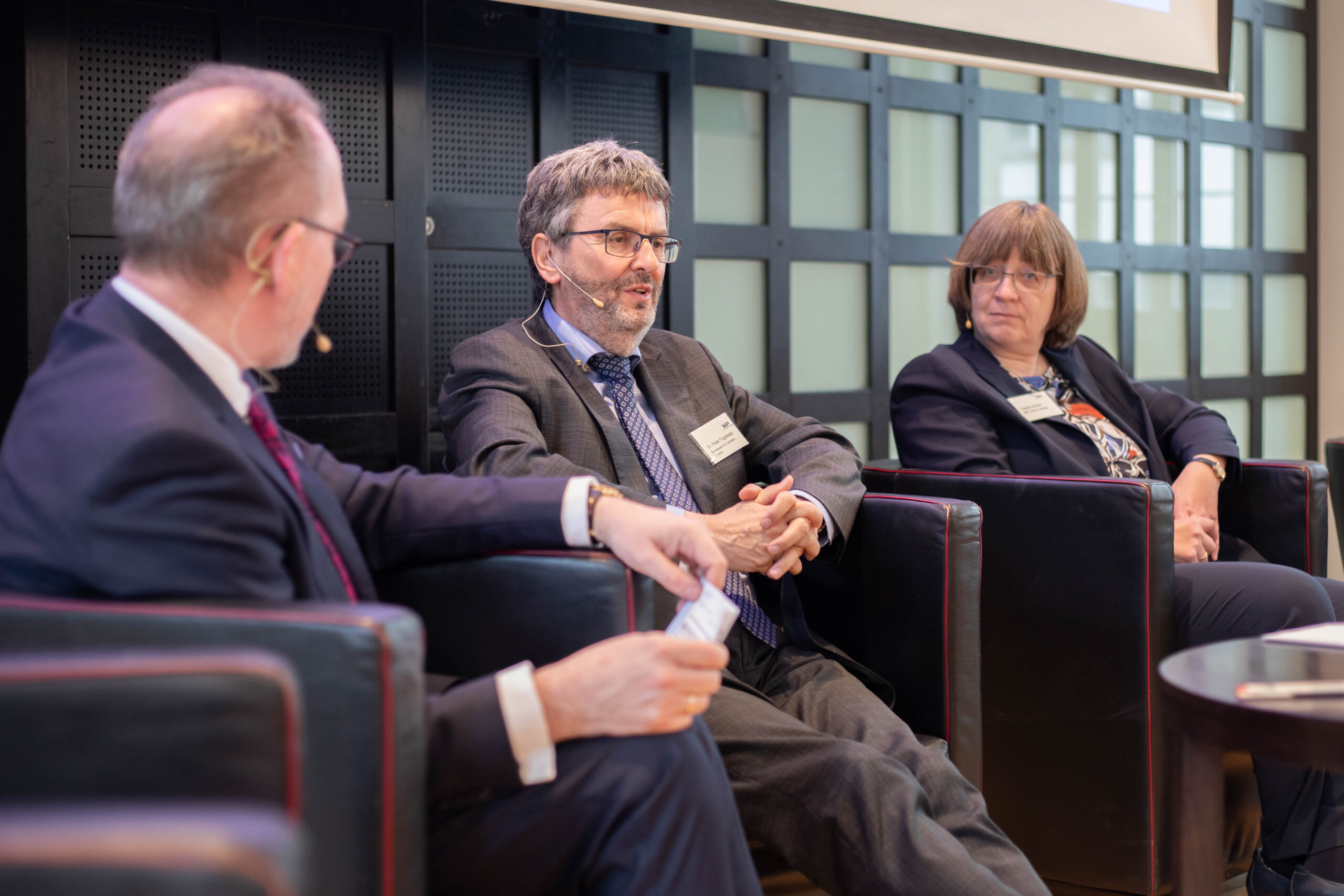
Dr Peter Füglistaler, Director of the Federal Office of Transport (FOT), gave an overview of the current legal framework and challenges in Swiss freight transport. For him, the temporary financial support for wagonload transport is a last attempt to save inland freight transport by rail. The DAK is the necessary means to achieve this, and with a subsidy of 30% to the owners, it is a good offer. Peter Westenberger, Managing Director of Die Güterbahnen in Deutschland, presented the digital railway and the VDV charter from a German perspective. He called for financial support for wagonload transport exclusively via the service routes, i.e. the reactivation or increase in volume at as many service points as possible. It is very difficult for competitors, as the data situation is extremely opaque. Claudia Nemeth from the Federal Ministry for Climate Protection, Environment, Energy, Mobility, Innovation and Technology (BMK) in Austria explained the instruments and strategies of Austrian transport policy with regard to rail freight transport and compared the per capita investments in Switzerland, Germany and Austria. Austria is committed to actively monitoring the measures of the Freight Transport Masterplan 2030 and recently presented the first monitoring report in this regard. One of these measures is the establishment of a modal shift coach at the end of 2023, who advises companies and municipalities on the modal shift to rail. Together with German Transport Minister Wissmann and Federal Councillor Rösti, Austrian Minister Leonore Gewessler supports the rapid introduction of the DAK. Ueli Maurer, Head of Intermodal Network at Bertschi AG, provided valuable feedback from a business perspective. Waiting for the DAK is impossible in view of the progress made on the road; it must be implemented immediately. The current construction sites, which are still completely inadequately coordinated internationally, as well as energy and track prices are currently fundamentally threatening the marketability of rail freight transport. He also called on infrastructure managers to pass on the savings from complete closures to rail freight transport as compensation for their additional costs.
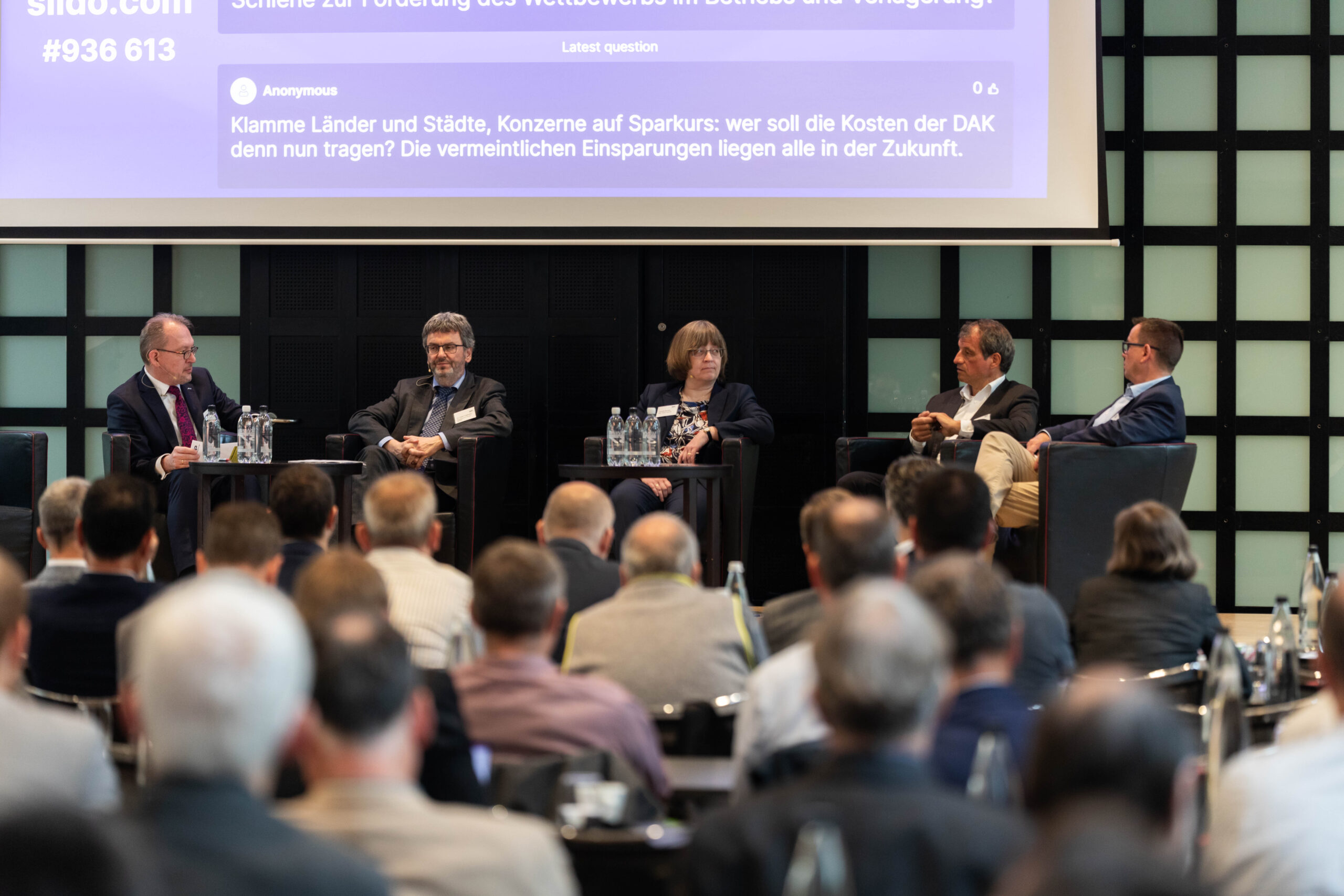
In the panel discussion that followed, Westenberger spoke about the current chaotic construction site situation and the associated additional costs and called for an improvement in the quality of rail freight transport. Nemeth agreed, but was optimistic about the future of rail freight transport and compared the current challenges to a small child learning to walk: there are setbacks, but it gets better. Füglistaler emphasised that there is no alternative to the corridor renovations and stressed the need for investment in infrastructure. Dr Jens Engelmann, who moderated the panel discussion, raised the issue of the effectiveness of funding measures and discussed the various approaches to supporting rail freight transport. Füglistaler and Nemeth defended the role of the state railways for single wagonload transport. Engelmann concluded the discussion by saying that rail makes an important contribution to sustainability and must continue to be promoted, but that challenges such as capacity bottlenecks and the costs of technological innovations must also be overcome.
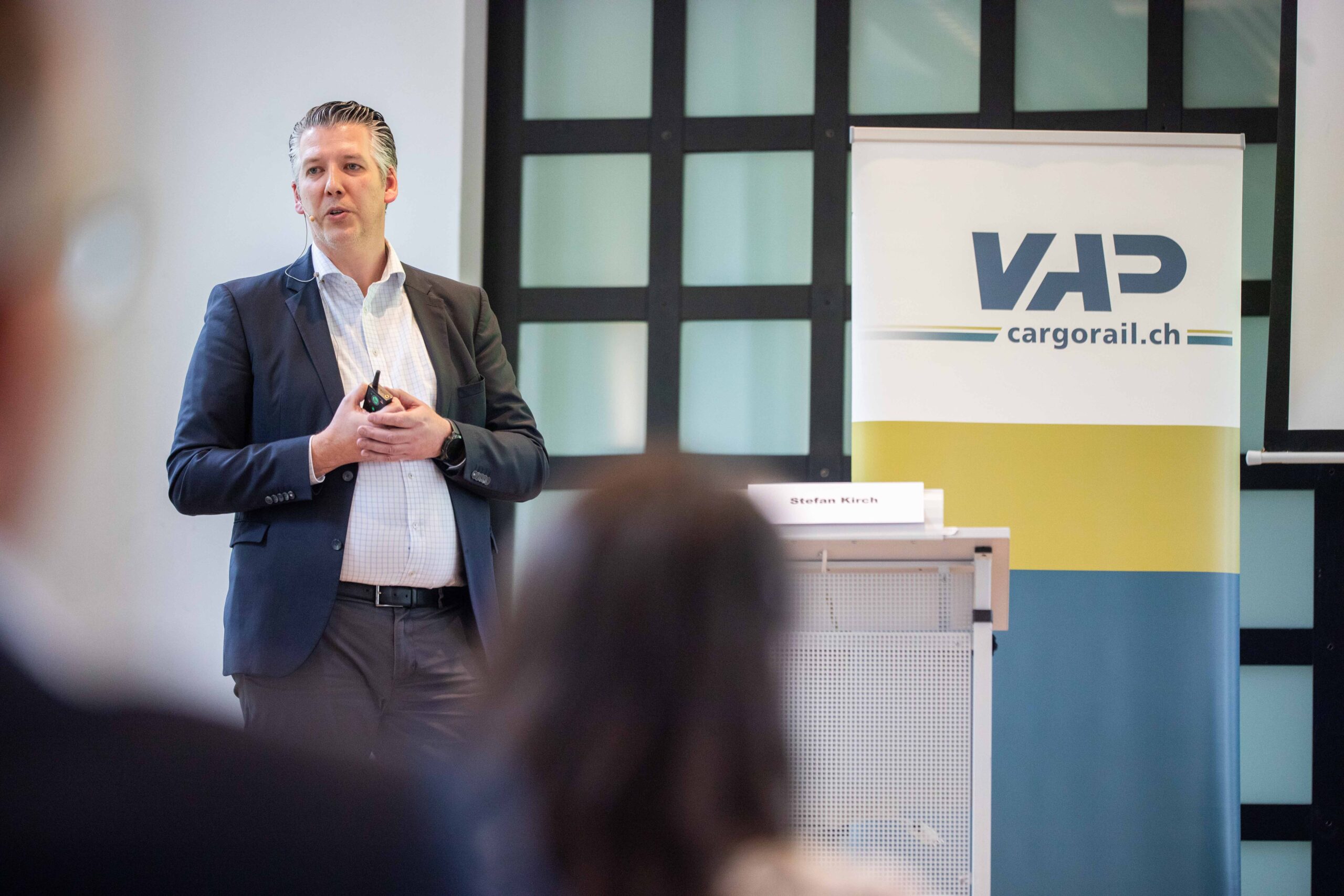
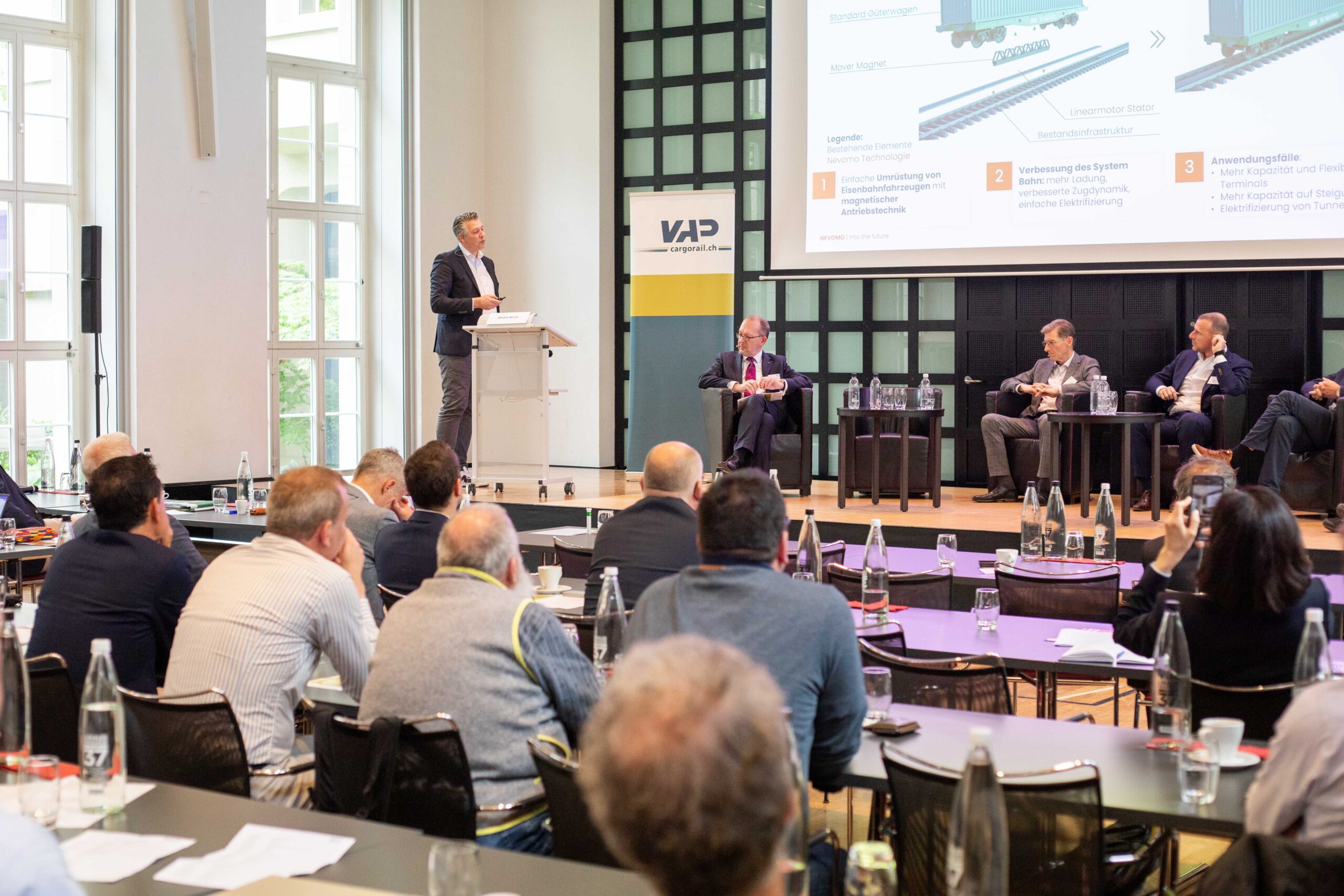
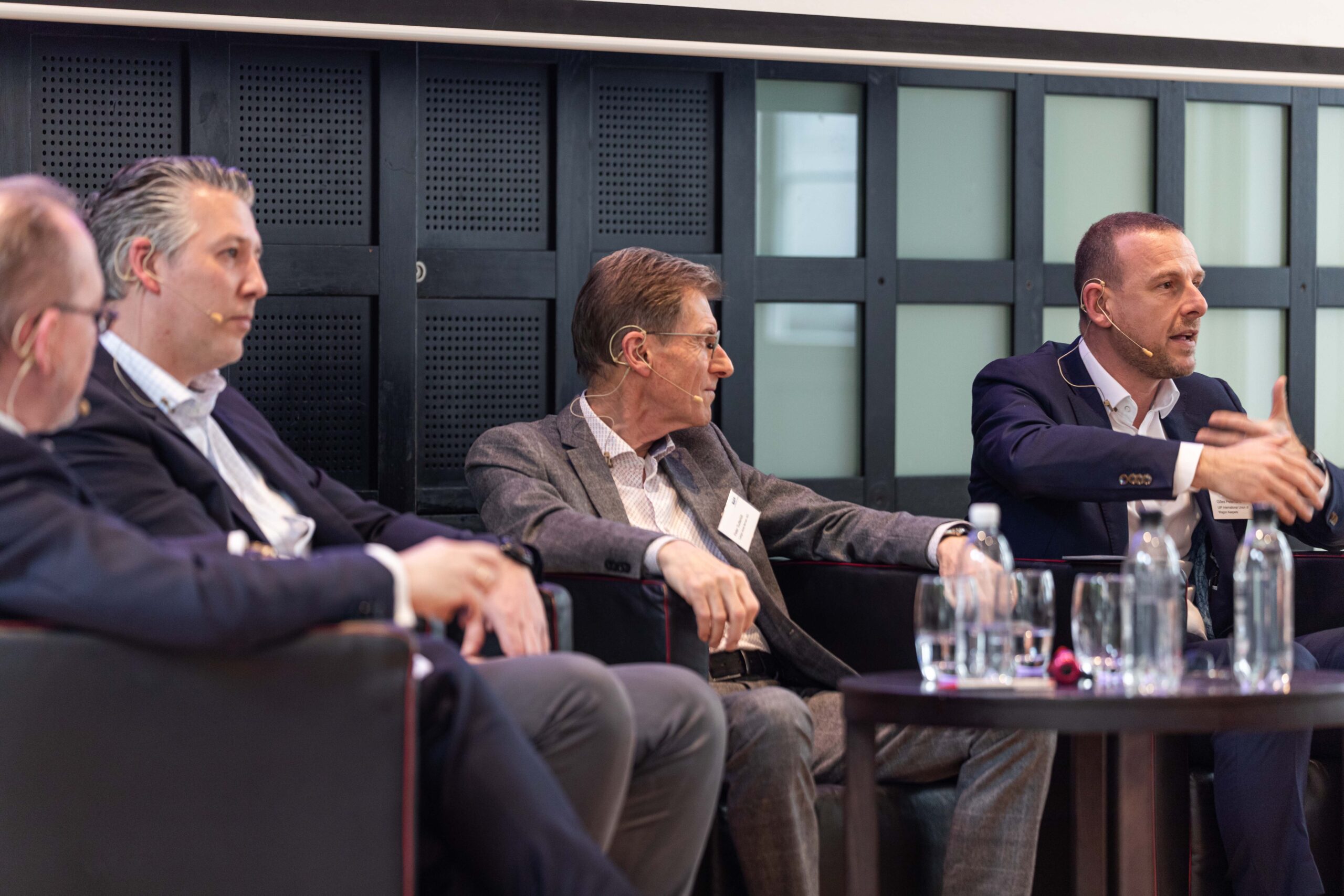
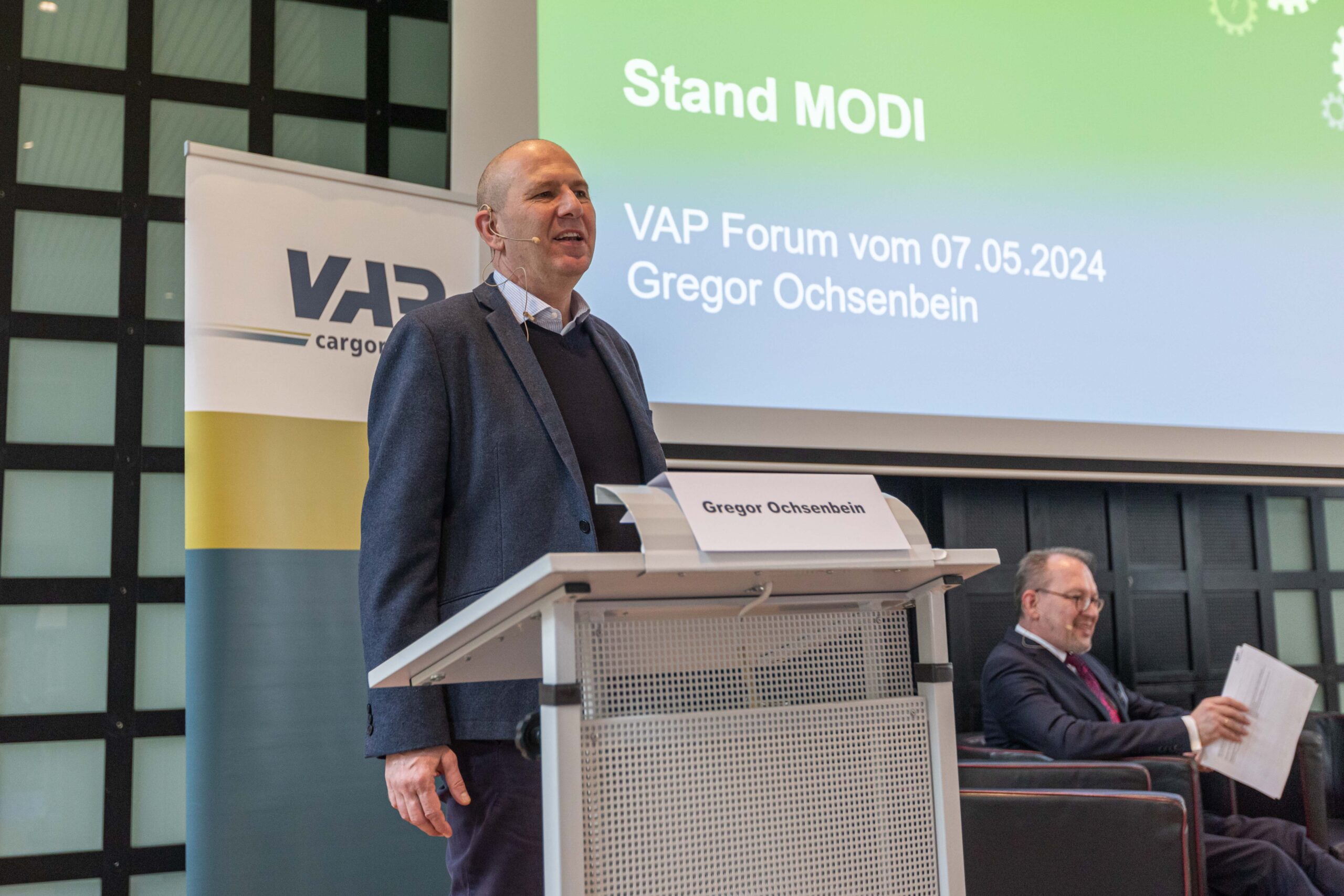
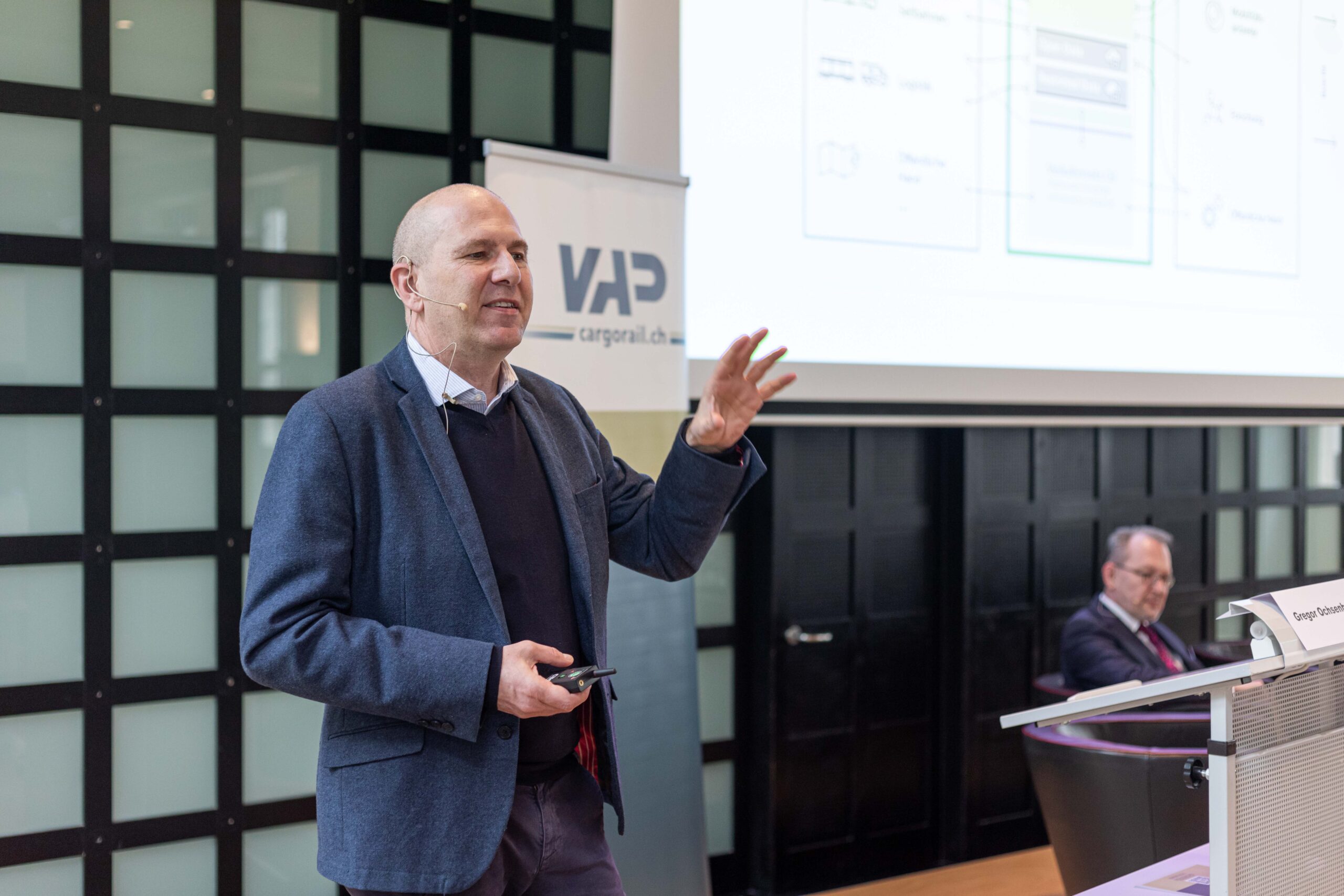
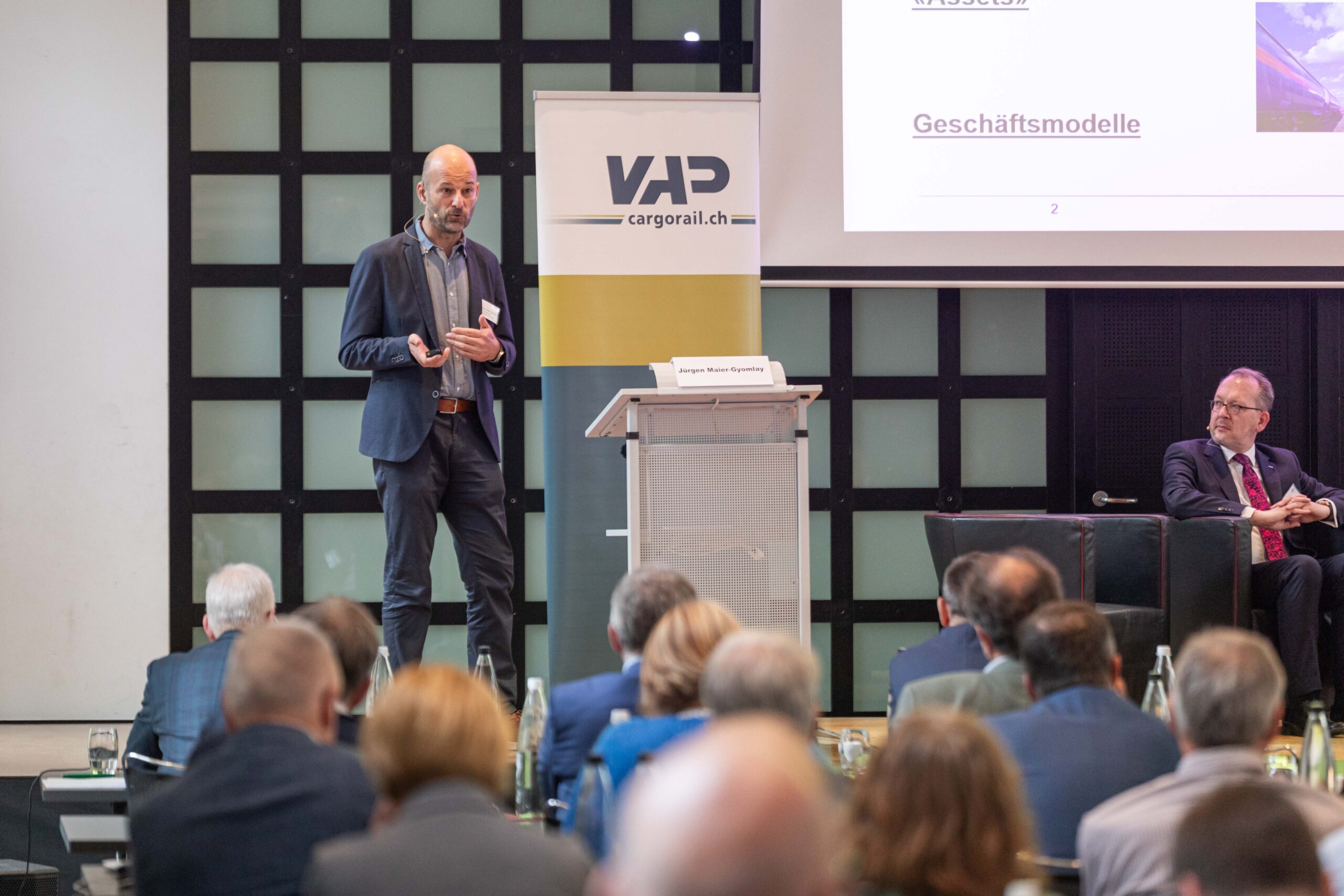
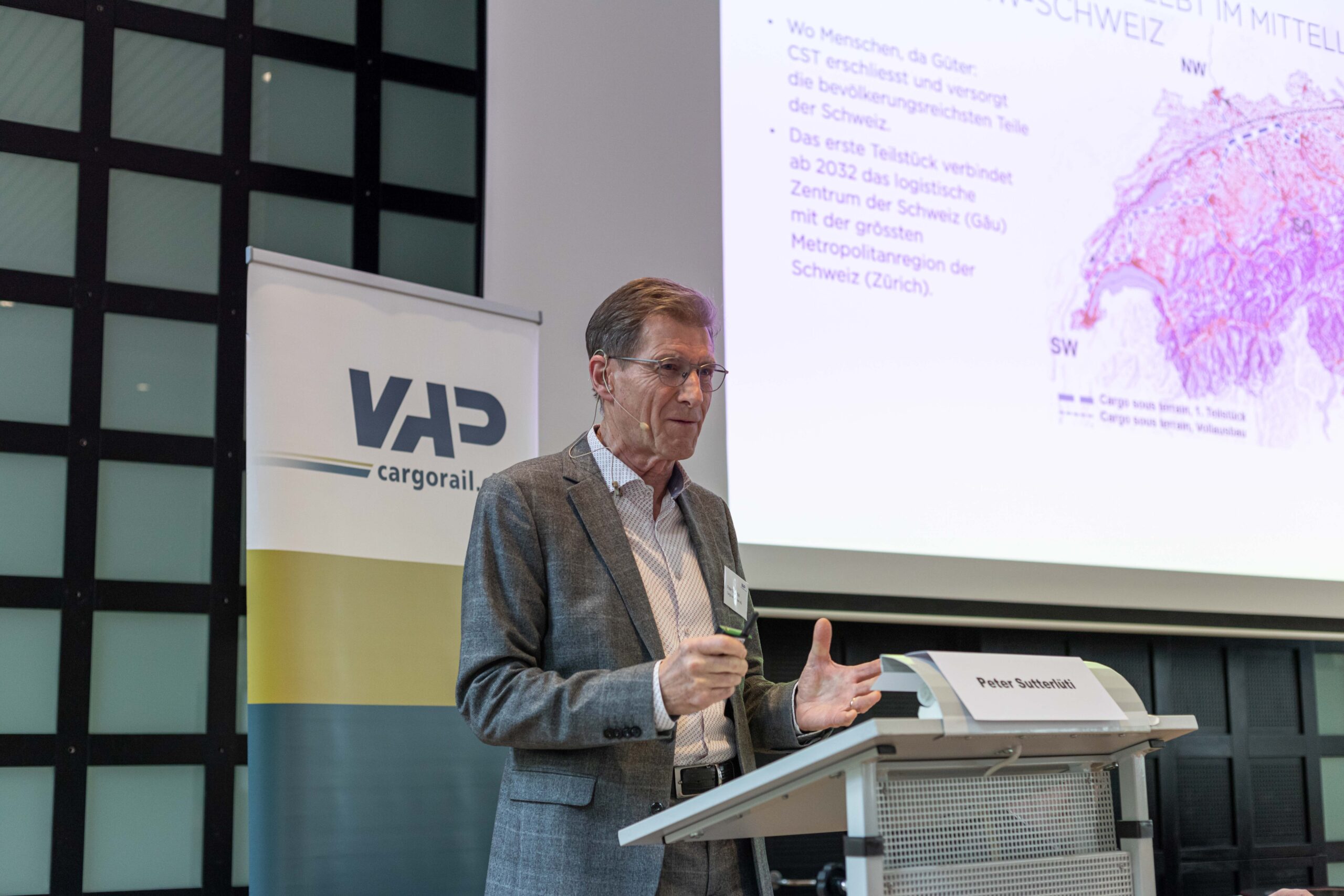
After a short break, the event focussed on the transformation of rail freight transport in the future. Gilles Peterhans, Secretary General of the International Union of Wagon Keepers (UIP), shed light on the current status of digital automatic coupling (DAK). He emphasised the difference between technical retrofitting and the associated transformation of archaic rail freight transport. The latter is to be seriously reorganised to make it competitive and transformed into a completely new rail system. Gregor Ochsenbein, Deputy Head of the Data for an Efficient Mobility System programme at the FOT and Jürgen Maier-Gyomlay, Head of the Logistics Working Group / IG WLV at the VAP, highlighted the importance of data ecosystems for efficient logistics. Peter Sutterlüti, CEO of Cargo sous terrain AG, presented the Cargo Sous Terrain (CST) concept. The purely privately financed logistics solution is available exclusively for general cargo. The interplay of underground main leg and overground fine distribution has the potential to significantly complement rail and road transport. Stefan Kirch, Co-Founder and Member of the Management Board at NEVOMO, presented the potential of maglev technology for a more effective and higher-capacity freight transport solution. In particular, autonomous driving of freight wagons in large-scale sidings with a large number of loading and unloading stations as well as consolidation points for dispatch and receipt offer exceptional potential for savings.
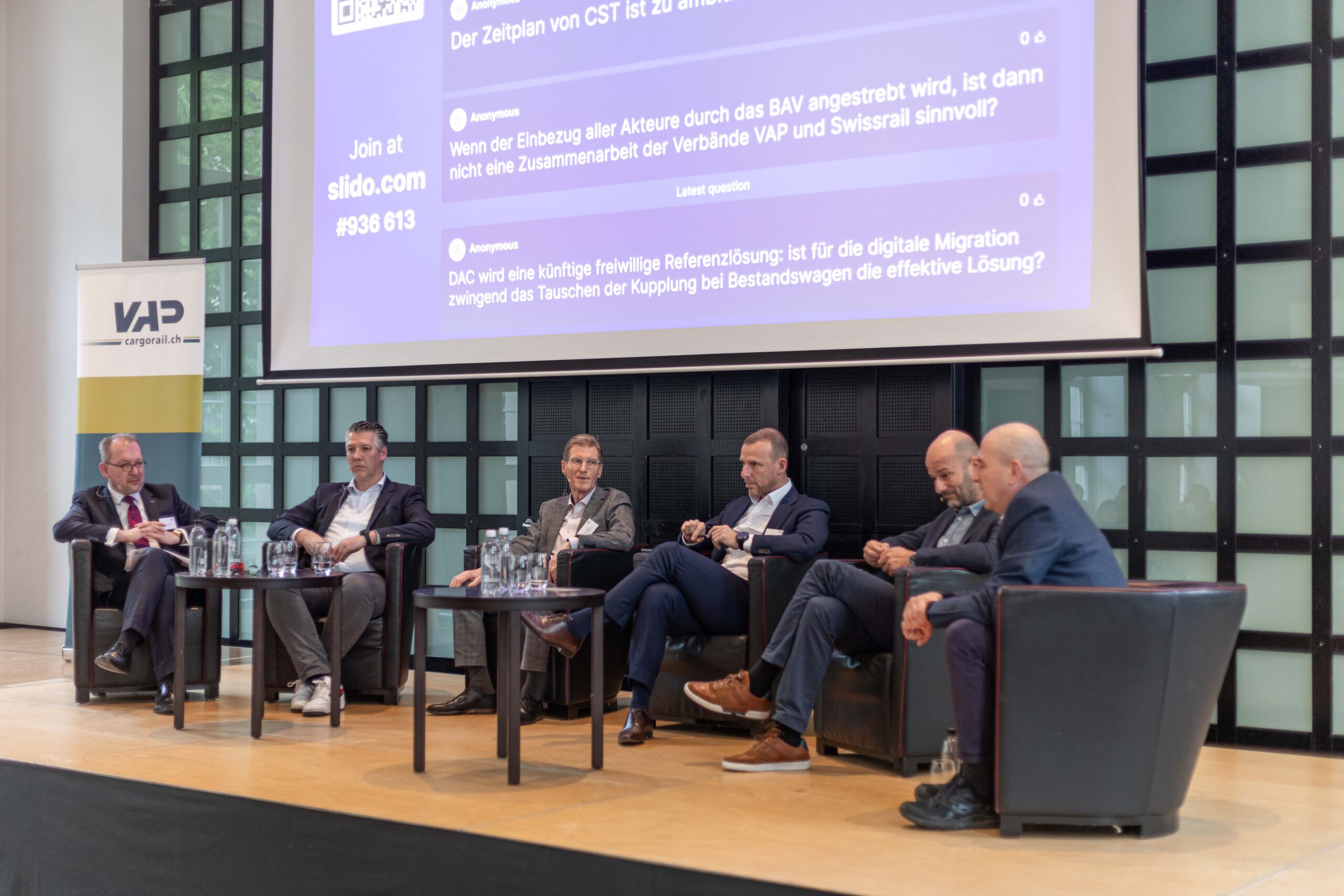
The event culminated in another panel discussion, which focussed on the future of logistics in 2035. In addition to the voluntary nature of data disclosure, the challenges of digital transformation, particularly in terms of costs and collaboration with various stakeholders, were also discussed. In conclusion, it was emphasised that we should be open to innovative solutions and not let problems hold us back. Frank Furrer summarised the event with a statement that was as confident as it was challenging: Anything is possible, as long as all industry players join forces and close ranks to move forward pragmatically and with a willingness to compromise.
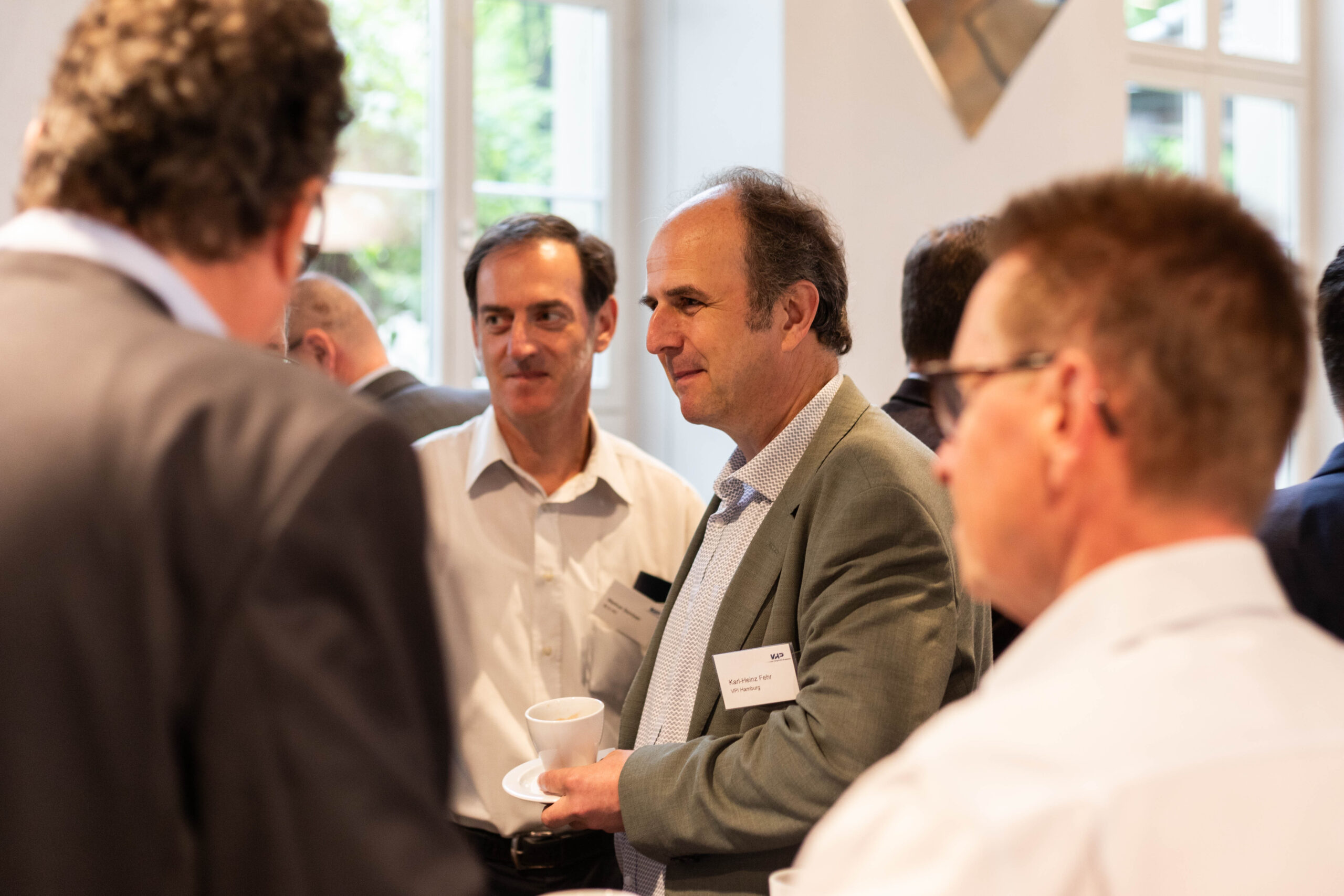
It was a day full of exciting encounters, informative presentations, stimulating discussions and a clear focus on shaping a sustainable freight transport landscape. The participants left the conference with new insights and impulses for the further development of the industry.
We are already looking forward to the Freight Transport Forum 2025!


























Bilaterals III: Switzerland must be involved in the future of rail freight transport
The Federal Council has given the go-ahead for the Bilateral Agreements IIIwith the definitive negotiating mandate. Negotiations on the so-called Bilaterals III began on 18 March 2024. We at the VAP support the efforts of the mandate in the area of overland transport. Switzerland must be able to help shape the far-reaching renewal of the rail freight transport system.
That’s what it’s all about:
- Stabilising Swiss-EU relations
- Mandate takes into account the fears of SBB and trade unions
- VAP welcomes continuation of the dialogue
- Joining forces in favour of rail as the mode of transport of the future
Stabilising Swiss-EU relations
At its meeting on 8 March 2024, the Federal Council adopted the mandate for negotiations with the European Union (EU). The negotiations on the comprehensive package are intended to stabilise and further develop bilateral relations between Switzerland and the European Union. They started on 18 March 2024. In its mandate, the Federal Council has adopted a number of recommendations, including market liberalisation in the electricity sector, the preservation of the cooperation model in the overland transport sector and the retention of customs tariffs in the agricultural sector. Other adopted recommendations relate to immigration, wage protection and institutional elements.
Mandate takes into account the fears of SBB and trade unions
In its «Report on the results of the consultation on the draft negotiating mandate between Switzerland and the European Union on the stabilisation and development of their relations», the Federal Council states that the model of SBB cooperation in international rail passenger transport remains possible, that Switzerland may continue to allocate train paths and that the rules for international passenger transport must not impair the Swiss quality of public rail transport. In its negotiating mandate, it also guarantees tariff integration, a synchronised timetable and a modal shift from road to rail. The regulatory dialogue in the financial sector between Switzerland and the EU will be resumed. In doing so, he dispels the unfounded fears of SBB and the trade unions of the «dark forces» of competition.
VAP welcomes resumption of dialogue
In our statement of 12 February 2024, we at the VAP welcome the fact that the government – in particular the Federal Office of Transport (FOT) and the Department of the Environment, Transport, Energy and Communications (DETEC) – is continuing its efforts to make progress on the key dossier for the rail sector in realistic stages despite the existing political deadlock between Switzerland and the EU. After all, market liberalisation offers Switzerland interesting opportunities such as guaranteed interoperability, greater innovative strength and higher efficiency. In this context, we also support the revision of the Railway Act and welcome the fact that there are already concrete proposals for amendments at ordinance level.
We consider the realisation of ERA membership for Switzerland following the successful negotiations to be the next milestone. The ERA has created expert status specifically for Switzerland. This means that Swiss experts can already participate in the ERA committees for the further development of the common specifications. In addition, Switzerland has been systematically adopting rules from the EU’s Interoperability Directive and Safety Directive for years. Overall, Switzerland has a great interest in securing sustainable access to the European railway sector as soon as possible through full ERA membership – not only to participate but also to have a say in decision-making.
We support the present negotiating mandate in the area of land transport. In our view, the market liberalisation in international passenger transport, which has not been implemented for years, is necessary and offers opportunities for interesting developments despite the restrictions imposed.The procedure for integrating the institutional elements into the sectoral agreements is justifiable based on our previous experience in the development of legislation with the involvement of Swiss experts.
Joining forces in favour of rail as the mode of transport of the future
Rail freight transport should regain market share thanks to innovation – that is what the EU wants and that is what Switzerland wants too.However, we need long-term strategies and strong investors to achieve this.Stability is the indispensable basis for international transport cooperation (see blog post «Stability as an indispensable basis for international transport cooperation»).The innovation for future rail freight transport with digitalisation and automation is currently being developed in the EU.Switzerland wants to participate and have a say in shaping this far-reaching renewal of the rail freight transport system.
This is only possible in an efficient and sustainable manner if political differences are resolved and there is sufficient clarity about future cooperation. This includes Switzerland rejoining the Horizon 2020 research and innovation programme, an update of the overland transport agreement between Switzerland and the EU and bilateral agreements on border operating routes with our neighbouring countries.
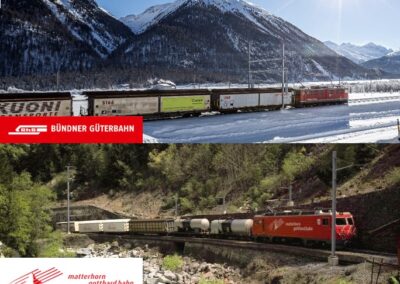
The future belongs to combined transport
What future do freight railways have in Switzerland? The VAP discusses these and other questions in a double interview with Peter Knaus, Head of Graubünden Freight Railway at the Rhaetian Railway (RhB), and Peter Luginbühl, Head of Operations at the Matterhorn-Gotthard Railway (MGBahn). In the debate, the experts talk about in-house operation and outsourcing, economic viability, innovation, competition and making rail freight transport more flexible.
Mr Luginbühl, rail freight logistics is outsourced on the Matterhorn-Gotthard Railway. Why is that?
Peter Luginbühl: As a company that operates primarily in the tourism sector, our main focus is on passenger mobility. Freight transport accounts for around 2% of the overall result in the public service sector. In 2011, the decision was made to concentrate on rail transport for freight transport. We have placed the upstream and downstream interfaces with the customer under the responsibility of Alpin Cargo AG as the overall logistics service provider. This allows us both to concentrate on our core competences: We are responsible for transport by rail, Alpin Cargo for the interface to the customer, i.e. also for the last mile. In Zermatt, for example, fine distribution is carried out using electric vehicles and horse-drawn carriages.
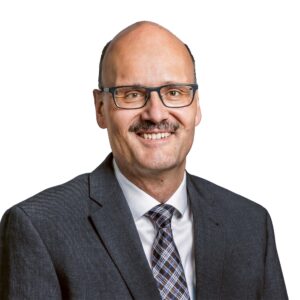
Peter Luginbühl, Head of Operations Matterhorn-Gotthard Railway
To what extent is this outsourcing an advantage?
Peter Luginbühl: This operator model has proved its worth for our starting position with a limited size and a fairly manageable contribution of freight transport to the overall result. It is also ideal from the freight customers’ point of view.
Would you outsource again?
Peter Luginbühl: Yes. Our operator model works very well. Nevertheless, we question it every five years and carry out a site assessment. We are only about a quarter of the size of the RhB’s Graubünden freight railway. So it doesn’t make sense to run it ourselves.
Mr Knaus, you operate rail freight transport yourself. What does this in-house operation look like?
Peter Knaus: We have orders from the canton of Graubünden to provide the public service, among other things. In the past, transport companies were literally forced onto the railway. Things are different today. We use the railway for what makes economic sense. This creates a win-win situation for us and our customers. For short distances or the last mile, we work together with road haulage companies. We regularly exchange information with these business partners at our annual transport platform and through personal contact.
What disadvantages do you see with your model?
Peter Knaus: An enormous amount of effort for our own rolling stock. Here’s an example: our entire fleet of around 320 carriages is equipped with vacuum brakes. Now, for strategic reasons, RhB has decided to switch all carriages to air brakes by 2040. According to our 2023–2030 strategy, we will modernise half of the fleet and renew the other half, as this is the more economical option.
What key criteria do you use to select the mode of transport?
Peter Luginbühl: We are convinced that although rail is ideal for all goods, it is not equally suitable for all of them. We currently transport around 40 to 50% of goods between Visp and Zermatt by rail. Rail’s strengths over road lie in its large capacities, high availability and reliability. We can guarantee the exact arrival time in Zermatt 99% of the time. With every mode of transport, you have to weigh up which is the best economic and ecological modal split.
Peter Knaus: Lorries are also becoming increasingly ecological. This in turn means that the roads will continue to be well frequented. The canton is happy for every lorry that gets off the road so that there is less congestion in private transport.
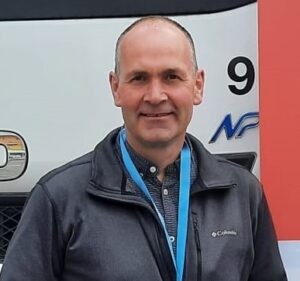
Peter Knaus, Head of Freight Transport at Bündner Güterbahn
Which products are more suitable for rail transport, and which still have potential?
Peter Knaus: Long-distance goods that depend on punctuality and reliability, such as foodstuffs. Likewise letter and parcel post and general cargo that needs to be delivered on time. Scheduled freight, which we transport from 4.00 am. Rubbish and recycling material must be transported within 24 hours. Building materials such as cement or salt are also very suitable for rail freight transport. We also transport an extremely large amount of round timber, around 95%, to Tirano. We are predestined for this, as customs clearance is also more economical than with a lorry. We transport most goods in combined transport, except for logs and general cargo. Combined transport has great potential for the future. I see potential for pellet transport in our area.
Peter Luginbühl: We have a very similar product focus to RhB. But we don’t transport wood. We also transport large quantities of heating oil. We also transport a lot of luggage for the tourist destination of Zermatt. Over the last few decades, consignments have become smaller, not least due to the mail order business.
Reliability and punctuality: what do you think?
Peter Luginbühl: As a small railway, we can guarantee stability and punctuality extremely well. 95% or more of our customers are extremely satisfied with our reliability. The situation is very different in the European or Swiss-wide freight railway system. Punctuality is a huge problem here. The industry still needs to improve a lot and become a more reliable partner.
Peter Knaus: I agree with that. We are extremely punctual, especially when it comes to food transport or scheduled freight. When we work with the big players, it becomes more challenging to meet the desired deadlines. For the WEF transport project, for example, we were reliant on suppliers from the standard gauge. If they don’t arrive on time in Landquart, we can’t deliver the containers to Davos on time either. This poses a major problem for our customers, as time slots allocated at the WEF have to be adhered to.
What developments do you recognise in production?
Peter Luginbühl: At the moment we still have mixed production, whereby we mainly work with block trains. We are increasingly moving away from attaching freight wagons to passenger trains. For one thing, the new multiple-unit trains and the capacities of our track systems no longer meet these requirements. We are also losing the logistics space for transhipment. We will increasingly concentrate on block goods trains.
Peter Knaus: We run 52 freight-only trains a day on the main network. The new trains with automatic coupling are only designed to move themselves. The sheer number of goods trains means that we retain a certain degree of flexibility. We have fixed annual timetables for scheduled freight, everything is planned through. We only run mixed services towards Arosa and Bernina, as there are not enough train paths for pure goods trains.
Speaking of train paths: What challenges do you face here?
Peter Knaus: During the day, regional passenger transport sets the pace for us. We have to adapt to this. We also have to adapt to prestige trains such as the Glacier and Bernina Express. Our most flexible time slots are from 4.00 am to 6.30 am. From 9.00 p.m. there is mainly construction work going on, so we can only operate to a very limited extent. The RhB and the canton support us well in the track issue and involve the various interest groups.
Peter Luginbühl: I see four challenges with the railway lines. Firstly, economic efficiency. Our desired train paths are often occupied by tourist trains, which are more economical. Secondly, economic viability. We have enormous investments and major financing issues. We make an important contribution to the security of supply in our region. Thirdly, flexibility through speed. We cannot react as quickly to changes in supply as a transport company can. Fourthly, innovative strength. We still produce in the same way as we did 30 years ago. I am curious to see whether we will actually be able to transform through digitalisation.
What best practice cases are there that you and others can learn from?
Peter Luginbühl: I see fine distribution over the last mile as a successful model. Our partner does it in such a way that more and more customers come, precisely because he is so flexible. And finally, I consider the disposal of rubbish to be an exciting business model from an ecological and economic point of view.
Peter Knaus: In my opinion, a good example is the conversion of beverage transport. The Valser company has been transporting its beverages from Vals via Ilanz to Untervaz for over 40 years. The early morning transhipment at the ramp in Ilanz caused a lot of noise emissions. This gave rise to the idea of using swap bodies for transshipment. Together with the parent company Coca-Cola and the canton, we procured suitable swap bodies. These have proved very successful. In the foreseeable future, we will even be transporting them using electric lorries with trailers. In dialogue with the canton and the police, we have obtained a special permit for trailers for the Schnaus-Ilanz route. . The only sticking point at the moment is the HVF reimbursement in combined road-rail transport. This refund is still linked to the LSVA. In future, it must be linked to combined transport. The legal framework still needs to change.
Which innovations will prove their worth in rail freight transport in the coming years?
Peter Knaus: I consider power packs, i.e. batteries that are mounted on the freight wagons, to be a sustainable solution. These can be used as an energy supplier for refrigerated containers, but also for construction work in the tunnels. We have even equipped sliding wall wagons with modern Powerpacks. We have also made great progress in the area of freight wagon tracking. We now know where the freight wagons are, how fast they are travelling, what their battery levels are, what the temperatures are in the refrigerated containers, etc. We can utilise this data in a digital scheduling system. We have also already thought about an Uber system for general cargo. That would be very innovative, but the sticking point here is the production costs and suitable partners.
Peter Luginbühl: Rail freight transport will still be around in 30 to 50 years’ time. To achieve this, we need to move away from the current rigid systems. Starting with the wagon superstructures, through rigid logistics processes in freight handling or wagon management, to wagon flexibility. There is potential everywhere to meet future requirements with innovations.
What does it take for such innovations to be realised?
Peter Knaus: I am a member of the FOT expert committee for technical innovations. The federal government is very open here and supports innovations that bring long-term benefits. The canton of Graubünden is also very open to innovations and supports them to the best of its ability if they bring economic and ecological benefits.
Peter Luginbühl: In regional passenger transport, it took pressure from a private economic player like Google to get things moving. That would probably be good for us too. It would be exciting if a market third party were to build up pressure.
What do you think about Europe-wide integrated data platforms?
Peter Knaus: An exciting starting point for the players in freight transport, and not just on the railways. The development of this is challenging, and I’m not sure whether everyone would make their data available. Currently, our customers can use tracking to see where the loading equipment is currently located. This allows a mineral oil transport customer, for example, to organise their and our scheduling more efficiently. I would welcome greater consistency with our customers, especially when it comes to timber loading.
Peter Luginbühl: We would have to equip the wagons with tracking devices. Only then could we take further steps towards data exchange, including across modes of transport. We at MGBahn are less concerned about this because we have a local focus.
Where do you see the greatest levers for advancing rail freight transport?
Peter Luginbühl: In making the rail freight system more flexible. We will never be as flexible as road transport. But we must be able to react more quickly to customer needs and play to the strengths of the railways. The potential for rail transport is huge. The pressure to shift transport to rail will come of its own accord.
Peter Knaus: You certainly have to differentiate between metre gauge and standard gauge. We have a manageable network with metre-gauge tracks. Compared to the SBB, we can react very quickly. A planned changeover of two weeks is quick compared to SBB – and slow compared to a road transport company. The latter switches within days. The more money we have, the faster we can invest in traction units and freight wagons or modernise the fleet and the more flexibly we can react to the wishes of our customers.
To what extent would more competition among the rail freight companies change the dynamics of the rail freight market?
Peter Luginbühl: More competition, more dynamism. However, the entry threshold for new players in our market is very high. If you want to operate a freight railway, you need a compliant traction unit and expensive rolling stock. That’s a different matter from buying a lorry for a few hundred thousand francs. Examples such as Railcare or Swiss Post show that competition leads to innovation and price pressure.
Peter Knaus: Competition is good and encourages development. Those responsible at Railcare have a very good transport logistics concept, they combine road and rail with their own fleet. Competitor companies on the railway are also dependent on free train paths. They cannot simply set off when they are fully loaded. In terms of price, small rail freight operators have the advantage that they have to factor in lower overheads.
What do you think of the VAP and what would you recommend to our association?
Peter Knaus: I have always had good contact with Secretary General Frank Furrer. I was in charge of the transport logistics project at the regional parcel centre in Untervaz. I worked very closely with the VAP. He was an independent and very valuable project member. I find the dialogue with Frank Furrer, Jürg Lütscher and other VAP representatives, who bring in a shipper’s perspective, constructive and exciting.
Peter Luginbühl: I didn’t know that this association existed until recently. My recommendation would be for you to make your association better known among freight transport companies. I think it’s great what the VAP is doing.
What hasn’t been said yet?
Peter Luginbühl: This discussion has given me valuable ideas, thank you for that.
Peter Knaus: Thank you for inviting us to this interview and giving us the opportunity to present ourselves.
|
About Peter Knaus and the Graubünden freight railway Peter Knaus is Head of Freight Transport at the Graubünden Freight Railway of the Rhaetian Railway (RhB). He also represents the narrow-gauge railways on the Freight Transport Commission (KGV) of the Swiss Association of Public Transport (VöV) and is a member of the Rail Freight Transport Advisory Group of the Federal Office of Transport (BAV). Under the umbrella of RhB, the Graubünden Freight Railway offers a wide range of transport solutions for companies and private individuals in Graubünden. With its diverse fleet of wagons – including container wagons, sliding wall wagons and tank wagons – it transports goods of all kinds. The service points cover the whole of Graubünden and include important industrial centres, logistics centres and agricultural businesses. As a result, the Graubünden freight railway guarantees a comprehensive supply of goods throughout the region and is an indispensable part of the regional logistics infrastructure. |
|
About Peter Luginbühl and the Matterhorn-Gotthard Railway Peter Luginbühl has been Head of Operations at the Matterhorn-Gotthard Railway since 2017. The qualified controller previously worked for several years as Head of Corporate Development HR at SBB. The Matterhorn-Gotthard Railway operates its freight transport with Alpin Cargo AG, a subsidiary of the Planzer Group. It offers a wide range of services for local businesses. These include goods handling, warehouse logistics and transport by both rail and road. The supply of mineral oil is another important service. Alpin Cargo not only serves companies on the last mile, but also private individuals. They can use its services for removals, the storage of household goods and home deliveries with assembly and e‑transport. |
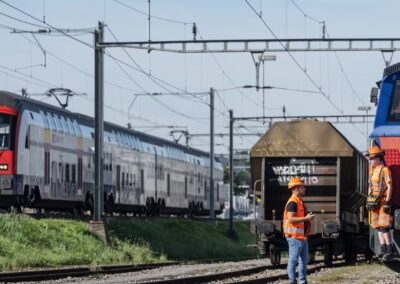
Joy at SBB, concern at SBB Cargo
SBB is in excellent financial health. This was communicated on 11 March 2024 with the 2023 annual accounts. Only subsidiary SBB Cargo is still considered a problem child and is to receive financial support. We at the VAP think so: This must not be tantamount to permanent subsidisation of single wagonload traffic (EWLV). And the proposed financial injection of CHF 1.25 billion is invalid in view of the 2023 annual accounts.
That’s the point:
- 2023 results: black and record-breaking
- Eternal problem child remains in deficit
- Record results and billions in aid – how does that fit together?
- Corporate responsibility required
2023 results: black and record-breaking
1.3 million travellers, CHF 269 million profit, 9.9 % additional revenue from passenger transport, 92.5 % punctuality despite 20,000 construction sites, debt down to CHF 11.3 billion, all investments financed from cash flow: SBB’s 2023 financial year is bursting with good news and superlatives. For the first time in the post-Covid era, SBB is back in the black. This pleasing performance is primarily due to a record number of passengers and substantial profits from SBB Real Estate. It is therefore not surprising that those responsible are looking to the future with confidence.
Eternal problem child remains loss-making
The financial situation in the freight transport division of the re-nationalised SBB Cargo looks much less rosy. Although the 2023 result of SBB Cargo Switzerland improved by CHF 148 million compared to the previous year to minus CHF 40 million, this is mainly due to impairments from 2022. Transport performance fell by 7.5 % compared to the previous year. According to SBB, the main drivers were price pressure, the structural deficit in the EWLV and the economic slowdown.
The only thing that remains unclear is how high this so-called structural deficit should actually be quantified. In the political debate, SBB speaks of CHF 80 to 100 million, while the 2023 Annual Report states CHF 40 million. Has SBB Cargo generated a profit of CHF 40 to 60 million in block train transport?
Record results and billions in aid – how does that fit together?
Peter Füglistaler, Director of the Federal Office of Transport (FOT), gives a plausible answer to this question in his comment on LinkedIn: «I don’t know». The fact that SBB is doing well financially is indeed commendable. After all, shippers want strong partners in the transport business. Nevertheless, we at the VAP are sticking to our position: SBB Cargo’s financial difficulties should not be confused with the necessary modernisation and restructuring of EWLV. In January 2024, the Federal Council rightly requested measures for the modernisation of the nationwide EWLV in its «Message on the Freight Transport Act» (see blog post «Setting the right track for inland freight transport by rail»). Instead of a reorganisation contribution to the EWLV, we are calling for targeted, degressive and temporary bridging funding for a sustainable transformation of the EWLV towards self-sufficiency. Only in this way can the EWLV modernise and grow.
Entrepreneurial responsibility required
Parliament is currently discussing the «Dispatch on the amendment of the Federal Act on Swiss Federal Railways (sustainable financing of SBB)». According to this, the federal government is to cover SBB’s pandemic-related deficits in long-distance transport. VAP President and Councillor of States Josef Dittli commented: «Why should the federal government, which has just announced linear cuts and plans to make cuts, use taxpayers’ money to support a state-owned company that is achieving record results? This is where I make an urgent appeal to the corporate responsibility of those involved.»
Digital rolling stock inspections: Win-win for everyone involved
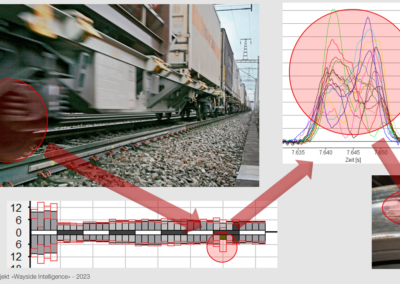
The fixed train control systems for goods trains and their rolling stock are constantly being refined. The digital control system Wayside Intelligence (WIN) not only increases safety in rail freight transport, but also helps wagon keepers to plan their maintenance work more efficiently. It is therefore all the more important that they contribute their experience to the further development of the system.
That’s what it’s all about:
- Maintenance of rolling stock: central to safety
- Complex checks between regular maintenance appointments
- Digitalisation increases predictability
- Targeted use of data from the infrastructure manager
- Maintaining the state of the art and planning with foresight
- Testing and further developing WIN
Maintenance of rolling stock: central to safety
Wagon keepers are responsible for the proper maintenance of their vehicles, as required by the current Safety and Interoperability Directive. In doing so, they make a significant contribution to safe rail transport (see blog article «Gotthard Base Tunnel (#2): Automatic train control systems»). The central element is the periodic maintenance of wagons by certified specialist workshops (Entity in Charge of Maintenance, ECM). These are commissioned by the keeper. Based on operating experience, the common safety objectives and methods, those responsible should schedule the scheduled workshop visits of the rolling stock in such a way that the safety-relevant components, assuming expected wear and tear, have a degree of wear and tear suitable for operation according to general experience and the normal course of events until the next periodic workshop visit.
Extensive checks between regular maintenance appointments
However, several years pass between two regular workshop visits. In daily freight transport, the railway undertakings (RUs) and infrastructure managers are responsible for the safe operation of freight wagons. Before the trains depart, the RUs inspect all wagons for visible damage and defects in the loads. Damaged wagons are stripped and sent for unscheduled maintenance in accordance with the General Contract of Use for Freight Wagons (GCU). Such extraordinary manoeuvres disrupt the planned operating schedule, can lead to delays and mean extra work and loss of income for the affected rail transport companies.
Digitalisation increases predictability
To enable keepers to better fulfil their responsibility for the operational suitability of their wagons in operation in future, they are obliged to document all maintenance measures and to evaluate the experience gained during maintenance. For the ongoing evaluation of their maintenance plans, they need reliable technical data on the behaviour and current degree of wear of system-relevant components. Thanks to advancing digitalisation, this data is increasingly available to them.
Targeted use of data
The Swiss standard-gauge network is equipped with stationary train control systems operated by the infrastructure manager SBB Infrastructure (SBBI). This system is called Wayside Intelligence, or WIN for short. It records safety-relevant measured values from every passing train. The focus of these checks is on operational safety and the prevention of incidents. Unacceptable deviations lead to the train being stopped promptly and the defective or incorrectly loaded wagon being discarded if necessary.
Wagon keepers can also use this continuously recorded data with little initialisation effort to obtain a real picture of the condition of system-relevant components in their wagons. To do this, they must equip their wagons with an RFID tag (EN 17230) and set up an interface for data transmission that is coordinated with the SBBI, for example via an application programming interface API web-based GUI.
Maintaining the state of the art and planning with foresight
SBBI can currently transmit the recorded data on the wheelset condition of its identified wagons to every registered keeper. The keeper can configure the data flow according to their needs. The change in the dynamic wheel load coefficient over time provides a reliable picture of the wear development of the wheel tread. The collected data allows the wagon keeper to continuously develop the maintenance plans so that he can always maintain the state of the art. In addition, he can initiate an extra-periodic maintenance measure with foresight, without the need for an unscheduled outage.
Testing and further developing WIN
Development work is currently underway to automatically evaluate the images captured by the camera system at the ZKE site for systematic analysis and comparison of operating data. The aim is to recognise anomalies in the braking equipment and running gear during operation. Interested parties from freight railways and wagon keepers can actively contribute to the development of this system by sharing their information requirements and participating in tests. Interested parties should contact:
Jörg Bisang
SBB AG, Train Control Units
+41 79 698 22 41
joerg.bisang@sbb.ch