
The VAP promotes freight transport by rail.
The VAP Association of Shippers campaigns for market-oriented framework conditions and an attractive Swiss rail freight system. Relevant topics:
Freight industry
- How do we shape the future of freight transport?
- What moves the freight industry?
- An overview of the players in rail freight transport.
Network
Here you will find useful information on railroads, their organization and network access.
Financing
Information on financial support and charges in freight transport.
Sites
Everything about free loading, terminals, sidings or even multimodal logistics hubs.
Interoperability
The VAP is committed to harmonizing the framework conditions so that trains can run effortlessly on European rail networks.
Sustainability
For a far-sighted future, various areas need to be designed sustainably.
Innovation
How can we drive innovation in freight transport?
Operations
In favor of fair competition, we want to utilize the strength of all modes of transport and combine them optimally. Because this makes the route shorter – and more economical – for everyone.
Events
Here you will find further information and documents on our events Forum Freight Transport, our General Assembly and others.

Motion CO2-free rail freight transport
The motion 20.3222 «Rail freight transport and contribution to reducing CO2 emissions» submitted by VAP President and Councillor of States Josef Dittli was adopted by both Councils. The aim is to draw up a plan of measures that outlines how rail freight transport and multimodal logistics solutions can make a better contribution to reducing CO2 emissions. In the action plan, technical, operational, infrastructural, legal and financial options are to be identified, evaluated and put together into a promising package of measures. The cantons, railways, logistics service providers and shippers are to be involved in the work of the federal administration.
Harnessing the sustainability of rail freight
With the Green Deal, the European Union aims to become climate-neutral by 2050. On 28 August 2019, the Federal Council aligned Swiss greenhouse gas targets with this. As a consequence, the transport sector must reduce CO2 emissions by 90%. Freight rail is an essential part of the solution towards CO2 neutrality. For example, SBB Cargo uses hybrid locomotives on the last mile. Trains use 90% hydropower for their propulsion, and from 2025 it will be 100% renewable energy. Rail freight should therefore take up a higher share of transports. In transport logistics, there is a trend towards smaller consignment sizes, shorter transit times and higher punctuality requirements. Only a multimodal logistics chain with the freight railway as a strong link can do justice to this package of tasks. Here, logistics service providers bundle the goods or packages for the railway and synchronise them with the timetable. Promoting multimodal logistics solutions in all combination forms of rail, road, Rhine favours energy-efficient and CO2-optimised transport solutions and relieves the environment in social, ecological as well as economic terms. The federal government should support this multimodality with suitable measures.
Not a new concern
SR Dittli had already submitted a similar interpellation in March 2019 (19.3148 «CO2-free rail freight transport and Energy Strategy 2050»), which suggested a reduction in the train path price in connection with the train path price revision as of January 2021 to promote sustainable rail freight transport. In December 2019, several motions with identical wording followed in parliament calling for a support package for public transport based on its sustainability. This new motion is now intended to trigger a strategy definition geared towards passenger and freight transport in order to prevent a further expansion of passenger transport at the expense of freight transport capacities on the network. Above all, however, the remaining legal, operational and technical hurdles in the road/rail interface that hinder multimodal logistics solutions are to be removed as far as possible.
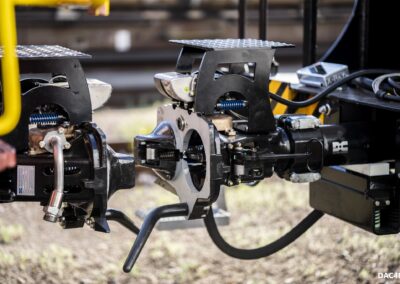
Progress for automation in rail freight transport
The Councils adopted the motion «Transporting more efficiently by rail through automation» by VAP President and Councillor of States Josef Dittli in the autumn or winter session 2020. The Europe-wide introduction of digital automatic coupling, automatic train preparation and other digital platforms is a main priority. By 2022, the member states want to agree on a pan-European implementation strategy.
Automation of the last mile
VAP President and Member of the Council of States Josef Dittli had submitted the motion 20.3221 «Transporting goods by rail more efficiently through automation» on 4 May 2025. It calls for a concept for the financing and coordinated implementation of technical innovations that in particular enable (partial) automation of the last mile in rail freight transport and simplify the management of the road/rail interface in multimodal logistics chains.
Based on Art. 10 of the Freight Transport Act (GüTG), the Confederation can promote investments in technical innovations. In order to ensure interoperability, the financing and coordination of a large-scale introduction of new technologies, coordinated with Europe, is indispensable, especially in system transport for the bundling of large quantities. However, this requires an industry-wide and internationally coordinated concept.
Digital Automatic Coupling (DAK)
At European level, a comparable initiative was taken with the «Digital Automatic Coupling Charter». On 29 June 2020, the final report for the creation of a concept for the migration of a digital automatic coupling system (DAK) for rail freight transport (SGV) was presented. The German Federal Ministry of Transport and Digital Infrastructure (BMVI) commissions and finances the creation of a concept for the migration of a DAK in rail freight transport.
The DAK in rail freight transport is seen as a central element to increase the competitiveness of rail freight transport compared to road freight transport. The biggest challenge in introducing a DAK is to develop and implement a migration strategy that is supported by all. The following key data were used for the study:
- Affected by the migration are: 432’000 to 485’000 existing freight wagons and 17’000 traction units
- Procurement costs of EUR 4’000 to 5’000 for a DAK
- Conversion costs of EUR 2,500 per freight wagon and EUR 5,300 per traction unit
- Procurement and installation of automation components per freight wagon: EUR 5’000
- Total costs of an EU-wide migration, including automation components: EUR 6.4 to 8.6 bn.
- Monetisation of the benefits for the EU-27, incl. Switzerland, Great Britain and Norway: annual benefit potential of approx. EUR 760 million.
- Payback period in the baseline scenario: 18 years
Currently, four coupler manufacturers (CAF, Wabtec, Voith, Dellner) are developing prototypes of a DAK. These will be installed in DB and GATX test wagons and tested throughout Europe by spring 2021. The aim is to agree on the coupler type in 2021 and to start with a migration of the DAK in 2023/2024 at the latest. It is assumed that a migration should take six to eight years and be completed by 2030.
Committed to technical innovation
The VAP has also signed the DAK Charter. It is committed to the rapid and comprehensive automation and digitalisation of rail freight transport as part of the 2017 «Memorandum of Understanding on the Promotion and Implementation of Technical Innovations in Swiss Rail Freight Transport» between the Confederation, VöV and Cargo Forum Switzerland. SBB’s pilot projects, which are made possible and supported within the framework of this agreement, should soon be brought to implementation maturity. In doing so, it is important to avoid half-hearted individual solutions and to trigger a coordinated nationwide automation initiative.
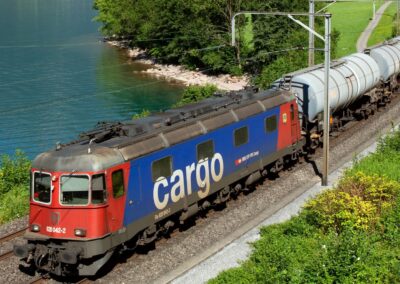
Four private logistics service providers take a stake in SBB Cargo
The four family-owned companies Galliker, Planzer, Bertschi and Camion Transport are taking a 35% stake in SBB Cargo AG under the name «Swiss Combi AG». The companies stand for customer orientation, innovation and market-oriented solutions.
SBB Cargo’s customers will benefit from this accumulated experience as an operator of logistics networks and from its broad customer base. The newly founded company has it in its power to counter the fears expressed in many quarters of further increasing market dominance with complete transparency and competition-oriented action. It can help wagonload traffic, SBB’s core business, to regain momentum after years of decline.
It remains to be seen to what extent the law on the organisation of railway infrastructure passed last year and the associated ordinances will be able to spur the further development of rail freight transport as a whole. The framework conditions for rail freight transport are still poor in the area of planning construction sites and line closures as well as regulating the non-discriminatory operation of sidings and terminals. Also, despite this involvement and the formal independence of SBB Cargo, it remains completely open whether a balanced infrastructure and real estate policy will be possible within the SBB Group in the future or whether it will continue to act unilaterally in favour of passenger traffic.
Revised train path price in 2021
The 2021 revision of the track access charge will lead to a reduction of CHF 30 million in freight transport. After the 2013 revision brought an increase of CHF 25 million, the cost block for freight railways is now back at the 2013 level. Accordingly, the costs for rail freight transport in the market should fall. Due to the newly introduced bonus for trains with a length of over 500m of 1Rp/train km, there is an incentive for the formation of long trains and thus the use of fewer train paths.
Noise bonus still granted
The noise bonus remains in place, but undergoes two negative changes: The bonus will be reduced from 2 Rp/km per axle to 1.6 Rp/km per axle. In addition, the bonus will only be granted if the goods train concerned contains only low-noise wagons. A single freight wagon equipped with grey cast iron brake blocks leads to the loss of the noise bonus for the railway undertaking (RU). The RUs have a responsibility not to classify any wagons with grey cast iron brake blocks, otherwise they will be liable to pay damages to the keepers of low-noise freight wagons. The noise bonus amounts to around CHF 30 million per year. If it were to be further reduced or cancelled, the compensation for the 2013 train path price surcharges granted with the 2021 train path price would be lost.
Criticism remains unheard
The fundamental criticism of the FOT’s train path pricing model by the industry associations once again went unheard. The definition of the standard marginal costs in the various route categories is not fair to the originator. What is needed is a differentiation of the route categories according to passenger and freight traffic. This is because each route category is primarily defined, built and operated according to the needs of passenger traffic. Freight traffic, with its comparatively modest train kilometres and demands on the network, does not define the standards and thus the so-called standard marginal costs per category in the mixed operation of passenger and freight traffic. Nevertheless, it must bear them in full. This is not fair to the polluter. Instead, a lower approach to the standard marginal costs should be applied to freight traffic in each category, in accordance with its demands on the standard of development.
A step in the right direction
After all, the last reduction in the train path price has its origins in the signal boxes and the costs for operations management. This may be interpreted as a first step in the right direction of increased polluter-pays fairness.
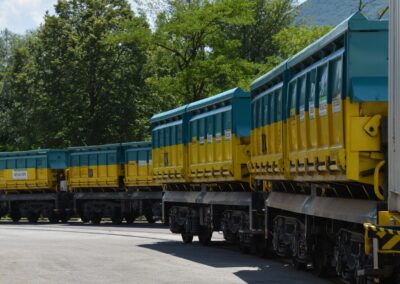
Federal Council puts together package of measures to strengthen modal shift
With the opening of the Ceneri Base Tunnel in December 2020, another piece of the puzzle for an efficient north-south connection through Switzerland will be completed. However, the expansion of the international freight corridor is delayed by at least a decade. As a result, the productivity gains in international combined transport are only half as great as originally planned.
The Federal Council acknowledges the delayed implementation in principle and presents a “package of measures to strengthen modal shift” in the modal shift report of 13 November 2019. However, from the perspective of the Swiss freight transport industry, the proposed measures are not sufficient. In order to maintain the competitiveness of UCT (Unaccompanied Combined Transport) in transalpine traffic and to continue the modal shift, the industry is calling for additional measures.
Delayed implementation of the modal shift
With the opening of the Ceneri Base Tunnel in December 2020, the NRLA project will be officially completed. However, the benefits for freight traffic in Alpine transit through Switzerland will only materialise with a considerable time delay. Numerous factors contribute to the fact that the productivity of the resources used – locomotives, personnel, railway wagons, etc. – cannot be increased by far to the extent and in the time frame originally planned:
- The delayed expansion of the feeder lines in the north makes it impossible to operate 740 m trains.
- Frequent and internationally uncoordinated construction sites with diversions and temporary capacity bottlenecks prevent the expected reduction in travel time and lead to continuously increasing quality deficits. The consequences are delays and inefficient use of resources.
- Due to the non-coordinated international train path planning, the travel time savings in Switzerland will fizzle out at the borders for the time being.
- The remaining gradients of the line and the operational concept of the Gotthard Base Tunnel still require the use of a second locomotive for heavy trains.
Under these conditions, combined transport operators can realise at most half of the originally expected productivity effects. In order to maintain the current volume in transalpine combined transport and to gain additional traffic volumes in the medium term with regard to the modal shift target, the Swiss freight transport industry proposes a longer-term orientation of the modal shift policy until 2030 with additional measures.
Extension of the payment framework for the promotion of transalpine UCT until 2030
In order not to jeopardise the positive results of the current modal shift policy, the promotion of transalpine UCT must not be suspended prematurely. From the market’s point of view, an extension of the funding measures until 2030 is necessary. Only from 2030 onwards can the planned further productivity effects be expected to be realised.
Furthermore, according to the monitoring of the Federal Office of Transport, the quality deficits of CT trains have continuously increased. While 75% of trains were less than one hour late in 2009, only 55% of all trains were late in the first half of 2019. Today, 12% of trains are even delayed for 12 hours or more. These quality deficits, driven by the expansion of the corridor infrastructure with numerous construction sites and capacity restrictions, will continue to weigh heavily on productivity until at least 2030.
The 2030 time horizon also creates the necessary investment security. Transport companies will invest in containers and craneable trailers, operators in rail wagons and terminals, and railway companies in locomotives if longer-term use of these capital goods is ensured.
Subsidies for operating compensation for UCT amounting to CHF 55 million annually from 2024
An efficient railway infrastructure in combination with train path prices at the level of the neighbouring countries Germany and Italy enables Switzerland to operate combined transport on its own account – this guiding principle still holds true. However, the operational and infrastructural conditions on the north-south corridor through Switzerland do not meet these requirements either at present or in the coming years. During this period, combined transport operators and railway companies will be able to increase productivity by a maximum of half of the originally planned value when the NRLA is completed.
It is true that the Swiss track price revision 2021 – which lowers the base price for freight transport and introduces discounts for long trains – makes a significant contribution to supporting UCT. Nevertheless, a gap of about half of the operating compensation of the reference year 2018 remains, amounting to CHF 110 million.
Based on this analysis of the situation, the freight transport industry demands that unaccompanied combined transport (UCT) be supported with operating contributions of CHF 55 million per year until 2030. This will enable UCT to maintain the current modal shift volume and, if necessary, to largely absorb traffic growth. Should the framework conditions improve more quickly than assumed – for example through a significant improvement in quality or a sustainable optimisation of the international timetables – additional traffic volumes could continue to be gained for UCT.
With the expected further growth of UCT until 2030, the reduction path of subsidies per consignment would again be significantly improved. Whereas in 2011 an average of CHF 173 in operating subsidies was paid per shifted truckload, in 2018 this figure was still CHF 116. According to the ideas of the freight transport industry, this amount would drop further to CHF 40–45 per shifted truck by 2030.
Expansion of access routes in the north
The NRLA concept for promoting rail freight transport depends on efficient, high-performance access lines to the base tunnels in order to ensure the supply of Europe’s highest-demand economic locations. After the commissioning of the 4 m corridor, the situation will be as follows:
- 3 access lines in Italy – via Chiasso, Luino and Domodossola
- 2 lines in Switzerland – via Gotthard and Lötschberg base tunnels
- 1 access line north of Basel – via Karlsruhe – Mannheim – Cologne – Benelux
An alternative must urgently be created for the bottleneck in the north. The only efficient alternative route (flat track) is the route on the left bank of the Rhine via France. It is optimal for the high-volume Belgium – Italy route. In addition, there is a direct connection route with the corridor on the right bank of the Rhine, which serves to reduce the risk.
However, these routes do not yet correspond to the corridor parameters of the Swiss transit axis and therefore currently only carry a low volume of traffic. In order to make the capacities on these alternative routes more usable for UCT through Switzerland, the Zeebrugge/Antwerp – Strasbourg – Basel line and the Wörth – Lauterbourg – Strasbourg cross connection must be upgraded to the parameters 740 m train length, 4 m corner height, 2000 t with one locomotive, ETCS. This would also create a system in the north with two feeder lines and an alternative route on the left bank of the Rhine.
The expansion of a corridor-compliant alternative route via France is likely to be manageable in terms of costs. It is very much in the interest of Switzerland and its transit shift policy. To implement it, Switzerland needs a political initiative together with France and Belgium, which should lead to an international treaty on infrastructure development. Parliament should call on the Federal Council to take the corresponding initiative in the form of an international treaty. In addition, the expansion of the Rhine Valley railway in Germany must be pursued with vigour. The completion of this contractually agreed capacity increase has been postponed until 2040.
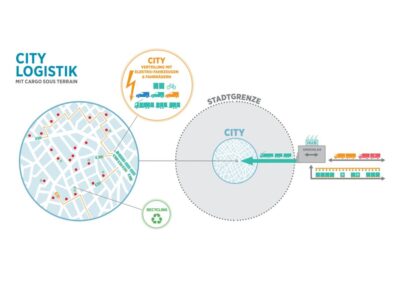
UGüTG: Prohibition of discrimination and the disclosure of prices
The draft of the UGüTG provides for a ban on discrimination for all transport services offered, in particular also for services offered above ground in city logistics. During its deliberations, the Council of States criticised this ban on discrimination and the disclosure of prices.
The VAP welcomes the ban on discrimination and the disclosure of prices. The linking of underground main transport with above-ground distribution from a single source obviously entails the risk of discrimination.
Our experience with SBB Cargo’s wagonload traffic, the service of the last mile to private sidings and terminals as well as access to private terminals is clear: a monopoly offer from a single source is fatal for the loading industry. A specific prohibition of discrimination must therefore be provided as a regulatory measure in addition to the generally applicable Cartel Act. Competition with other transport systems such as rail or road does exist. But just as rail freight transport is the only mode of transport that can offer the night jump, the combined offer of city logistics and main run of Cargo sous terrain enjoys a unique USP. This is also the reason why the Confederation has an economic interest in this infrastructure and decided to enact the UGüTG.
Access to other private infrastructures is also specifically regulated by law in a non-discriminatory manner. Access to terminals is regulated in Art. 6 para. 1 lit. d Freight Transport Ordinance, GüTV: Conditions, prices and discounts must be non-discriminatory and disclosed on the internet. For the service of sidings and terminals (last mile), transparency has unfortunately been reduced: Art. 6a GüTV only requires the general description of the “assessment of the price”. Art. 5 para. 3 lit. c of the UGüTG is also formulated in this sense: “Calculation of the price”. This is the minimum variant to protect customers against the monopoly provider.
The price should be in line with the market. This is also the case for terminal access and last mile service. But it must not be discriminatory, for example by providing a discount for particularly close “friends” that cannot be justified from an economic point of view. The principles developed in connection with network access to the rail network have proven their worth and should also apply to city logistics and underground mainline services.
For these reasons, the VAP recommends that Parliament adopt Art. 5 UGüTG unchanged.
Motion Borloz
On 11 March 2020, FDP National Councillor Frédéric Borloz submitted motion 20.3084 «Clarifying regulations on liability in the transport of goods by rail». With this motion, he is demanding that the Federal Council clarify regulations on liability in the transport of goods by rail. The clarification should in particular concern the distribution of risks and the regulation of legal remedies between railway undertakings (RUs) and wagon keepers, as well as the legal consequences of incidents involving dangerous goods.
Position of the VAP
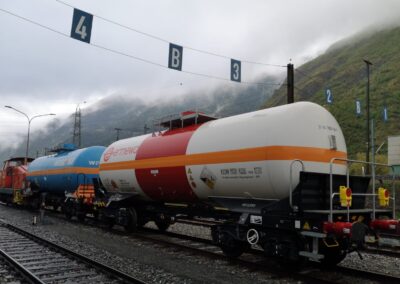
The VAP, as the representative of the shipping industry, together with scienceindustries, as the professional association of the chemical industry, opposes motion 20.3084. The motion cites as an example the incident that took place in the summer of 2009. This motion cites the incident at Daillens in May 2015 as an example and justifies the need for clarification as follows. Firstly, the wagon keeper is only liable in the event of an accident if the RU can prove that he is at fault. Secondly: It is not clear who is responsible for the quality of the (rolling) stock. Both assertions are false.
Valid arguments
Since the Daillens incident, the international legal framework has been substantially adapted. On 1 July 2015, Appendix D to the Convention concerning International Carriage by Rail (COTIF) entered into force. Article 7 states: «The person who has made the wagon available for use as a means of transport on the basis of a contract in accordance with Article 1 shall be liable for the damage caused by the wagon if he is at fault.» Clause 2 states that the contracting parties may make deviating agreements. This is what the approximately 600 private sector contracting parties did and updated the General Contract of Use for Wagons (GCU) as of 1 January 2017. Article 7 clarifies the maintenance obligations of the wagon keeper, Article 27 describes the principle of liability: «The keeper is liable for the damage caused if he is at fault.» And: «Fault is presumed if he has not properly fulfilled his obligations under Article 7.»
Lack of practicability
The Borloz motion places the liability issue in a national context, although it is an international issue. Responsibilities and controls are clearly regulated supranationally and under treaty law. A national law amendment – or whatever is meant by «clarifying provisions» – would affect the practicability for rail freight transport in and through Switzerland. The internationally applicable transport regulations have long since complied with the required incentivisation and tightening of liability. The demanded transition to strict liability for wagon keepers is unnecessary, as in the event of an incident there are no insurance gaps under civil law in the matter of liability, for example with regard to compensation payments, as previous incidents have shown.
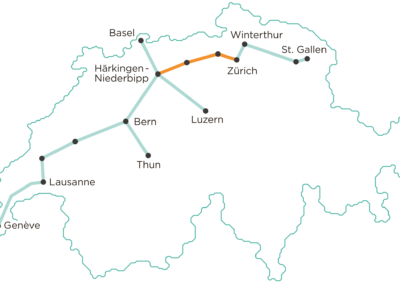
Draft Federal Law on the Underground Transport of Goods
The VAP welcomes the framework law on underground freight transport presented by the Federal Council. We see an underground transport system as a positive addition to the existing possibilities on water, road and rail. The bill offers a liberal, risk-oriented and autonomous framework for the construction and operation of the facilities, so that efficient and thus economical multimodal transport can succeed. Clarifications are still necessary, particularly in the coordination of procedures at federal and cantonal level. The FOT should be given a clear coordination role for this.
The involvement of state and state-related companies raises questions, as does the intention to design city logistics as a one-stop service by the operators of the underground transport system. The VAP prefers a competition-oriented city logistics in order to exclude market power and discrimination.