
The VAP promotes freight transport by rail.
The VAP Association of Shippers campaigns for market-oriented framework conditions and an attractive Swiss rail freight system. Relevant topics:
Freight industry
- How do we shape the future of freight transport?
- What moves the freight industry?
- An overview of the players in rail freight transport.
Network
Here you will find useful information on railroads, their organization and network access.
Financing
Information on financial support and charges in freight transport.
Sites
Everything about free loading, terminals, sidings or even multimodal logistics hubs.
Interoperability
The VAP is committed to harmonizing the framework conditions so that trains can run effortlessly on European rail networks.
Sustainability
For a far-sighted future, various areas need to be designed sustainably.
Innovation
How can we drive innovation in freight transport?
Operations
In favor of fair competition, we want to utilize the strength of all modes of transport and combine them optimally. Because this makes the route shorter – and more economical – for everyone.
Events
Here you will find further information and documents on our events Forum Freight Transport, our General Assembly and others.
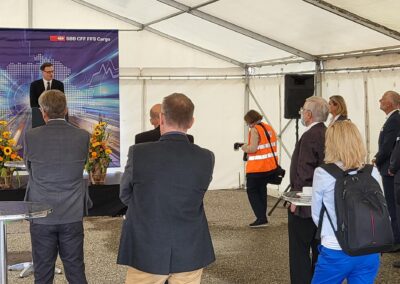
VAP signs letter of intent on automation
Together with the Federal Office of Transport (FOT) and the Association of Public Transport (VÖV), the VAP Association of the Loading Industry has signed a declaration of intent to automate Swiss rail freight transport. The long-term major project will start on 1 October 2021 with the preparation and implementation of the migration of the screw coupler to the digital automatic coupler (DAK).
Transport policy fundamentals
Rail freight transport should become more productive and competitive, increase its market share in overall logistics and thereby strengthen the shift policy and the federal government’s 2050 climate protection goals. VAP President and Member of the Council of States Josef Dittli has provided the impetus for an implementation and financing concept for the automation and digitalisation of rail freight transport with his motion 20.3221 “Transporting goods more efficiently by rail through automation”. Parliament has already approved the motion.
Bringing all market participants to the table
Now the FOT, with the support of VöV and VAP, is working out the basics for the executive. On this basis, the Federal Council and Parliament can decide on the migration to DAK. The VAP represents the needs of the economy. The industry wants to make sustainable use of multimodal transport with freight or container transhipment between the modes of transport according to their strengths. To achieve this, all market participants must be involved. These include not only those responsible for goods such as chemicals, paper, pulp and wood products, cars, consumer goods, food or building materials, but also the corresponding means of transport such as freight wagons.
As a reminder: of 600,000 freight wagons in Europe, 220,000 are privately owned. These private wagons perform about 50% of the tonne-kilometres on the European rail network. Members of the VAP manage almost 45,000 private freight wagons. Close coordination with Europe is essential to ensure intermodality.
Taking action with data
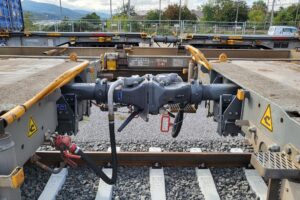
The VAP wants to promote an efficient exchange of information and data as well as networked openness to innovation between the players in the railway system along the entire logistics chain and with the involvement of rail freight customers, and to (co-)develop corresponding instruments. The VAP sees the DAK as a central element for the success of this process and therefore focuses on the following topics:
- Operations: DAK enables both real-time data exchange and significantly more efficient operations for freight railways in stations, on sidings and at borders. The most promising technology is the one currently adopted by the European DAC Delivery Programme EDDP platform. The operational and monetary advantages of automation mainly benefit the railway undertakings. The investment and follow-up costs, on the other hand, fall on the wagon keepers.
- Costs/benefits: The fair balance of costs and benefits must be taken into account in the implementation. Since the conversion of the European wagon fleet must take place within a defined time window, seamless financial support is imperative. Current estimates assume migration costs from the screw coupling to the DAK of up to 20,000 euros per freight wagon. For the private wagon owners of the VAP, this means approximately 1 billion Swiss francs. This does not include downtime and transport costs to and from the workshop during the migration phase.
- Data: The DAK is central above all because of the data that will be available in the future. These are to flow into a superordinate and freely accessible data platform. Freight railways and customers will be able to use this to communicate with each other and obtain information, for example about the condition or weight of the wagons, train length or real-time locations of the goods. Such a platform will make stronger competition in wagonload traffic possible in the first place. In Germany, considerable market shares are already held by private freight railways. In Switzerland, the framework conditions for this development must first be improved. The DAK lays a first milestone for this.
FOT, SBB Cargo and VAP give the starting signal
On 28 September 2021, FOT Director Peter Füglistaler, Per-Anders Benthin (CEO TRANSWAGGON AG) from the VAP and Désirée Baer (CEO SBB Cargo AG) and Dirk Stahl (CEO BLS Cargo AG) from VöV publicly presented the declaration of intent together with industry representatives. The occasion was a stop of the “Connecting Europe Express” – a special train of the EU for the “Year of Rail” – at the container terminal Basel Wolf.
Click here for the media release in German.
Click here for the media release in French.
Compromise for UGüTG: Discrimination ban yes, disclosure of calculation no
After the Council of States decided to delete the prohibition of discrimination in transport services offered in Art. 5 UGüTG, the National Council decided to retain the article while waiving the disclosure of the calculation of the non-discriminatory price. This compromise allows RailCom to identify any discrimination in the design of offers and prices. The Council of States ultimately endorsed the National Council’s decision.

VAP becomes a member of SWISS SUPPLY
VAP as new competence partner
With the SWISS SUPPLY association, the most important logistics, supply and transport organisations in Switzerland want to promote the image of logistics, supply chain and transport and carry out public education work. The VAP, as the representative of the shipper industry in rail freight transport, joined the support organisation in August 2021 to contribute to these objectives. In this way, we create the best conditions for our members for an economically fruitful environment and a broad public understanding for a well-functioning supply. In future, we will coordinate our transport policy activities in Cargo Forum Switzerland with the initiatives of Swiss Supply in order to develop even more clout together.
How it came about
The idea for SWISS SUPPLY came about at the beginning of 2020 as part of the new focus exhibition “Experience Logistics!” at the Swiss Museum of Transport. The intention was to realise such image projects and corresponding initiatives in the future under the umbrella of a national non-profit organisation and with combined forces in a sustainable manner. Thus, the Swiss Association for Vocational Training in Logistics (ASFL SVBL), the Swiss Commercial Vehicle Association ASTAG, the value creation network GS1 Switzerland, the professional association for purchasing and supply management procure.ch, the association of Swiss forwarding and logistics companies SPEDLOGSWISS, the logistics network VNL Switzerland and the Swiss Logistics Foundation founded the new association SWISS SUPPLY on 26 March 2021. The organisation will be chaired by Jörg Mathis, CEO of GS1 Switzerland. The members of the organisation also form the sponsoring body and represent well over 10,000 members.
Strengthening supply, logistics and transport in Switzerland
Many people do not know: The national supply with the areas of procurement, logistics, storage, transport, forwarding, packaging, disposal and recycling form a system-relevant backbone of the Swiss economy. The initiators of SWISS SUPPLY want to improve the reputation of these sectors in Switzerland in the long term and arouse interest and understanding for them among the public. To this end, existing initiatives are being intensified and new activities launched. In addition, the association wants to generate enthusiasm for the industry among young people at an early stage. SWISS SUPPLY shows students and career changers comprehensive career opportunities with development possibilities in various directions.
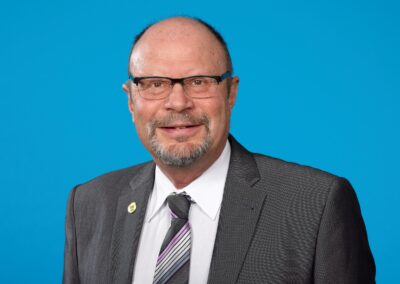
In the interview: Matthias Grieder
VAP: Mr Grieder, what is your collaboration with the VAP like?
Matthias Grieder: We have regular dealings with General Secretary Frank Furrer. For example, he is the representative of the Ristet-Bergermoos track cooperative and has represented it in a joint development project for this industrial area on the municipal territory of Urdorf and Birmensdorf. He has also been involved in the drafting of the partial revision 2022 of the cantonal structure plan and is always involved in various logistics-related working groups. Frank Furrer brings both the perspective of the siding owners and the overall national view of multimodal logistics. He supports us with his enormous expertise and his extensive professional-political network. I find this cooperation very pleasant and fruitful.
Where do you see the most urgent need for action for rail freight transport?
In my opinion, the most important and at the same time most difficult task is to secure rail/road transhipment areas in urban areas. Here’s an example: where the “Europaallee” now stands behind Zurich’s main railway station, there used to be a postal distribution centre with ten tracks. With the redevelopment of the area, the entire supply infrastructure as well as large logistics areas that would have been important for ensuring the future supply and disposal of the city of Zurich were lost. Freight traffic and logistics facilities are moving out of the city and are increasingly being displaced to the Mittelland. These distribution centres are often not accessible by rail. As a result, more and more trucks and delivery vans are driving from there into the city, which puts additional strain on the congestion belt around the agglomerations.
The Spatial Planning Act also requires denser building in existing settlement areas. The additional traffic caused by population growth must be handled on existing transport areas. This means that these areas must be used more efficiently and areas must also be made available for supply and disposal. The more densely one builds, the more important it becomes to design attractive outdoor spaces. A ground-level supply system impairs this attractiveness. That is why it is important to check early on in the site planning process how above-ground areas can be relieved of delivery traffic and how delivery and waste disposal can be integrated into underground facilities. Good examples of such solutions are the new Circle at Zurich Airport or the Sihlcity shopping centre.
What is the situation with the sidings?
The problem is similar here. Sidings and switches are constantly being dismantled and their service reduced. This creates a downward spiral: fewer tracks, less rail transport volume, less rail loading, less single wagon loads, less demand-oriented rail services. On the other hand, this means more road transport, more traffic jams, more noise and more CO2. In the long term, this trend must be reversed.
How could the problem be solved?
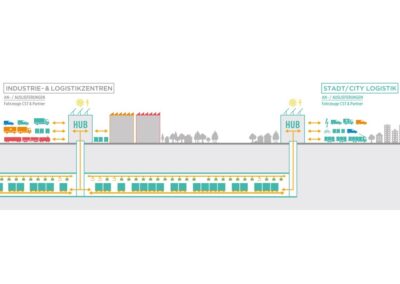
We need solutions that bundle shipments even more and bring them efficiently through the congestion belt into the centres. Approaches to bypass or drive under the congestion. We also need service concepts for fast and direct service. And we need better financial incentives that strengthen the railways and do not allow single-wagon load traffic to dwindle. With its excellent infrastructures, the railway has a great opportunity here and can fulfil this task. But new innovative modes of transport, such as the digital overall logistics system Cargo Sous Terrain (CST), can also transport large quantities without placing an additional burden on road transport. All these systems can be linked via common digital platforms and made even more efficient.
How do such solutions come about?
Only if all parties completely rethink and cooperate in partnership. Unfortunately, today every company calculates for itself in isolation and is focused on short-term profit maximisation. The railways concentrate on the profitable block train traffic and neglect the costly single wagon traffic, which can contribute significantly to a shift from road to rail. Road hauliers focus their fleets on the most cost-effective production, usually with smaller vehicles, and optimise their tours internally. This is despite the fact that vehicle kilometres could be reduced through cooperation with competitors. Real estate strategies or concepts of both private landowners and the public sector do not allow for innovative solutions for a vertical division of use and thus prevent solutions for a space-saving and efficient supply and disposal in urban areas.
A networked way of thinking is missing in the economy, in politics, in administrations and also in the training of transport and spatial planners.
Has the pandemic not triggered a rethink?
Yes, Covid-19 has made people more aware of the relevance of a functioning supply system. The topic of freight transport and logistics has become much more important. Experts had been dealing with these complex interrelationships long before the pandemic, and politicians are also becoming more and more aware of the issue. We try to draw attention to these interrelationships again and again. Sometimes even with success, as for example with the Sihlcity shopping centre on the site of the former “Zürcher Papierfabrik an der Sihl” in Zurich-Wiedikon. Here, the planners have integrated the supply and disposal systems into the basement right next to the garage entrance. From there, it is finely distributed vertically upwards. This is exactly the direction we have to think in when planning sites: away from pieces of cake and towards layers of cake. In this way, a combined use of urban or peri-urban areas becomes possible.
How can transshipment areas and locations be secured in the long term?
Logistics areas in urban areas are rare, and there will hardly be any new ones. The public sector is trying to secure existing transshipment areas through entries in the structure plan. However, these planning specifications are not binding on the property owner. The only way to secure land, to which private landowners are also obligated, would be through a corresponding zoning ordinance or through an increased purchase of the corresponding land by the cantons and cities. These strive for longer-term objectives with a longer planning horizon, such as securing the supply and disposal of goods, and are not so profit-driven.
How could the economy be more involved in the preparation of spatial planning concepts?
The inclusion of economic actors in the development of sites is central to the future of freight transport. After all, they have to implement site development. In the Canton of Zurich we already involve the business representatives in the analysis phase within the framework of working groups, although as a canton we have no legal mandate for freight transport planning, but only act in an advisory and supportive capacity. In the canton of Zurich we have laid down guidelines for the development of freight transport in a cantonal freight transport and logistics concept. We are certainly playing a pioneering role here. But other cantons such as Aargau, Bern, Vaud or Basel-City are also acting in a progressive manner. We learn from each other through regular exchanges via the SBB Cargo platform and the freight transport group of the Swiss Association of Cities.
In your opinion, what does optimal utilisation of the infrastructure by passenger and freight traffic look like?
I think that we should continue to pursue and optimise the current approach with separate train paths for passenger and freight traffic in the network utilisation concept. I am rather sceptical about a flexible allocation of train paths, because freight traffic could literally get lost in the process. The need for infrastructure expansion has been recognised, as the expansion step 2040 shows.
Where do you see the biggest tasks in infrastructure?
In the further development of the infrastructure, the special needs of freight transport must be taken into account. The Zurich suburban station node is already completely overloaded today and rail traffic in the Zurich area will continue to increase. Therefore, bypasses must be created, such as the freight tunnel from the Limmattal marshalling yard into the Furttal and on towards eastern Switzerland. Rail freight transports coming from the Mittelland and wanting to continue in the direction of Knonauer Amt also have to make a U‑turn in the Zurich preliminary station with a hairpin bend. This places an additional burden on the infrastructure several times over. Shortcuts” are needed here to bypass hot spots. For example, the Limmattal marshalling yard could be connected directly to Zug and Lucerne via Knonauer Amt. Such projects are of course enormously expensive and can only be implemented in the long term. Nevertheless, the planning course must already be set today.
What do you wish for the future of Swiss rail freight transport?
I very much hope that the opportunities offered by rail for shifting traffic from road to rail will also be exploited in national transport. This requires a trend reversal with faster and more efficient service concepts, especially in single wagonload traffic. Innovative service concepts that are demand-oriented and efficient are needed here.
What are these?
Digitalisation offers opportunities that are currently not being exploited in rail freight transport. For example, freight railways know via digital codes exactly when, where and for how long their goods are parked. They should make this knowledge available to their customers in the form of shipment tracking throughout the entire transport chain from sender to recipient. This would significantly increase their attractiveness.
Digitalisation and automation are also crucial for the competitiveness of rail freight. Of course, short distances of a few kilometres, as we often encounter in Switzerland, are not very suitable for rail. But if you automate certain processes – for example with the Digital Automatic Coupling (DAK) or through automated reloading of swap bodies – efficiency could be significantly increased. Private wagon owners would have to implement such solutions in order to keep their fleets more profitable and to shorten running times.
Why does freight rail have such a hard time being competitive?
That is a difficult question. One would have to analyse very carefully why rail freight is so uncompetitive and which measures are effective for more attractive offers or lower costs. Such a study could be a task of the VAP.
Speaking of the VAP: What could we do better?
I know Frank Furrer and I know what the VAP logo looks like. But I hardly perceive the VAP as an overall organisation. Here I see potential for optimisation. Moreover, I am always invited to interesting and meaningful events. But for us administrative staff, the administrative effort for the approval of an event with costs is so great that we often refrain from participating. That is actually a pity.
To whom would you recommend cooperation with the VAP?
All cantons and municipalities in Switzerland. For the administrations, the VAP is a competence partner and informant that supports the transfer of know-how; especially thanks to its national overall view. For siding owners, the VAP is an important representative of their interests, committed to the expansion of railway services, the preservation of facilities and the safeguarding of areas.
Mr Grieder, thank you very much for the interview.
| Personal details Matthias Grieder is a trained spatial and transport planner and has been project manager for freight transport and logistics at the Office for Mobility of the Canton of Zurich for four years. |

Data platforms: Better cooperation, more competition
In the Year of Rail 2021, we are focusing our attention on the development of so-called data platforms in Germany. A first neutral data platform for combined transport is to go live as early as 2022. All players in combined transport are to be involved. The project is supported by the German Federal Ministry of Transport and Digital Infrastructure (BMVI).
Aiming for opening to all providers
Under the aegis of the Association of German Transport Companies (VDV), a comparable platform for wagonload transport is currently being set up. The VDV has the support of the German Chemical Industry Association (VCI) for this project. In view of the developments in wagonload traffic in Germany, the VCI, too, no longer seems convinced of the performance of the largest provider. Just like us, the VCI does not seek subsidies, but sees the solution in opening the marshalling yards and nodal stations to all providers. This is the only way to make stronger competition possible in wagonload traffic as well. With a neutral data platform, a network open to the market could be utilised much better and faster.
Goodbye to narrow-minded thinking
The separation of rail transport into combined transport and conventional transport has never really been comprehensible. Garden-variety thinking is counterproductive and complicates the overall system. Separate booking platforms are an indication that the focus is not on an overall system with an overall benefit for the entire rail freight industry. Sustainable, competitive and end-customer-oriented (rail) freight transport can only be achieved through the interaction of all players.
That is why we are working intensively on the idea of a platform for rail freight transport. In this context, we are in close contact with the VDV and its partner companies for a platform for cross-border combined transport. Because we are convinced that only platforms that are compatible across Europe will be successful.
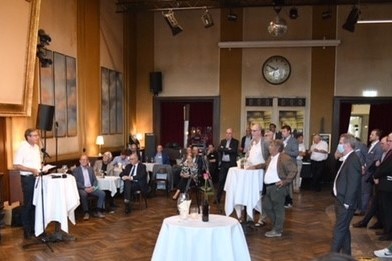
25 years of the «Contract of Lugano» – a look into the future
Exactly 25 years after the signing of the “Treaty of Lugano”, the German railway station in the Swiss border metropolis of Basel took stock. For the VAP, in addition to the expansion of the line on the right bank of the Rhine, that of the line on the left bank of the Rhine for freight traffic is also urgent. Automation, in particular through digital automatic coupling, must be implemented just as quickly. Finally, the VAP welcomes the proposed opening up of the EU Combined Transport Directive to multimodal transport with freight instead of container transhipment when changing modes of transport.
New agreement
Under the motto “Visiting Friends”, the contracting countries concluded a new agreement that complements the Treaty of Lugano and sets new priorities. It provides for the sustainable strengthening of rail freight transport, wants to optimise its intermodal competitiveness and intensify cooperation in innovation – especially the Digital Automatic Coupling (DAK) – as well as in the joint project Shift2Rail. After the speeches of the guests Winfried Hermann, Minister of Transport of Baden-Württemberg, and Adolf Ogi, former Federal Councillor of Switzerland, Josef Dittli, Member of the Council of States and President of the VAP Association of the Freight Industry, spoke about the core topics of this anniversary.
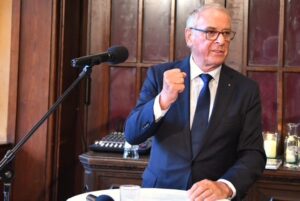
Adolf Ogi, former Federal Councillor of Switzerland
Securing the access route is necessary
Josef Dittli brought in the perspective of the VAP. On the Swiss side, the VAP contributes with various measures to the promotion of an efficient freight railway system. Dittli emphasised the necessity of extending the railway line to the left bank of the Rhine in France in order to secure the access routes. With the motion «State treaty for NEAT access route on the left bank of the Rhine», the NR Commission for Transport and Telecommunications had instructed the Federal Council in January 2020 to seek a state treaty with France and Belgium for an efficient alternative route on the left bank of the Rhine (flat railway) with the necessary infrastructure parameters for freight traffic. In addition, the expansion of the Rhine Valley railway in Germany should be pursued with vigour. With regard to the new agreement between Switzerland (DETEC) and the German Ministry of Transport, Josef Dittli noted that it was well-intentioned but more like a non-binding declaration of intent, and demanded: «The new agreement must not invalidate the Treaty of Lugano, but should complement it.» Josef Dittli welcomed the fact that France is now pushing ahead with plans to increase the clearance gauge in tunnels on the Réding-Saverne section of the Saarbrücken-Basel line via France, as announced by the French infrastructure operator SNCF Réseau.
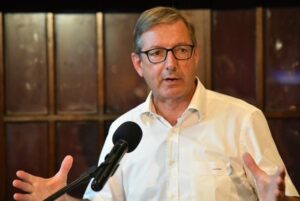
Josef Dittli, Member of the Council of States and President of the VAP
The VAP promotes automation and digitalisation
The VAP also advocates a vote at European level on the issues of automation and digitalisation. With the motion «Using automation to transport goods by rail more efficiently», it has called for the necessary financial resources. And with the Wagonload Transport Interest Group (IG WLV), it is committed to the implementation of corresponding measures together with other players in the economy.
Multimodal transport points the way to the future
For the VAP, it is important to promote not only combined transport in the narrower sense, but also multimodal transport with transhipment of goods. The latter also combines different modes of transport and meets the requirements of the strongly growing general cargo business in particular. The VAP therefore welcomes the corresponding proposals of the EU Commission for the revision of the Combined Transport Directive. Such proposals can make a significant contribution to achieving the goals of the European Green Deal. In Switzerland, the volume of multimodal rail freight transport is five times higher than that of combined transport. It is no coincidence that the event was held in Basel; after all, the port of Basel is successfully on the move as a hub for loose goods for multimodal water/rail transport.
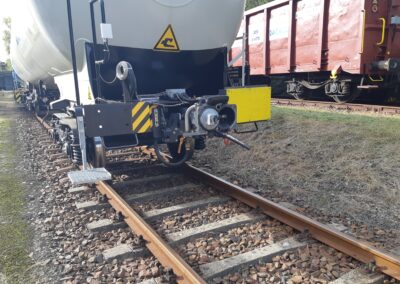
Focus on automation of wagonload traffic
In the Year of Rail 2021, modernisation through automation of wagonload traffic is at the top of our agenda. Our cooperation with the Federal Office of Transport (FOT) and the Association of Public Transport (VVO) for a joint approach to automation in rail freight transport is progressing according to plan. Among other things, the focus is on the Digital Automatic Coupling (DAK). The details of the joint tasks will soon be defined in consultation with the freight railways, wagon and locomotive operators and shippers, so that concrete progress can be seen soon.
Model evaluation underway
At the same time, the evaluation of the various DAK models is underway at the European level. We expect the decision for a specific system in autumn. After that, the corresponding implementation plan should be presented at the EU level. In other words, the DAK and with it automation in rail freight transport are taking shape.
Funding needed
The modernisation of rail freight transport requires clear political and financial support. This is why our President and Member of the Council of States Josef Dittli started the corresponding political process with the motion 20.3221 «Transporting goods more efficiently by rail through automation». By accepting the motion, Parliament has entrusted the Federal Council with the preparation of a concept.
Implementation concept envisaged
We at the VAP, together with the FOT and the VöV, will therefore tackle a concept and submit it to parliament for consultation in due course. This concept should contain the technical solution, a transformation plan and the initial costs with the expected efficiency increases. It will be up to parliament to decide on the financial support and suitable framework conditions (streamlining of the statutory safety and working regulations, adoption of the European interoperability regulations, etc.).
Combined transport and multimodality (Part 2)
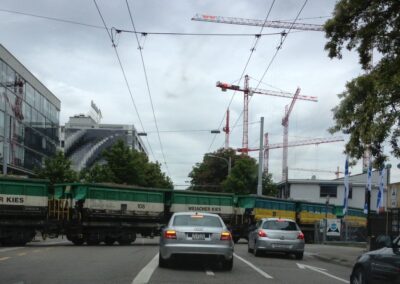
In addition to the federal government, the cantons and large Swiss cities are also increasingly defining holistic freight transport concepts for their efficient, safe and environmentally friendly supply and disposal of goods. The freight transport industry is striving to work in partnership with the cantons and cities in order to join forces and further develop logistics locations. City logistics within cities and conurbations is becoming increasingly important. We at the VAP consider the following measures to be necessary so that the strengths of rail freight transport can be brought to bear in combined and multimodal transport.
1. Infrastructure development
- Dedicated investments in line extensions for freight transport are necessary for long-term competitiveness. It is imperative that these be included in the work for the next STEP expansion stage 2040/45, namely:
- Planning and implementation of the Zurich freight bypass line for additional capacity and unbundling of passenger and freight traffic, including elimination of bottlenecks in the nodes between Aarau and Winterthur.
- Examination of the complete unbundling of freight and passenger traffic in the Basel, Geneva and Zurich-Winterthur area as well as the Lausanne junction.
- The Swiss road network is in urgent need of modernisation. The measures adopted by the Federal Council and Parliament within the framework of the new National Roads and Agglomeration Transport Fund (NAF) and the strategic development programme STEP National Roads must be implemented as quickly as possible. There is a need for both renovations and the elimination of bottlenecks and capacity expansions on the most congested stretches.
- The coordination of the superordinate and subordinate road network must become the focus of attention. This means that more resources in the cities and agglomerations must be used directly for the specific needs of city logistics than is the case in agglomeration programmes 1 and 2.
- For comodal solutions in import/export, the transhipment capacities in Ticino must be significantly increased. To this end, existing terminals should be expanded and additional new locations near the border should be evaluated.
- Logistics locations must be taken into account in spatial planning and made more accessible: This includes access by road (national, cantonal, municipal roads), access by rail (network capacity to the (receiving) station) and shunting capacity for access to the siding from the (receiving) station. The latter is currently not legally secured. Regional network plans would be decisive for this.
2. Regulatory framework for the road
- The current road regulations should be retained in their entirety. The HVF, the ban on night and Sunday driving for HGVs, the 40-tonne weight limit and the ban on cabotage are undisputed in the transport industry and ensure fair social and competitive conditions.
- The cabotage ban in particular is central. Any relaxation of the current regulations would threaten the existence of the entire Swiss transport industry on rail and road. In addition, fatal consequences for the environment and modal shift policy would have to be reckoned with. In the current process on the possible conclusion of an institutional agreement, the ban on cabotage must therefore not be tampered with. It must remain anchored in the existing land transport agreement in its current form.
- As a financial incentive for multimodal transport, the HVF reimbursement in combined transport on the initial or final road leg should be additionally increased and now also granted for the combination of road and rail in wagonload transport with goods instead of container transhipment.
- The (road) transport industry abroad works with completely different cost structures than Swiss transport companies. The biggest differences are in the remuneration of drivers. The result is so-called “social dumping”, which massively distorts competition in the highest-volume freight transport markets in Europe. In addition, there is a need for tighter controls on the existing cabotage ban, including massively higher fines in the event of infringements.
3. Regulatory framework conditions for the railways
- In order to use infrastructures for passenger and goods trains as efficiently as possible, network utilisation concepts should be further developed in line with demand. In this way, expensive investments in infrastructure can be avoided and nodes can be effectively relieved. The freight transport industry is prepared to dynamise demand, for example in north-south traffic, thanks to hourly or daily planning. In return, the freight transport companies demand a discussion regarding the use of train paths by freight and regional trains at off-peak times early in the morning and late in the evening.
- Maintenance concepts of the infrastructure managers must take more account of the needs of freight traffic at night. The compensation introduced for line closures due to construction sites is useful as compensation, but ultimately the loading industry needs more reliability in the freight railways’ service provision. In future, maintenance work should therefore also be planned increasingly during the day and at weekends with uniform restrictions for all modes of transport.
- In order to strengthen the competitiveness of the railway in co-modal transport chains, the marginal costs of infrastructure use per train travelled must be redefined, taking into account the different demands of passenger and freight transport.
Entrepreneurial commitment
Freight railways, road hauliers and the shipping industry are aware of their responsibility for the supply of goods in Switzerland and have already implemented various measures in favour of co- or multimodal freight transport solutions.
- The partnership between SBB Cargo and Swiss Combi strengthens the shift from road to rail and sustainably increases capacity utilisation in system wagonload traffic and combined transport. The aim is to further increase the competitiveness of rail in the customers’ logistics chain and to use the modes of transport according to their strengths.
- SBB Cargo, the VAP VAP Swiss Rail Shippers Association and the Association of Public Transport VöV are developing a joint view of the range of services offered by the freight transport industry. Within the framework of the STEP 2030/35 expansion step, demands such as sufficient capacities, faster train paths and upgrading and new construction of freight transport facilities and stations were pushed through.
- Road freight transport is continuously increasing its efficiency through internal optimisations (e.g. planning, dispatching, digitalisation). The number of unproductive empty runs is at a very low level. However, a considerable part of the efficiency gains achieved is lost again due to productivity losses as a result of increasing congestion on the entire road network.
More dialogue for more sustainability and efficiency
Switzerland’s transport companies and shippers are committed to sustainable and efficient freight transport as a contribution to an ecological and competitive Switzerland. The modal shift from road to rail in transit traffic from border to border and a sensible (multi-) modal split should be further strengthened. The VAP and its partner organisations support a partnership-based, dynamic relationship between the authorities and industry players and are prepared to participate actively in the work.
Combined transport and multimodality (Part 1)
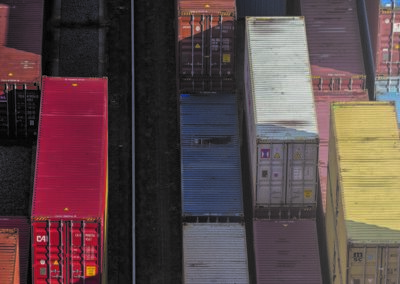
The transport companies on road and rail as well as the shipping industry take their economic, ecological and social responsibility seriously and rely on cross-modal solutions. They combine the Rhine, road, rail, inland waterways, pipelines and air freight to create needs-oriented multimodal logistics solutions.
Conceptual
Combined transport in the narrower sense combines different modes of transport (road, rail, water) in one system. In this process, it is not the transported goods that are reloaded, but a transport container – in most cases a container. The majority of the distance covered (main leg) is to be covered by rail or ship, and the pre-carriage and onward carriage by road are to be as short as possible.
Multimodal transport in the broader sense also combines different modes of transport. However, the goods to be transported are reloaded when the mode of transport is changed, usually from ship and rail to truck and vice versa. Combined transport does not meet the requirements of the general cargo business in particular. This is why the rapidly growing general cargo traffic is predestined for multimodal transport, as the collection and distribution can take place more flexibly on the road than in combined transport. The latter presupposes a destination-specific load for all goods in the container. In Cargo Domicile alone, 300 freight wagons are transported in such traffic every night. Accordingly, rail freight transport plays a key role as a means of mass transport in both combined and multimodal transport. Proven subsidies (flat-rate reimbursement of the HVF, 44t limit in pre/post-carriage) should therefore be extended to all combinations of road and rail – regardless of their concrete design.
Combined transport on the rise
Combined transport has gained in importance in recent years due to its unprecedented promotion through subsidies, toll reductions and weight increases for HGVs (cf. Figure 1). In transit through Switzerland, 85.3% of the tonnages transported in 2019 were in combined transport (cf. Figure 2). In import and export traffic, 7.6% of the tonnages transported were in combined transport. In domestic transport it was 7.1% of the tonnages transported.
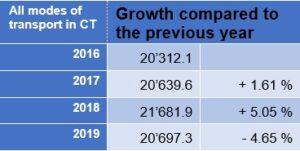
Figure 1: Growth of combined transport 2016 to 2019 1
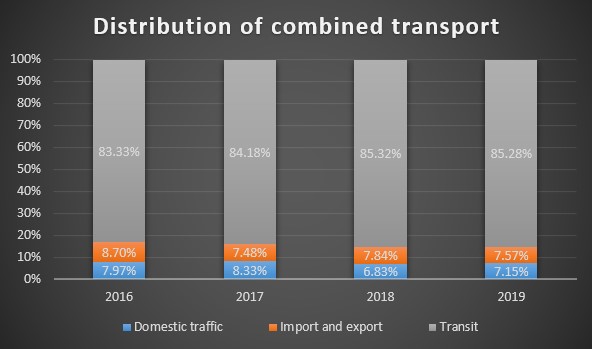
Figure 2: Percentage breakdown of combined transport2
Around one third of all rail freight is carried by combined transport. In rail transport, it came to a share of transported tonnages of 34% in 2019 and 12% for inland navigation to and from Basel. The share of net tonnes transported in unaccompanied combined inland transport is 8%. The corresponding figure is much lower for road transport, which – as mentioned – is only used for the so-called pre-carriage and onward carriage (average transport distance of around 50 kilometres). Here, the CT share in 2019 was 2%, whereby this figure only refers to transports with domestic vehicles. The remaining goods are transported via conventional transport in freight wagons with transhipment of goods instead of containers.
Freight transport volume on the rise
The volume of goods transported on Swiss infrastructures will increase by 37% by 20403. The biggest driver is the growth in domestic traffic with an increase of 39%. Due to population and economic growth, division of labour, digitalisation and e‑commerce, small lot sizes in the form of courier, express and parcel services in particular will grow disproportionately. The volume of transit freight transport is also growing continuously and will increase by 38% by 2040 compared to the 2010 reference value.
Implementation of the constitutional mandate to shift traffic in transit
With the constitutional article on the protection of the Alps («Alpine protection article») adopted in 1994, the shift of freight traffic to rail in transit was enshrined in the constitution. Since then, Switzerland has invested a great deal in this shift. The construction of the Neat, to be completed in 2020 when the Ceneri base tunnel comes into operation, cost CHF 18.5 billion. The compensation for combined transport between 1994 and 2020 (until 2023) totalled CHF 1675 million4. By 2026, a further CHF 90 million will be paid to keep combined transit traffic on the railways. Today, rail has a market share of over 70% in transalpine transit freight transport from border to border through Switzerland, which is unique in Europe.
1 Cf. Swiss Federal Statistical Office, Combined goods transport, 2021
2 Cf. Federal Statistical Office, table Combined goods transport by rail
3 Cf. «Transport Outlook 2050», Federal Office for Spatial Development (ARE)
4 Cf. Federal Council Dispatch 2019 (in german)